Pearson Edexcel · A-Level · History
Course version: 9HI0 · Version from Sept 2015
The knights and the crusades: the nature of knighthood in the late…
Full specification wording
Reasons for the crusades, 1095–1192: The knights and the crusades: the nature of knighthood in the late eleventh century; the development of the concept of chivalry; protecting Christianity and pilgrims; settlement in the crusader states and the acquisition of wealth.
Knighthood in the late eleventh century was a mounted warrior elite bound by ties of lordship and land.
Checked against the Pearson Edexcel 9HI0 specification (opens in a new tab) on .
- Point 3 of 3
Study notes
From the checked teaching notes for this specification point.
The idea
Knighthood in the late eleventh century was a mounted warrior elite bound by ties of lordship and land. Knights served lords in return for fiefs, and their training emphasised martial skill, loyalty and courage. Chivalry developed as a code blending martial prowess with Christian ideals, though its influence was gradual and often imperfect. The Church sought to direct knightly violence towards protecting Christianity and pilgrims, especially after reports of persecution in the Holy Land. Crusading offered spiritual rewards and the chance to settle in the crusader states, where knights could acquire wealth through land, tribute and trade. This combination of religious duty and material opportunity made the crusades attractive to knights.
What earns the marks
- Describes the nature of late eleventh-century knighthood: mounted warriors, fief-holding, service to lords, and training in arms.
- Explains how chivalry developed as a code combining martial values with Christian ethics, and how it was promoted by the Church and literature.
- Analyses the Church's role in redirecting knightly violence towards the protection of Christianity and pilgrims, including the Peace of God and Truce of God movements.
- Assesses the appeal of settlement in the crusader states and the acquisition of wealth through land grants, lordships, and economic opportunities.
Common mistakes and how to put them right
Assuming chivalry was a fully formed and universally followed code in the late eleventh century.
Put it right: In reality it was evolving and often ignored.
Overlooking the economic motives for crusading, such as the prospect of land and wealth in the East, and focusing only on religious devotion.
Confusing the protection of pilgrims with the broader aim of protecting Christianity, or vice versa, without recognising their interconnection in crusade preaching.
Exam tips
- Use specific examples, such as the Peace of God movement or the preaching of the First Crusade, to illustrate how the Church tried to control knightly violence.
- When discussing chivalry, refer to contemporary texts like the Song of Roland to show its ideals, but note that practice often fell short.
- Link the nature of knighthood to the reasons for the crusades by explaining how knights' martial skills and desire for land made them receptive to crusading appeals.
Try the lesson
The start of the Reasons for the crusades, 1095–1192: The knights and the crusades: the nature of knighthood in the late eleventh century; the development of the concept of chivalry; protecting Christianity and pilgrims; settlement in the crusader states and the acquisition of wealth. lesson, made from checked teaching notes for this specification point.
Have a go first
In the late eleventh century, what was the main military role expected of a knight?
Listen
Knighthood in the late eleventh century was a mounted warrior elite bound by ties of lordship and land. Knights served lords in return for fiefs, and their training emphasised martial skill, loyalty and courage. Chivalry developed as a code blending martial prowess with Christian ideals, though its influence was gradual and often imperfect. The Church sought to direct knightly violence towards protecting Christianity and pilgrims, especially after reports of persecution in the Holy Land. Crusading offered spiritual rewards and the chance to settle in the crusader states, where knights could acquire wealth through land, tribute and trade. This combination of religious duty and material opportunity made the crusades attractive to knights. A strong answer earns marks for these points. Describes the nature of late eleventh-century knighthood: mounted warriors, fief-holding, service to lords, and training in arms. Explains how chivalry developed as a code combining martial values with Christian ethics, and how it was promoted by the Church and literature. Analyses the Church's role in redirecting knightly violence towards the protection of Christianity and pilgrims, including the Peace of God and Truce of God movements. Assesses the appeal of settlement in the crusader states and the acquisition of wealth through land grants, lordships, and economic opportunities. Exam tip: Use specific examples, such as the Peace of God movement or the preaching of the First Crusade, to illustrate how the Church tried to control knightly violence.
See it
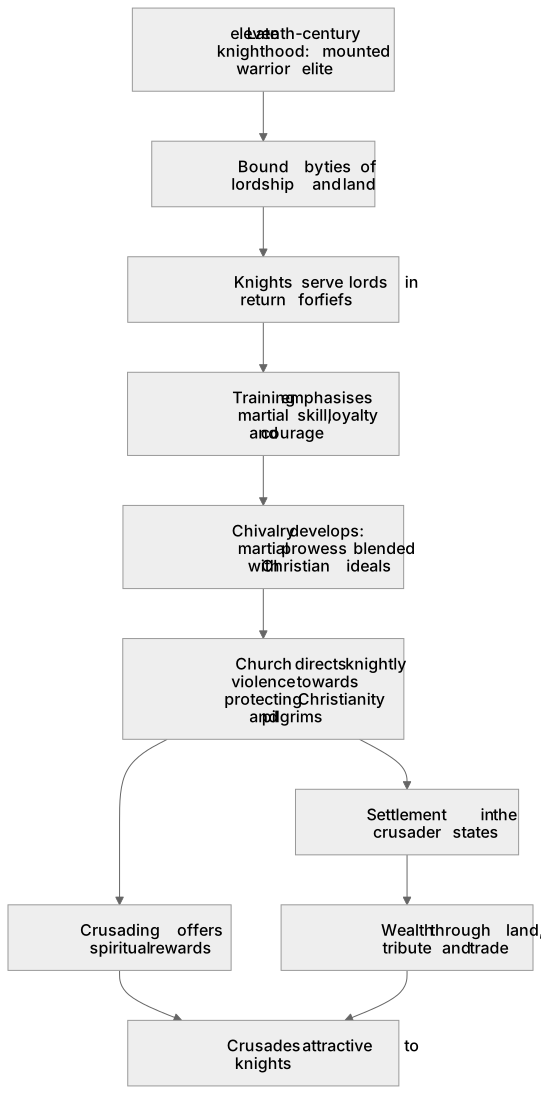
Label the diagram
Some boxes have lost their names. Pick the right name for each number.
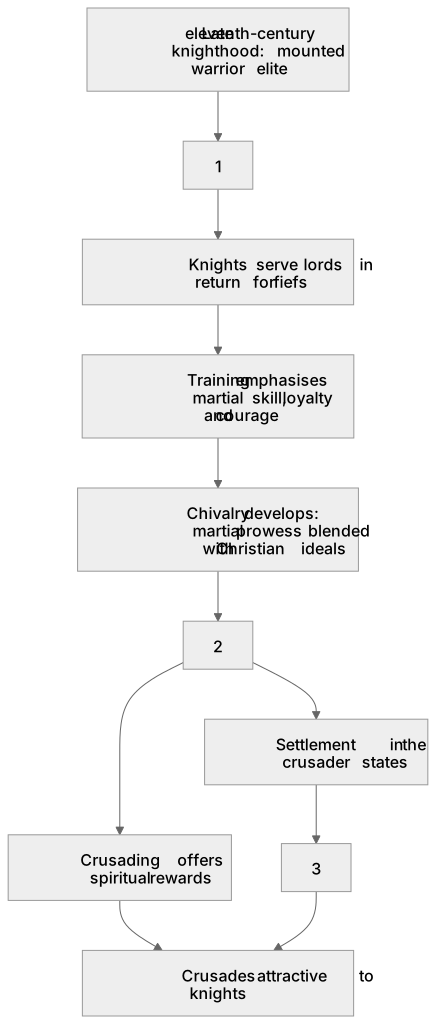
1Box 1
2Box 2
3Box 3
There is more to this lesson
The full lesson goes on to check your understanding and help you earn the marks. Create a free account to carry on, with your progress saved.
A week of Premium from your first lesson · Then the free plan continues · No card, no charge
Test your understanding of Reasons for the crusades, 1095–1192: The knights and the crusades: the nature of knighthood in the late eleventh century; the development of the concept of chivalry; protecting Christianity and pilgrims; settlement in the crusader states and the acquisition of wealth.
Active recall beats re-reading. Take an instant quiz now to test what you’ve learned and lock it into long-term memory.
A week of Premium from your first lesson · Then the free plan continues · No card, no charge