Pearson Edexcel · A-Level · History
Course version: 9HI0 · Version from Sept 2015
The changing nature of kingship: growing political and economic power of…
Full specification wording
Reforms in England, 1154–89: The changing nature of kingship: growing political and economic power of the king; relations with leading barons; the importance of the itinerant kingship on maintaining royal power in England and the Angevin Empire.
Henry II’s kingship saw growing political and economic power, centralising authority through legal and financial reforms.
Checked against the Pearson Edexcel 9HI0 specification (opens in a new tab) on .
- Point 4 of 4
- 4 key terms
Study notes
From the checked teaching notes for this specification point.
The idea
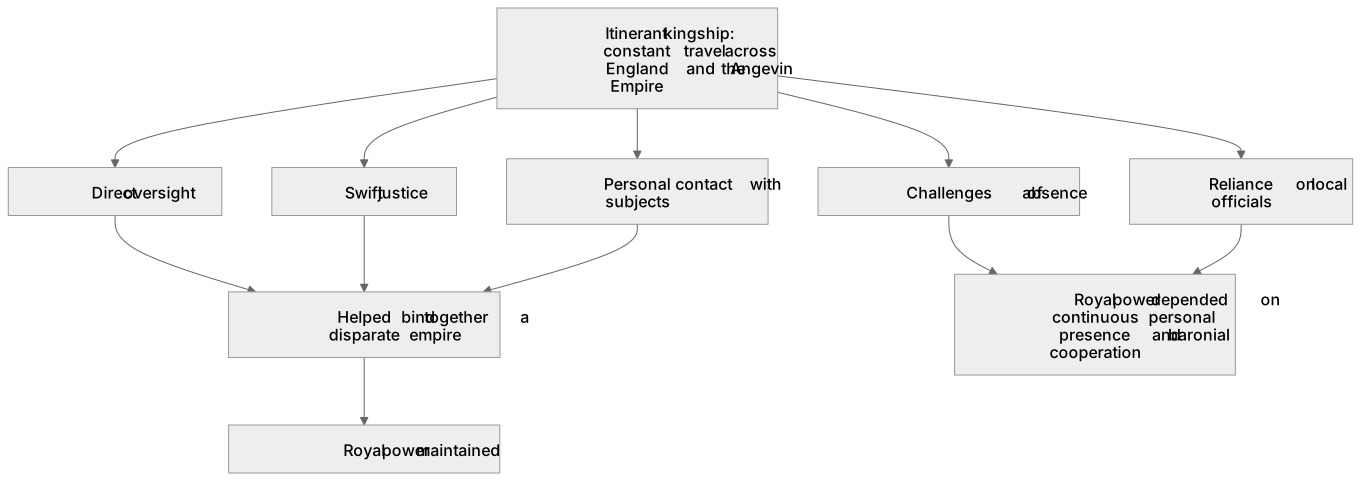
Henry II’s kingship saw growing political and economic power, centralising authority through legal and financial reforms. Relations with leading barons were managed through a mix of patronage, coercion, and royal justice, but tensions persisted. Itinerant kingship—the king’s constant travel across England and the Angevin Empire—was crucial for maintaining royal power, allowing direct oversight, swift justice, and personal contact with subjects. This mobility helped bind together a disparate empire, though it also posed challenges of absence and reliance on local officials. Overall, the changing nature of kingship under Henry II enhanced royal authority but depended on continuous personal presence and baronial cooperation.
What earns the marks
- Explains how the king’s political power grew through legal reforms, centralised courts, and control over the church, and how economic power expanded via feudal incidents, taxation, and royal forests.
- Describes the nature of relations with leading barons, including the use of patronage, marriage alliances, and the threat of royal justice, and how these relations could be cooperative or conflictual.
- Explains the concept of itinerant kingship and its importance for maintaining royal power in England, such as through direct administration and the dispensation of justice.
- Assesses the role of itinerant kingship in the Angevin Empire, considering how travel across territories helped maintain control but also created problems of governance and communication.
- Evaluates the overall importance of itinerant kingship in maintaining royal power, weighing it against other factors like baronial support and administrative institutions.
Common mistakes and how to put them right
Assuming that itinerant kingship meant the king was always absent from England.
Put it right: Itinerant kingship involved constant movement across all territories, not just absence from England.
Confusing political and economic power.
Put it right: Political power refers to authority and control over governance, while economic power refers to revenue and resources, and both grew but through different mechanisms.
Overlooking the role of barons in maintaining royal power.
Put it right: Many barons cooperated with the king and were essential for local governance and military support, though tensions existed.
Exam tips
- When discussing itinerant kingship, use specific examples of Henry II’s travels (e.g., his frequent crossings to Normandy) to illustrate its importance for maintaining power across the Angevin Empire.
- For the ‘changing nature of kingship’ element, compare Henry II’s style with that of his predecessors or successors to highlight what was new, such as increased reliance on written records and central courts.
- Address all parts of the statement: political power, economic power, baronial relations, and itinerant kingship in both England and the Angevin Empire; avoid focusing on only one aspect.
Try the lesson
The start of the Reforms in England, 1154–89: The changing nature of kingship: growing political and economic power of the king; relations with leading barons; the importance of the itinerant kingship on maintaining royal power in England and the Angevin Empire. lesson, made from checked teaching notes for this specification point.
Have a go first
What was a key reason Henry II travelled constantly around England and his continental lands?
Listen
Henry II’s kingship saw growing political and economic power, centralising authority through legal and financial reforms. Relations with leading barons were managed through a mix of patronage, coercion, and royal justice, but tensions persisted. Itinerant kingship—the king’s constant travel across England and the Angevin Empire—was crucial for maintaining royal power, allowing direct oversight, swift justice, and personal contact with subjects. This mobility helped bind together a disparate empire, though it also posed challenges of absence and reliance on local officials. Overall, the changing nature of kingship under Henry II enhanced royal authority but depended on continuous personal presence and baronial cooperation. A strong answer earns marks for these points. Explains how the king’s political power grew through legal reforms, centralised courts, and control over the church, and how economic power expanded via feudal incidents, taxation, and royal forests. Describes the nature of relations with leading barons, including the use of patronage, marriage alliances, and the threat of royal justice, and how these relations could be cooperative or conflictual. Explains the concept of itinerant kingship and its importance for maintaining royal power in England, such as through direct administration and the dispensation of justice. Assesses the role of itinerant kingship in the Angevin Empire, considering how travel across territories helped maintain control but also created problems of governance and communication. A common slip: Assuming that itinerant kingship meant the king was always absent from England: the error is overlooking that Henry II spent significant periods in England and that his travels included both England and the Angevin Empire. Instead, itinerant kingship involved constant movement across all territories, not just absence from England. Exam tip: When discussing itinerant kingship, use specific examples of Henry II’s travels (e.g., his frequent crossings to Normandy) to illustrate its importance for maintaining power across the Angevin Empire.
See it
Key words
Say what each word means before you turn the card.
Centralisation of royal authority
Try answering aloud or in your head before turning the card.
Baronial cooperation and resistance
Try answering aloud or in your head before turning the card.
Itinerant kingship and empire governance
Try answering aloud or in your head before turning the card.
Economic foundations of royal power
Try answering aloud or in your head before turning the card.
See every definition
- Centralisation of royal authority
- The growing political and economic power of the king, centralising authority through legal and financial reforms and centralised courts.
- Baronial cooperation and resistance
- Relations with leading barons managed through a mix of patronage, coercion and royal justice, which could be cooperative or conflictual, with tensions persisting.
- Itinerant kingship and empire governance
- The king's constant travel across England and the Angevin Empire, allowing direct oversight, swift justice and personal contact with subjects, binding together a disparate empire.
- Economic foundations of royal power
- Economic power expanded via feudal incidents, taxation and royal forests, referring to revenue and resources.
Label the diagram
Some boxes have lost their names. Pick the right name for each number.
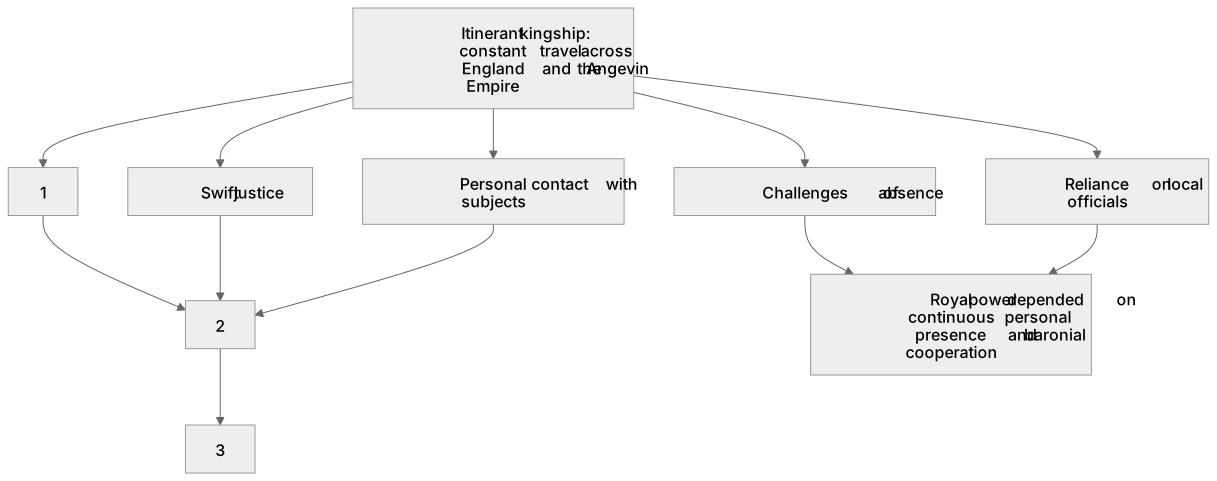
1Box 1
2Box 2
3Box 3
There is more to this lesson
The full lesson goes on to check your understanding and help you earn the marks. Create a free account to carry on, with your progress saved.
A week of Premium from your first lesson · Then the free plan continues · No card, no charge
Test your understanding of Reforms in England, 1154–89: The changing nature of kingship: growing political and economic power of the king; relations with leading barons; the importance of the itinerant kingship on maintaining royal power in England and the Angevin Empire.
Active recall beats re-reading. Take an instant quiz now to test what you’ve learned and lock it into long-term memory.
A week of Premium from your first lesson · Then the free plan continues · No card, no charge