Pearson Edexcel · A-Level · History
Course version: 9HI0 · Version from Sept 2015
Relationship with the Catholic Church: the move away from anticlerical…
Full specification wording
The fascist state, 1925–40: Relationship with the Catholic Church: the move away from anticlerical views; Pope Pius IX; the impact of the Lateran Pacts; church support for the regime; church-state tensions in the 1930s.
Mussolini initially held anticlerical views, but after 1922 he sought reconciliation with the Catholic Church.
Checked against the Pearson Edexcel 9HI0 specification (opens in a new tab) on .
- Point 4 of 4
- 4 key terms
Study notes
From the checked teaching notes for this specification point.
The idea
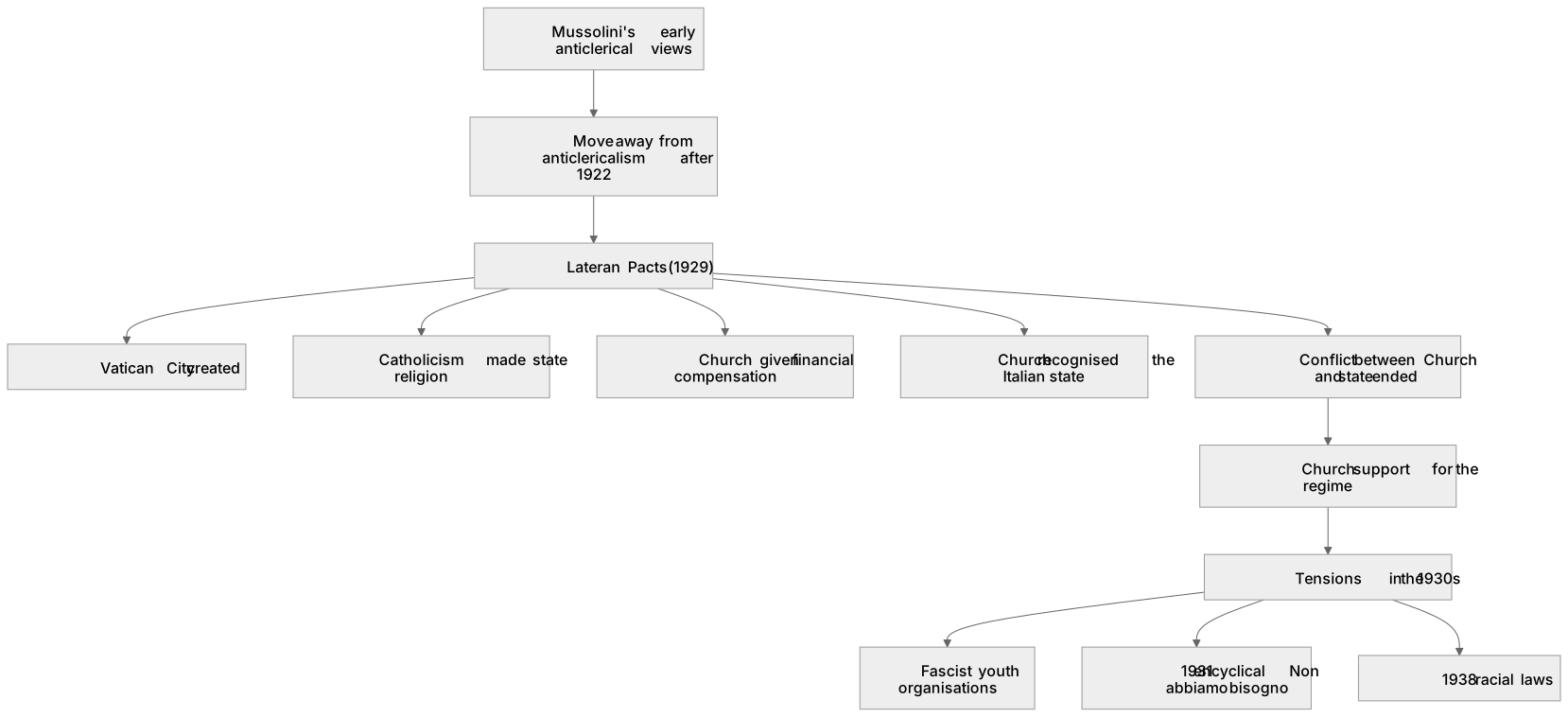
Mussolini initially held anticlerical views, but after 1922 he sought reconciliation with the Catholic Church. Pope Pius IX (not Pius XI) is a factual error in the statement; the pope during the Lateran Pacts was Pius XI. The Lateran Pacts (1929) ended the Roman Question, created Vatican City, and made Catholicism the state religion. In return, the Church recognised the Italian state. The Church largely supported the regime, but tensions arose in the 1930s over fascist youth groups, racial laws, and state interference. Assessment requires explaining the shift from anticlericalism to cooperation, the terms and impact of the Pacts, and the nature of support and tensions.
What earns the marks
- Move away from anticlerical views: Mussolini abandoned early anticlericalism to gain support from Catholics and the Church.
- Pope Pius IX: the statement incorrectly names Pius IX; the pope at the time of the Lateran Pacts was Pius XI (1922–1939).
- Lateran Pacts (1929): they created Vatican City, made Catholicism the state religion, and gave the Church financial compensation.
- Impact of the Pacts: they ended the conflict between Church and state and gave Mussolini prestige and Catholic support.
- Church support: the Church backed the regime in many areas, seeing it as a bulwark against communism.
- Tensions in the 1930s: disputes over fascist youth organisations, the 1931 encyclical Non abbiamo bisogno, and the 1938 racial laws.
Common mistakes and how to put them right
Naming Pope Pius IX instead of Pius XI.
Put it right: The pope during the Lateran Pacts was Pius XI.
Claiming the Lateran Pacts gave the Church full independence.
Put it right: The Church recognised the Italian state and made concessions.
Saying there were no tensions between Church and state.
Put it right: Tensions existed over youth groups and racial laws.
Exam tips
- Use specific terms of the Lateran Pacts and examples of tension to support your answer.
- Explain how the relationship changed over time, from conflict to cooperation to tension.
- Avoid confusing the popes; ensure you refer to Pius XI for the Lateran Pacts.
Try the lesson
The start of the The fascist state, 1925–40: Relationship with the Catholic Church: the move away from anticlerical views; Pope Pius IX; the impact of the Lateran Pacts; church support for the regime; church-state tensions in the 1930s. lesson, made from checked teaching notes for this specification point.
Have a go first
Which agreement, signed in 1929, settled the long-standing dispute between the Italian state and the Catholic Church?
Listen
Mussolini initially held anticlerical views, but after 1922 he sought reconciliation with the Catholic Church. Pope Pius IX (not Pius XI) is a factual error in the statement; the pope during the Lateran Pacts was Pius XI. The Lateran Pacts (1929) ended the Roman Question, created Vatican City, and made Catholicism the state religion. In return, the Church recognised the Italian state. The Church largely supported the regime, but tensions arose in the 1930s over fascist youth groups, racial laws, and state interference. Assessment requires explaining the shift from anticlericalism to cooperation, the terms and impact of the Pacts, and the nature of support and tensions. A strong answer earns marks for these points. Move away from anticlerical views: Mussolini abandoned early anticlericalism to gain support from Catholics and the Church. Pope Pius IX: the statement incorrectly names Pius IX; the pope at the time of the Lateran Pacts was Pius XI (1922–1939). Lateran Pacts (1929): they created Vatican City, made Catholicism the state religion, and gave the Church financial compensation. Impact of the Pacts: they ended the conflict between Church and state and gave Mussolini prestige and Catholic support. A common slip: naming Pope Pius IX instead of Pius XI. Instead, the pope during the Lateran Pacts was Pius XI. Exam tip: Use specific terms of the Lateran Pacts and examples of tension to support your answer.
See it
Key words
Say what each word means before you turn the card.
Lateran Pacts
Try answering aloud or in your head before turning the card.
Church support
Try answering aloud or in your head before turning the card.
Tensions in the 1930s
Try answering aloud or in your head before turning the card.
Pope Pius XI
Try answering aloud or in your head before turning the card.
See every definition
- Lateran Pacts
- Agreements of 1929 that created Vatican City, made Catholicism the state religion, and gave the Church financial compensation.
- Church support
- Backing for the regime in many areas, seeing it as a bulwark against communism.
- Tensions in the 1930s
- Disputes over fascist youth organisations, the 1931 encyclical Non abbiamo bisogno, and the 1938 racial laws.
- Pope Pius XI
- The pope at the time of the Lateran Pacts, from 1922 to 1939.
Label the diagram
Some boxes have lost their names. Pick the right name for each number.
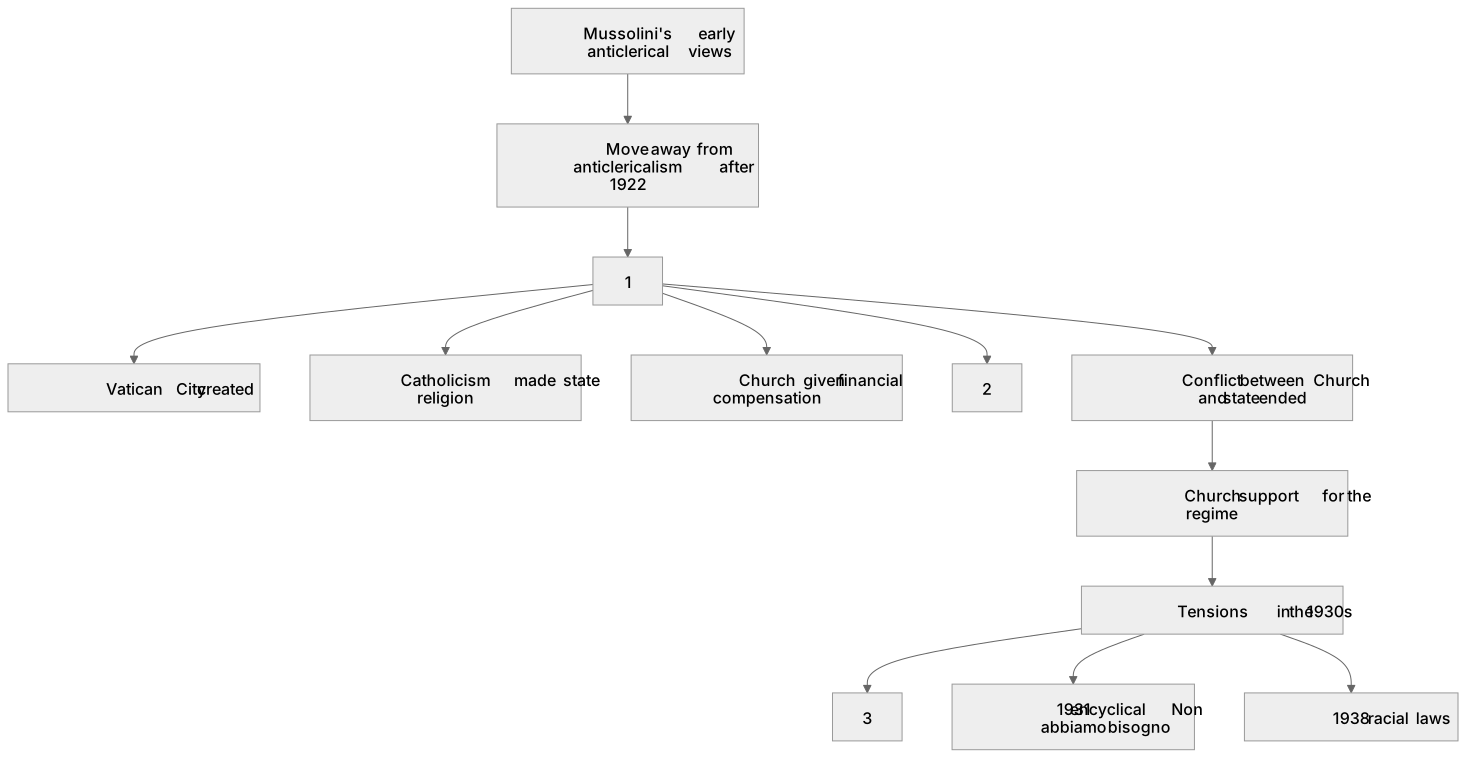
1Box 1
2Box 2
3Box 3
There is more to this lesson
The full lesson goes on to check your understanding and help you earn the marks. Create a free account to carry on, with your progress saved.
A week of Premium from your first lesson · Then the free plan continues · No card, no charge
Test your understanding of The fascist state, 1925–40: Relationship with the Catholic Church: the move away from anticlerical views; Pope Pius IX; the impact of the Lateran Pacts; church support for the regime; church-state tensions in the 1930s.
Active recall beats re-reading. Take an instant quiz now to test what you’ve learned and lock it into long-term memory.
A week of Premium from your first lesson · Then the free plan continues · No card, no charge