Pearson Edexcel · GCSE · History
Course version: 1HI0 · Version from Sept 2016
C1900–present: Medicine in modern Britain - 1 Ideas about the cause of…
Full specification wording
Option 11: c1900–present: Medicine in modern Britain - 1 Ideas about the cause of disease and illness: Improvements in diagnosis: the impact of the availability of blood tests, scans and monitors.
Modern medicine has been revolutionised by technological improvements in diagnosis, moving away from symptom-based guesswork to precise internal investigations.
Checked against the Pearson Edexcel 1HI0 specification (opens in a new tab) on .
- Point 2 of 2
- 3 key terms
Study notes
From the checked teaching notes for this specification point.
The idea
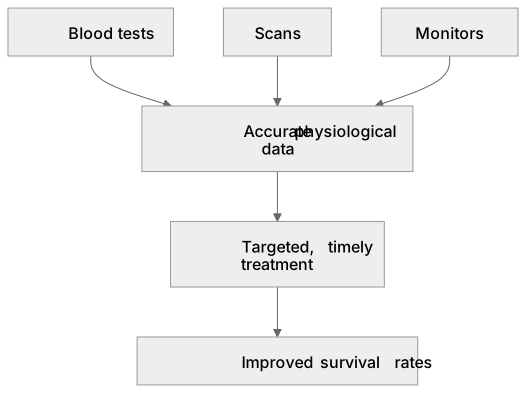
Modern medicine has been revolutionised by technological improvements in diagnosis, moving away from symptom-based guesswork to precise internal investigations. The availability of blood tests allows doctors to check for infections, genetic conditions, and organ function without invasive surgery. Scans, such as X-rays, ultrasound, CT, and MRI scans, provide detailed images of the body's interior, enabling the early detection of tumours and internal injuries. Furthermore, medical monitors, like ECGs for heart activity, allow continuous tracking of a patient's vital signs. These advancements have significantly improved survival rates by ensuring treatments are targeted, timely, and based on accurate physiological data.
What earns the marks
- Describe how blood tests improved diagnosis by allowing doctors to identify infections and genetic markers without surgery.
- Explain the impact of various scanning technologies, such as X-rays, CT, and MRI scans, on detecting internal injuries and tumours.
- Discuss the role of medical monitors, like ECGs, in providing continuous, real-time data on a patient's vital signs.
- Evaluate how these technological improvements shifted diagnosis from symptom-based observation to precise scientific measurement.
Common mistakes and how to put them right
Confusing the discovery dates of different scans, such as placing MRI scans in the early 1900s.
Put it right by noting X-rays were late 19th century, while CT and MRI are late 20th century.
Stating that blood tests are only used to find infections.
Put it right by explaining they are also crucial for checking organ function and genetic conditions.
Claiming that advanced scans replaced all traditional diagnostic methods.
Put it right by explaining they are used alongside physical examinations and patient histories.
Exam tips
- Use specific examples of diagnostic tools, such as MRI for soft tissue or ECG for heart function, to support your answers.
- Emphasise how improved diagnosis leads to earlier and more targeted treatments, improving survival rates.
- Contrast modern diagnostic technology with historical methods to highlight the extent of change.
Try the lesson
The start of the Option 11: c1900–present: Medicine in modern Britain - 1 Ideas about the cause of disease and illness: Improvements in diagnosis: the impact of the availability of blood tests, scans and monitors. lesson, made from checked teaching notes for this specification point.
Have a go first
Which diagnostic technology, developed in the twentieth century, uses magnetic fields and radio waves to create detailed images of the inside of the body?
Listen
Modern medicine has been revolutionised by technological improvements in diagnosis, moving away from symptom-based guesswork to precise internal investigations. The availability of blood tests allows doctors to check for infections, genetic conditions, and organ function without invasive surgery. Scans, such as X-rays, ultrasound, CT, and MRI scans, provide detailed images of the body's interior, enabling the early detection of tumours and internal injuries. Furthermore, medical monitors, like ECGs for heart activity, allow continuous tracking of a patient's vital signs. These advancements have significantly improved survival rates by ensuring treatments are targeted, timely, and based on accurate physiological data. A strong answer earns marks for these points. Describe how blood tests improved diagnosis by allowing doctors to identify infections and genetic markers without surgery. Explain the impact of various scanning technologies, such as X-rays, CT, and MRI scans, on detecting internal injuries and tumours. Discuss the role of medical monitors, like ECGs, in providing continuous, real-time data on a patient's vital signs. Evaluate how these technological improvements shifted diagnosis from symptom-based observation to precise scientific measurement. A common slip: Confusing the discovery dates of different scans, such as placing MRI scans in the early 1900s. Instead, noting X-rays were late 19th century, while CT and MRI are late 20th century. Exam tip: Use specific examples of diagnostic tools, such as MRI for soft tissue or ECG for heart function, to support your answers.
See it
Watch it explained
What is the one idea the video explains? Say it in a sentence.
Read the described scene instead
Modern medicine has moved diagnosis away from symptom-based guesswork. Instead, doctors can use blood tests, scans and monitors to investigate the body's interior. This lesson examines how these technologies made diagnosis more precise. As you watch, connect each tool to earlier detection and more targeted treatment. Three broad diagnostic technologies stand out. Blood tests check for infections, genetic conditions and organ function without invasive surgery. Scans, including X-rays, ultrasound, CT and MRI, provide detailed images of the body's interior. Medical monitors, such as ECGs for heart activity, track a patient's vital signs continuously. Modern diagnosis does not ignore physical examination or patient history. Instead, those traditional methods are used alongside technology. A doctor can combine a physical examination with blood-test results, scan images and monitor readings. This produces accurate physiological data, so treatment can be timely and targeted rather than based only on visible symptoms. Consider a patient with suspected heart trouble. An ECG monitors heart activity continuously and gives real-time data on vital signs. Pause to think: why is this more useful than a one-off observation of symptoms? Continuous monitoring of heart activity can help doctors target treatment promptly and base decisions on measured physiological data. Avoid three common errors. X-rays were developed in the late nineteenth century, while CT and MRI scans belong to the late twentieth century. Blood tests are not only for infections; they also check organ function and genetic conditions. Finally, advanced scans did not replace all traditional methods. They are used alongside physical examinations and patient histories. To recap, blood tests, scans and monitors changed diagnosis by giving doctors internal and measured evidence. They enabled early detection of tumours and injuries and continuous tracking of vital signs. This helped make treatment more timely and targeted. Modern technology did not remove traditional methods; it added precision to them.
Key words
Say what each word means before you turn the card.
Blood tests
Try answering aloud or in your head before turning the card.
Scans
Try answering aloud or in your head before turning the card.
Medical monitors
Try answering aloud or in your head before turning the card.
See every definition
- Blood tests
- These allow doctors to check for infections, genetic conditions and organ function without invasive surgery.
- Scans
- These provide detailed images of the body's interior, enabling the early detection of tumours and internal injuries.
- Medical monitors
- Devices like ECGs for heart activity allow continuous tracking of a patient's vital signs.
Label the diagram
Some boxes have lost their names. Pick the right name for each number.
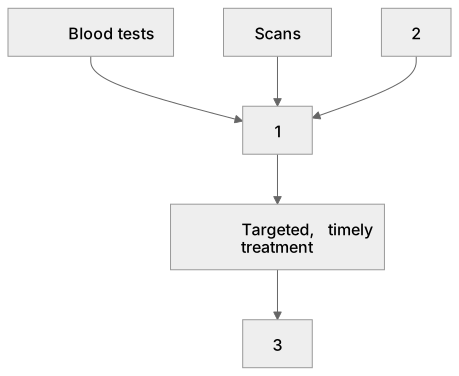
1Box 1
2Box 2
3Box 3
There is more to this lesson
The full lesson goes on to check your understanding and help you earn the marks. Create a free account to carry on, with your progress saved.
A week of Premium from your first lesson · Then the free plan continues · No card, no charge
Test your understanding of Option 11: c1900–present: Medicine in modern Britain - 1 Ideas about the cause of disease and illness: Improvements in diagnosis: the impact of the availability of blood tests, scans and monitors.
Active recall beats re-reading. Take an instant quiz now to test what you’ve learned and lock it into long-term memory.
A week of Premium from your first lesson · Then the free plan continues · No card, no charge