Pearson Edexcel · GCSE · History
Course version: 1HI0 · Version from Sept 2016
C1500–c1700: Warfare and English society in the early modern period - 2…
Full specification wording
Option 12: c1500–c1700: Warfare and English society in the early modern period - 2 The experience of war: The impact of war on civilians, including recruitment and requisitioning.
During the early modern period (c1500–c1700), warfare significantly impacted civilians through recruitment and requisitioning.
Checked against the Pearson Edexcel 1HI0 specification (opens in a new tab) on .
Study notes
From the checked teaching notes for this specification point.
The idea
During the early modern period (c1500–c1700), warfare significantly impacted civilians through recruitment and requisitioning. Recruitment often relied on the militia system and impressment (forced conscription), which disrupted local economies by removing able-bodied men from agriculture and trades. Requisitioning involved armies seizing food, horses, and supplies from civilian populations, often without adequate compensation, leading to hardship and starvation. The English Civil War (1642–1651) provides a stark example, where both Royalist and Parliamentarian forces heavily requisitioned goods and billeted soldiers in civilian homes, causing widespread resentment and economic devastation in affected communities.
What earns the marks
- Explain how the militia system and impressment were used to recruit soldiers, removing men from civilian occupations.
- Describe the process of requisitioning, where armies seized food, livestock, and transport from local populations.
- Analyse the economic and social disruption caused by billeting soldiers in civilian homes without adequate payment.
- Evaluate the impact of these practices during specific conflicts, such as the English Civil War, on civilian attitudes towards the military.
Common mistakes and how to put them right
Assuming civilians were largely unaffected by war in this period.
Put it right: Emphasise that recruitment, requisitioning, and billeting caused severe economic and social disruption to civilian life.
Confusing early modern recruitment with modern volunteer armies.
Put it right: Highlight the use of impressment and the compulsory nature of the militia system.
Believing requisitioning was always paid for fairly.
Put it right: Note that compensation was often delayed, inadequate, or non-existent, leading to civilian hardship.
Exam tips
- Use the English Civil War as a primary example to illustrate the severe impact of requisitioning and billeting on civilians.
- When discussing recruitment, distinguish between the local militia (intended for home defence) and impressment for foreign or national campaigns.
- Link the economic impact of requisitioning directly to the loss of agricultural output and local trade.
Try the lesson
The start of the Option 12: c1500–c1700: Warfare and English society in the early modern period - 2 The experience of war: The impact of war on civilians, including recruitment and requisitioning. lesson, made from checked teaching notes for this specification point.
Have a go first
What was the primary meaning of 'requisitioning' for civilians during warfare in the period c1500–c1700?
Listen
During the early modern period (c1500–c1700), warfare significantly impacted civilians through recruitment and requisitioning. Recruitment often relied on the militia system and impressment (forced conscription), which disrupted local economies by removing able-bodied men from agriculture and trades. Requisitioning involved armies seizing food, horses, and supplies from civilian populations, often without adequate compensation, leading to hardship and starvation. The English Civil War (1642–1651) provides a stark example, where both Royalist and Parliamentarian forces heavily requisitioned goods and billeted soldiers in civilian homes, causing widespread resentment and economic devastation in affected communities. A strong answer earns marks for these points. Explain how the militia system and impressment were used to recruit soldiers, removing men from civilian occupations. Describe the process of requisitioning, where armies seized food, livestock, and transport from local populations. Analyse the economic and social disruption caused by billeting soldiers in civilian homes without adequate payment. Evaluate the impact of these practices during specific conflicts, such as the English Civil War, on civilian attitudes towards the military. A common slip: Assuming civilians were largely unaffected by war in this period. Instead, Emphasise that recruitment, requisitioning, and billeting caused severe economic and social disruption to civilian life. Exam tip: Use the English Civil War as a primary example to illustrate the severe impact of requisitioning and billeting on civilians.
See it
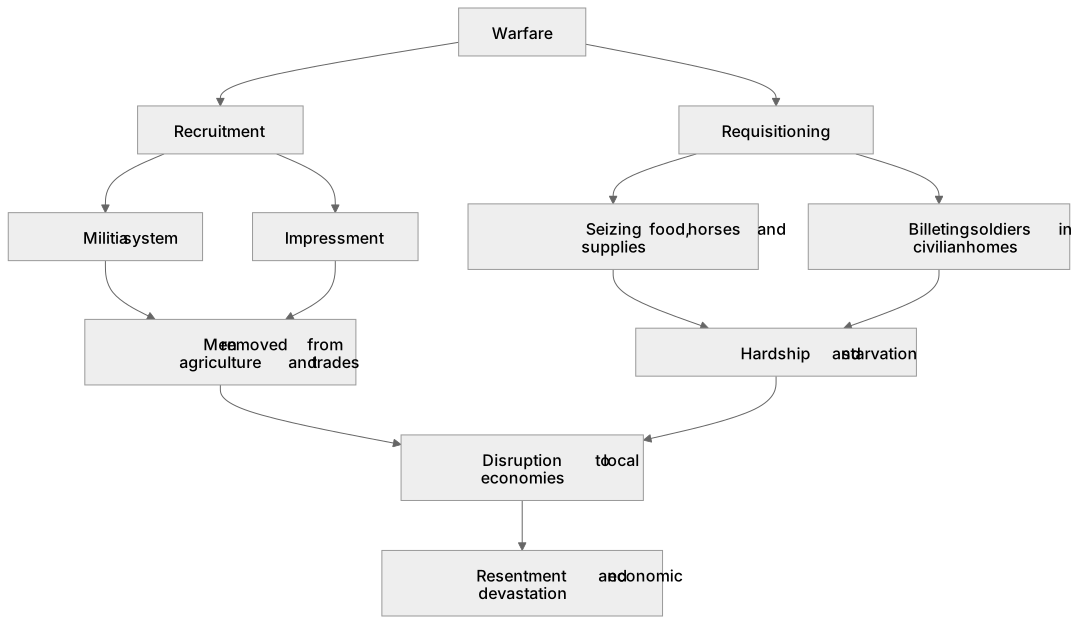
Label the diagram
Some boxes have lost their names. Pick the right name for each number.
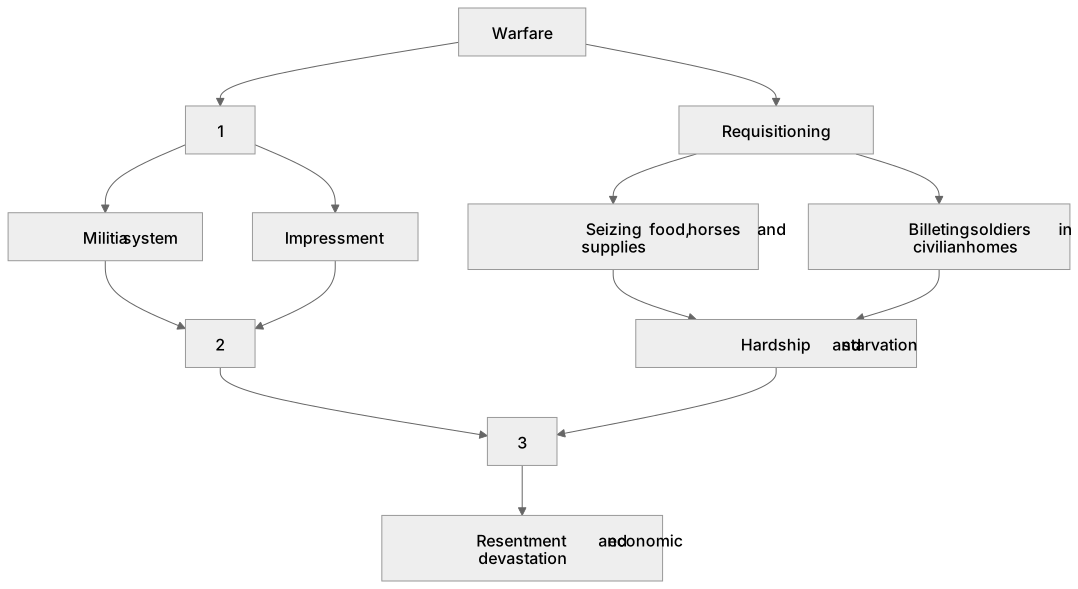
1Box 1
2Box 2
3Box 3
There is more to this lesson
The full lesson goes on to check your understanding and help you earn the marks. Create a free account to carry on, with your progress saved.
A week of Premium from your first lesson · Then the free plan continues · No card, no charge
Test your understanding of Option 12: c1500–c1700: Warfare and English society in the early modern period - 2 The experience of war: The impact of war on civilians, including recruitment and requisitioning.
Active recall beats re-reading. Take an instant quiz now to test what you’ve learned and lock it into long-term memory.
A week of Premium from your first lesson · Then the free plan continues · No card, no charge