Pearson Edexcel · GCSE · History
Course version: 1HI0 · Version from Sept 2016
C1900–present: Warfare and British society in the modern era - 2 The…
Full specification wording
Option 12: c1900–present: Warfare and British society in the modern era - 2 The experience of war: The impact of war on civilians, including recruitment and the organisation of a Home Front during the First and Second World Wars and fear of nuclear war post-1945. Attitudes to Conscientious Objectors. The influence of war reporting in the period on attitudes, including increased concern for casualties. Government use of censorship and propaganda in wartime.
The 20th century transformed civilian experiences of war.
Checked against the Pearson Edexcel 1HI0 specification (opens in a new tab) on .
- 3 key terms
Study notes
From the checked teaching notes for this specification point.
The idea
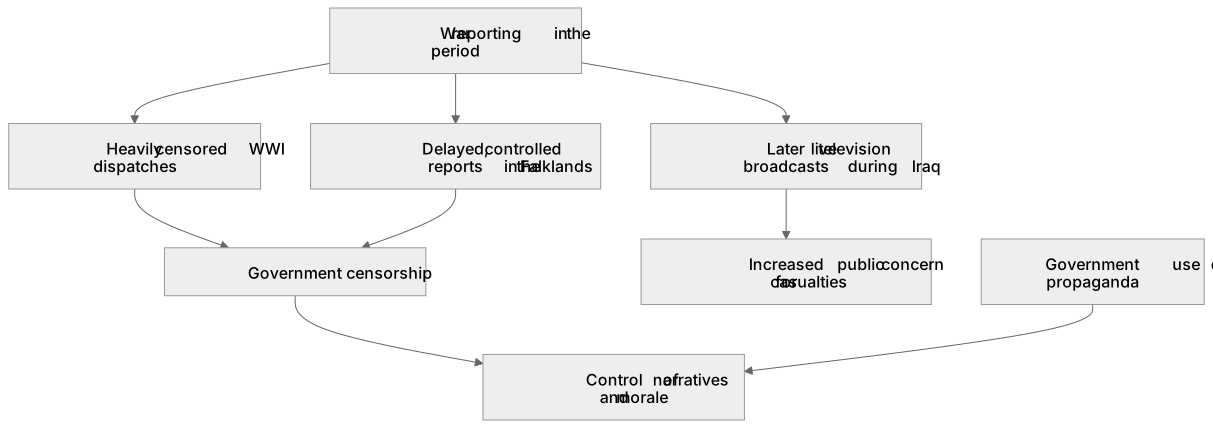
The 20th century transformed civilian experiences of war. The Home Front during both World Wars involved mass mobilisation, rationing, and civilian recruitment into industries. Conscientious Objectors faced harsh treatment and tribunals in WWI, though attitudes softened slightly by WWII. Post-1945, the fear of nuclear war created a new psychological burden on civilians, exemplified by 'Protect and Survive'. War reporting evolved from heavily censored WWI dispatches to delayed, controlled reports in the Falklands and later live television broadcasts during Iraq, increasing public concern for casualties. Governments consistently used censorship and propaganda, like the Ministry of Information, to maintain morale and control narratives.
What earns the marks
- Evaluate the organisation of the Home Front, including civilian recruitment into munitions and agriculture during WWI and WWII.
- Contrast the harsh public and official attitudes towards Conscientious Objectors in WWI with the slightly more accommodating tribunal system in WWII.
- Explain how the fear of nuclear war post-1945 impacted civilians, referencing government advice and the psychological threat of total annihilation.
- Analyse the shift in war reporting from strict government censorship in WWI to delayed reports in the Falklands and live media coverage in modern conflicts, which heightened public concern for casualties.
- Assess the government's use of propaganda to sustain morale and censorship to suppress damaging information during wartime.
Common mistakes and how to put them right
Stating that Conscientious Objectors were universally executed.
Put it right: Most were assigned non-combatant roles or imprisoned, though they faced severe social stigma.
Assuming war reporting was always uncensored.
Put it right: Early 20th-century reporting was heavily controlled, and modern reporting still faces operational restrictions.
Confusing the Home Front of WWI with WWII.
Put it right: While both involved rationing and female labour, WWII saw direct civilian targeting through the Blitz.
Exam tips
- Provide specific examples of propaganda, such as Lord Kitchener's recruitment poster or WWII 'Dig for Victory' campaigns.
- Link the evolution of media technology (e.g., photography, television, internet) to the changing public attitudes towards casualties.
Try the lesson
The start of the Option 12: c1900–present: Warfare and British society in the modern era - 2 The experience of war: The impact of war on civilians, including recruitment and the organisation of a Home Front during the First and Second World Wars and fear of nuclear war post-1945. Attitudes to Conscientious Objectors. The influence of war reporting in the period on attitudes, including increased concern for casualties. Government use of censorship and propaganda in wartime. lesson, made from checked teaching notes for this specification point.
Have a go first
How were conscientious objectors generally treated by the British public and authorities during the First World War?
Listen
The 20th century transformed civilian experiences of war. The Home Front during both World Wars involved mass mobilisation, rationing, and civilian recruitment into industries. Conscientious Objectors faced harsh treatment and tribunals in WWI, though attitudes softened slightly by WWII. Post-1945, the fear of nuclear war created a new psychological burden on civilians, exemplified by 'Protect and Survive'. War reporting evolved from heavily censored WWI dispatches to delayed, controlled reports in the Falklands and later live television broadcasts during Iraq, increasing public concern for casualties. Governments consistently used censorship and propaganda, like the Ministry of Information, to maintain morale and control narratives. A strong answer earns marks for these points. Evaluate the organisation of the Home Front, including civilian recruitment into munitions and agriculture during WWI and WWII. Contrast the harsh public and official attitudes towards Conscientious Objectors in WWI with the slightly more accommodating tribunal system in WWII. Explain how the fear of nuclear war post-1945 impacted civilians, referencing government advice and the psychological threat of total annihilation. Analyse the shift in war reporting from strict government censorship in WWI to delayed reports in the Falklands and live media coverage in modern conflicts, which heightened public concern for casualties. Exam tip: Provide specific examples of propaganda, such as Lord Kitchener's recruitment poster or WWII 'Dig for Victory' campaigns.
See it
Key words
Say what each word means before you turn the card.
Home Front
Try answering aloud or in your head before turning the card.
Censorship
Try answering aloud or in your head before turning the card.
Propaganda
Try answering aloud or in your head before turning the card.
See every definition
- Home Front
- The organisation of civilian life during the First and Second World Wars, involving mass mobilisation, rationing and civilian recruitment into industries.
- Censorship
- A government tool used in wartime, alongside propaganda, to maintain morale and control narratives.
- Propaganda
- A government tool used in wartime, like the Ministry of Information, to maintain morale and control narratives.
Label the diagram
Some boxes have lost their names. Pick the right name for each number.
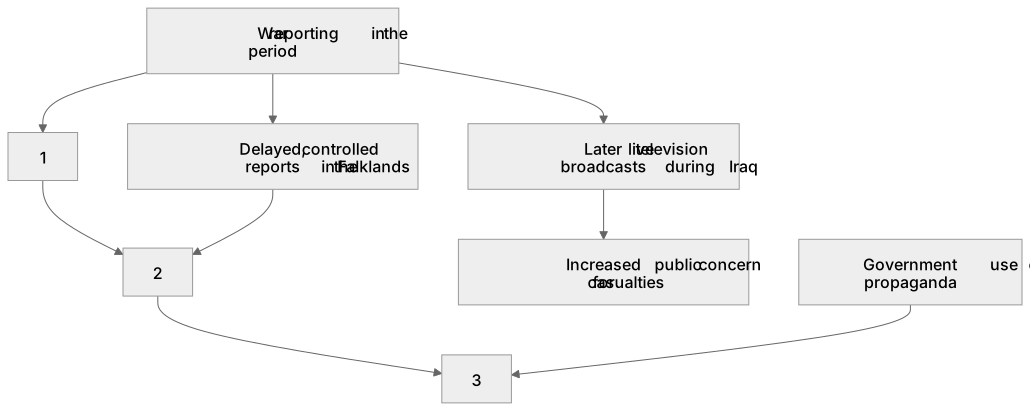
1Box 1
2Box 2
3Box 3
There is more to this lesson
The full lesson goes on to check your understanding and help you earn the marks. Create a free account to carry on, with your progress saved.
A week of Premium from your first lesson · Then the free plan continues · No card, no charge
Test your understanding of Option 12: c1900–present: Warfare and British society in the modern era - 2 The experience of war: The impact of war on civilians, including recruitment and the organisation of a Home Front during the First and Second World Wars and fear of nuclear war post-1945. Attitudes to Conscientious Objectors. The influence of war reporting in the period on attitudes, including increased concern for casualties. Government use of censorship and propaganda in wartime.
Active recall beats re-reading. Take an instant quiz now to test what you’ve learned and lock it into long-term memory.
A week of Premium from your first lesson · Then the free plan continues · No card, no charge