Pearson Edexcel · GCSE · History
Course version: 1HI0 · Version from Sept 2016
Key topic 3: Later developments in the West, c1876–c1895 - 3 Indigenous…
Full specification wording
Option P3: Key topic 3: Later developments in the West, c1876–c1895 - 3 Indigenous peoples of the Plains: the destruction of their ways of life: The hunting and extermination of the buffalo.
The extermination of the buffalo was a deliberate and devastating blow to the Plains Indians' way of life.
Checked against the Pearson Edexcel 1HI0 specification (opens in a new tab) on .
- Point 1 of 3
Study notes
From the checked teaching notes for this specification point.
The idea
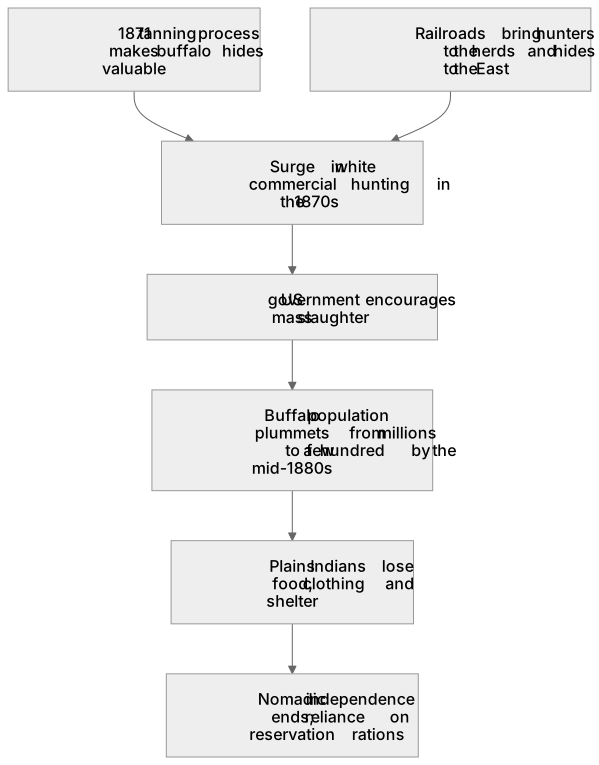
The extermination of the buffalo was a deliberate and devastating blow to the Plains Indians' way of life. While Indigenous peoples hunted buffalo sustainably for survival, the 1870s saw a surge in white commercial hunting. This was driven by a new tanning process in 1871 that made buffalo hides valuable for industrial leather, alongside the expansion of the railroads which brought hunters directly to the herds. The US government actively encouraged this mass slaughter to force Indigenous peoples onto reservations by destroying their primary source of food, clothing, and shelter. Consequently, the buffalo population plummeted from millions to just a few hundred by the mid-1880s, effectively ending the nomadic independence of the Plains tribes.
What earns the marks
- Identify the economic drivers of the buffalo hunt, such as the 1871 tanning process and the demand for leather belts in eastern factories.
- Explain the role of the railroads in facilitating the mass slaughter by transporting hunters to the Plains and hides to the East.
- Analyse the US government's tacit and active support for extermination as a military strategy to subjugate the Plains Indians.
- Evaluate the devastating impact of the buffalo's near-extinction on Indigenous nomadic lifestyles, forcing reliance on government reservation rations.
Common mistakes and how to put them right
Claiming the US army directly shot most of the buffalo.
Put it right: While the army encouraged it, professional white hunters seeking profit killed the vast majority.
Stating that Indigenous peoples hunted the buffalo to extinction.
Put it right: Indigenous hunting was sustainable, whereas white commercial hunting caused the extermination.
Ignoring the economic motives.
Put it right: Include the demand for buffalo hides in eastern industries as a primary catalyst for the slaughter.
Exam tips
- Link the extermination of the buffalo directly to the loss of Indigenous independence and the forced move to reservations.
- Use specific dates, such as the 1871 discovery of a new tanning method, to explain the sudden acceleration in hunting.
- When discussing consequences, mention the psychological and cultural devastation alongside the loss of food and shelter.
Try the lesson
The start of the Option P3: Key topic 3: Later developments in the West, c1876–c1895 - 3 Indigenous peoples of the Plains: the destruction of their ways of life: The hunting and extermination of the buffalo. lesson, made from checked teaching notes for this specification point.
Have a go first
What was the primary reason white hunters killed millions of buffalo on the Plains in the 1870s and 1880s?
Listen
The extermination of the buffalo was a deliberate and devastating blow to the Plains Indians' way of life. While Indigenous peoples hunted buffalo sustainably for survival, the 1870s saw a surge in white commercial hunting. This was driven by a new tanning process in 1871 that made buffalo hides valuable for industrial leather, alongside the expansion of the railroads which brought hunters directly to the herds. The US government actively encouraged this mass slaughter to force Indigenous peoples onto reservations by destroying their primary source of food, clothing, and shelter. Consequently, the buffalo population plummeted from millions to just a few hundred by the mid-1880s, effectively ending the nomadic independence of the Plains tribes. A strong answer earns marks for these points. Identify the economic drivers of the buffalo hunt, such as the 1871 tanning process and the demand for leather belts in eastern factories. Explain the role of the railroads in facilitating the mass slaughter by transporting hunters to the Plains and hides to the East. Analyse the US government's tacit and active support for extermination as a military strategy to subjugate the Plains Indians. Evaluate the devastating impact of the buffalo's near-extinction on Indigenous nomadic lifestyles, forcing reliance on government reservation rations. A common slip: Claiming the US army directly shot most of the buffalo. Instead, while the army encouraged it, professional white hunters seeking profit killed the vast majority. Exam tip: Link the extermination of the buffalo directly to the loss of Indigenous independence and the forced move to reservations.
See it
Label the diagram
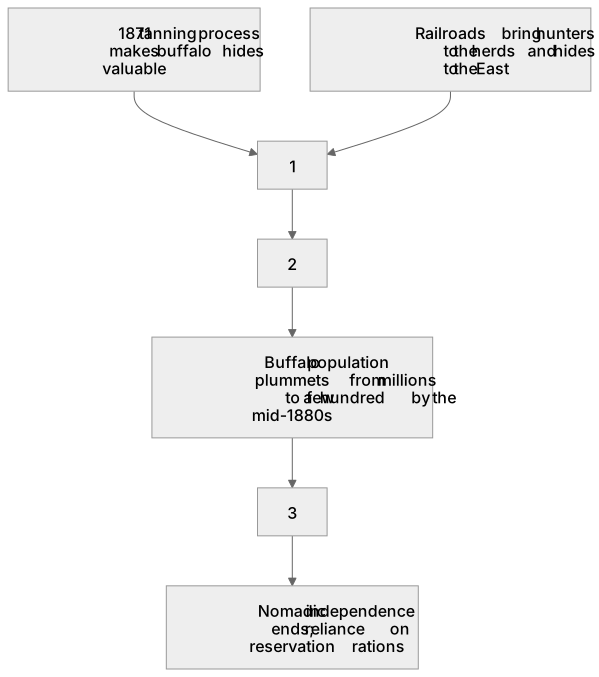
Some boxes have lost their names. Pick the right name for each number.
1Box 1
2Box 2
3Box 3
There is more to this lesson
The full lesson goes on to check your understanding and help you earn the marks. Create a free account to carry on, with your progress saved.
A week of Premium from your first lesson · Then the free plan continues · No card, no charge
Test your understanding of Option P3: Key topic 3: Later developments in the West, c1876–c1895 - 3 Indigenous peoples of the Plains: the destruction of their ways of life: The hunting and extermination of the buffalo.
Active recall beats re-reading. Take an instant quiz now to test what you’ve learned and lock it into long-term memory.
A week of Premium from your first lesson · Then the free plan continues · No card, no charge