Pearson Edexcel · GCSE · History
Course version: 1HI0 · Version from Sept 2016
Key topic 3: The end of the Cold War, 1970–91 - 1 Attempts to reduce…
Full specification wording
Option P4: Key topic 3: The end of the Cold War, 1970–91 - 1 Attempts to reduce superpower tensions in the 1970s: Détente and attempts to reduce tensions in the 1970s.
Détente refers to the period of relaxed tensions between the USA and the USSR during the 1970s.
Checked against the Pearson Edexcel 1HI0 specification (opens in a new tab) on .
- Point 1 of 2
Study notes
From the checked teaching notes for this specification point.
The idea
Détente refers to the period of relaxed tensions between the USA and the USSR during the 1970s. Both superpowers had compelling reasons to seek improved relations: the USA was economically drained by the Vietnam War and facing domestic unrest, while the USSR needed to reduce defence spending to improve living standards and address a technological gap. The Sino-Soviet split also encouraged the USSR to seek better terms with the USA, just as Nixon's visit to China in 1972 pressured Moscow into negotiations. Attempts to reduce tensions included high-level diplomacy, such as the Apollo-Soyuz joint space mission in 1975, which symbolised cooperation. This era was defined by a shift from brinkmanship to negotiation, laying the groundwork for major arms control treaties.
What earns the marks
- Détente was driven by the mutual desire to avoid nuclear war and reduce the crippling economic costs of the arms race.
- The USA sought détente to facilitate an honourable exit from the Vietnam War and address domestic economic issues.
- The USSR pursued détente to access Western technology, improve domestic living standards, and secure its borders following the Sino-Soviet split.
- Nixon's diplomatic visit to China in 1972 played a crucial role in pressuring the Soviet Union to engage in détente with the USA.
- Symbolic acts of cooperation, such as the 1975 Apollo-Soyuz space mission, demonstrated the practical attempts to reduce superpower tensions.
Common mistakes and how to put them right
Assuming détente meant the end of the Cold War.
Put it right: It was merely a temporary relaxation of tensions, and ideological rivalry continued.
Stating that only the USA wanted détente.
Put it right: Both superpowers had strong economic and political motivations for reducing tensions.
Confusing détente with appeasement.
Put it right: détente involved mutual agreements and arms limitations, not one-sided concessions.
Exam tips
- Clearly articulate the distinct motivations for both the USA and the USSR in pursuing détente to show a balanced understanding.
- Use the Apollo-Soyuz mission as a concrete example of how attempts to reduce tensions manifested in practical cooperation.
- Link the concept of détente to the broader context of the Sino-Soviet split and triangular diplomacy.
Try the lesson
The start of the Option P4: Key topic 3: The end of the Cold War, 1970–91 - 1 Attempts to reduce superpower tensions in the 1970s: Détente and attempts to reduce tensions in the 1970s. lesson, made from checked teaching notes for this specification point.
Have a go first
Which of the following best describes the policy of 'détente' during the 1970s?
Listen
Détente refers to the period of relaxed tensions between the USA and the USSR during the 1970s. Both superpowers had compelling reasons to seek improved relations: the USA was economically drained by the Vietnam War and facing domestic unrest, while the USSR needed to reduce defence spending to improve living standards and address a technological gap. The Sino-Soviet split also encouraged the USSR to seek better terms with the USA, just as Nixon's visit to China in 1972 pressured Moscow into negotiations. Attempts to reduce tensions included high-level diplomacy, such as the Apollo-Soyuz joint space mission in 1975, which symbolised cooperation. This era was defined by a shift from brinkmanship to negotiation, laying the groundwork for major arms control treaties. A strong answer earns marks for these points. Détente was driven by the mutual desire to avoid nuclear war and reduce the crippling economic costs of the arms race. The USA sought détente to facilitate an honourable exit from the Vietnam War and address domestic economic issues. The USSR pursued détente to access Western technology, improve domestic living standards, and secure its borders following the Sino-Soviet split. Nixon's diplomatic visit to China in 1972 played a crucial role in pressuring the Soviet Union to engage in détente with the USA. Exam tip: Clearly articulate the distinct motivations for both the USA and the USSR in pursuing détente to show a balanced understanding.
See it
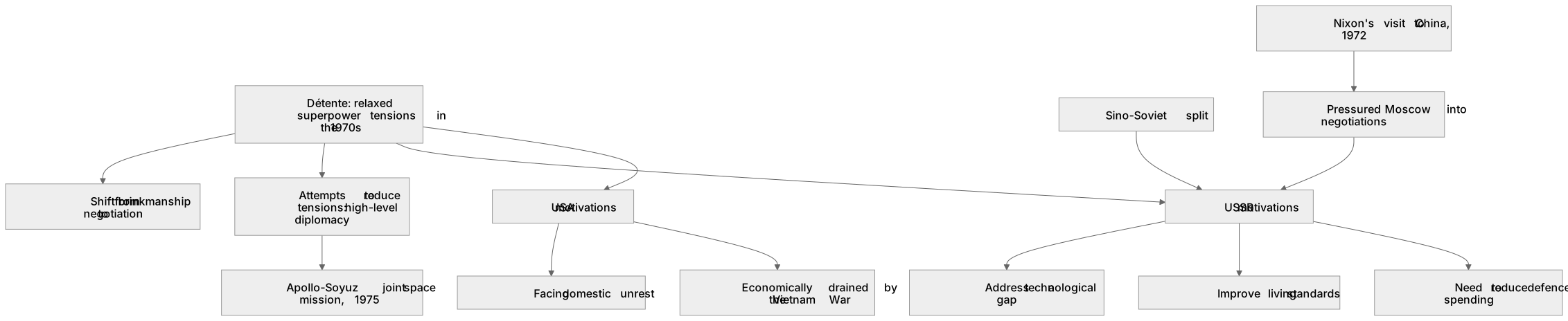
Label the diagram
Some boxes have lost their names. Pick the right name for each number.
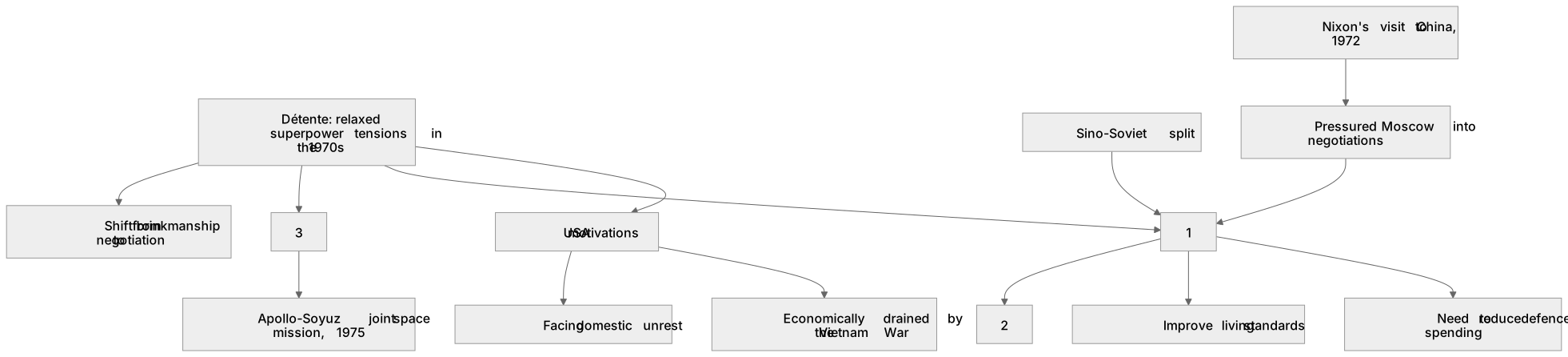
1Box 1
2Box 2
3Box 3
There is more to this lesson
The full lesson goes on to check your understanding and help you earn the marks. Create a free account to carry on, with your progress saved.
A week of Premium from your first lesson · Then the free plan continues · No card, no charge
Test your understanding of Option P4: Key topic 3: The end of the Cold War, 1970–91 - 1 Attempts to reduce superpower tensions in the 1970s: Détente and attempts to reduce tensions in the 1970s.
Active recall beats re-reading. Take an instant quiz now to test what you’ve learned and lock it into long-term memory.
A week of Premium from your first lesson · Then the free plan continues · No card, no charge