Pearson Edexcel · A-Level · Law
Course version: Pearson-A-Level-Law · Version from Mar 2026
The individual
This topic covers the essential legal rights and protections you have as an individual, from protecting your reputation to your privacy and property. It's a heavily tested area that requires precise application of specific Acts, particularly the Defamation Act 2013 and Occupiers' Liability Acts.
- 8 min read
- 3 worked examples
- 5 practice questions
- 6 key terms
Check what you remember
Read the wording for your board, then hide it and explain Libel in your own words. Rough notes are fine. This is a self-check, with no mark or grade.
Reference: Pearson Edexcel
Defamation in a permanent form (e.g., written, broadcast) which is actionable per se without proof of special damage.
Study Notes
Overview
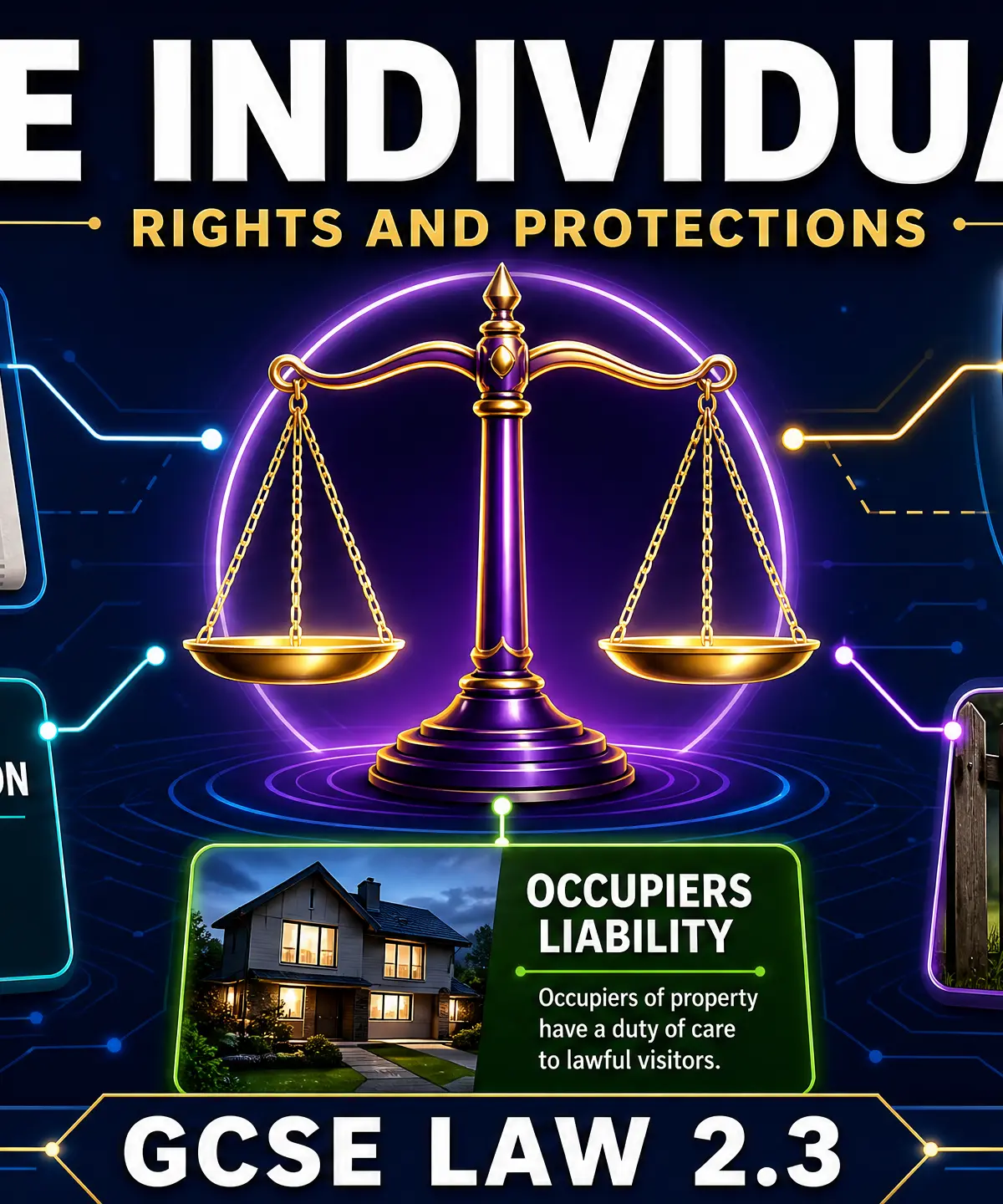
Topic 2.3, 'The Individual', explores the delicate balance the law strikes between protecting personal rights and allowing societal freedoms. You will examine how the law protects your reputation through defamation, your privacy through data protection and human rights, and your physical safety on others' property through occupiers' liability.
This is a foundational area of civil law. It connects strongly to constitutional principles, particularly when exploring the tension between the Human Rights Act 1998 and parliamentary sovereignty. In the exam, you will typically face scenario-based questions requiring you to apply specific statutory rules (like the Defamation Act 2013 or Occupiers' Liability Act 1957) to factual situations, alongside evaluation questions asking you to assess whether the law strikes the right balance.
Podcast Revision
Listen to our comprehensive 12-minute revision podcast covering all the core concepts, common mistakes, and a quick-fire recall quiz:
Key Concepts
Concept 1: Defamation
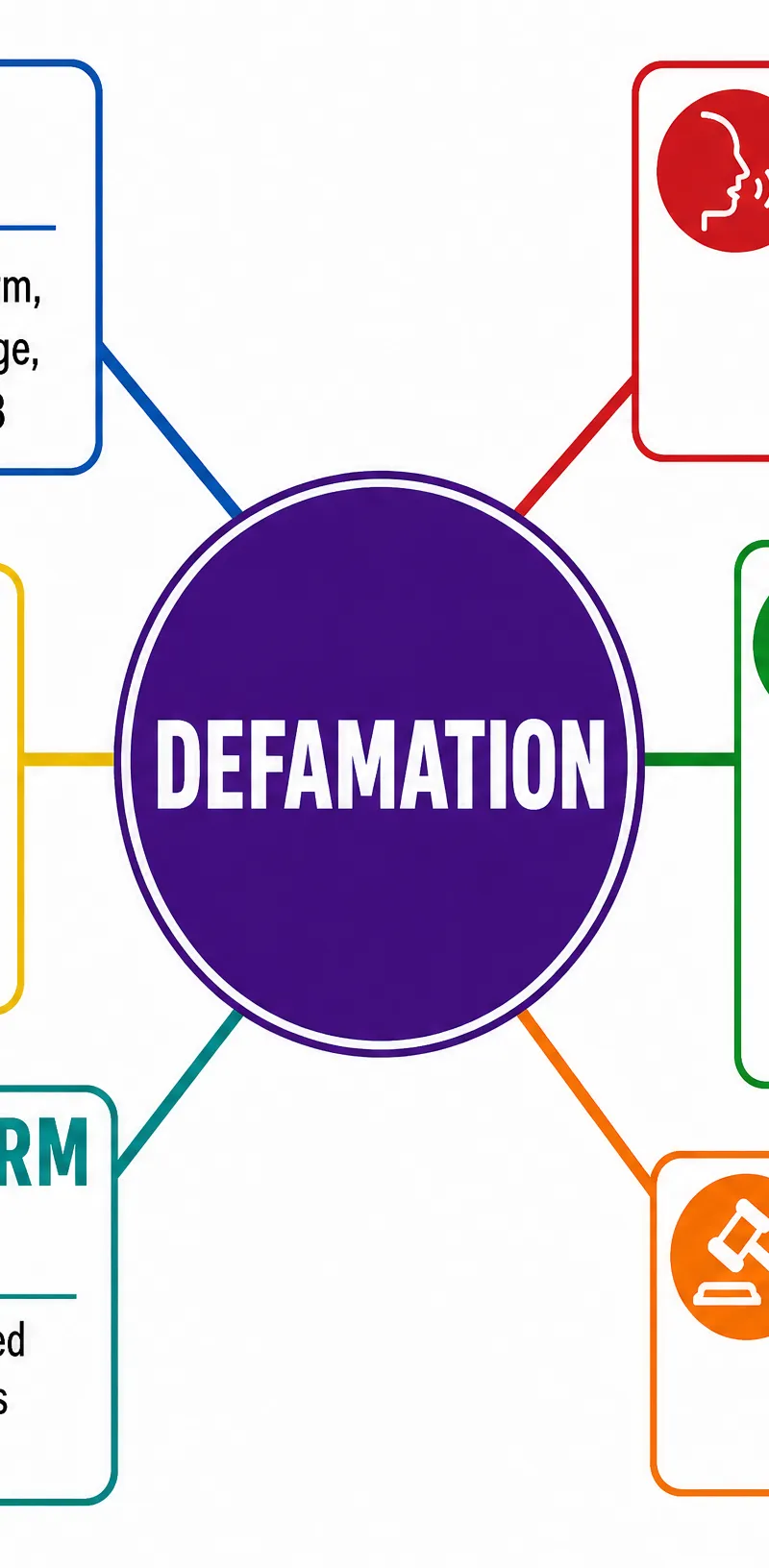
Defamation occurs when a false statement is published that damages a person's reputation. The law is governed by the Defamation Act 2013, which sought to balance the protection of reputation with freedom of expression.
The Two Forms of Defamation
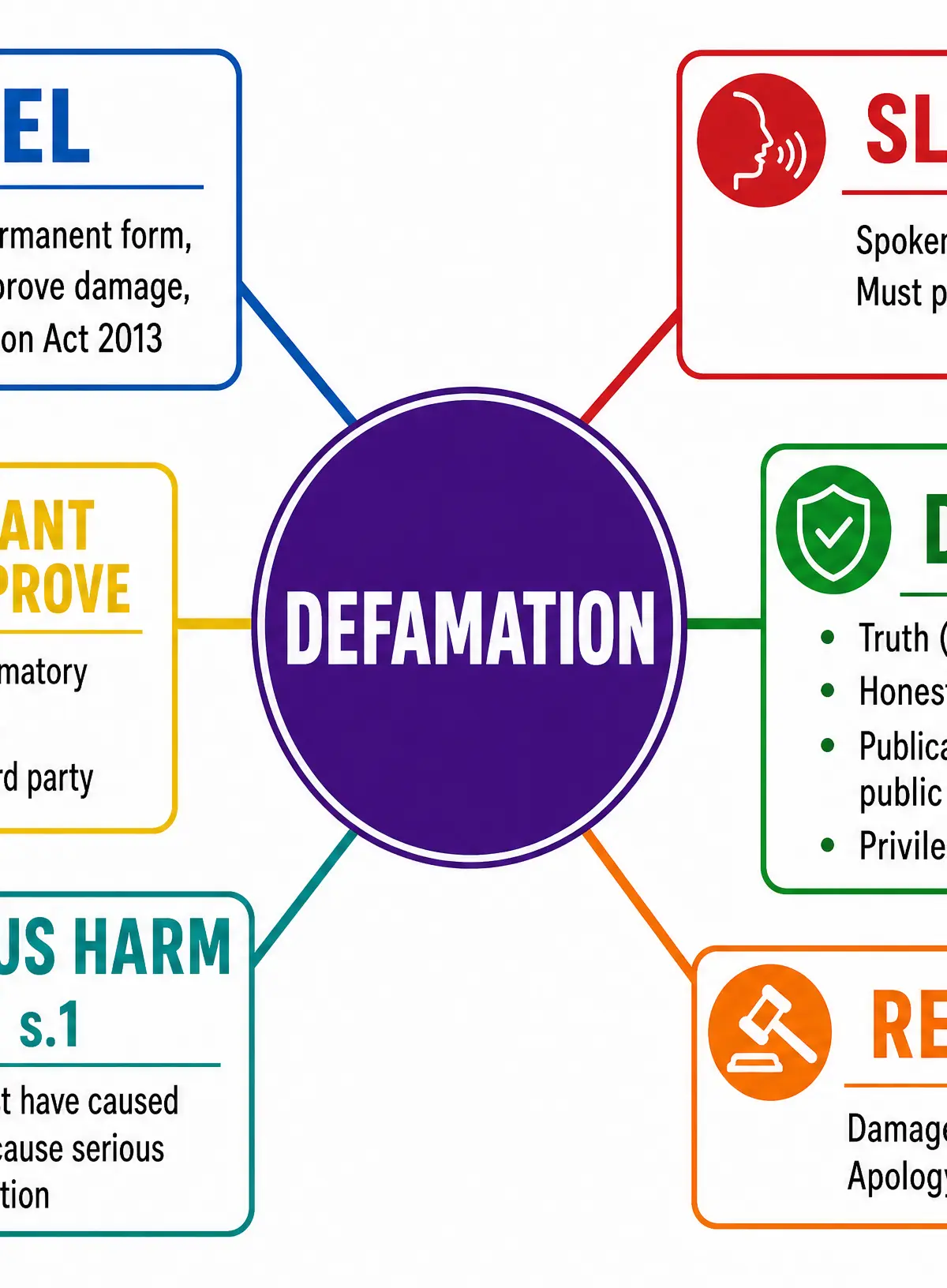
- Libel: Defamation in a permanent form (e.g., written articles, social media posts, broadcasts). Libel is actionable per se, meaning the claimant does not need to prove actual financial loss; the law presumes damage occurred.
- Slander: Defamation in a transient form (e.g., spoken words, gestures). For slander, the claimant generally must prove 'special damage' (actual financial or material loss).
**The Serious Harm Test (s.1 Defamation Act 2013)**To stop trivial claims, section 1 requires that a statement must have caused or be likely to cause serious harm to the reputation of the claimant. If the claimant is a business, it must have caused or be likely to cause serious financial loss.
What the Claimant Must Prove
- The statement was defamatory (lowered them in the estimation of right-thinking members of society).
- The statement referred to the claimant.
- The statement was published to a third party.
Defences
- Truth (s.2): A complete defence if the statement is substantially true.
- Honest Opinion (s.3): Applies if it was an opinion, based on existing facts, that an honest person could hold.
- Public Interest (s.4): Protects publishers (often journalists) who reasonably believed publishing was in the public interest.
- Privilege (s.15): Absolute privilege covers statements in Parliament/court; qualified privilege covers situations where there is a duty to communicate.
Example: A newspaper publishes an article falsely claiming a local headteacher is stealing school funds. This is in permanent form (libel). The headteacher does not need to prove special damage. Unless the newspaper can prove the statement was true (s.2) or in the public interest (s.4), the headteacher will succeed in a claim for damages and an injunction.
Concept 2: Human Rights
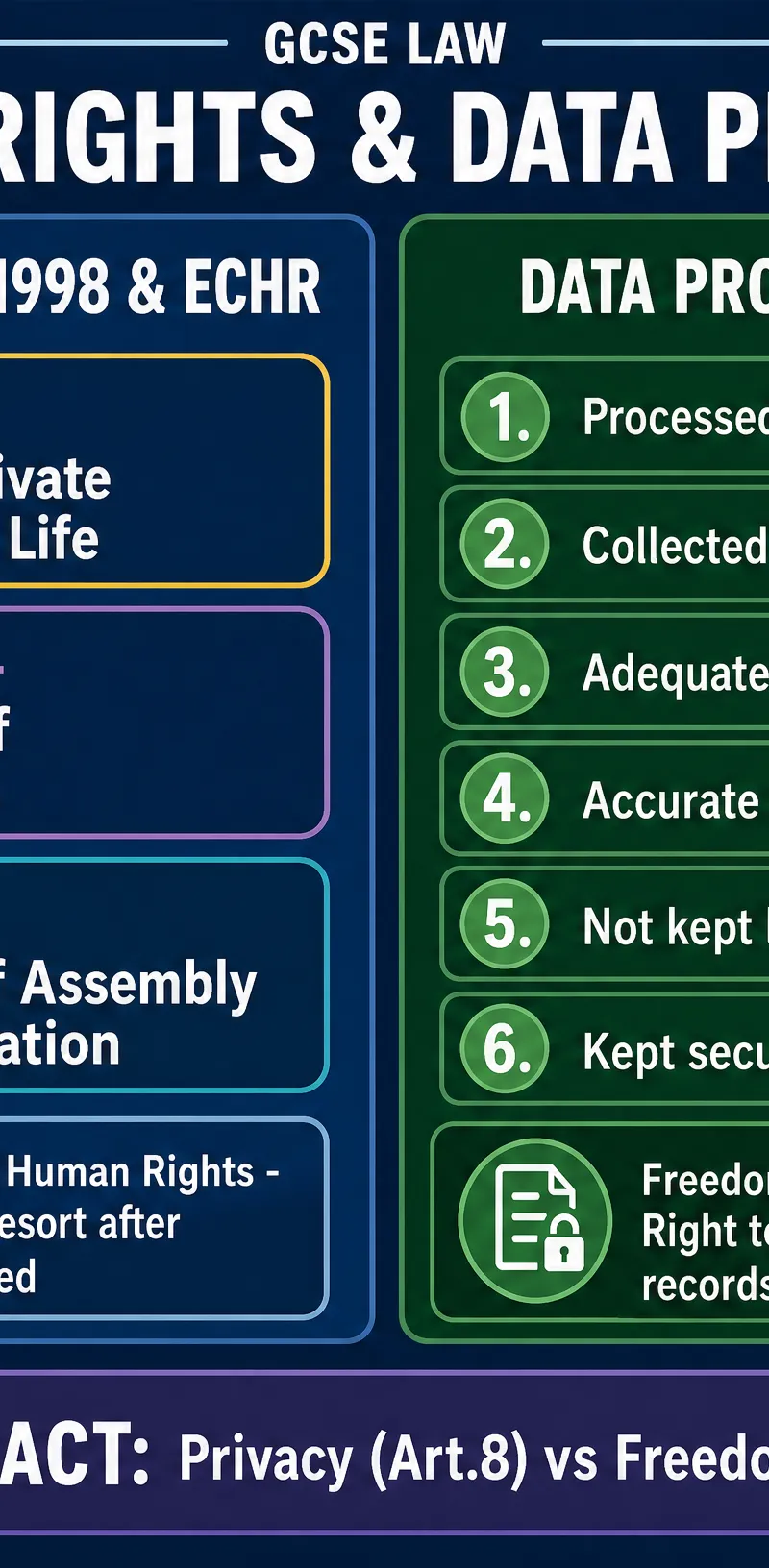
The Human Rights Act 1998 incorporated the European Convention on Human Rights (ECHR) into UK law, allowing citizens to enforce their rights in domestic courts rather than going to Strasbourg.
Key Articles
- Article 8: Right to respect for private and family life, home, and correspondence. This is a qualified right, meaning the state can interfere if lawful, necessary, and proportionate (e.g., police surveillance for national security).
- Article 10: Freedom of expression. Also a qualified right.
- Article 11: Freedom of assembly and association (right to protest and join trade unions).
The Balancing ActExaminers frequently test the tension between Article 8 (privacy) and Article 10 (freedom of expression). When a celebrity seeks an injunction to stop a newspaper publishing private photos, the court must balance the celebrity's Article 8 rights against the press's Article 10 rights.
**The European Court of Human Rights (ECtHR)**The ECtHR sits in Strasbourg. Crucial point: It is part of the Council of Europe, NOT the European Union. Individuals can only apply to the ECtHR after exhausting all UK domestic courts. If the ECtHR finds a violation, it can award compensation and declare the UK in breach, which places immense political pressure on the UK Government to change its laws.
Concept 3: Data Protection and Privacy
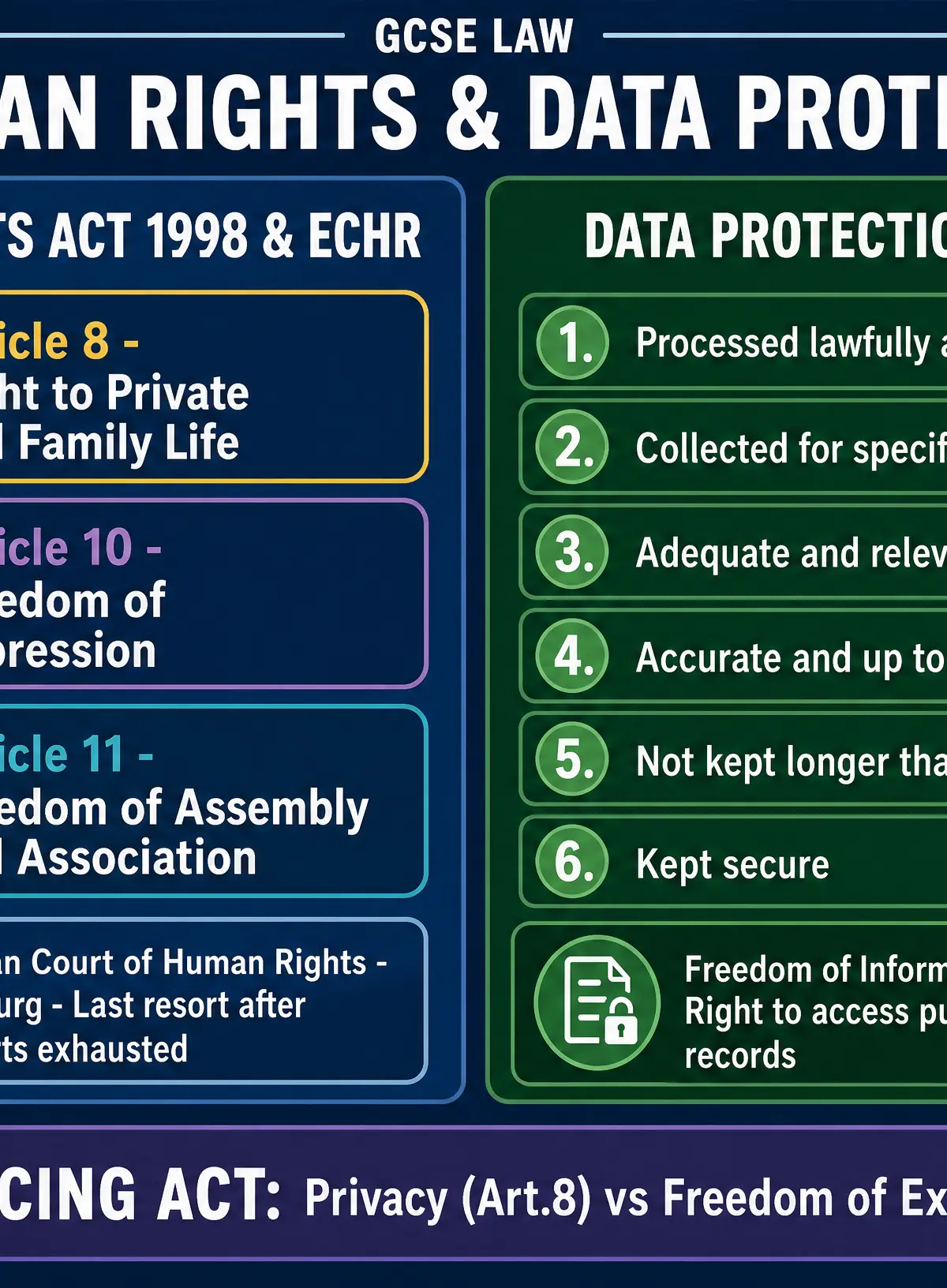
The Data Protection Act 2018 (incorporating UK GDPR) regulates how personal data is processed.
Key PrinciplesData must be:
- Processed lawfully, fairly, and transparently.
- Collected for specified, explicit purposes.
- Adequate, relevant, and limited to what is necessary.
- Accurate and kept up to date.
- Kept no longer than necessary.
- Processed securely.
Specific Sections to Know
- Sections 1-7: Establish the general framework and definitions (e.g., data controller, data subject).
- Section 43: Details the role of the Information Commissioner's Office (ICO), the regulatory body.
- Section 45: Covers processing for law enforcement purposes.
- Section 170: Creates a criminal offence of knowingly or recklessly obtaining, disclosing, or retaining personal data without the controller's consent.
Freedom of Information Act 2000While data protection restricts information sharing, the FOIA promotes transparency. It gives the public the right to access recorded information held by public authorities (e.g., schools, hospitals, government departments). Authorities must respond within 20 working days, subject to exemptions (like national security or third-party personal data).
Concept 4: Occupiers' Liability
Occupiers' liability deals with the duty owed by a person in control of land to those who enter it. There are two distinct Acts. You must always identify the status of the entrant first.
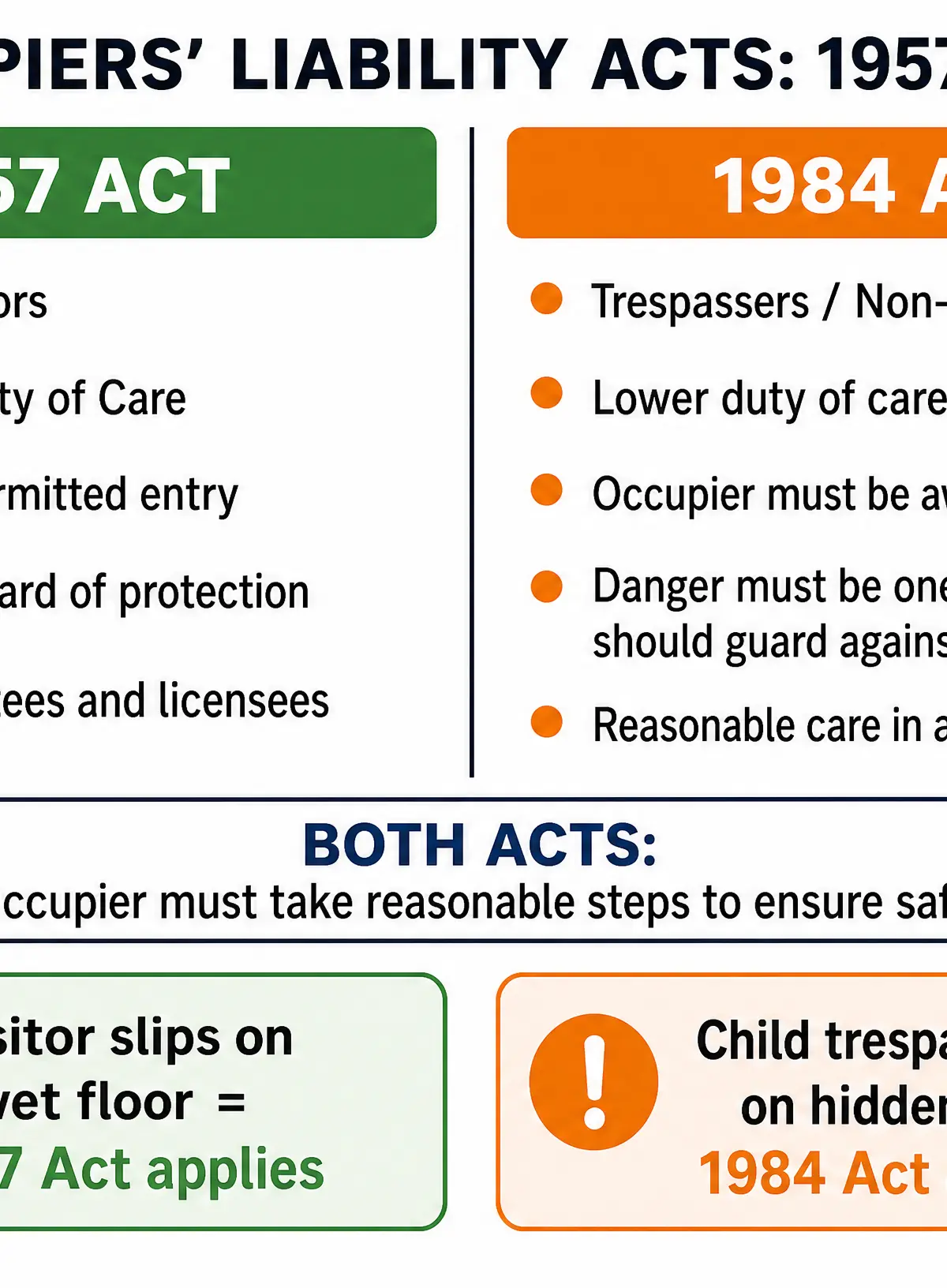
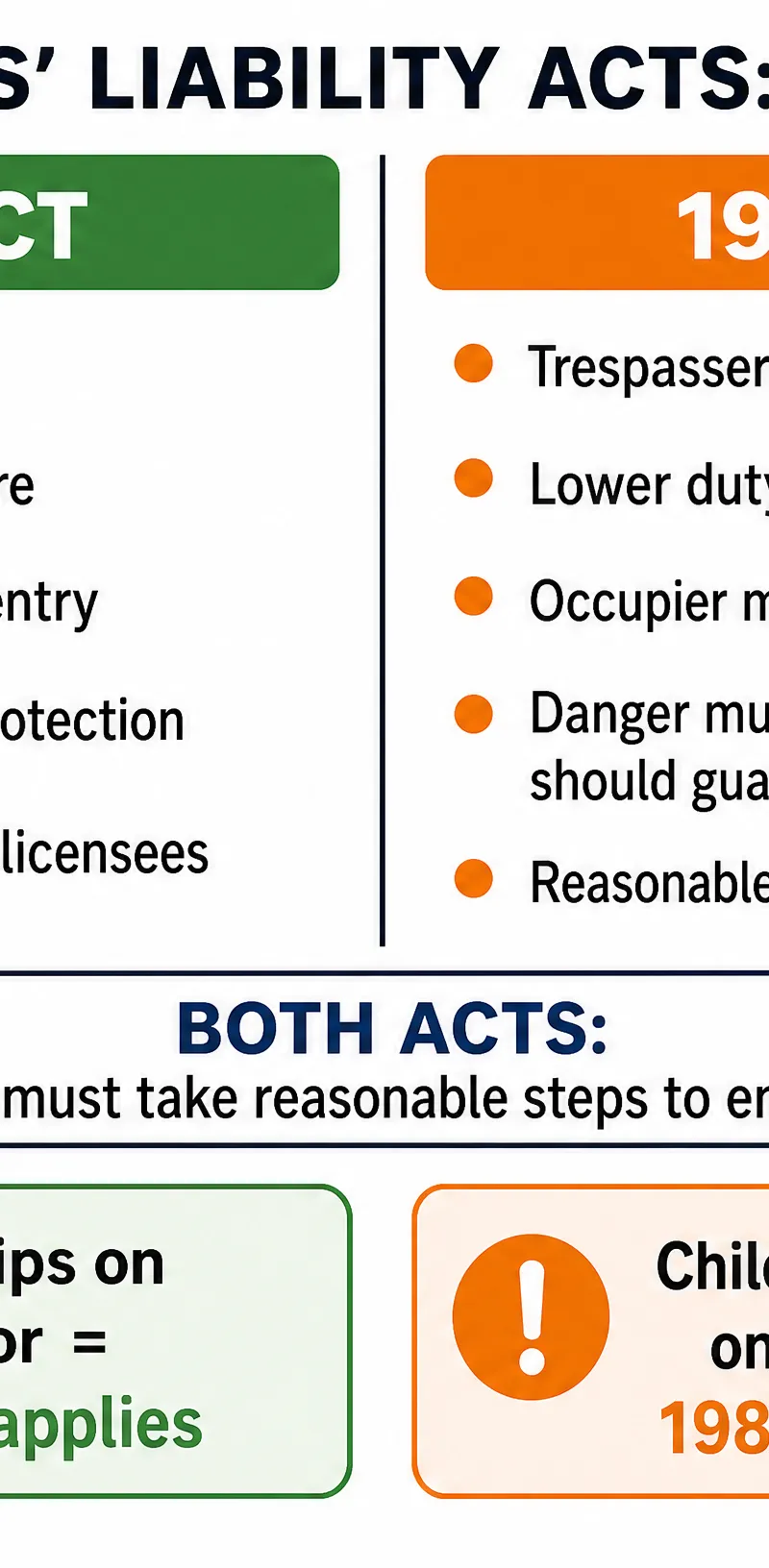
**Occupiers' Liability Act 1957 (Lawful Visitors)**Applies to people invited or permitted to be on the premises (e.g., a customer in a shop, a guest in a house). The occupier owes a common duty of care: to take such care as is reasonable in all the circumstances to see that the visitor will be reasonably safe using the premises for the purposes for which they are invited.
Note: The standard is higher for children (occupiers must expect children to be less careful).
**Occupiers' Liability Act 1984 (Trespassers)**Applies to non-visitors/trespassers. The duty is much lower and only arises if three conditions are met:
- The occupier is aware of the danger (or has reasonable grounds to believe it exists).
- The occupier knows (or has reasonable grounds to believe) the trespasser is in the vicinity of the danger.
- The risk is one against which, in all the circumstances, the occupier may reasonably be expected to offer some protection.
Example: If a customer slips on a wet floor in a supermarket, the 1957 Act applies (they are a lawful visitor). If a burglar breaks into a warehouse at night and falls through a rotten floorboard, the 1984 Act applies, and the occupier will only be liable if the three specific conditions are met.
Concept 5: Trespass to Land
Trespass to land is a tort occurring when a person unlawfully interferes with another's possession of land. Crucially, it is actionable per se — the claimant does not need to prove they suffered any actual damage.
Forms of Trespass
- Unlawful entry: Walking onto someone's land without permission.
- Intentional/direct interference: Throwing rubbish over a fence onto a neighbour's lawn.
- Continuing trespass: Building a wall that encroaches onto a neighbour's property and leaving it there.
RemediesThe primary remedies are damages (financial compensation) and an injunction (a court order to stop the trespass or remove the encroaching object).
Visual Resources
3 diagrams and illustrations
Interactive Diagrams
2 interactive diagrams to visualise key concepts
Conceptual Flow Outline
Decision tree for determining which Occupiers' Liability Act applies.
Conceptual Flow Outline
The tension between Article 8 and Article 10 of the ECHR.
Worked Examples
3 worked examples — open one to explore the question and available guidance.
Practice Questions
Try the question, then reveal an answer plan or example response
State the difference between libel and slander. (2 marks)
Hint: Think about how long the statement lasts.
Explain the 'Serious Harm Test' under the Defamation Act 2013. (3 marks)
Hint: Look at section 1 of the Act. Why was it introduced?
A journalist discovers that a local politician has been secretly taking bribes. The journalist publishes an article detailing the allegations. The politician sues for defamation. Explain the most likely defence the journalist will use. (4 marks)
Hint: Which defence protects the media when reporting on important issues?
Evaluate the impact of successful appeals to the European Court of Human Rights on the UK Government. (6 marks)
Hint: Can the ECtHR force the UK to change its laws immediately? What kind of pressure does it apply?
Mark walks across his neighbour's garden every day as a shortcut to the bus stop, despite the neighbour asking him to stop. Explain the legal action the neighbour could take. (4 marks)
Hint: What tort occurs when you enter land without permission? Do you need to prove damage?
Exam technique
How to turn what you know into marks
How to approach the question
Always use IRAC for scenario questions: Issue (identify the legal topic), Rule (state the Act and section), Application (link the rule to the specific names and facts in the scenario), Conclusion (state the likely outcome).
How to structure your answer
For 4-6 mark application questions, use 1 paragraph per logical step. Don't write one massive block of text. Use the names of the people in the scenario.
Timing
Approximately 1 minute per mark, so a 6-mark question should take about 6-7 minutes
Common pitfalls
- Applying the Occupiers' Liability Act 1957 to a trespasser scenario. Always check permission first.
- Stating that the European Court of Human Rights is an EU institution. It is part of the Council of Europe.
- Forgetting to mention the 'Serious Harm Test' under s.1 when answering a defamation question.
What the command words want
- Compare
- Identify similarities AND differences - use comparative language (e.g., 'Whereas libel is permanent, slander is transient').
- Explain
- Say HOW or WHY - use 'because' to link cause and effect. Reference specific sections of Acts.
- Describe
- Say what happens or what something is like - use correct legal terminology (e.g., 'actionable per se').
- Evaluate
- Consider both sides, use evidence (case law or statute), and make a reasoned judgement on the balance of the law.
- Calculate
- Not typically used in Law.
- State/Give
- Brief factual answer - 1-2 words or a short phrase. No explanation needed.
Watch or listen (optional)
Test your understanding of The individual
Active recall beats re-reading. Take an instant quiz now to test what you’ve learned and lock it into long-term memory.
7 days Premium · Then the free plan continues · No card, no charge