WJEC · A-Level · Physical Education
Musculo-skeletal System Analysis
This guide provides a comprehensive analysis of the musculo-skeletal system for WJEC A-Level PE. It covers the essential anatomical knowledge, biomechanical principles, and exam techniques required to achieve top marks.
- 8 min read
- 3 worked examples
- 4 practice questions
- 6 key terms
Study Notes
Overview
The musculo-skeletal system is the foundation of all human movement. For WJEC A-Level PE, a deep understanding of this topic is crucial for success in both the theoretical and practical components of the course. This guide will deconstruct the complexities of the musculo-skeletal system, providing you with the knowledge and skills to analyse sporting movements with the precision of a senior examiner.
Key Knowledge & Theory
Core Concepts
The Skeleton: The human skeleton is a framework of 206 bones that provides structure, protection, and a system of levers for movement. For your exam, you must be able to identify the key articulating bones at major joints, such as the femur and tibia at the knee, or the humerus and scapula at the shoulder. Using precise anatomical language is non-negotiable for earning marks.
Joints: Joints are the points where two or more bones meet. The most important type for movement analysis is the synovial joint, which is characterized by a joint capsule, synovial membrane, and synovial fluid. You need to be familiar with the different types of synovial joints and the movements they permit:
- Ball and Socket (e.g., hip, shoulder): Allows for movement in all three planes (flexion/extension, abduction/adduction, rotation).
- Hinge (e.g., knee, elbow): Primarily allows for movement in one plane (flexion/extension).
- Pivot (e.g., radioulnar joint): Allows for rotation.
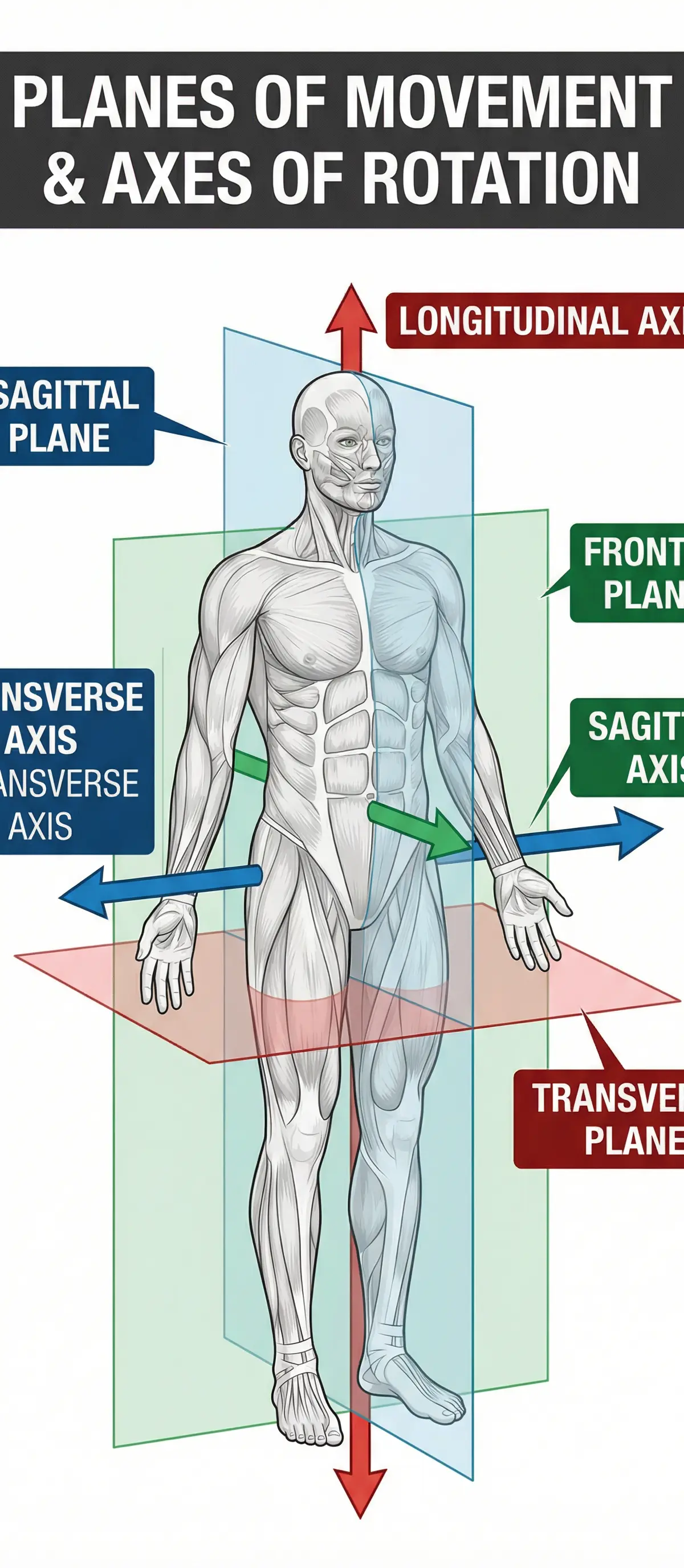
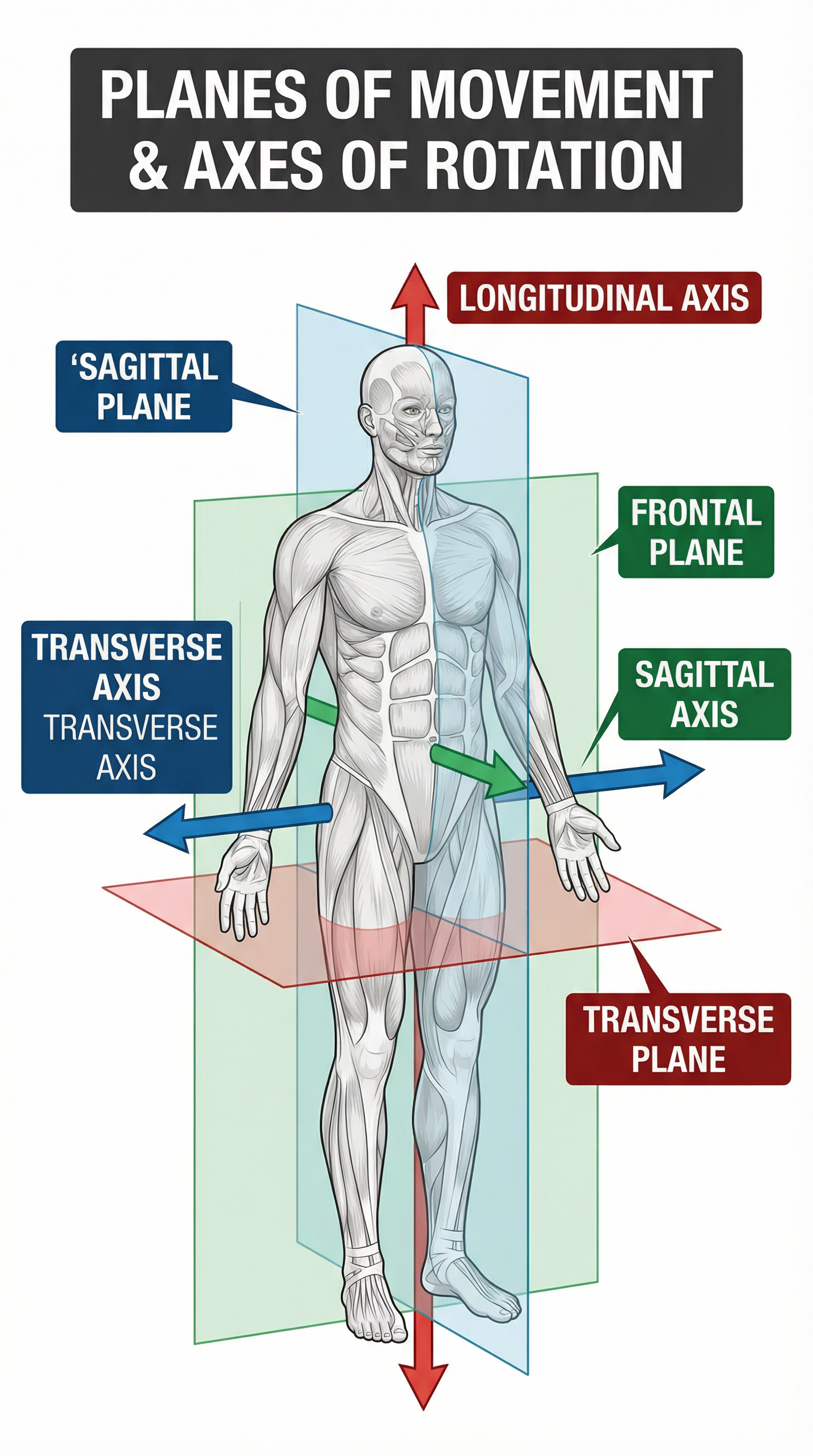
Planes and Axes of Movement: All sporting movements can be analysed in terms of planes and axes. It is essential that you learn the correct pairings:
- Sagittal Plane & Transverse Axis: For forwards and backwards movements like sprinting or a bicep curl.
- Frontal Plane & Sagittal Axis: For sideways movements like a cartwheel or a star jump.
- Transverse Plane & Longitudinal Axis: For rotational movements like a golf swing or a discus throw.
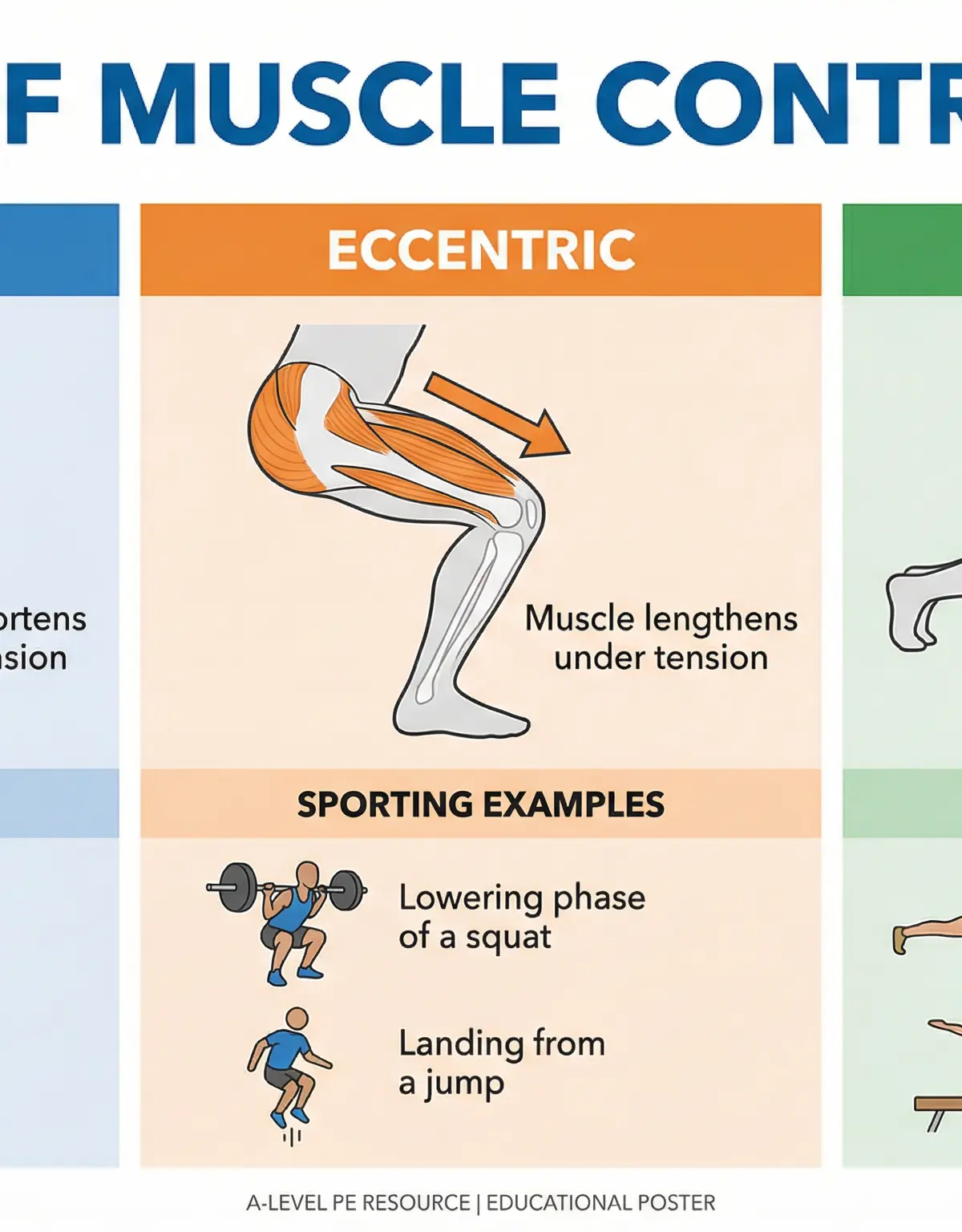
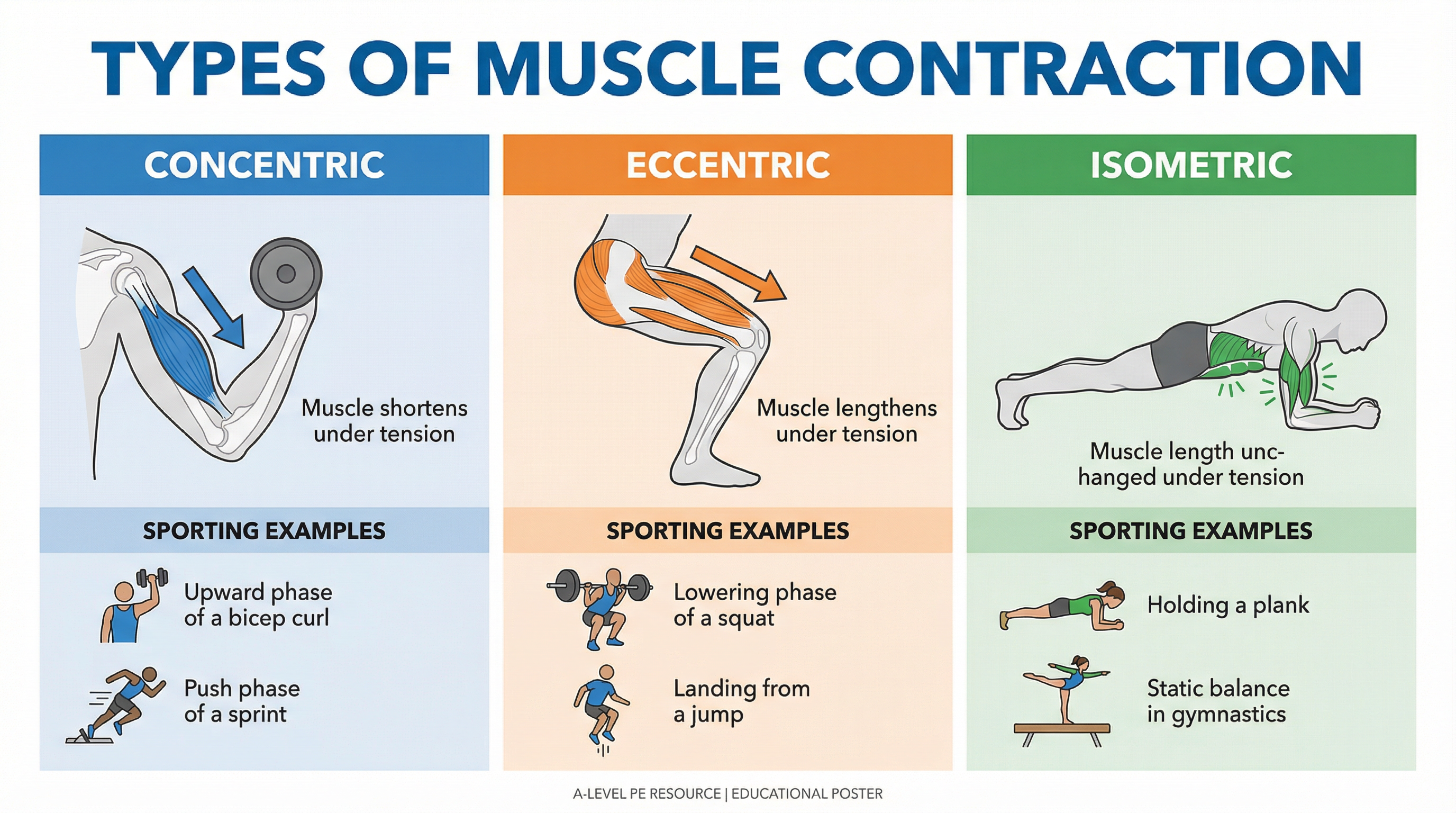
Muscles and Muscle Contractions: Muscles are the engines of the body, creating movement by pulling on bones. You need to know the major muscle groups, their locations, and their roles as agonists (prime movers), antagonists (opposing muscles), synergists (assisting muscles), and fixators (stabilisers). A crucial area for earning marks is understanding the different types of muscle contraction:
- Concentric: The muscle shortens under tension (e.g., the upward phase of a bicep curl).
- Eccentric: The muscle lengthens under tension (e.g., the downward phase of a squat).
- Isometric: The muscle develops tension but there is no change in length (e.g., holding a plank).
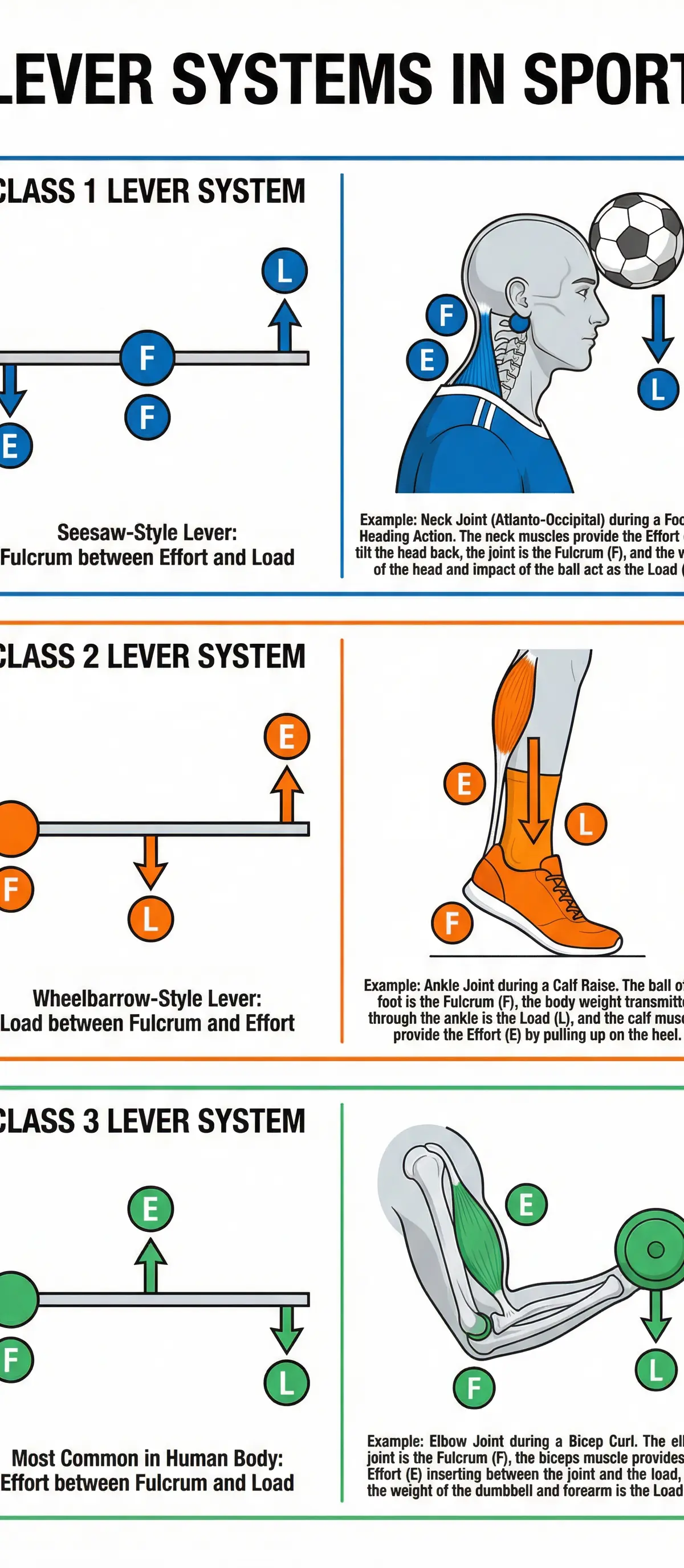
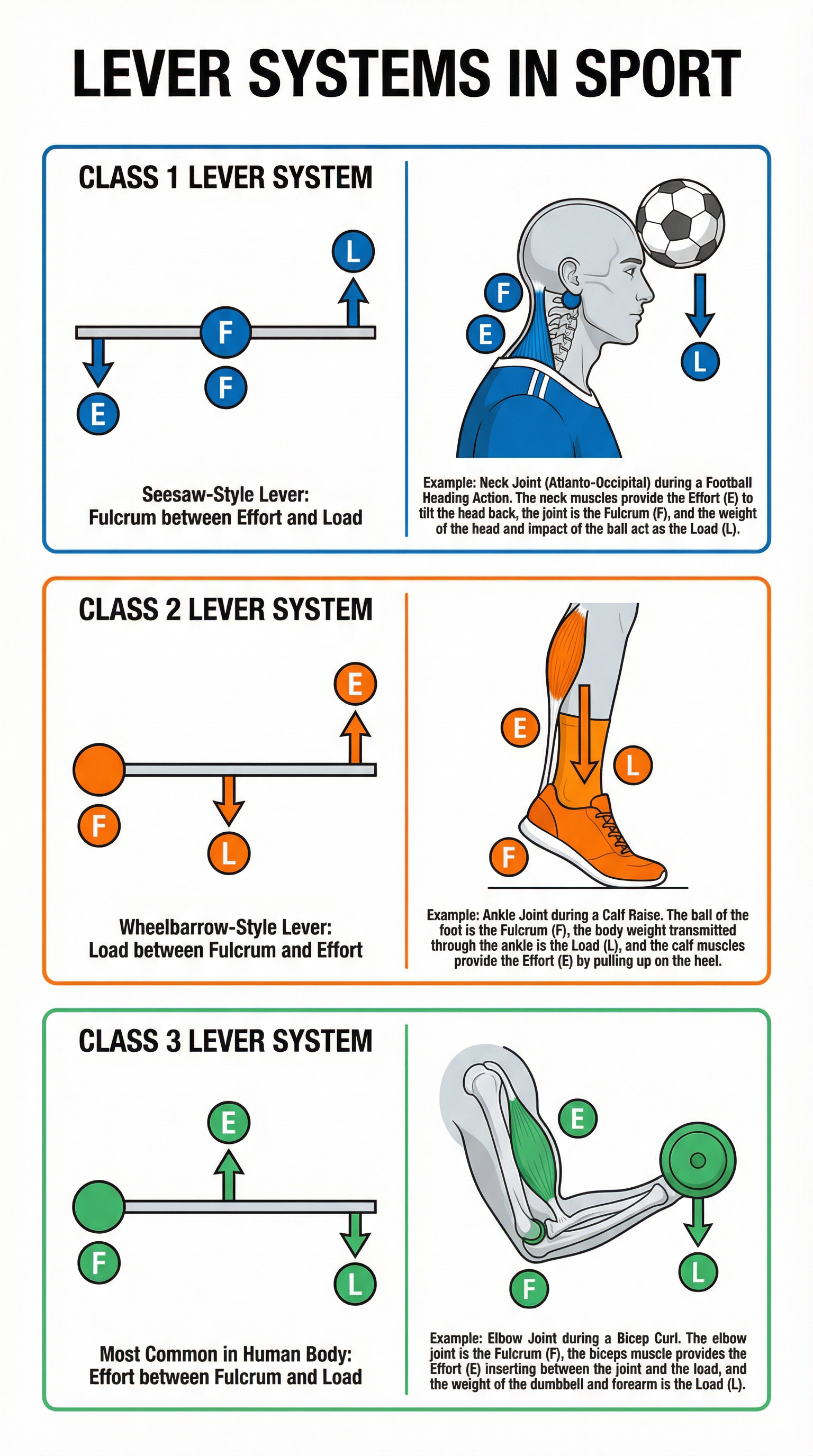
Lever Systems: The musculo-skeletal system creates a series of levers, with bones acting as the lever arms, joints as the fulcrums, and muscles providing the effort. There are three classes of lever, each with different mechanical advantages and disadvantages. Understanding these is key to analysing the efficiency of sporting movements.
Key Practitioners/Artists/Composers
| Name | Period/Style | Key Works | Relevance |
|---|---|---|---|
| Dr. James Andrews | Contemporary | Leading orthopedic surgeon for elite athletes | His work exemplifies the practical application of musculo-skeletal knowledge in injury prevention and rehabilitation. |
| Nikolai Bernstein | Early 20th Century | Biomechanist and neurophysiologist | His research on motor control and the degrees of freedom problem provides a theoretical basis for understanding how the nervous system coordinates complex movements. |
| Usain Bolt | Contemporary | World-record sprinter | Analysis of his running technique provides a perfect case study for the application of biomechanical principles, including lever systems, muscle fibre recruitment, and planes of movement. |
Technical Vocabulary
- Articulating bones: The bones that form a joint.
- Agonist/Antagonist: The prime mover and opposing muscle in a movement.
- Concentric/Eccentric/Isometric: The three types of muscle contraction.
- Planes of Movement (Sagittal, Frontal, Transverse): The three dimensions in which movement occurs.
- Axes of Rotation (Transverse, Sagittal, Longitudinal): The lines around which movement occurs.
- Lever System (Class 1, 2, 3): The mechanical arrangement of bones, joints, and muscles.
- Mechanical Advantage/Disadvantage: The efficiency of a lever system.
Practical Skills
Techniques & Processes
Movement Analysis: The core practical skill in this topic is the ability to deconstruct a sporting movement. A systematic approach is essential. For any given movement, you should be able to:
- Identify the joint(s) involved.
- Name the movement(s) occurring at each joint (e.g., flexion, extension, abduction).
- Identify the agonist muscle(s) responsible for the movement.
- Determine the type of muscle contraction (concentric, eccentric, or isometric).
- State the plane and axis in which the movement is occurring.
Practical Application: You should be able to apply this analytical process to a wide range of sporting examples, from a simple bicep curl to a complex gymnastic routine. The more you practice, the more fluent you will become.
Materials & Equipment
- Video analysis software: Tools like Kinovea or Hudl can be invaluable for slowing down movements and analysing them in detail.
- Goniometer: A tool for measuring joint angles, which can be useful for quantifying range of motion.
- Resistance bands and weights: Practical tools for exploring the different types of muscle contraction.
Portfolio/Coursework Guidance
Assessment Criteria
For your practical assessment, examiners will be looking for evidence of your ability to apply theoretical knowledge to your own performance. This includes:
- Accurate analysis of your own technique: Can you identify the strengths and weaknesses in your movement patterns?
- Application of corrective measures: Can you use your understanding of the musculo-skeletal system to devise and implement strategies for improvement?
- Use of specialist terminology: Do you use the correct anatomical and biomechanical language to describe your performance?
Building a Strong Portfolio
- Record your performances: Use video to capture your technique in a range of different skills.
- Annotate your videos: Use your movement analysis skills to deconstruct your own performance, identifying key joint actions, muscle contractions, and planes of movement.
- Set clear goals for improvement: Based on your analysis, what are the key areas you need to work on?
- Document your training: Keep a detailed record of the drills and exercises you use to improve your technique.
- Evaluate your progress: Regularly review your performance to track your improvement over time.
Exam Component
Written Exam Knowledge
The written exam will test your theoretical knowledge of the musculo-skeletal system. You can expect questions on:
- Anatomical structures: Identifying bones, joints, and muscles.
- Movement analysis: Deconstructing sporting movements in detail.
- Biomechanical principles: Applying your knowledge of planes, axes, and lever systems.
- Injury prevention and rehabilitation: Understanding how the musculo-skeletal system is affected by injury.
Practical Exam Preparation
For the practical exam, you will be assessed on your ability to perform a range of sporting skills. To prepare effectively, you should:
- Master the fundamental techniques: Ensure you have a solid foundation in the core skills of your chosen sports.
- Practice under pressure: Simulate exam conditions to get used to performing in a high-stakes environment.
- Develop your tactical awareness: Understand how to apply your skills in a competitive situation.

Visual Resources
3 diagrams and illustrations
Interactive Diagrams
1 interactive diagram to visualise key concepts
Conceptual Flow Outline
A flowchart for analysing sporting movements.
Worked Examples
3 worked examples — open one to explore the question and available guidance.
Practice Questions
Test your understanding — click to reveal model answers
Identify the plane and axis of rotation for a discus throw. (2 marks)
Hint: Think about the rotational nature of the movement.
Describe the role of the deltoid muscle during a lateral raise. (3 marks)
Hint: Think about the movement of the arm and the type of contraction involved.
Analyse the movement at the elbow joint during the downward phase of a press-up. (4 marks)
Hint: Think about the role of gravity and the muscle that is controlling the movement.
Evaluate the effectiveness of the human body's lever systems for generating powerful movements in sport. (8 marks)
Hint: Consider the trade-off between mechanical advantage and speed/range of movement.