AQA · A-Level · Physics
Course version: 7408 · Version from Sept 2016
Appreciation of balance between risk and benefits in the development of…
Full specification wording
Safety aspects (A-level only): Appreciation of balance between risk and benefits in the development of nuclear power.
Nuclear power supplies large-scale low-carbon electricity, but its development involves hazards such as radiation exposure, radioactive waste and accident risk.
Checked against the AQA 7408 specification (opens in a new tab) on .
- Point 3 of 3
Study notes
From the checked teaching notes for this specification point.
The idea
Nuclear power supplies large-scale low-carbon electricity, but its development involves hazards such as radiation exposure, radioactive waste and accident risk. A balanced judgement weighs these risks against benefits including reliable baseload output, reduced greenhouse-gas emissions and fuel security. For example, compare the routine radiation dose from a nuclear plant with the health effects of air pollution from coal, and consider how waste is contained and monitored. The skill is to reason with evidence, not to declare nuclear power simply good or bad. You should identify the groups affected, the timescales involved and the uncertainties in each estimate, then reach a supported conclusion.
What earns the marks
- Identifies specific benefits of nuclear power, such as high energy density, low carbon dioxide emissions during operation and reliable baseload supply.
- Identifies specific risks, such as ionising radiation exposure, long-lived radioactive waste and the consequences of accidents.
- Compares risks and benefits using evidence, for example radiation dose data or greenhouse-gas emissions per unit of electricity generated.
- Considers factors such as timescale, affected populations, waste storage and decommissioning costs.
- Reaches a justified overall judgement that acknowledges uncertainty and the values behind the decision.
Common mistakes and how to put them right
Listing benefits and risks without comparing them.
Put it right: Explicitly weighing each risk against a named benefit.
Treating all radiation as equally dangerous regardless of dose.
Put it right by referring to dose, exposure pathway and duration.
Claiming nuclear power is completely safe or completely unsafe.
Put it right by using qualified language such as 'relatively low risk when regulated'.
Exam tips
- Use comparative connectives such as 'whereas' and 'however' to show balance.
- Quote or estimate at least one quantitative comparison, such as carbon dioxide emissions per kilowatt-hour.
- State clearly which risks are routine and which are accident-related, then judge their relative significance.
Try the lesson
The start of the Safety aspects (A-level only): Appreciation of balance between risk and benefits in the development of nuclear power. lesson, made from checked teaching notes for this specification point.
Have a go first
Which statement best describes why the development of nuclear power involves balancing risk against benefit?
Listen
Nuclear power supplies large-scale low-carbon electricity, but its development involves hazards such as radiation exposure, radioactive waste and accident risk. A balanced judgement weighs these risks against benefits including reliable baseload output, reduced greenhouse-gas emissions and fuel security. For example, compare the routine radiation dose from a nuclear plant with the health effects of air pollution from coal, and consider how waste is contained and monitored. The skill is to reason with evidence, not to declare nuclear power simply good or bad. You should identify the groups affected, the timescales involved and the uncertainties in each estimate, then reach a supported conclusion. A strong answer earns marks for these points. Identifies specific benefits of nuclear power, such as high energy density, low carbon dioxide emissions during operation and reliable baseload supply. Identifies specific risks, such as ionising radiation exposure, long-lived radioactive waste and the consequences of accidents. Compares risks and benefits using evidence, for example radiation dose data or greenhouse-gas emissions per unit of electricity generated. Considers factors such as timescale, affected populations, waste storage and decommissioning costs. A common slip: Listing benefits and risks without comparing them. Instead, explicitly weighing each risk against a named benefit. Exam tip: Use comparative connectives such as 'whereas' and 'however' to show balance.
See it
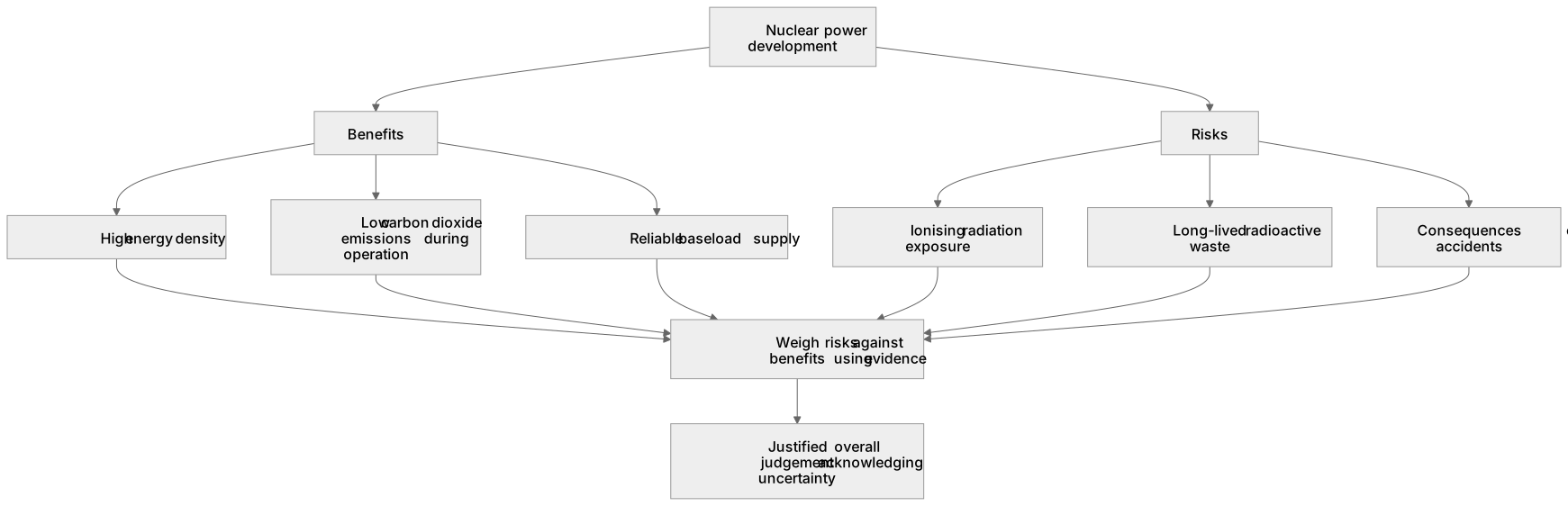
Label the diagram
Some boxes have lost their names. Pick the right name for each number.
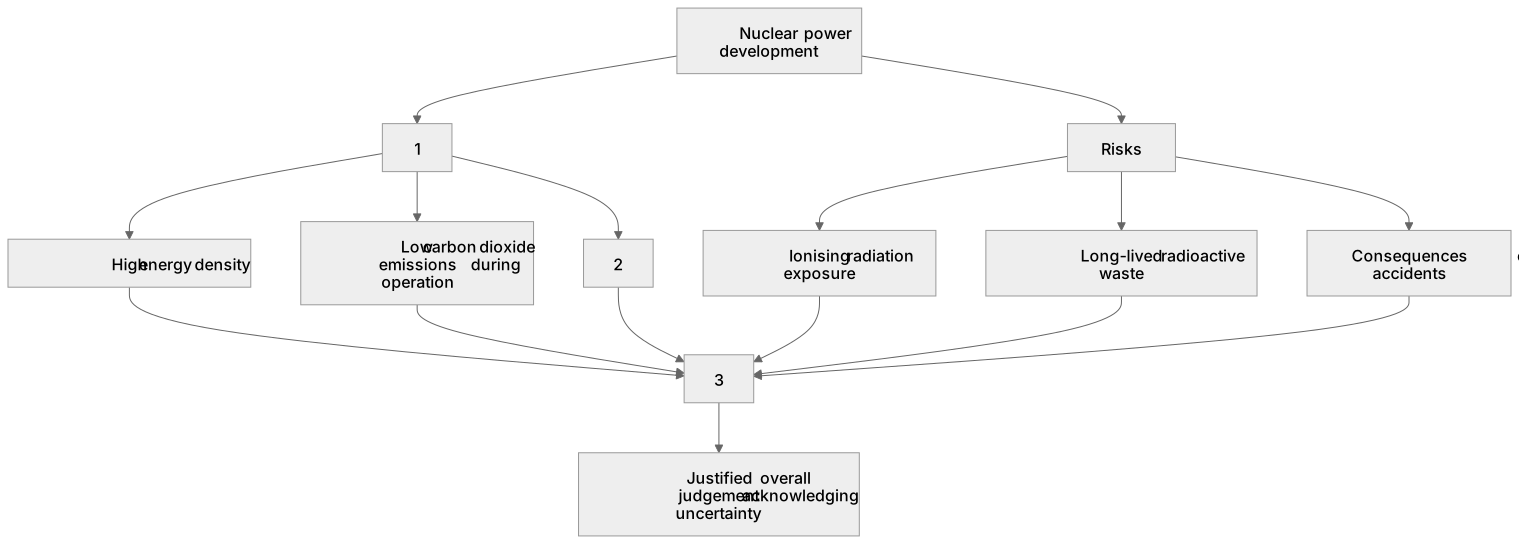
1Box 1
2Box 2
3Box 3
There is more to this lesson
The full lesson goes on to check your understanding and help you earn the marks. Create a free account to carry on, with your progress saved.
A week of Premium from your first lesson · Then the free plan continues · No card, no charge
Test your understanding of Safety aspects (A-level only): Appreciation of balance between risk and benefits in the development of nuclear power.
Active recall beats re-reading. Take an instant quiz now to test what you’ve learned and lock it into long-term memory.
A week of Premium from your first lesson · Then the free plan continues · No card, no charge