AQA · A-Level · Physics
Course version: 7408 · Version from Sept 2016
Analysis of characteristics of simple harmonic motion (SHM).
Full specification wording
Simple harmonic motion (SHM) (A-level only): Analysis of characteristics of simple harmonic motion (SHM).
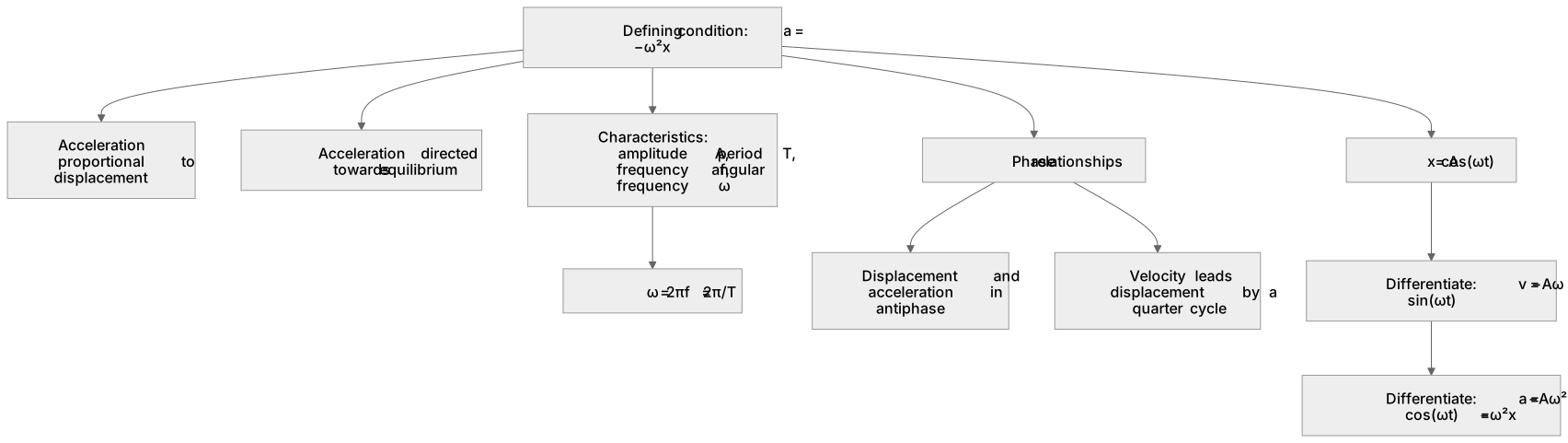
Simple harmonic motion is oscillatory motion where the acceleration is directly proportional to displacement from equilibrium and always directed towards that equilibrium point, expressed as a = −ω²x.
Checked against the AQA 7408 specification (opens in a new tab) on .
- Point 1 of 2
- 4 key terms
Study notes
From the checked teaching notes for this specification point.
The idea
Simple harmonic motion is oscillatory motion where the acceleration is directly proportional to displacement from equilibrium and always directed towards that equilibrium point, expressed as a = −ω²x. The minus sign shows the restoring acceleration opposes displacement. Characteristics to analyse include amplitude A, period T, frequency f, angular frequency ω = 2πf = 2π/T, and the phase relationships: displacement and acceleration are in antiphase, while velocity leads displacement by a quarter cycle. For example, for x = A cos(ωt), differentiating gives v = −Aω sin(ωt) and a = −Aω² cos(ωt) = −ω²x, confirming SHM. Graphs of x, v and a against time share the same period, with v maximum at equilibrium and zero at maximum displacement, and a maximum at maximum displacement and zero at equilibrium.
What earns the marks
- States the defining condition a = −ω²x, with acceleration proportional to displacement and directed towards equilibrium.
- Identifies amplitude, period, frequency and angular frequency, and links ω = 2πf = 2π/T.
- Describes the phase relationship between displacement, velocity and acceleration over one cycle.
- Explains that velocity is maximum at equilibrium and zero at maximum displacement, while acceleration is maximum at maximum displacement and zero at equilibrium.
- Interprets or sketches graphs of x, v and a against time, recognising the same period and the phase differences.
- Uses x = A cos(ωt) or x = A sin(ωt) and differentiates to obtain velocity and acceleration expressions.
Common mistakes and how to put them right
Omitting the minus sign in a = −ω²x.
Put it right: Include it to show acceleration is directed towards equilibrium.
Stating that velocity and acceleration are in phase.
Put it right: Recognise that velocity leads displacement by a quarter cycle and acceleration is in antiphase with displacement.
Confusing period with frequency when finding ω.
Put it right: Use ω = 2π/T for period and ω = 2πf for frequency, keeping the two distinct.
Exam tips
- Start by quoting a = −ω²x and then link each characteristic to this defining relationship.
- When describing graphs, state the phase difference in fractions of a cycle or in radians rather than vaguely saying they are shifted.
- Check whether the question gives period or frequency before calculating ω, and show the conversion clearly.
Try the lesson
The start of the Simple harmonic motion (SHM) (A-level only): Analysis of characteristics of simple harmonic motion (SHM). lesson, made from checked teaching notes for this specification point.
Have a go first
A mass on a spring oscillates with simple harmonic motion. At which point in the oscillation is the magnitude of the acceleration of the mass greatest?
Listen
Simple harmonic motion is oscillatory motion where the acceleration is directly proportional to displacement from equilibrium and always directed towards that equilibrium point, expressed as a = −ω²x. The minus sign shows the restoring acceleration opposes displacement. Characteristics to analyse include amplitude A, period T, frequency f, angular frequency ω = 2πf = 2π/T, and the phase relationships: displacement and acceleration are in antiphase, while velocity leads displacement by a quarter cycle. For example, for x = A cos(ωt), differentiating gives v = −Aω sin(ωt) and a = −Aω² cos(ωt) = −ω²x, confirming SHM. Graphs of x, v and a against time share the same period, with v maximum at equilibrium and zero at maximum displacement, and a maximum at maximum displacement and zero at equilibrium. A strong answer earns marks for these points. States the defining condition a = −ω²x, with acceleration proportional to displacement and directed towards equilibrium. Identifies amplitude, period, frequency and angular frequency, and links ω = 2πf = 2π/T. Describes the phase relationship between displacement, velocity and acceleration over one cycle. Explains that velocity is maximum at equilibrium and zero at maximum displacement, while acceleration is maximum at maximum displacement and zero at equilibrium. A common slip: Omitting the minus sign in a = −ω²x. Instead, include it to show acceleration is directed towards equilibrium. Exam tip: Start by quoting a = −ω²x and then link each characteristic to this defining relationship.
See it
Key words
Say what each word means before you turn the card.
Simple harmonic motion
Try answering aloud or in your head before turning the card.
Angular frequency
Try answering aloud or in your head before turning the card.
Phase relationship
Try answering aloud or in your head before turning the card.
Graphs of x, v and a against time
Try answering aloud or in your head before turning the card.
See every definition
- Simple harmonic motion
- Oscillatory motion where the acceleration is directly proportional to displacement from equilibrium and always directed towards that equilibrium point, expressed as a = −ω²x.
- Angular frequency
- Given by ω = 2πf = 2π/T, linking it to frequency and period.
- Phase relationship
- Displacement and acceleration are in antiphase, while velocity leads displacement by a quarter cycle.
- Graphs of x, v and a against time
- They share the same period, with v maximum at equilibrium and zero at maximum displacement, and a maximum at maximum displacement and zero at equilibrium.
Label the diagram
Some boxes have lost their names. Pick the right name for each number.
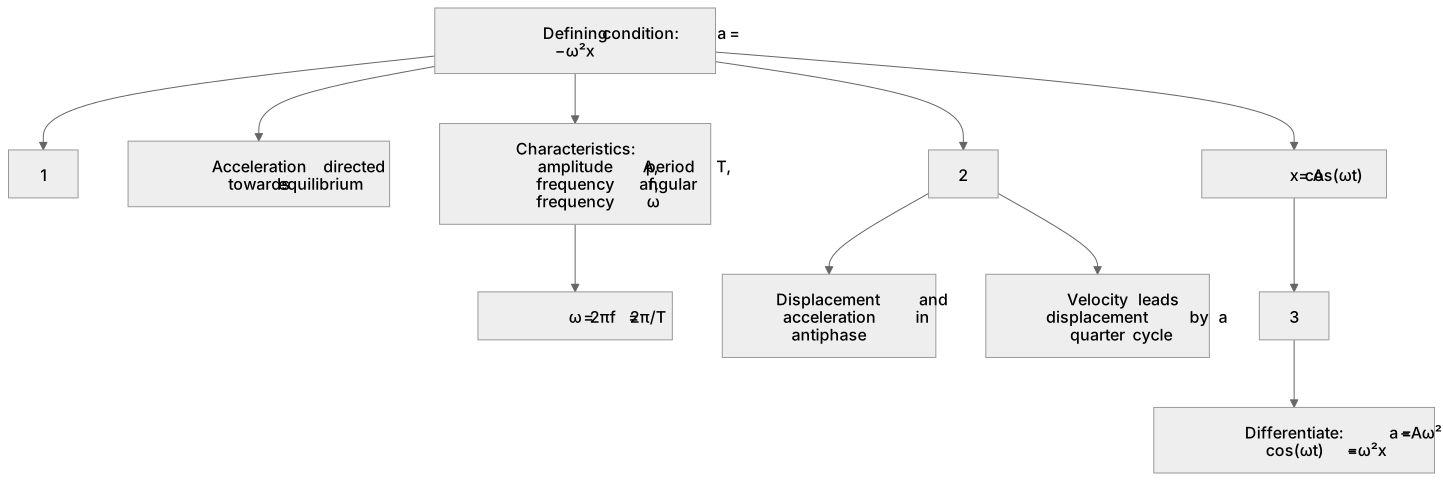
1Box 1
2Box 2
3Box 3
There is more to this lesson
The full lesson goes on to check your understanding and help you earn the marks. Create a free account to carry on, with your progress saved.
A week of Premium from your first lesson · Then the free plan continues · No card, no charge
Test your understanding of Simple harmonic motion (SHM) (A-level only): Analysis of characteristics of simple harmonic motion (SHM).
Active recall beats re-reading. Take an instant quiz now to test what you’ve learned and lock it into long-term memory.
A week of Premium from your first lesson · Then the free plan continues · No card, no charge