AQA · A-Level · Psychology
Eating Behaviour
This guide provides a comprehensive analysis of Eating Behaviour for AQA A-Level Psychology, focusing on the critical interplay between biological and psychological explanations. It is designed to equip candidates with the precise knowledge and evaluative skills required to deconstruct 16-mark questions and achieve top-band marks in Paper 3.
- 10 min read
- 3 worked examples
- 5 practice questions
- 6 key terms
Study Notes
Overview
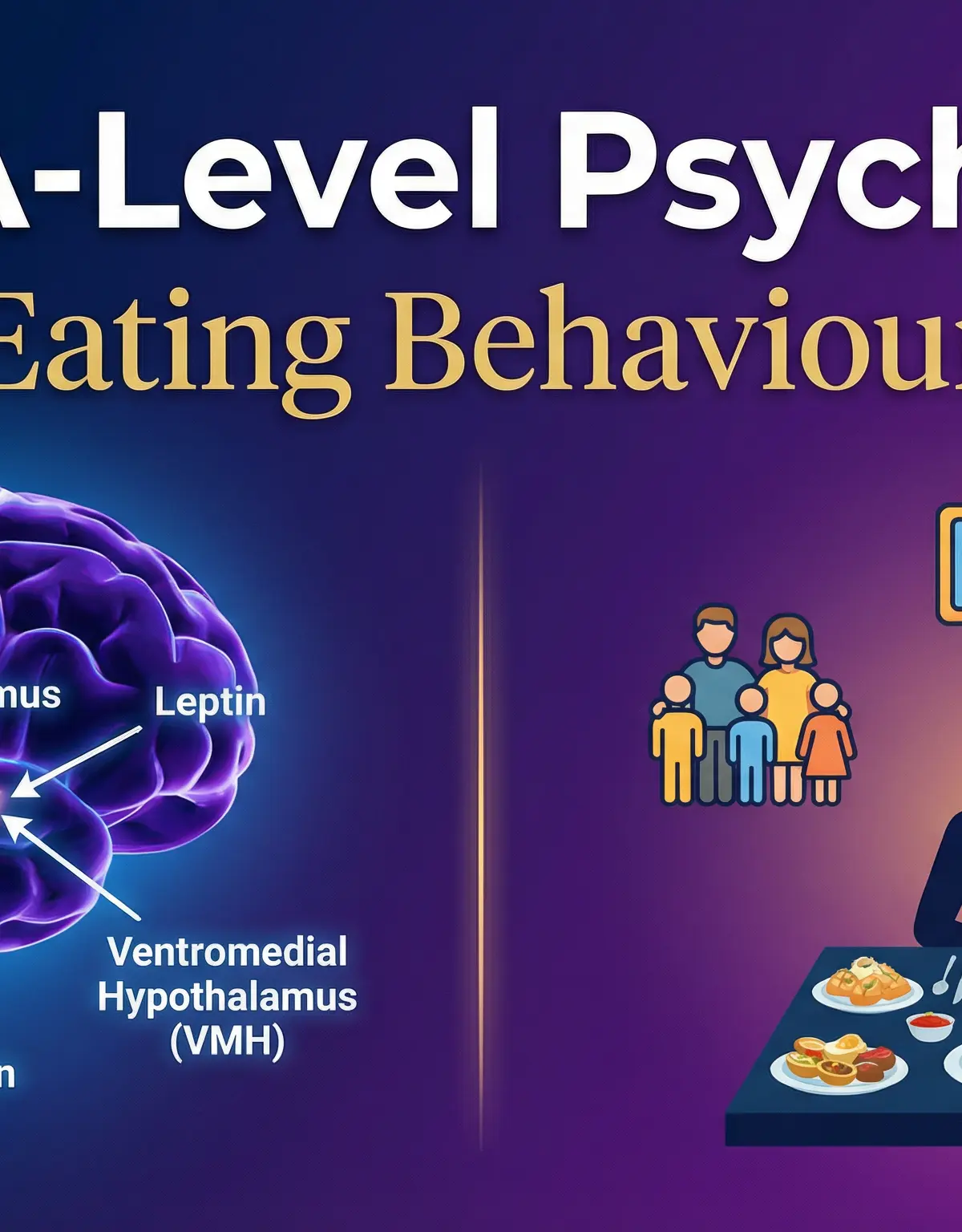
This topic explores the complex factors that govern why, what, and when we eat. For AQA A-Level Psychology, a sophisticated understanding of Eating Behaviour requires candidates to move beyond simple descriptions and critically evaluate competing explanations for food preferences, anorexia nervosa, obesity, and dieting. Examiners expect a detailed grasp of biological mechanisms, such as neural and hormonal systems, alongside psychological factors like social learning and family dynamics. The most successful candidates will be those who can weave these explanations together, using the Issues and Debates (especially nature-nurture and reductionism) as a lens for powerful AO3 analysis. This guide provides the foundational knowledge (AO1), application skills (AO2), and critical evaluation points (AO3) necessary to excel.

Biological Explanations of Eating Behaviour
Neural Mechanisms: The Hypothalamus
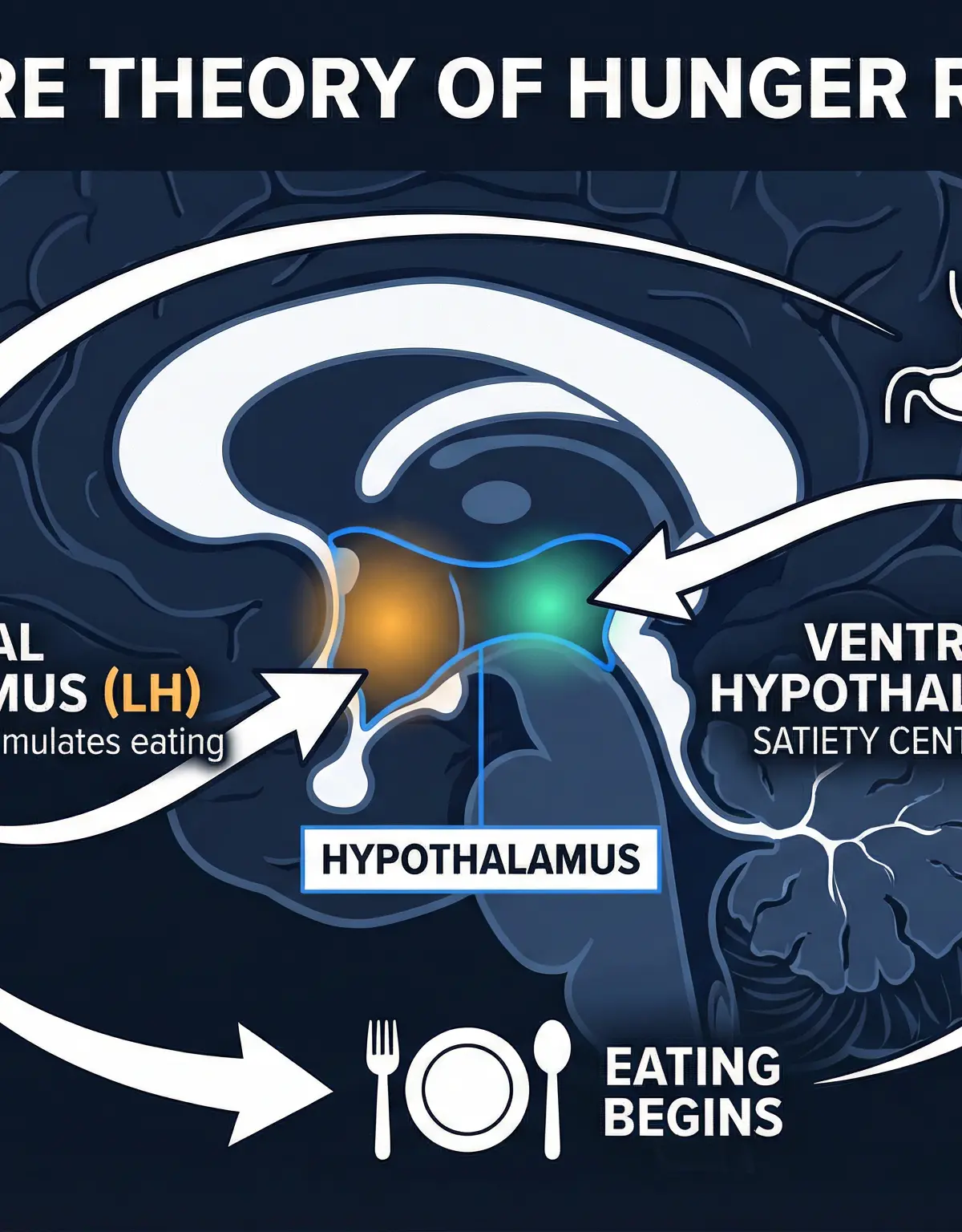
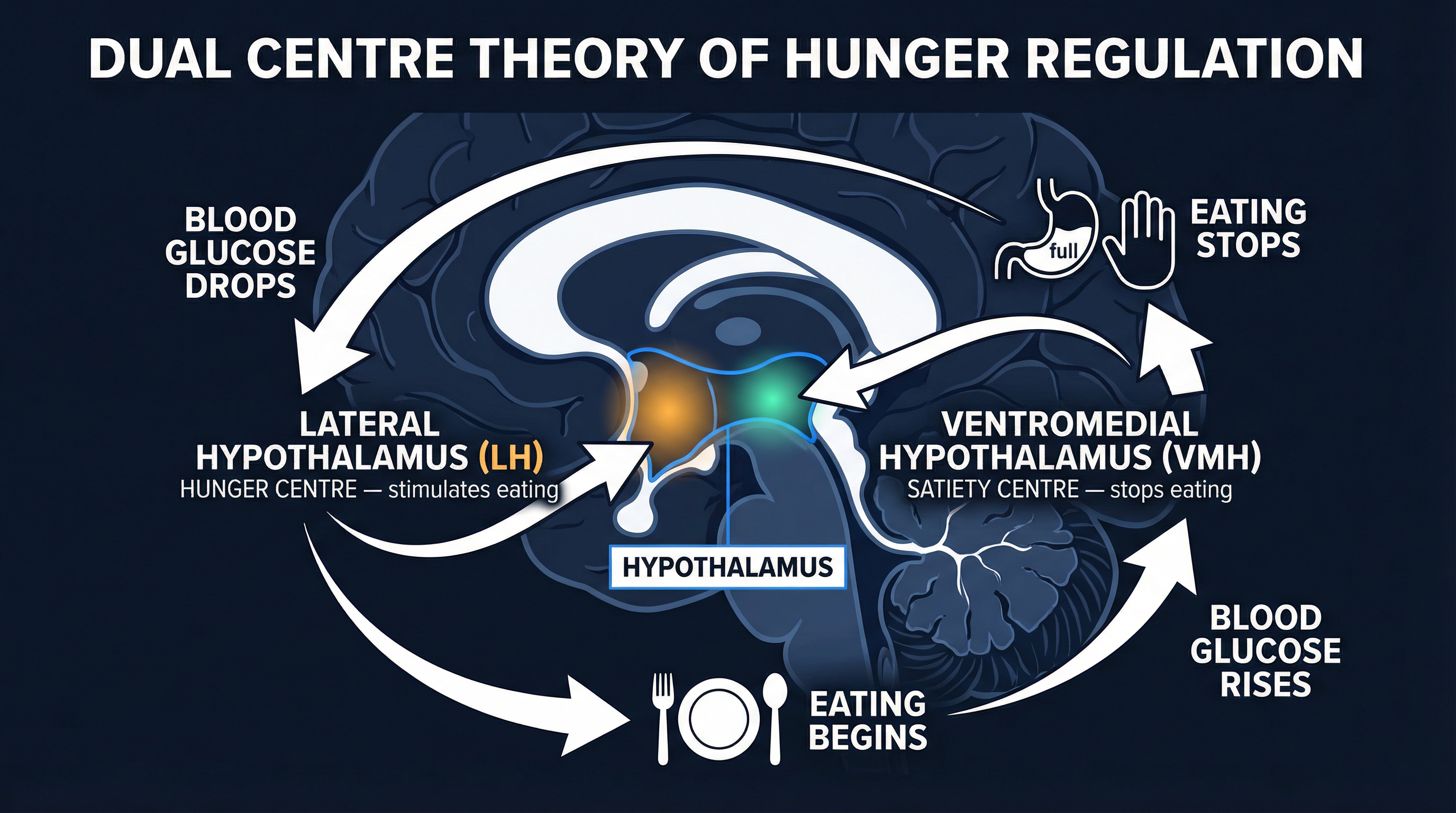
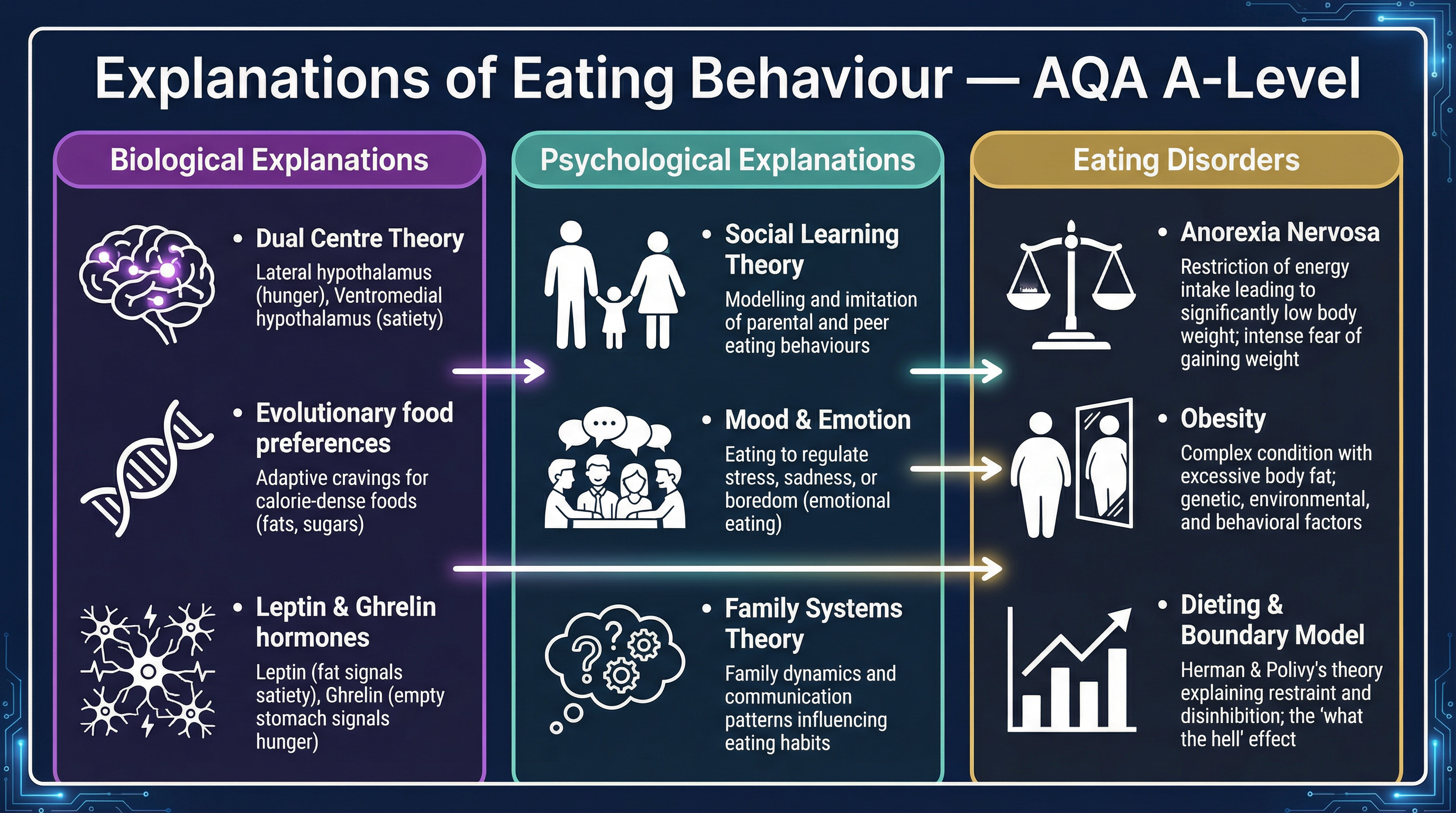
What happened: Early research identified the hypothalamus as the brain's control centre for hunger and satiety. The Dual Centre Theory posits two key interacting regions.
Why it matters: This provides a foundational biological explanation for the regulation of food intake. Credit is given for precise knowledge of the roles of the two centres.
Specific Knowledge:
- Lateral Hypothalamus (LH): The 'feeding centre'. When stimulated, it initiates eating. Damage leads to aphagia (cessation of eating). Remember: Lateral for Lunch.
- Ventromedial Hypothalamus (VMH): The 'satiety centre'. When stimulated, it stops eating. Damage leads to hyperphagia (excessive eating). Remember: Very Much Full.
- Supporting Evidence: Anand & Brobeck (1951) found that lesions in the LH of rats caused them to stop eating, while Hetherington & Ranson (1942) found that lesions in the VMH caused rats to become obese.
Hormonal Mechanisms: Ghrelin and Leptin
What happened: Research has identified hormones that provide feedback to the brain, regulating appetite.
Why it matters: This adds a layer of complexity to the neural model, showing how the brain and body communicate to maintain homeostasis.
Specific Knowledge:
- Ghrelin: Secreted by the stomach when empty. It travels to the hypothalamus and stimulates appetite. Levels decrease after eating.
- Leptin: Produced by adipose (fat) cells. It signals satiety to the hypothalamus, suppressing appetite. Levels are proportional to body fat.
Evolutionary Explanations for Food Preference
What happened: Evolutionary theory suggests our food preferences are adaptations from our ancestral past (the Environment of Evolutionary Adaptedness or EEA).
Why it matters: This explains innate human preferences for certain tastes and the avoidance of others. It is a powerful example of the nature side of the nature-nurture debate.
Specific Knowledge:
- Preference for Sweet/Fatty/Salty Foods: These were rare, valuable sources of calories and minerals in the EEA. A preference for them increased survival chances.
- Taste Aversion: A biological preparedness to learn to avoid foods that have previously caused illness. This is a survival mechanism.
- Neophobia: A fear of new foods, particularly prominent in childhood. It is adaptive as it prevents children from consuming potentially toxic substances.
Psychological Explanations of Eating Behaviour
Social Learning Theory (SLT)
What happened: SLT proposes that eating behaviours, particularly food preferences, are learned through observation and imitation of role models.
Why it matters: This provides a strong counter-argument to purely biological determinism, emphasizing the role of nurture and environment.
Specific Knowledge:
- Modelling: Children observe the eating habits of parents, peers, and media figures.
- Vicarious Reinforcement: If a model is seen to enjoy a food or is rewarded for eating it, the observer is more likely to imitate that behaviour.
- Key Study: Birch (1980) found that children who observed peers choosing a previously disliked vegetable were more likely to choose that vegetable themselves in a subsequent task.
Cultural Influences
What happened: The foods we prefer are heavily influenced by the culture in which we are raised.
Why it matters: This explains the vast diversity in diets across the world, which cannot be accounted for by biology alone.
Specific Knowledge:
- Mere Exposure: Repeatedly being exposed to a food tends to increase liking for it. This is how cultural norms for food are established and maintained.
- Context of Meals: Cultural rules dictate when and how food is eaten, shaping our eating patterns.
Family Systems Theory (FST)
What happened: Minuchin et al. (1978) proposed that eating disorders like anorexia are a product of dysfunctional family dynamics.
Why it matters: This theory provides a holistic, interactionist explanation for anorexia, moving beyond the individual to consider the family system.
Specific Knowledge: FST identifies four key features of the 'psychosomatic family':
- Enmeshment: Poorly defined boundaries between family members.
- Overprotectiveness: Family members are constantly involved in each other's lives.
- Rigidity: The family resists change and maintains a rigid structure.
- Conflict Avoidance: Problems are not confronted and resolved openly.
- Application: Anorexia can be seen as a way for an adolescent to assert control and autonomy in an enmeshed family.
Explanations for Eating Disorders

Anorexia Nervosa (AN)
Biological Explanations:
- Genetics: Twin studies show a significant genetic component. Holland et al. (1988) found a 56% concordance rate for AN in MZ twins, compared to just 7% in DZ twins.
- Neural: Dysregulation of serotonin has been implicated. Kaye et al. (2005) found elevated levels of serotonin metabolites in recovered anorexics, suggesting over-activity of the serotonin system may contribute to the anxiety and obsessive traits seen in AN.
Psychological Explanations:
- Family Systems Theory: As detailed above, Minuchin's work is a key explanation.
- Cognitive Theory: Beck's cognitive theory suggests that individuals with AN have distorted cognitions and irrational beliefs about their body shape and weight. These cognitive distortions lead to behaviours like food restriction.
Obesity
Biological Explanations:
- Genetics: Twin studies suggest a strong genetic predisposition. The Thrifty Gene Hypothesis (Neel, 1962) argues that genes promoting fat storage were adaptive in our ancestral past but are maladaptive in modern society.
- Neural: Leptin resistance is a key mechanism. In obese individuals, the brain becomes less sensitive to leptin, meaning the satiety signal is not effectively received, leading to continued eating.
Psychological Explanations:
- Boundary Model: See below. The model can explain how attempts at dieting can paradoxically lead to overeating and weight gain.
- Externality Theory: Schachter (1968) proposed that obese individuals are less sensitive to internal (interoceptive) hunger cues and more sensitive to external food cues (e.g., sight and smell of food).
The Psychology of Dieting
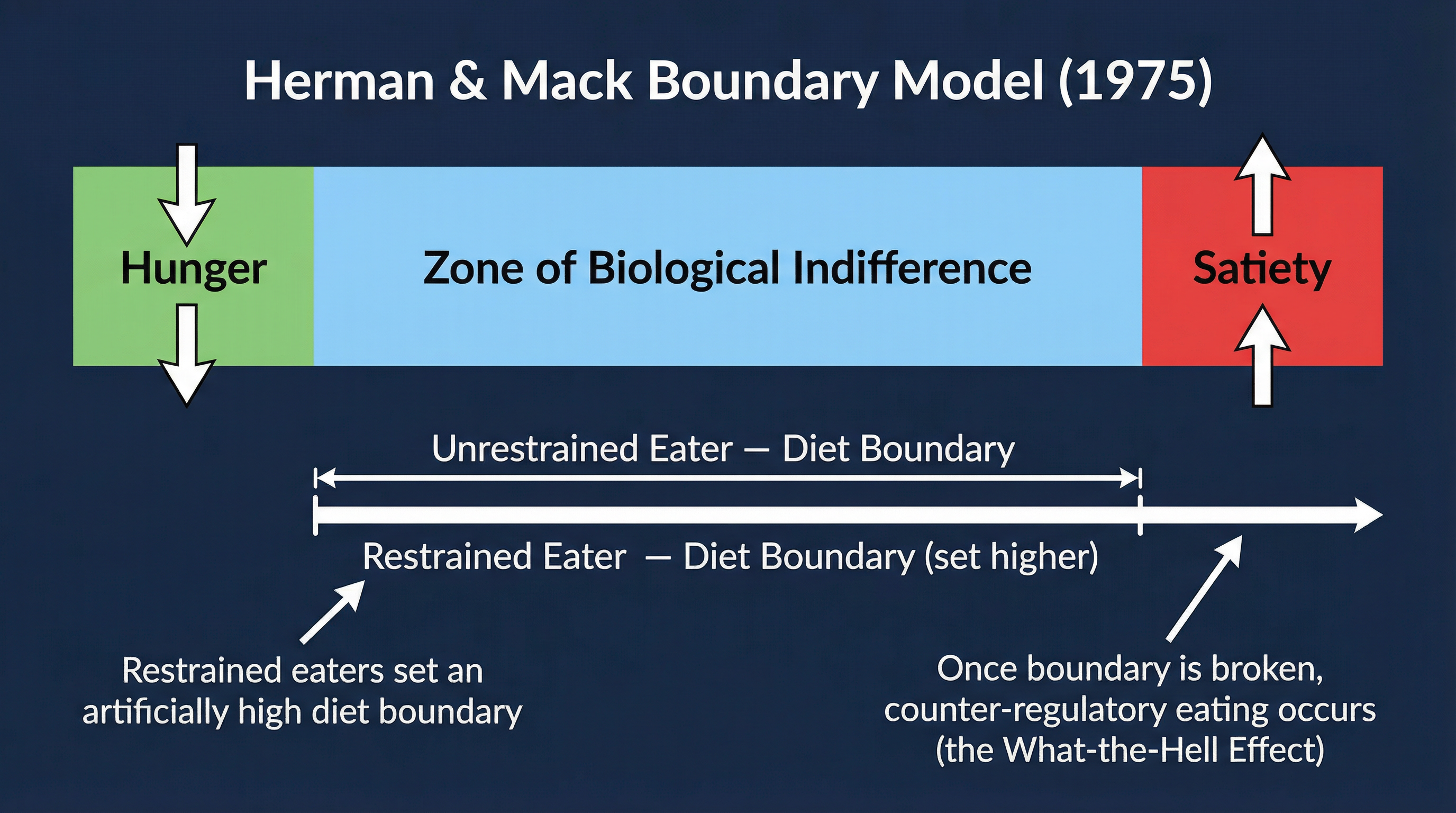
The Boundary Model (Herman & Mack, 1975):
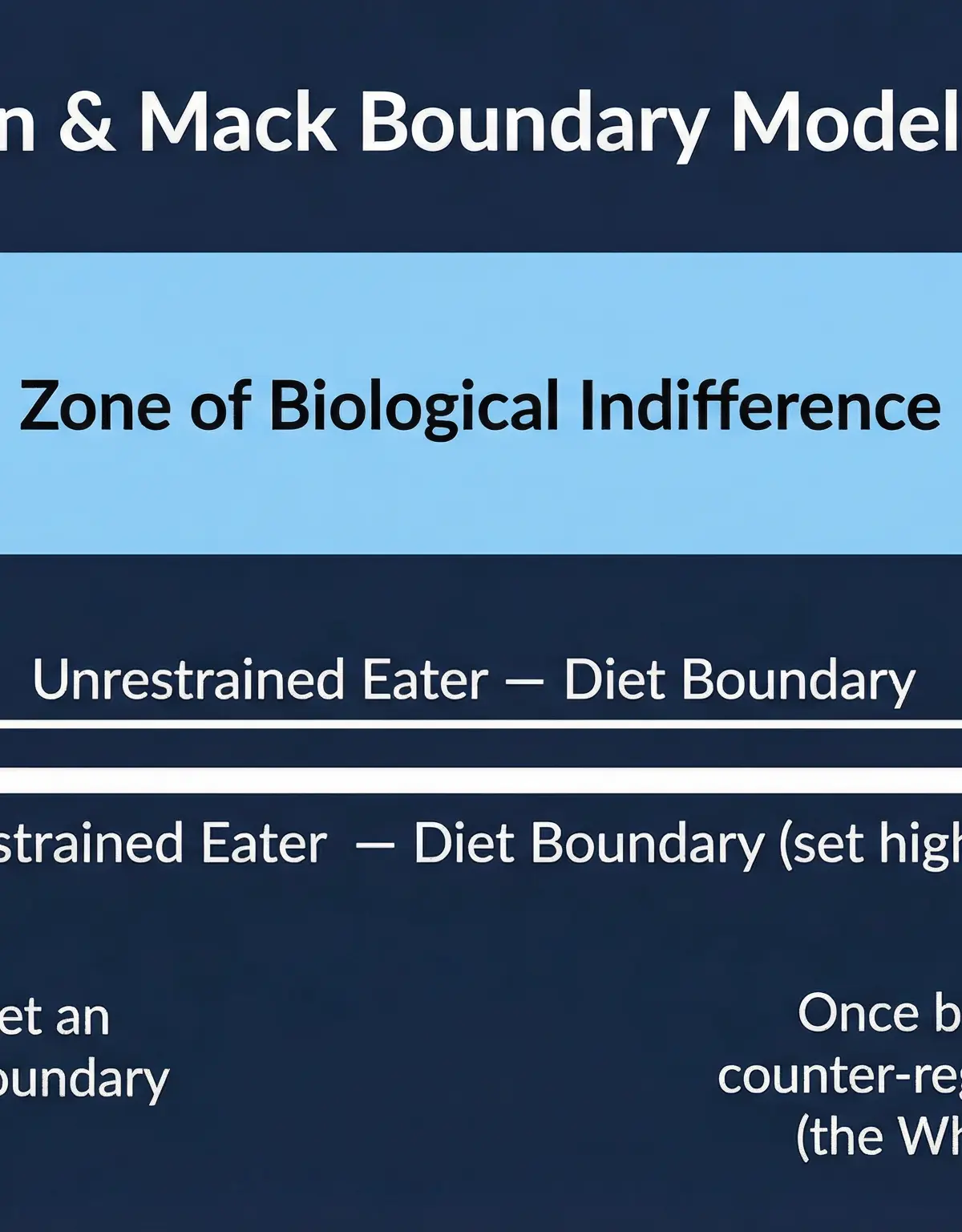
This model explains why dieting often fails. It proposes that eating is controlled by a hunger boundary and a satiety boundary.
- Restrained Eaters (Dieters): Impose a cognitive 'diet boundary' which is lower than their physiological satiety boundary.
- The 'What-the-Hell' Effect: When a restrained eater breaks their diet boundary (e.g., eats a piece of cake), they experience a cognitive shift. They feel they have already failed, so they abandon all restraint and overeat, often consuming more than an unrestrained eater would. This is also known as disinhibition.
- Key Study: Wardle & Beales (1988) found that obese women in a diet group ate more in a laboratory taste test than those in an exercise or control group, supporting the idea of counter-regulatory eating.
Second-Order Concepts
Causation
- Biological Reductionism: Many explanations reduce complex behaviour to a single biological factor (e.g., a gene or hormone). This is a strength in terms of scientific parsimony but a weakness as it offers an incomplete explanation.
- Environmental Determinism: SLT and cultural explanations can be seen as deterministic, suggesting our eating habits are passively shaped by our environment, ignoring free will.
Consequence
- Treatment Implications: Biological explanations lead to drug-based treatments (e.g., SSRIs for anorexia), while psychological explanations lead to talking therapies (e.g., Family Therapy or CBT). An interactionist approach suggests a combination of treatments is often most effective.
Change & Continuity
- Evolutionary Mismatch: Our innate food preferences have remained constant, but our food environment has changed dramatically. This mismatch is a key cause of modern health problems like obesity.
Significance
- Nature-Nurture Debate: This topic is a perfect arena for discussing the relative contributions of biology and environment. The best answers will demonstrate how nature and nurture interact (e.g., a genetic predisposition for obesity may only be expressed in a specific food environment).
Source Skills
While Psychology A-Level does not have traditional source questions like History, it does require you to analyse and evaluate research studies. When presented with a study in the exam (often in the stem of a question), apply this framework:
- Content: What did the study find? What does it tell us about the topic?
- Provenance (Methodology): Who conducted the study? Was it on animals or humans? Was it a lab experiment or a naturalistic observation? What are the strengths and weaknesses of this methodology (e.g., control vs. ecological validity)?
- Usefulness: How does this study support or challenge a particular theory? Can it be used as effective AO3 evaluation?
- Limitations: Are there issues with generalisability (e.g., from animals to humans)? Is the sample size small or culturally biased? Is the research correlational, meaning cause and effect cannot be established?
Visual Resources
3 diagrams and illustrations
Interactive Diagrams
1 interactive diagram to visualise key concepts
Conceptual Flow Outline
The Dual Centre Theory Feedback Loop
Worked Examples
3 worked examples — open one to explore the question and available guidance.
Practice Questions
Test your understanding — click to reveal model answers
Outline the role of ghrelin and leptin in the control of eating behaviour. (4 marks)
Hint: Think about where each hormone is produced and what signal it sends to the brain.
Describe and evaluate one study of social learning and food preferences. (8 marks)
Hint: Use Birch's study with the disliked vegetable. For evaluation, consider the methodology.
A psychologist was interested in the link between mood and eating. She asked 20 participants to watch a sad film and 20 different participants to watch a neutral film. All participants were given a large bowl of popcorn. The psychologist measured how many grams of popcorn each participant ate. She found that the participants who watched the sad film ate significantly more popcorn than those who watched the neutral film. Explain how this study could be improved by using a repeated measures design. (4 marks)
Hint: Think about the main weakness of an independent groups design.
Discuss biological explanations for anorexia nervosa. (16 marks)
Hint: Focus on both genetic and neural explanations. Use the diathesis-stress model in your evaluation.
Outline what is meant by 'disinhibition' in the context of dieting. (3 marks)
Hint: Link it to the Boundary Model and the 'what-the-hell' effect.