Pearson Edexcel · A-Level · Psychology
Course version: Pearson-A-Level-Psychology · Version from Mar 2026
Topic 1: Social psychology
Biological Psychology explores how physical mechanisms—like brain structure, neurotransmitters, and hormones—shape human behaviour, particularly aggression. By understanding the biological approach, you will master the classic Raine et al. (1997) study and learn to critically evaluate these physical explanations against psychological ones like Freud's psychodynamic theory.
- 8 min read
- 3 worked examples
- 5 practice questions
- 6 key terms
Check what you remember
Read the wording for your board, then hide it and explain Synaptic Transmission in your own words. Rough notes are fine. This is a self-check, with no mark or grade.
Reference: Pearson Edexcel
The process by which chemical messengers (neurotransmitters) cross the gap between neurons to pass on an electrical impulse.
Study Notes
Overview
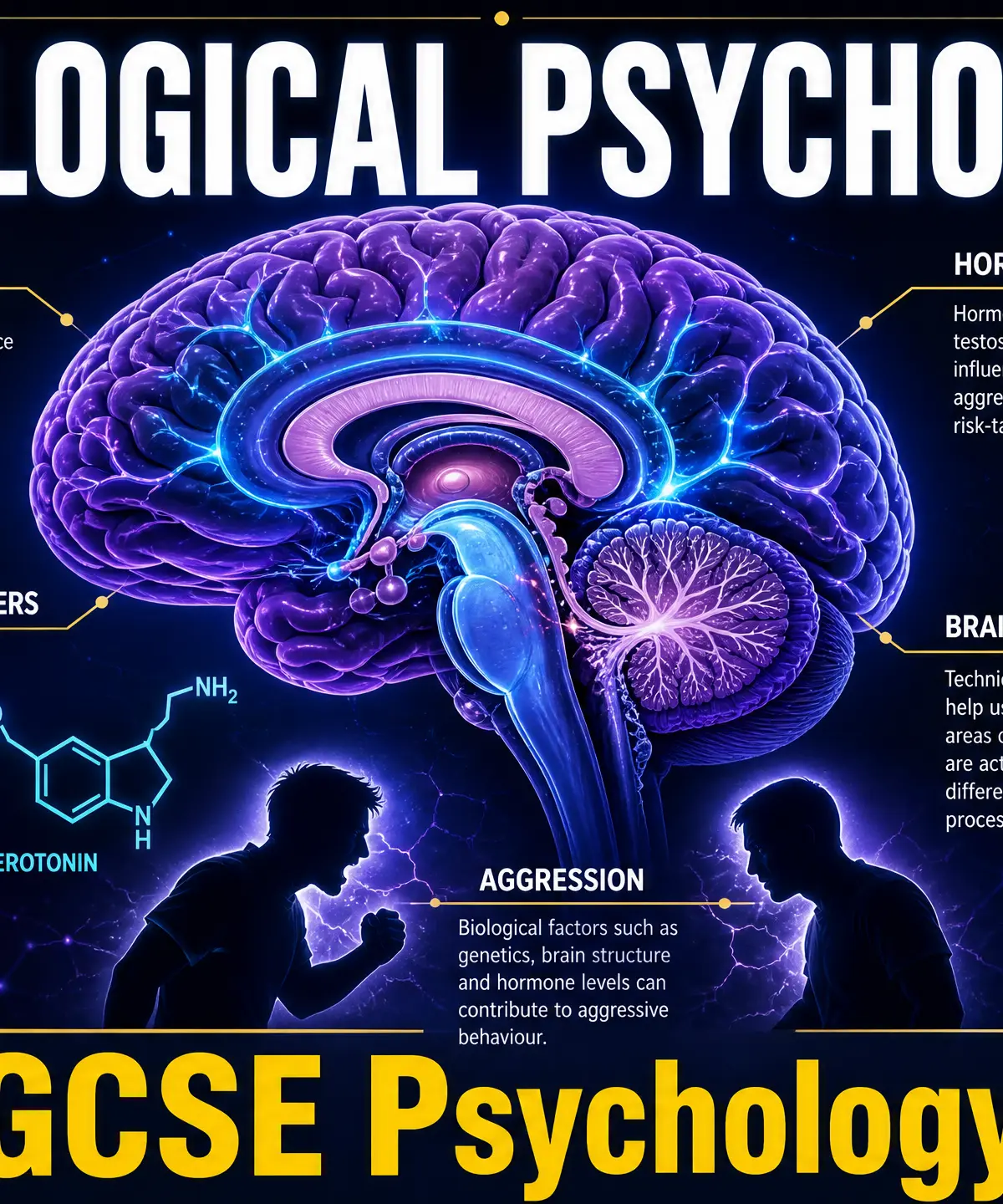
Biological Psychology is a foundational topic in the GCSE Psychology specification. It argues that all behaviour, including complex human aggression, has a physical cause rooted in our biology. This means that to understand why people act aggressively, we must look inside the body: at the structure of the brain, the chemicals transmitting messages across synapses, the hormones circulating in our blood, and the genes inherited from our ancestors.
Examiners expect candidates to not only describe these biological mechanisms accurately but also to evaluate them. You must be able to explain how the biological approach differs from other psychological theories, particularly Freud's psychodynamic approach. Furthermore, you must demonstrate a clear understanding of the research methods used to investigate these claims, including correlational studies and brain scanning techniques. This guide will take you through the core concepts, the classic study by Raine et al. (1997), and how to apply this knowledge to secure maximum marks.
The Neuron and Synaptic Transmission
The nervous system is built from billions of specialised cells called neurons. These cells transmit electrical and chemical signals throughout the body.
Neuron Structure
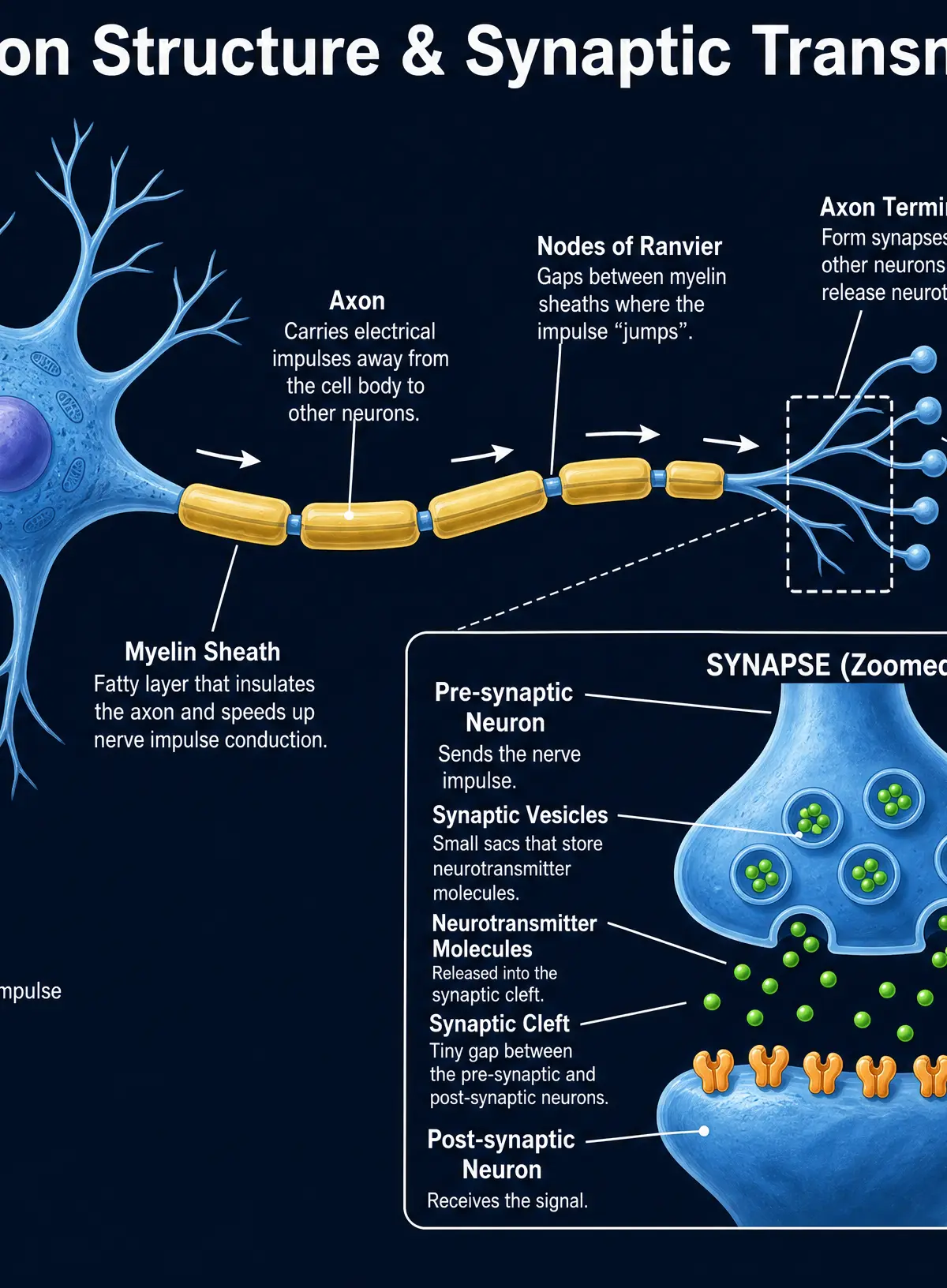
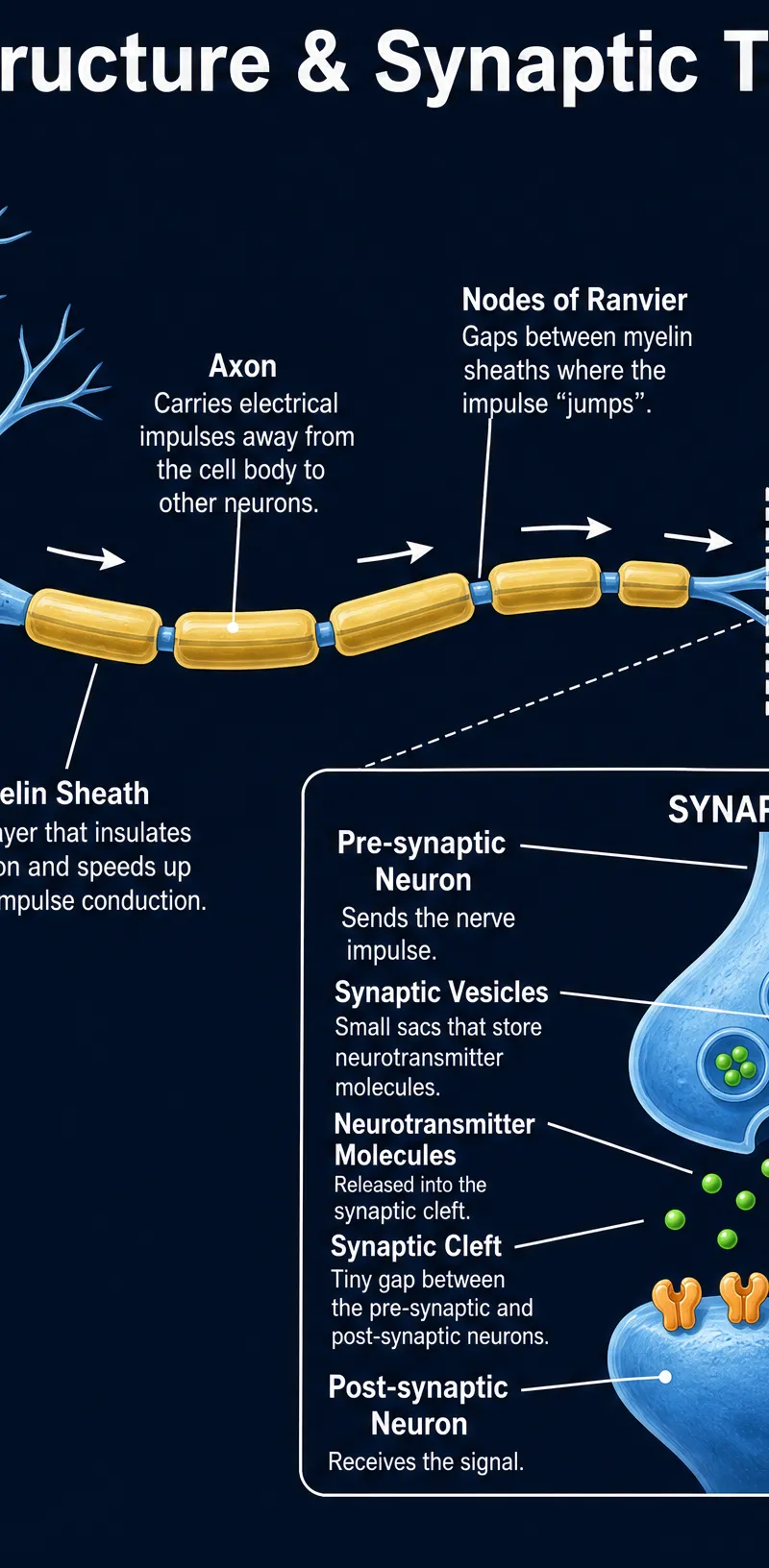
To secure marks, candidates must be able to label and describe the function of key neuronal components:
- Cell Body (Soma): Contains the nucleus and genetic material.
- Dendrites: Branch-like structures that receive incoming signals from other neurons.
- Axon: A long extension that carries the electrical impulse away from the cell body.
- Myelin Sheath: A fatty layer that insulates the axon, significantly speeding up the transmission of the electrical impulse.
- Axon Terminals: The end points of the neuron where chemical messengers are released.
Synaptic Transmission
Information travels between neurons via a process called synaptic transmission. When an electrical impulse reaches the axon terminal, it triggers the release of neurotransmitters from synaptic vesicles. These chemical messengers cross a tiny gap called the synaptic cleft and bind to specific receptor sites on the post-synaptic neuron. This binding either excites the receiving neuron (making it more likely to fire) or inhibits it (making it less likely to fire).
Key Neurotransmitters in Aggression:
- Serotonin: Generally associated with mood regulation and inhibiting aggression. Low levels of serotonin in the brain have been linked to an increase in aggressive behaviour.
- Dopamine: Linked to reward and motivation. Imbalances in dopamine are also associated with aggression.
The Effect of Recreational Drugs
Recreational drugs alter behaviour by interfering with synaptic transmission in the Central Nervous System (CNS). For example, Selective Serotonin Reuptake Inhibitors (SSRIs) block the reabsorption of serotonin, keeping it active in the synapse for longer. Stimulant drugs, such as cocaine, block the reuptake of dopamine, flooding the synapse and leading to increased neural activity and altered behaviour. Examiners frequently test candidates' ability to explain this mechanism clearly.
Brain Structure and Aggression
Specific regions of the brain are strongly implicated in the control and expression of aggression.
- Pre-frontal Cortex: Located at the front of the brain, this area is responsible for decision-making, regulating emotional responses, and impulse control. If the pre-frontal cortex is damaged or underactive, an individual may struggle to control aggressive impulses.
- Amygdala: Deep within the brain, the amygdala processes emotions, particularly fear and aggression. Overactivity or structural abnormalities here can lead to heightened aggressive responses.
- Hippocampus: Involved in learning and memory. Abnormalities in the hippocampus can affect how an individual learns from the consequences of aggressive actions.
Hormones and Evolution
The Role of Hormones
Hormones are chemical messengers secreted by glands directly into the bloodstream. The hormone most frequently linked to aggression is testosterone, an androgen produced primarily in the male testes (and in smaller amounts in females).
Research has demonstrated a positive correlation between testosterone levels and aggressive behaviour. For instance, studies on prison populations often show that inmates convicted of violent crimes have higher average testosterone levels than those convicted of non-violent offences.
Examiner Tip: Candidates must explicitly state that correlation does not imply causation. High testosterone might cause aggression, but it is equally possible that engaging in aggressive behaviour causes testosterone levels to rise.
Evolution and Natural Selection
The evolutionary explanation posits that aggression is an adaptive trait that evolved to help our ancestors survive and reproduce. According to Charles Darwin's theory of natural selection, individuals who could successfully compete for resources, defend territory, and secure mates were more likely to pass their genes to the next generation. Therefore, aggression is viewed as a hardwired, inherited behaviour.
Classic Study: Raine et al. (1997)
This is a mandatory study for the Biological Psychology topic.
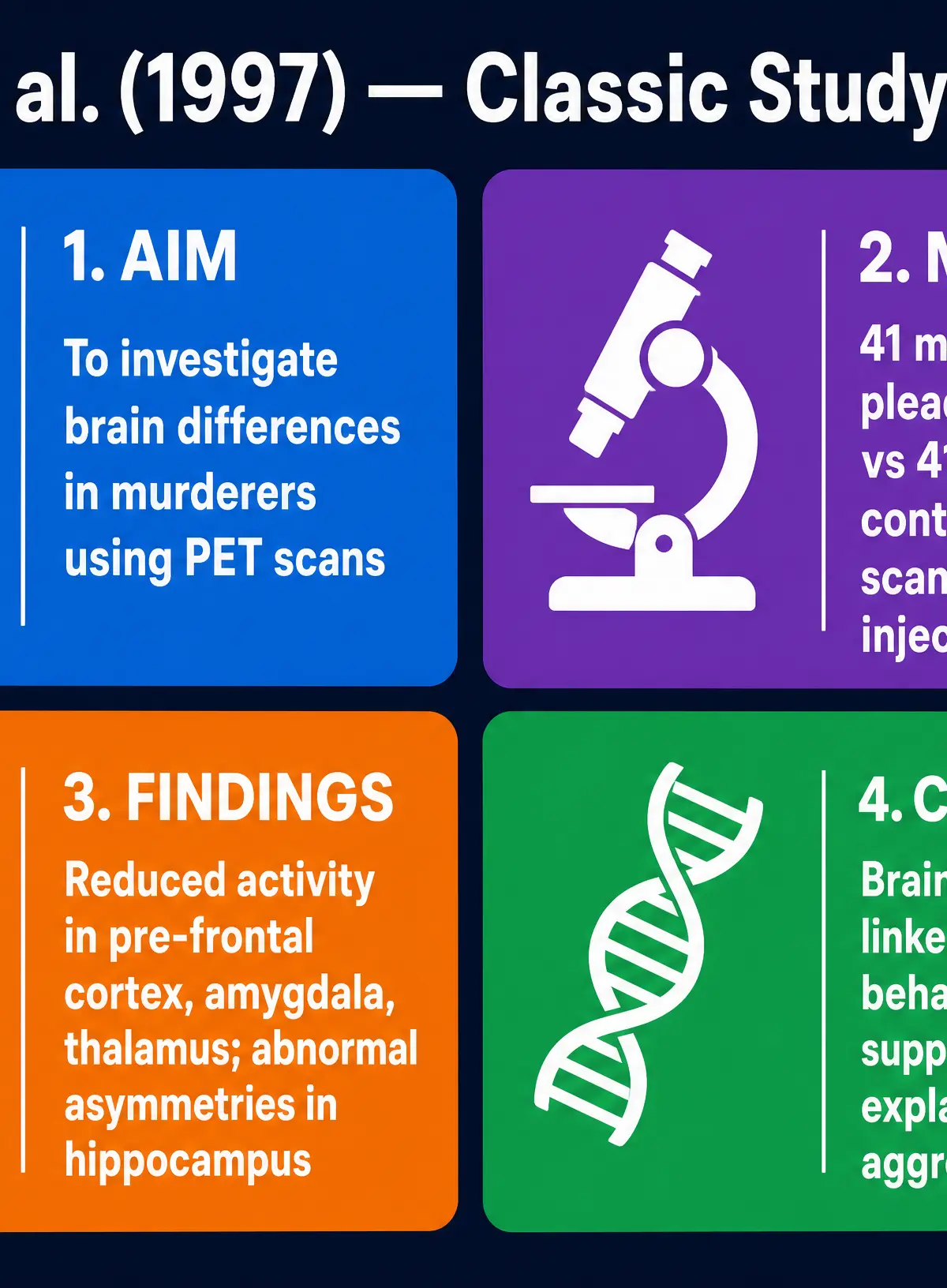
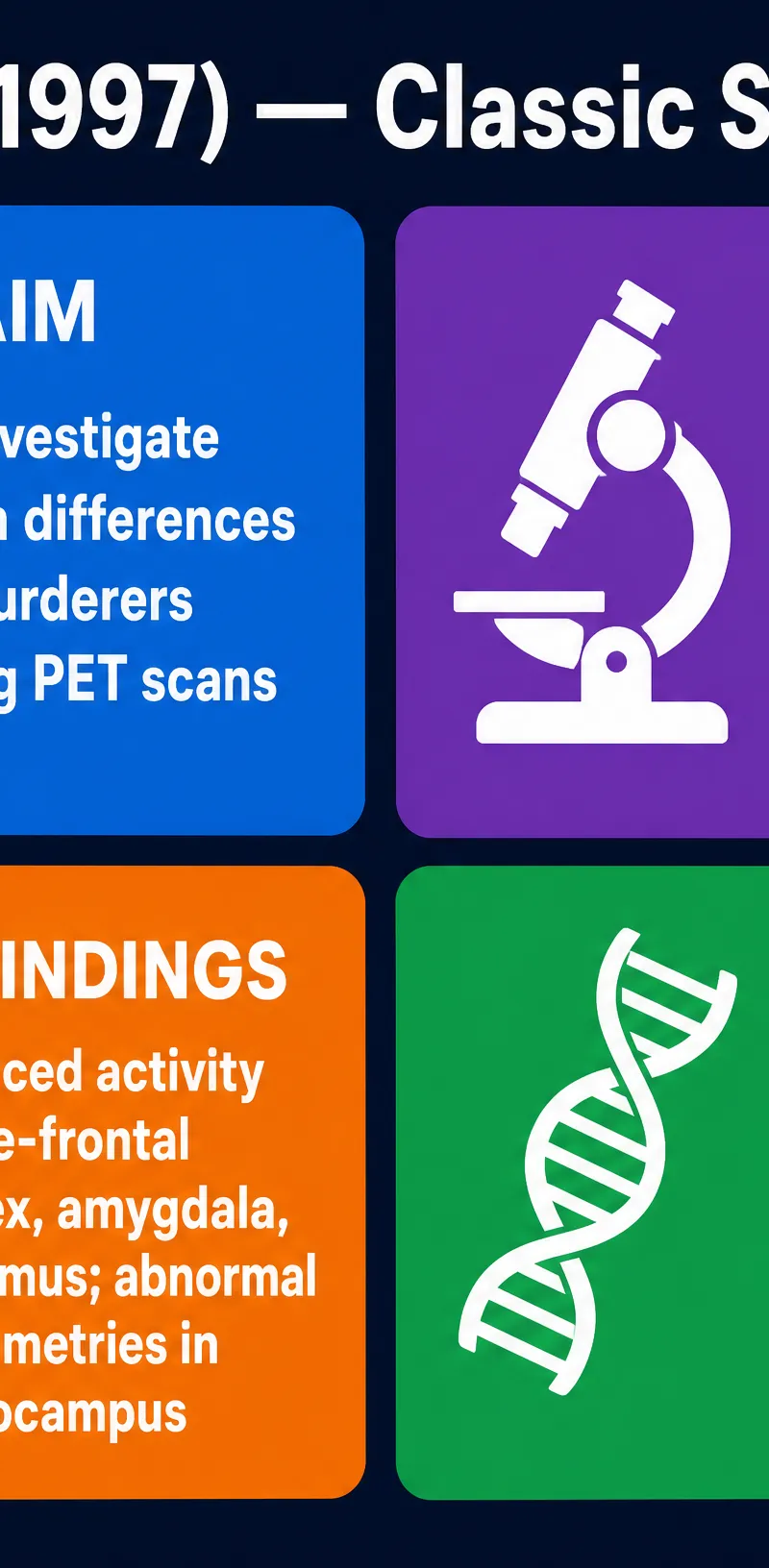
Aim: To investigate whether murderers pleading Not Guilty by Reason of Insanity (NGRI) exhibited brain abnormalities compared to non-murderers.
Method: Raine used Positron Emission Tomography (PET) scans. The sample consisted of 41 murderers pleading NGRI and 41 matched controls (matched for age and sex). Participants were injected with a radioactive glucose tracer (FDG) and completed a continuous performance task for 32 minutes while their brain activity was scanned.
Findings: The murderers showed:
- Reduced activity in the pre-frontal cortex (linking to poor impulse control).
- Abnormal activity in the amygdala, thalamus, and hippocampus.
- Unusual asymmetries (differences between the left and right hemispheres) in the amygdala and hippocampus.
Conclusion: Brain dysfunction is associated with violent behaviour, supporting the biological explanation of aggression.
Comparing Explanations: Biological vs. Psychodynamic
Candidates must be able to contrast the biological approach with Freud's psychodynamic theory.
- Biological Explanation: Focuses on physical, observable mechanisms (brain structure, neurotransmitters, genes, hormones).
- Psychodynamic Explanation: Focuses on unconscious mental processes. Freud proposed the mind consists of the id (primitive desires and aggression), the ego (rational thought), and the superego (moral conscience). Freud argued that aggression arises from the id. He also proposed the concept of catharsis—the idea that releasing pent-up aggression through safe, non-violent outlets (like playing sports) reduces the likelihood of actual violent behaviour.
Research Methods in Biological Psychology
Correlational Research
Correlational studies measure the relationship between two co-variables (e.g., testosterone and aggression). Candidates must understand how to interpret scatter diagrams and distinguish between positive and negative correlations. The crucial evaluation point is that correlations cannot establish cause and effect.
Brain Scanning Techniques
- CAT Scans: Use X-rays to create structural images of the brain. They show brain damage but do not show brain activity.
- PET Scans: Measure brain activity by tracking a radioactive tracer (FDG) as it is consumed by active brain areas.
- fMRI Scans: Measure changes in blood oxygenation and flow to detect active brain regions in real-time. They have excellent spatial resolution and are non-invasive, unlike PET scans.
Twin and Adoption Studies
These studies attempt to separate the influence of nature (genetics) from nurture (environment). If monozygotic (identical) twins show higher concordance rates for aggression than dizygotic (non-identical) twins, it suggests a strong genetic component. Adoption studies examine whether adopted children's behaviour more closely resembles their biological parents (genetics) or their adoptive parents (environment).
Podcast Audio Revision
Listen to this comprehensive audio guide to reinforce your learning on the go.
Visual Resources
2 diagrams and illustrations
Interactive Diagrams
1 interactive diagram to visualise key concepts
Conceptual Flow Outline
Flowchart showing the sequence of Synaptic Transmission
Worked Examples
3 worked examples — open one to explore the question and available guidance.
Practice Questions
Try the question, then reveal an answer plan or example response
Describe the function of the myelin sheath. (2 marks)
Hint: Think about what surrounds wires to protect them and make electricity flow faster.
Outline the findings of Raine et al. (1997) regarding brain activity in murderers. (3 marks)
Hint: Name specific brain regions and state whether activity was higher, lower, or abnormal.
Explain one limitation of using correlational research to investigate the relationship between testosterone and aggression. (3 marks)
Hint: What can a correlation NOT tell you about two variables?
Describe Freud's concept of catharsis in relation to aggression. (3 marks)
Hint: Think about a pressure cooker releasing steam safely.
Assess the biological explanation of aggression. (8 marks)
Hint: Provide a balanced argument. Discuss scientific evidence as a strength, and reductionism as a weakness.
Exam technique
How to turn what you know into marks
How to approach the question
Identify the command word immediately. 'Describe' means AO1 (knowledge). 'Evaluate' or 'Assess' means AO3 (judgement and limitations). 'Compare' requires explicit similarities and differences.
How to structure your answer
- Essay questions
- Introduction defining the theory → Paragraph describing the theory (AO1) → Paragraph evaluating strengths/weaknesses (AO3) → Paragraph comparing to alternative theory (AO3) → Conclusion.
- Source questions
- If given a scenario (e.g., 'Read the extract about John's aggressive behaviour'), you must explicitly link the biological theory to the details in the text (AO2 Application).
- Explain questions
- Use the PEEL structure: Point, Evidence (specific biological term or study), Explanation (how it works), Link back to the question.
Timing
Approximately 1 minute per mark, plus planning time for 8 and 12-mark questions.
Common pitfalls
- Confusing correlation with causation when discussing testosterone or brain scans.
- Being too vague when evaluating brain scans (e.g., just saying 'it is scientific' without explaining why).
- Describing the biological and psychodynamic theories in separate paragraphs without actually comparing them using connective language (whereas, similarly, in contrast).
What the command words want
- Compare
- Identify explicit similarities and differences between two theories or methods.
- Explain
- Give reasons how or why something happens. Show the mechanism (e.g., how neurotransmitters cross the synapse).
- Describe
- Provide accurate details and definitions. No evaluation is needed.
- Evaluate
- Discuss strengths and limitations. Use evidence to support your points and reach a judgement.
Watch or listen (optional)
Test your understanding of Topic 1: Social psychology
Active recall beats re-reading. Take an instant quiz now to test what you’ve learned and lock it into long-term memory.
7 days Premium · Then the free plan continues · No card, no charge