Pearson Edexcel · A-Level · Psychology
Course version: Pearson-A-Level-Psychology · Version from Mar 2026
Topic 3: Biological psychology
Biological Psychology explores how our physical bodies—including the brain, neurotransmitters, and hormones—shape our behaviour. This topic is essential because it grounds psychological phenomena like aggression in observable, measurable science, though it raises challenging questions about free will and determinism.
- 4 min read
- 3 worked examples
- 5 practice questions
- 6 key terms
Check what you remember
Read the wording for your board, then hide it and explain Synaptic Transmission in your own words. Rough notes are fine. This is a self-check, with no mark or grade.
Reference: Pearson Edexcel
The process by which neurotransmitters are released by a presynaptic neuron and bind to receptors on a postsynaptic neuron.
Study Notes
Overview
Biological Psychology (Topic 3) examines the physical basis of human behaviour. Rather than looking at childhood experiences or cognitive processes, this approach argues that to understand the mind, we must first understand the brain. Examiners expect candidates to confidently discuss the central nervous system, synaptic transmission, and the role of hormones, particularly in relation to aggression.
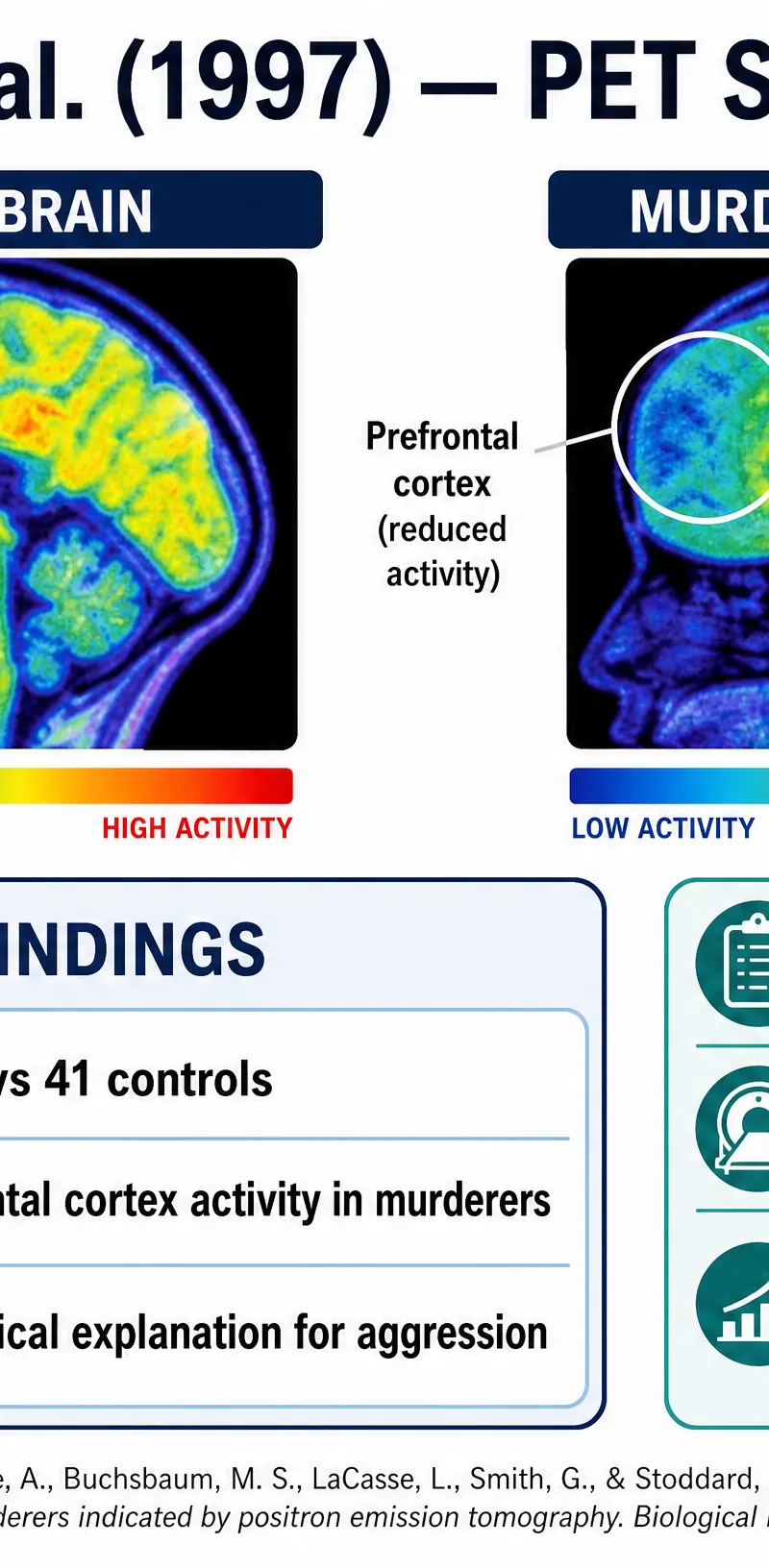
This topic is historically significant because it shifted psychology towards the natural sciences, utilising objective scanning methods like PET and fMRI. A major focus is comparing biological explanations of aggression with Freud's psychodynamic approach, and understanding the classic Raine et al. (1997) study on murderers' brains.

Key Concepts & Biological Mechanisms
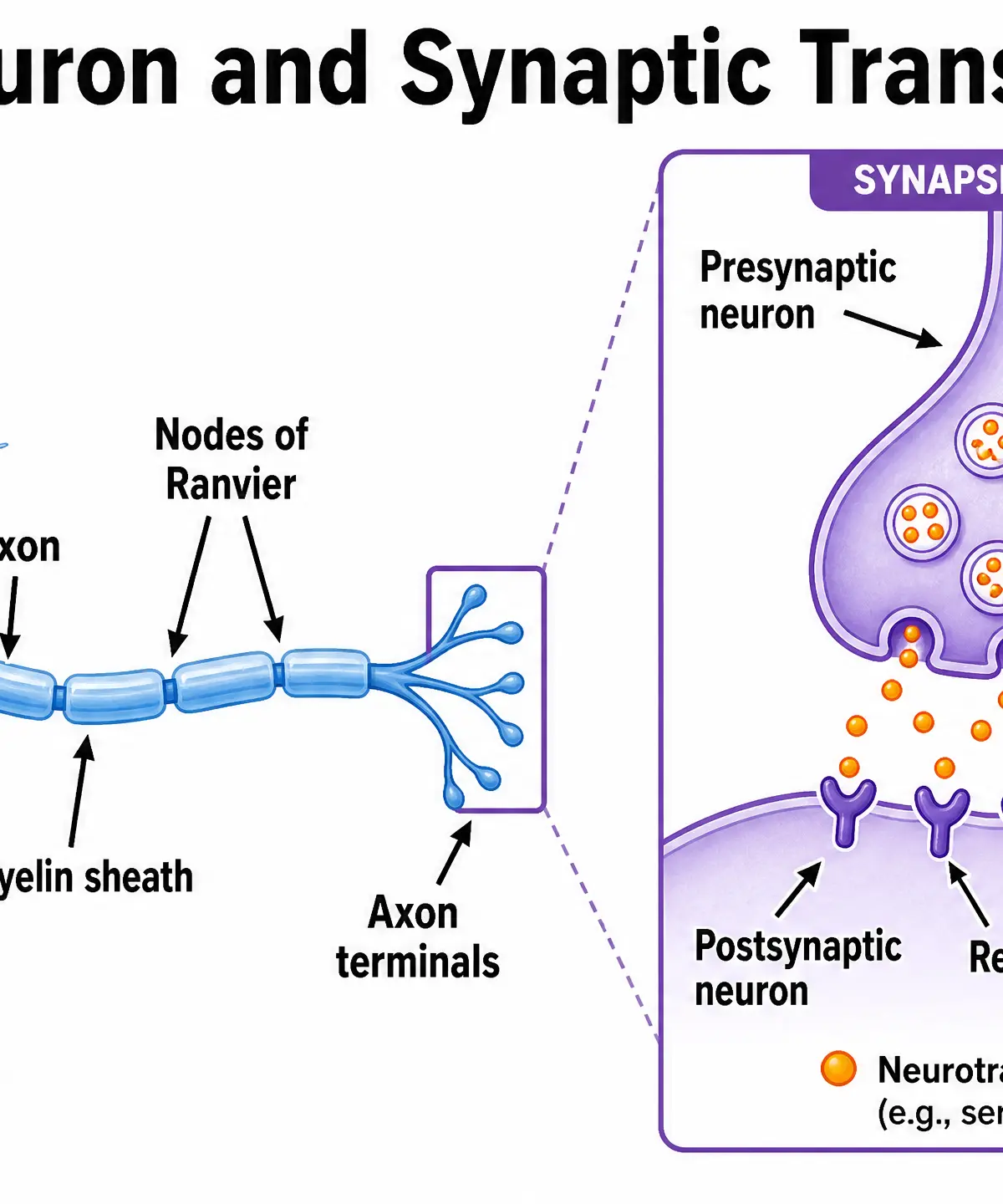
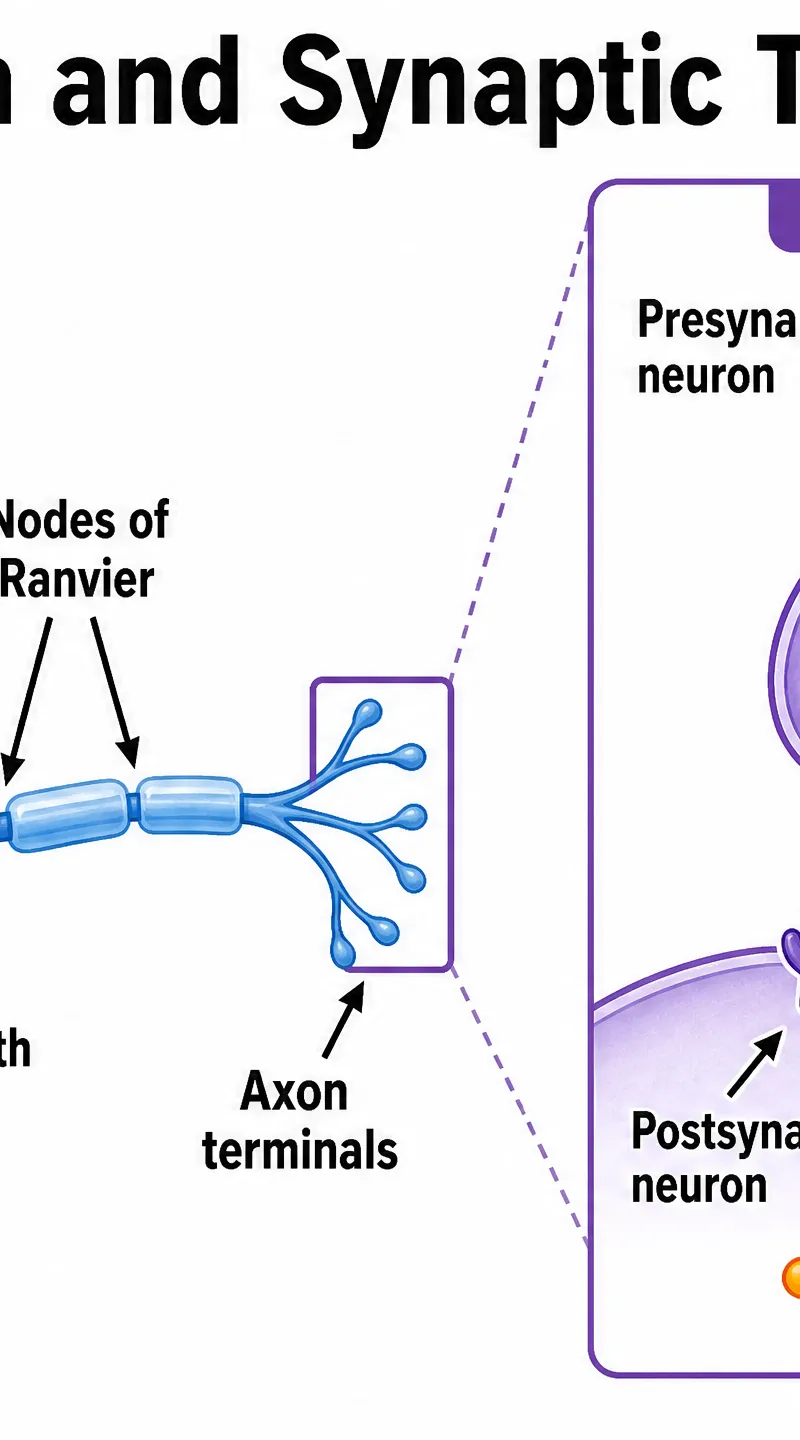
The Neuron and Synaptic Transmission
Structure: Neurons are specialised cells transmitting electrical and chemical signals. Key parts include the cell body, dendrites, axon, and myelin sheath.
Process: Signals travel electrically down the axon but cross the synaptic cleft chemically via neurotransmitters (e.g., serotonin, dopamine). These bind to receptor sites on the postsynaptic neuron.
Exam Relevance: You must be able to describe this process sequentially. Examiners often ask how recreational drugs affect transmission (e.g., blocking reuptake).
Brain Structure and Aggression
The Prefrontal Cortex: Located at the front of the brain, this area regulates emotion and impulse control. Dysfunction here is heavily linked to aggressive behaviour.
Hormones: Testosterone is the primary hormone linked to aggression. Remember that correlation does not equal causation—testosterone levels can rise as a result of aggression, not just cause it.
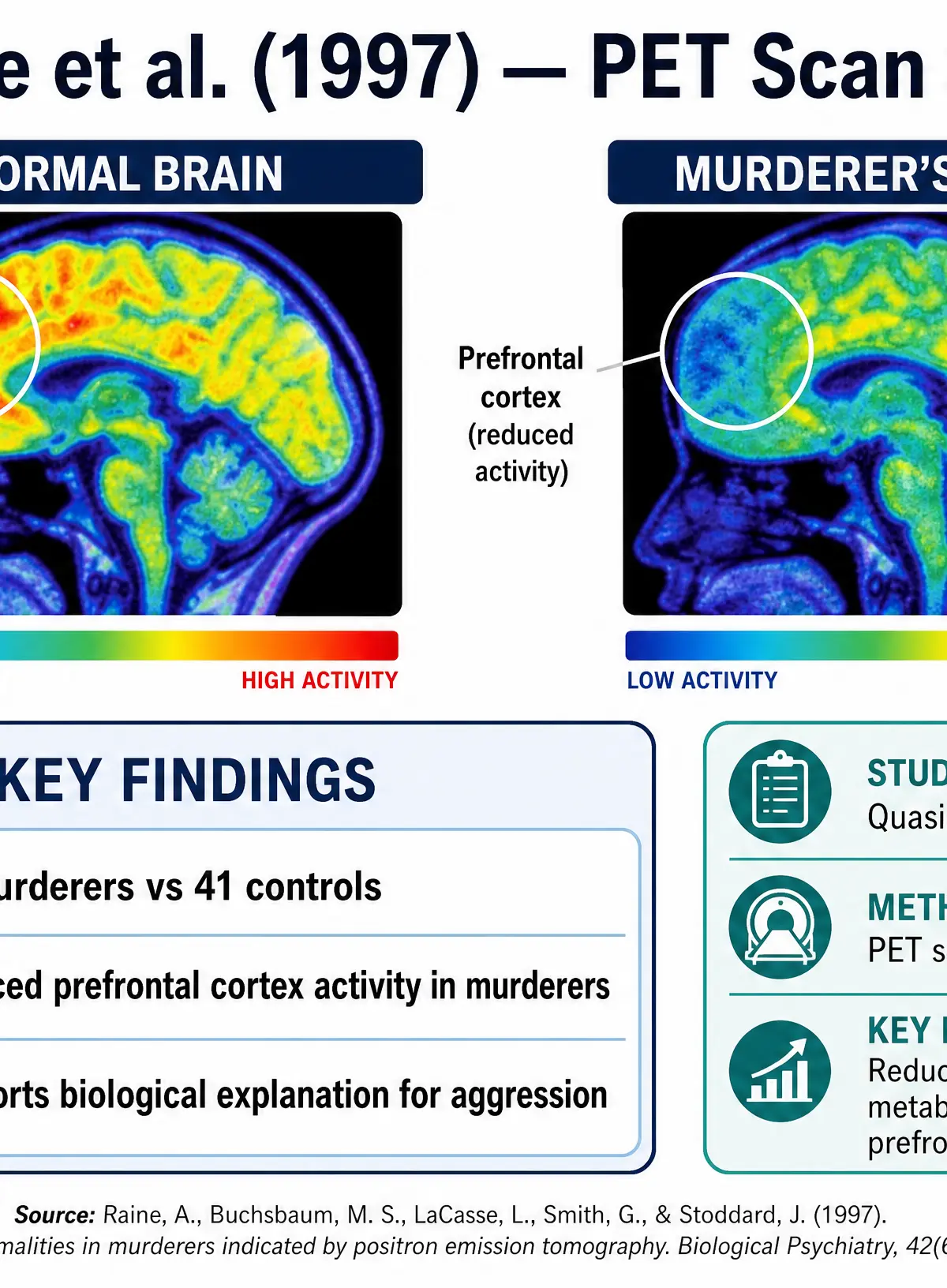
The Classic Study: Raine et al. (1997)
Aim: To investigate whether murderers who pleaded not guilty by reason of insanity (NGRI) showed brain abnormalities compared to a control group.
Method: A quasi-experiment using PET scanning. 41 murderers (39 men, 2 women) were matched with 41 controls.
Findings: Murderers showed significantly reduced glucose metabolism in the prefrontal cortex compared to controls.
Conclusion: Reduced prefrontal cortex activity may predispose individuals to violence by impairing impulse control.
Explaining Aggression: Biological vs Psychodynamic
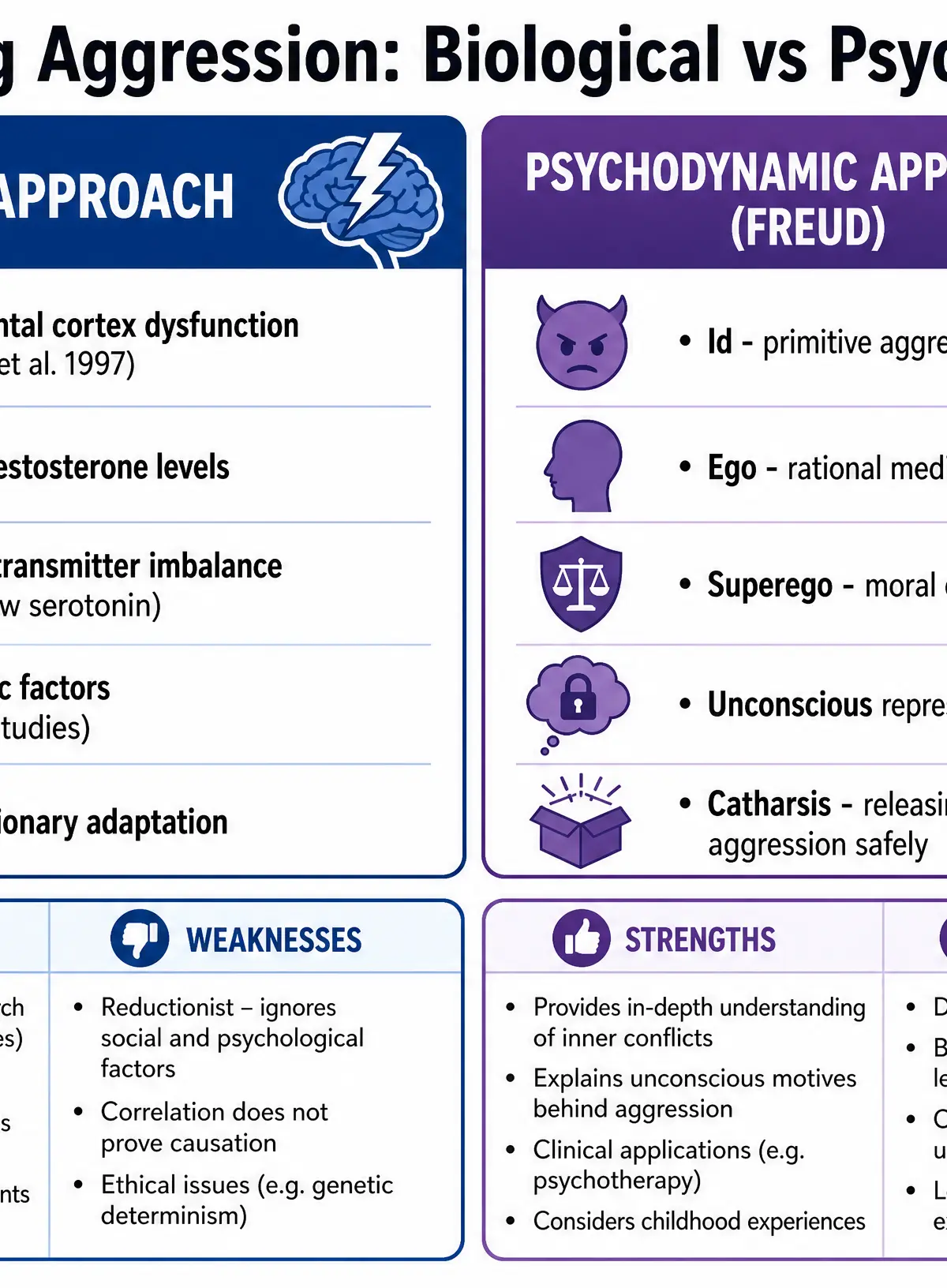
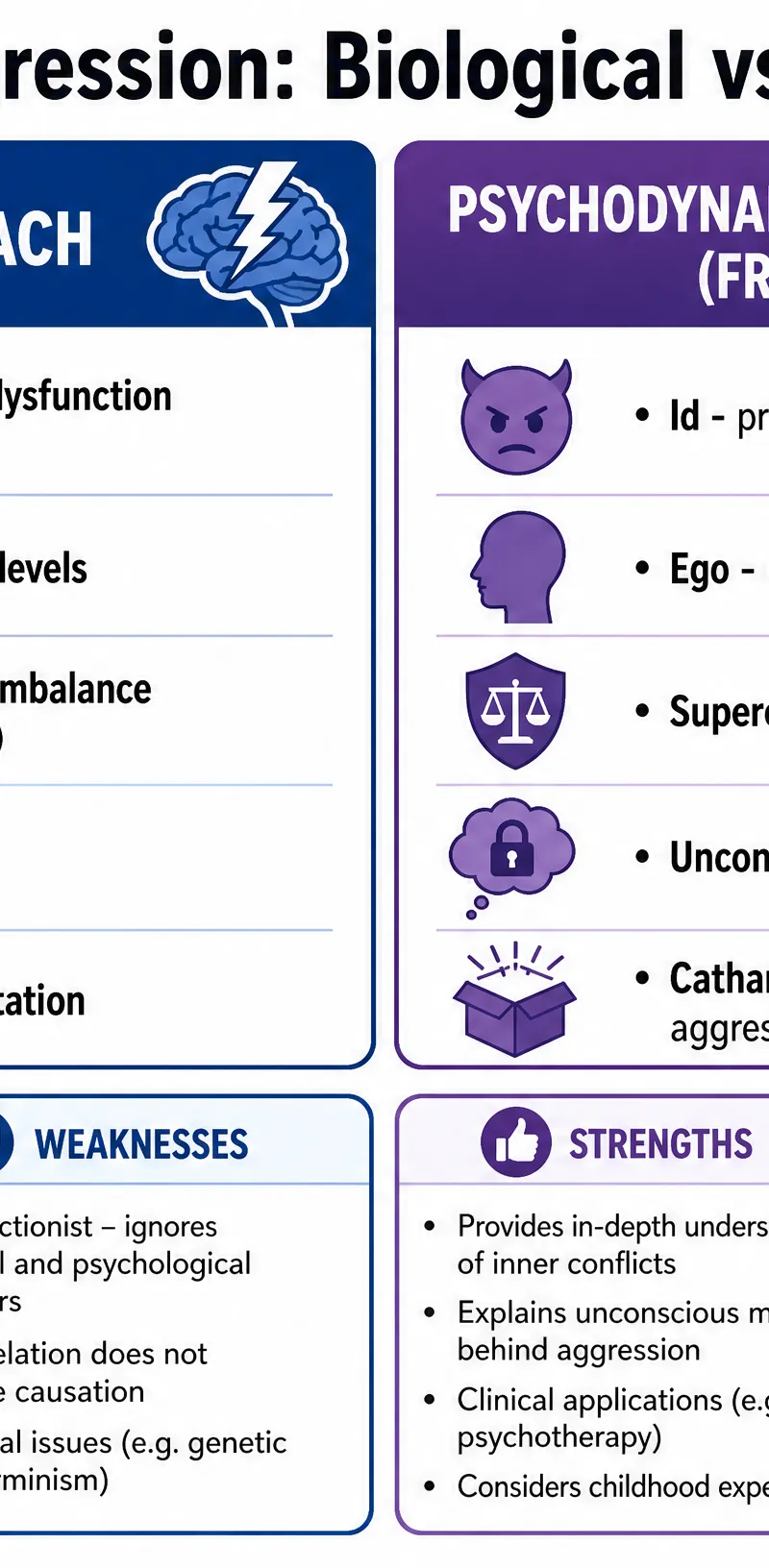
Examiners frequently ask for comparisons between these two approaches. The biological approach focuses on measurable physical factors (brain structure, genes). Freud's psychodynamic approach focuses on the unconscious mind, proposing that aggression stems from the 'id' and requires 'catharsis' to be released safely.
Research Methods in Biological Psychology
Brain Scanning Techniques
- CAT Scans: Uses X-rays for 3D structural images. Good for finding tumours, but shows no brain activity.
- PET Scans: Measures glucose metabolism to show brain activity (used by Raine). Involves radioactive tracers.
- fMRI: Measures blood flow in the brain. Excellent spatial resolution and non-invasive.
Correlational Research
Measures the relationship between two co-variables without manipulation. Displayed on scatter diagrams. The inferential test used is Spearman's rho.
Crucial Exam Rule: Correlation does not equal causation.
Podcast Revision
Listen to the revision podcast for a full walkthrough of the topic, exam tips, and a quick-fire recall quiz.
Visual Resources
3 diagrams and illustrations
Interactive Diagrams
1 interactive diagram to visualise key concepts
Conceptual Flow Outline
The Process of Synaptic Transmission
Worked Examples
3 worked examples — open one to explore the question and available guidance.
Practice Questions
Try the question, then reveal an answer plan or example response
Identify two features of a PET scan. (2 marks)
Hint: Think about what is injected and what it measures.
Explain one weakness of using twin studies to investigate aggression. (3 marks)
Hint: Think about the environments that twins grow up in.
Describe the procedure of Raine et al.'s (1997) study. (4 marks)
Hint: Who were the participants? What scanning method was used? What task did they do?
Explain the evolutionary theory of aggression. (4 marks)
Hint: Link aggression to survival, reproduction, and natural selection.
Evaluate the use of correlational research in biological psychology. (6 marks)
Hint: Discuss ethics, practicalities, and the issue of causation.
Exam technique
How to turn what you know into marks
How to approach the question
Always identify the command word first. 'Describe' means state what happens. 'Evaluate' or 'Assess' requires strengths, weaknesses, and a conclusion.
How to structure your answer
- Essay questions
- Introduction outlining both sides -> 2/3 comparison paragraphs using PEEL -> Sustained conclusion.
- Source questions
- Identify the data in the source -> Apply biological theory to explain it -> Discuss limitations of the data.
- Explain questions
- Point -> Evidence (Study/Theory) -> Explanation -> Link back to the question.
Timing
Approximately 1 minute per mark. Spend 12-15 minutes on a 12-mark essay.
Common pitfalls
- Saying 'correlation proves causation' (it never does).
- Vague evaluation of brain scans (e.g., 'it's bad because it's in a lab' - you must be specific about spatial resolution or radiation).
- Describing Freud's theory when asked for the biological theory.
What the command words want
- Compare
- Identify similarities and differences between two approaches.
- Explain
- Give reasons how or why something happens.
- Describe
- Give a detailed account of a process or study.
- Evaluate
- Judge the value or success of a theory/study by looking at strengths and weaknesses.
Watch or listen (optional)
Test your understanding of Topic 3: Biological psychology
Active recall beats re-reading. Take an instant quiz now to test what you’ve learned and lock it into long-term memory.
7 days Premium · Then the free plan continues · No card, no charge