OCR · GCSE · Psychology
Bystander Behaviour
This study guide explores the fascinating psychology of bystander behaviour, focusing on the pivotal Piliavin et al. (1969) subway study. It's a deep dive into why people do—or don't—help in emergencies, providing you with the critical knowledge and exam skills needed to excel in your OCR GCSE Psychology exam.
- 5 min read
- 3 worked examples
- 3 practice questions
- 6 key terms
Study Notes
Overview
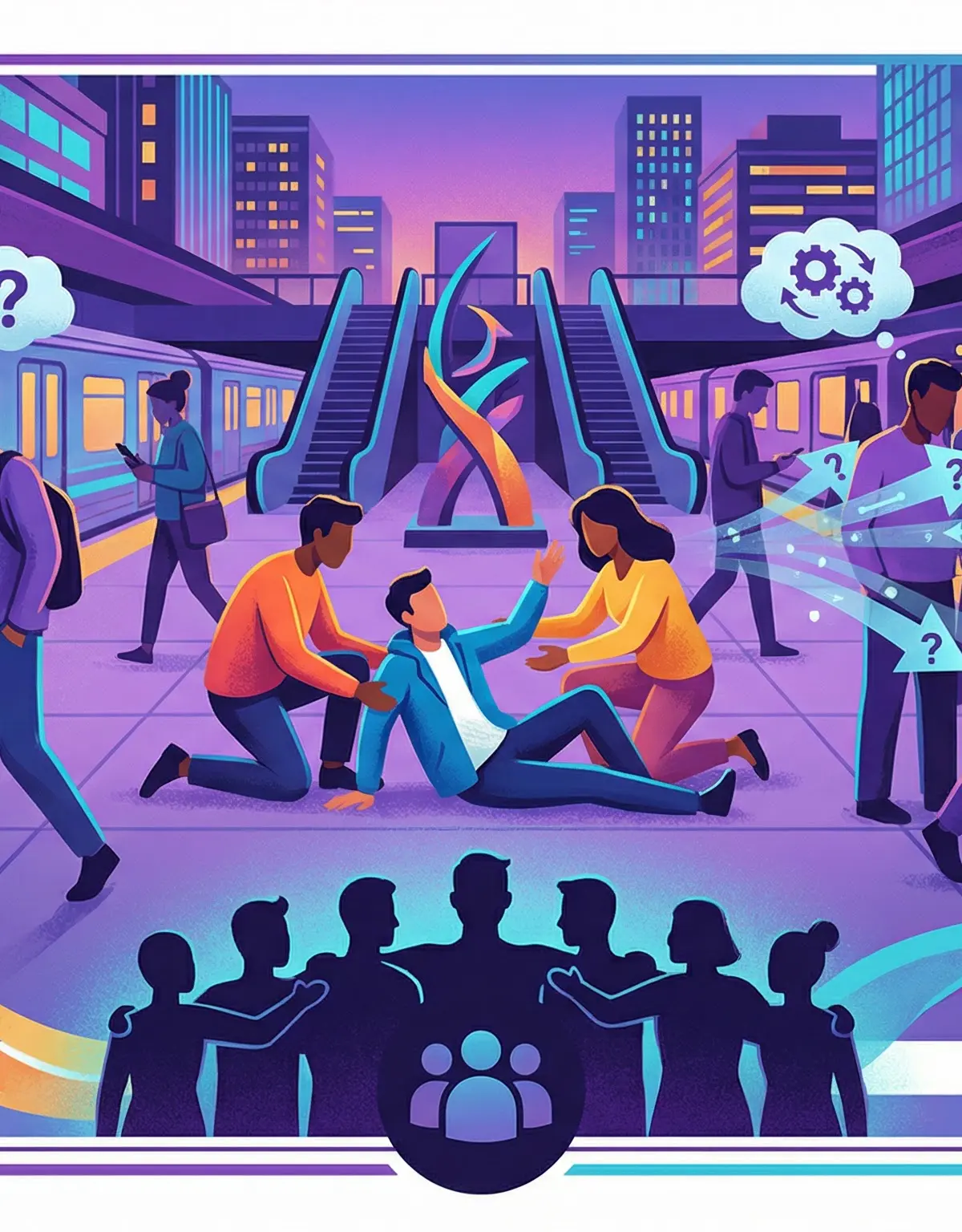
Bystander behaviour is a core topic in social psychology that examines why the presence of others can inhibit helping in an emergency. For your OCR GCSE exam, you are expected to have a detailed understanding of the situational factors that influence intervention, with a specific focus on the classic study by Piliavin, Rodin, and Piliavin (1969). This field experiment, conducted on the New York subway, challenged existing theories like 'diffusion of responsibility' and introduced the Cost-Reward Model. Examiners will expect you to know the procedure, findings, and evaluation of this study in detail, and be able to apply its concepts to novel scenarios. This guide will equip you with the precise knowledge and analytical skills to deconstruct exam questions and secure top marks.

Key Study: Piliavin, Rodin & Piliavin (1969)
The Subway Study
Date(s): 1969
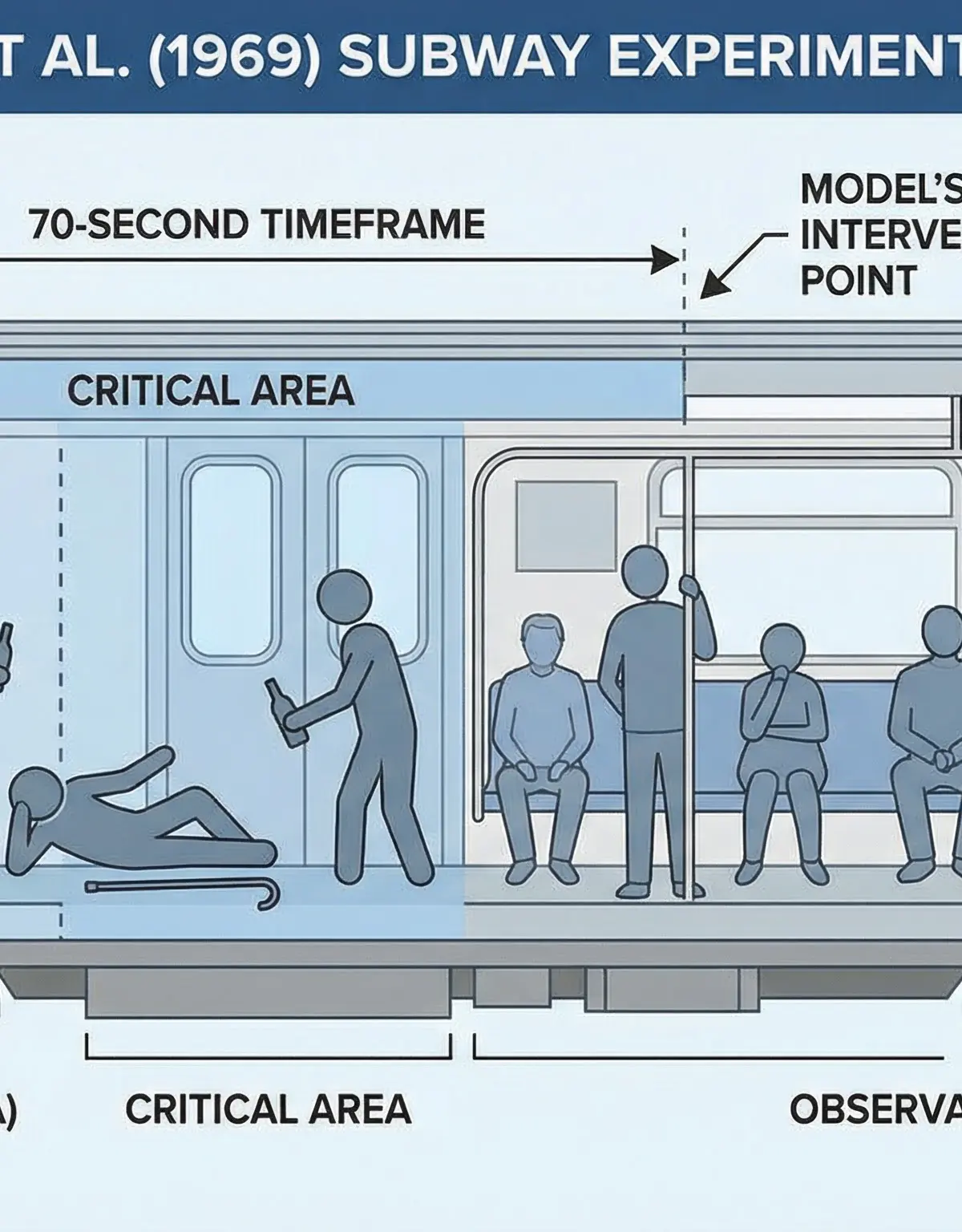
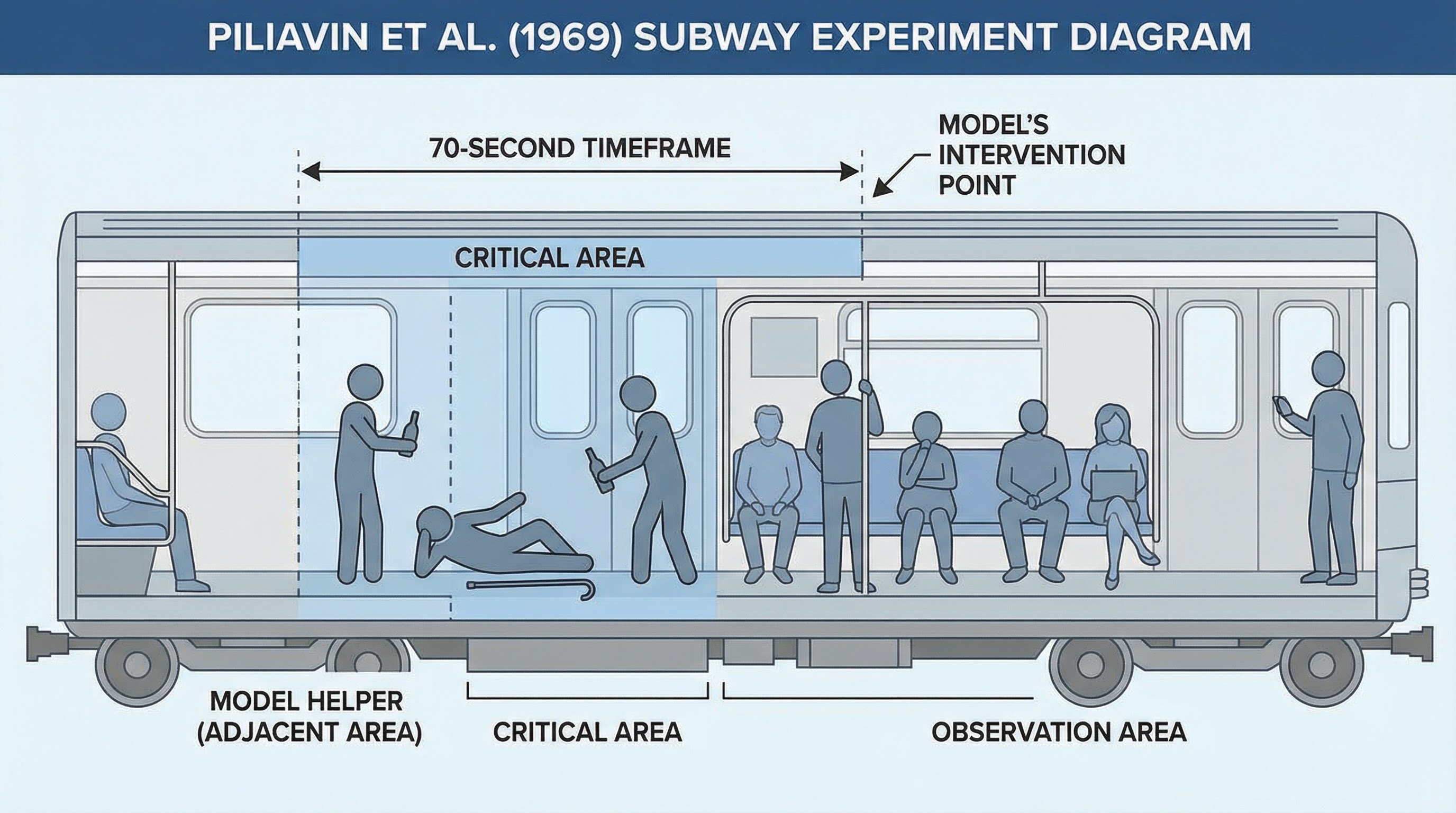
What happened: Over 103 trials, a male confederate pretended to collapse on a moving New York subway train, 70 seconds into the journey. The 'victim' either appeared ill (carrying a cane) or drunk (smelling of alcohol). A 'model' helper was instructed to intervene after 70 seconds if no one else had. Researchers observed the speed and frequency of help offered by the real passengers (approximately 4,450 in total).
Why it matters: This was a field experiment, giving it high ecological validity. Crucially, its findings did not support the widely accepted 'diffusion of responsibility' hypothesis. Instead, it showed that in a situation where bystanders cannot easily leave (a moving train), help is often provided quickly. It led to the development of a more nuanced explanation of bystander behaviour: the Cost-Reward Model.
Specific Knowledge: Candidates must know these figures: 103 trials, ~4450 participants, 7.5-minute gap between trials. The cane victim received spontaneous help on 95% of trials, compared to 50% for the drunk victim. Help was quicker and more frequent when more passengers were in the immediate vicinity.
Key Concepts
Bystander Effect & Diffusion of Responsibility
Definition: The bystander effect is the finding that the presence of other people reduces the likelihood of an individual helping in an emergency. Diffusion of responsibility is the psychological process behind this, where each person feels less personal obligation because they assume someone else will take action. Piliavin's study is significant for challenging the universality of this effect.
The Cost-Reward Model of Helping
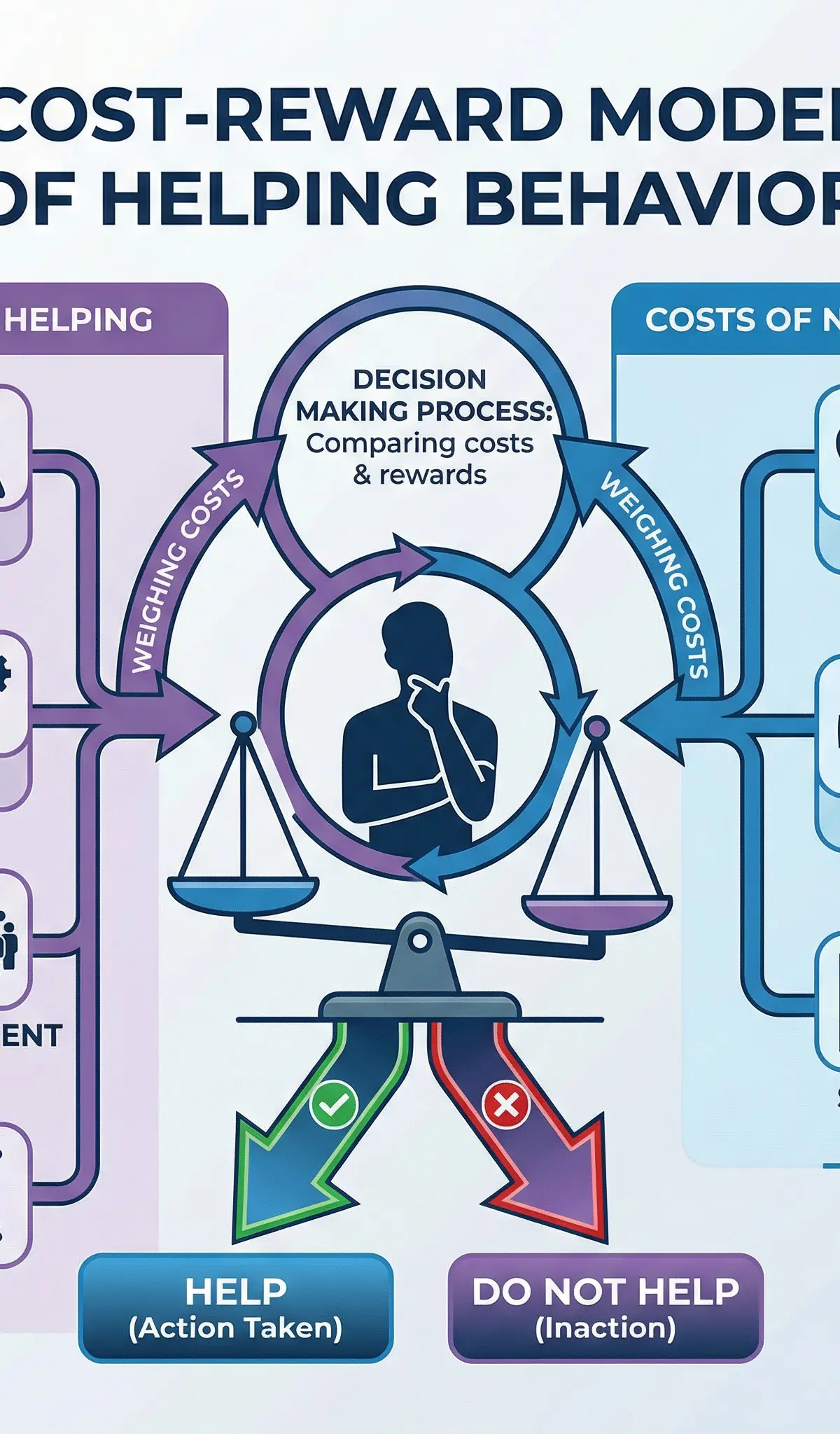
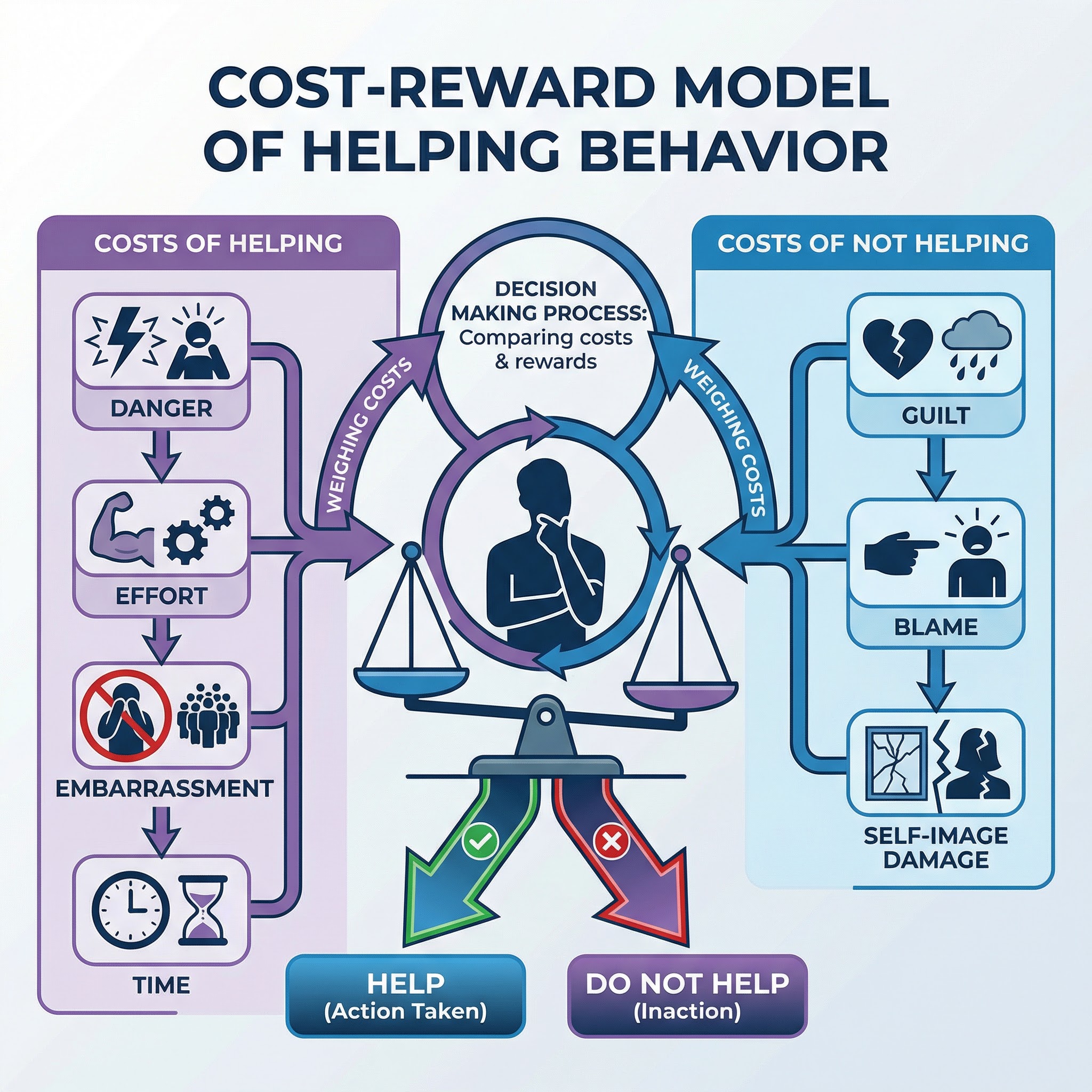
What it is: Proposed by Piliavin, this model suggests that bystanders go through a cognitive calculation before deciding to help. They weigh the 'costs of helping' (e.g., physical danger, embarrassment, effort) against the 'costs of not helping' (e.g., guilt, social disapproval, anxiety). If the costs of not helping are higher, they are more likely to intervene. This model explains why the trapped subway passengers helped so readily.
Application: Examiners will give you a scenario and expect you to apply this model. For example, if a person collapses in a quiet library, the costs of helping (embarrassment) might feel higher than in a busy, noisy train station.
Second-Order Concepts
Situational vs. Dispositional Factors
Situational: These are factors in the environment that influence behaviour. Piliavin's study focused on these, such as the type of victim (cane vs. drunk), the number of bystanders, and the physical environment (a contained subway car). These were shown to be powerful predictors of helping.
Dispositional: These are internal characteristics of the individual, such as personality (e.g., being empathetic) or mood. While potentially a factor, Piliavin's work demonstrated that the situation can often override a person's disposition.
Research Methods Evaluation
Field Experiment: This study is a prime example of a field experiment. You must be able to evaluate this method. Strengths include high ecological validity as the behaviour is natural. Weaknesses include a lack of control over extraneous variables (e.g., passengers' mood, time of day) and significant ethical issues (deception, no consent, no right to withdraw, potential psychological distress).
Visual Resources
2 diagrams and illustrations
Interactive Diagrams
1 interactive diagram to visualise key concepts
Conceptual Flow Outline
Flowchart of the Cost-Reward Model decision process.
Worked Examples
3 worked examples — open one to explore the question and available guidance.
Practice Questions
Test your understanding — click to reveal model answers
Describe the procedure of the Piliavin et al. (1969) subway study. (6 marks)
Hint: Include specific details about the setup, the victims, the models, and what was measured.
Explain one strength and one weakness of using a field experiment in the Piliavin et al. study. (4 marks)
Hint: Think about the trade-off between realism and control.
To what extent can bystander behaviour be explained by situational factors? (13 marks)
Hint: This is an essay question. Argue for the importance of situational factors using Piliavin, but also consider the role of dispositional factors as a counter-argument.