Applied Ethics: Sexual Ethics
This study guide provides a comprehensive overview of Applied Ethics: Sexual Ethics for Edexcel A-Level Religious Studies. It explores the complex interplay between religious doctrines and secular philosophies, equipping candidates with the critical tools needed to analyse and evaluate these sensitive issues for high marks.
Study Notes
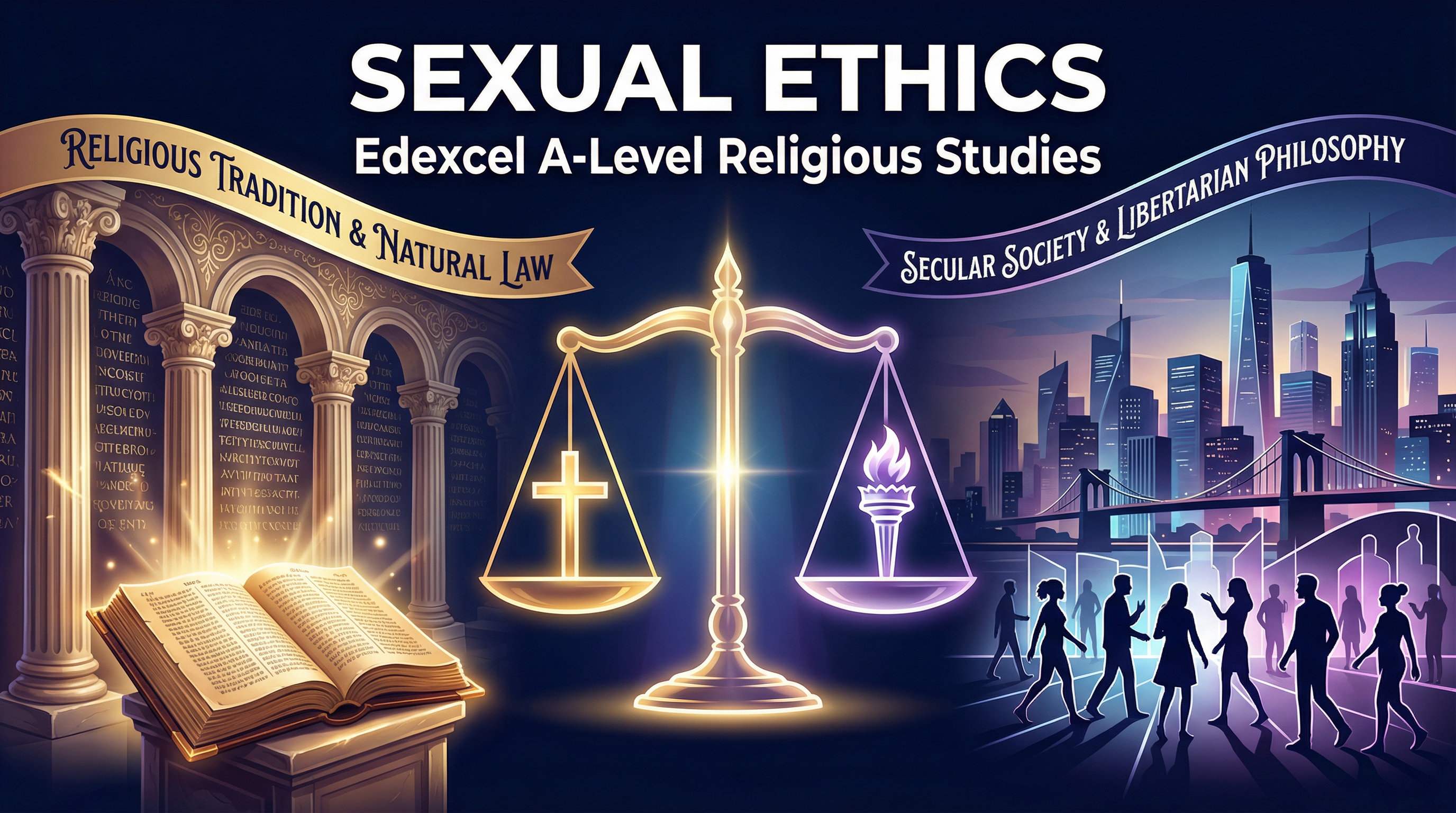
Overview
Welcome to one of the most dynamic and challenging topics in the Edexcel A-Level Religious Studies specification. Sexual Ethics requires candidates to move beyond simple description and apply complex ethical theories to real-world moral dilemmas. Examiners are looking for a nuanced understanding of the tension between deontological, rule-based ethics (like Natural Moral Law and Kantian Ethics) and teleological, outcome-based ethics (like Utilitarianism and Situation Ethics). This guide will break down the key debates surrounding premarital sex, extramarital sex, and homosexuality, providing the specific knowledge and analytical frameworks required to achieve the highest grades. You will learn to contrast traditional religious teachings, such as those found in Humanae Vitae, with liberal secular arguments, like J.S. Mill's Harm Principle, to construct sophisticated, well-supported arguments. Success in this topic demonstrates not just what you know, but how well you can think critically about enduring human questions.
Key Concepts & Debates
Natural Moral Law vs. Situation Ethics
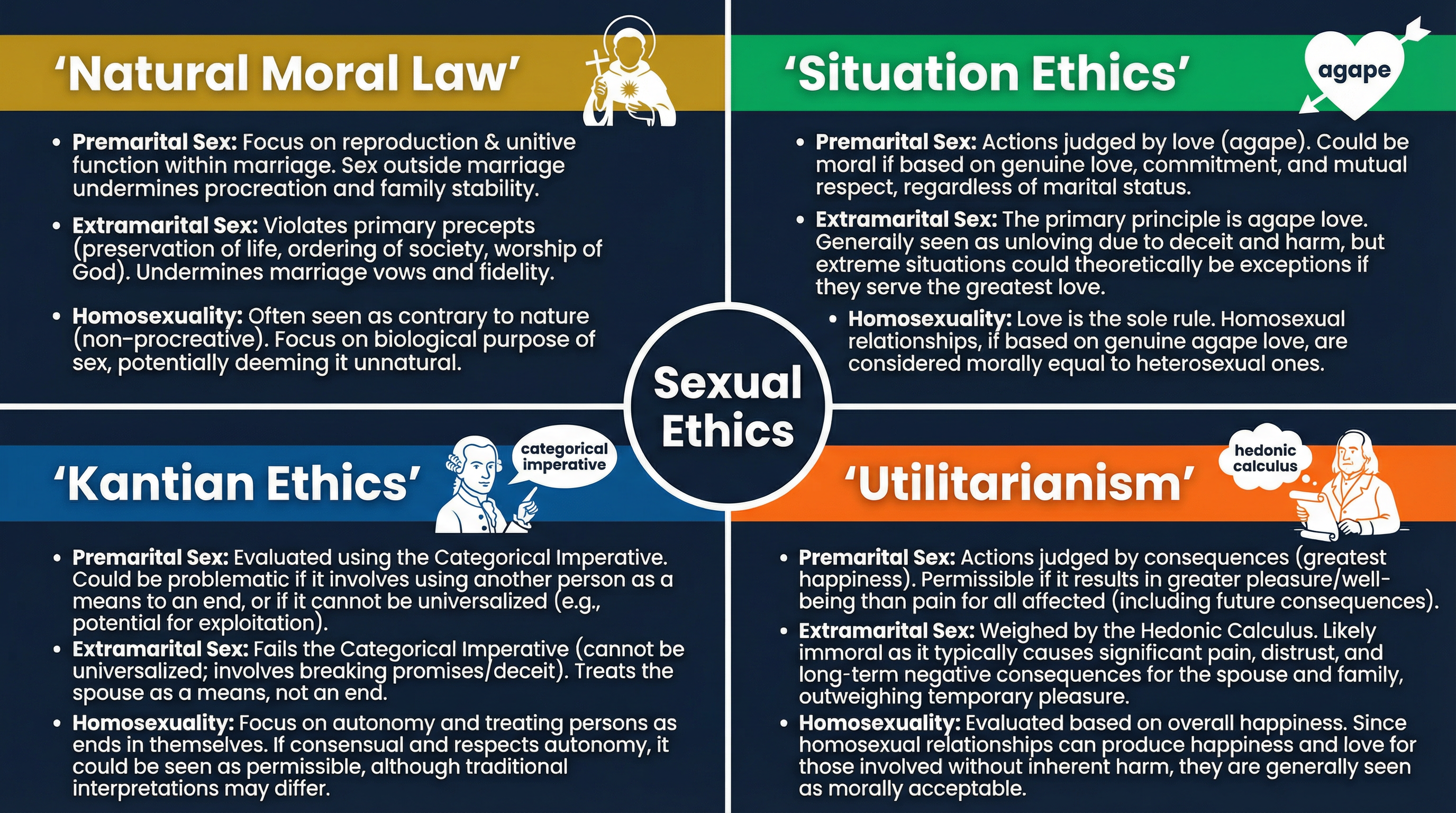
The Core Tension: This is a classic clash between absolute rules and situational love. Natural Moral Law (NML), developed by Aquinas, posits that the purpose (telos) of sex is twofold: procreation and union within marriage. Any sexual act that frustrates this purpose (e.g., homosexual acts, sex with contraception) is intrinsically wrong. In stark contrast, Joseph Fletcher's Situation Ethics argues that the only intrinsic good is agape love. Any action, including premarital or even extramarital sex, could be justified if it is the most loving thing to do in a particular situation. Examiners expect you to use this fundamental conflict to structure your essays.
Specific Knowledge: For NML, cite the primary precepts (reproduction, ordered society) and Humanae Vitae (1968). For Situation Ethics, reference Fletcher's 'sacrificial adultery' example and John Robinson's Honest to God (1963).
Religious vs. Secular Authority
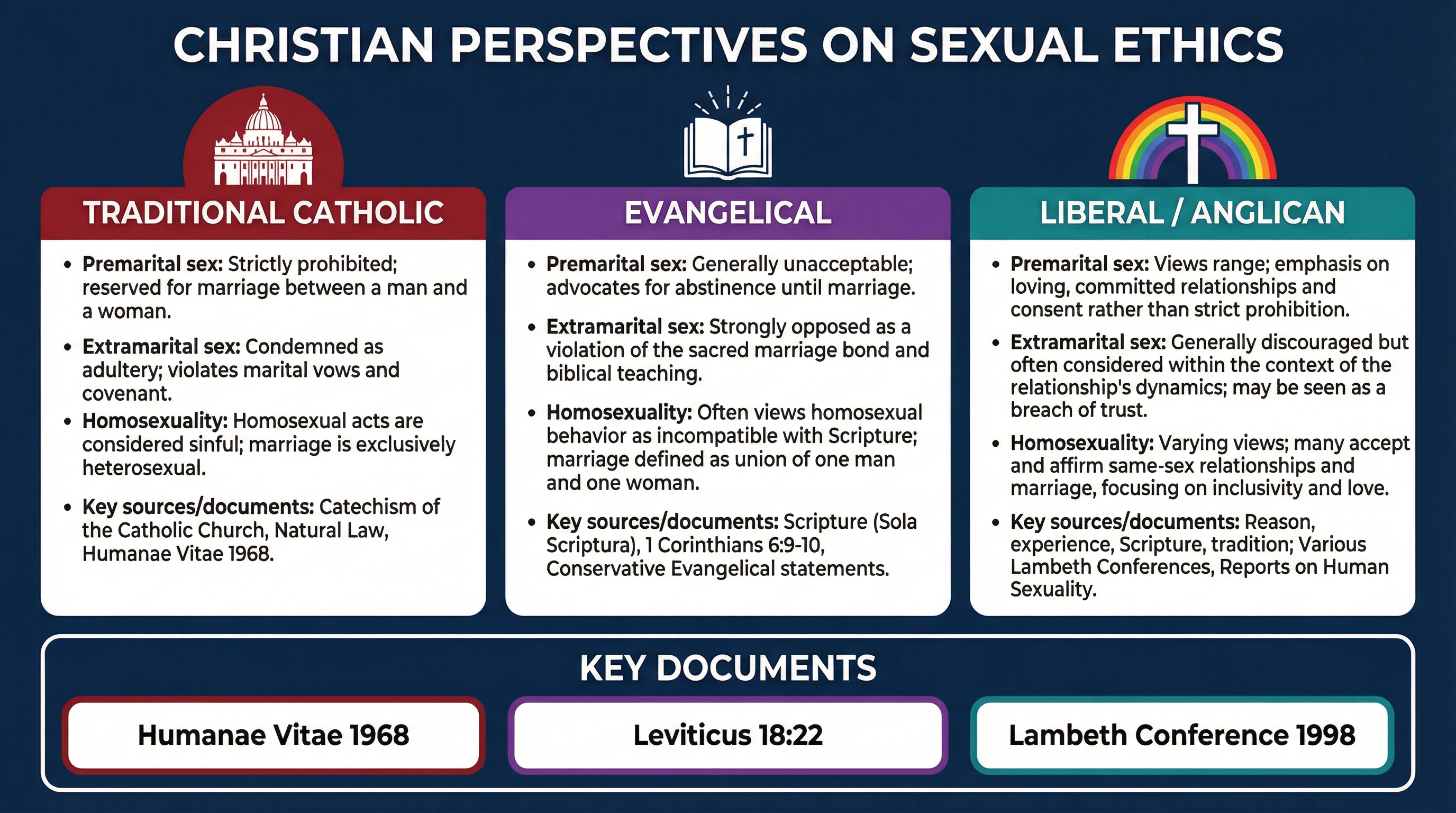
The Core Tension: This debate pits divine command and church tradition against individual autonomy and reason. Religious perspectives, particularly traditional Catholic and Evangelical views, derive their authority from scripture (e.g., Leviticus 20:13) and church documents. Secular perspectives, particularly libertarianism, champion individual freedom. J.S. Mill's Harm Principle is the cornerstone here: the only justification for state interference is to prevent harm to others. This was pivotal in the arguments of the Wolfenden Report (1957), which distinguished between sin and crime, paving the way for the decriminalisation of homosexuality.
Specific Knowledge: Contrast the Lambeth Conference (1998) Resolution 1.10, which called homosexual practice 'incompatible with Scripture', with Mill's arguments in On Liberty (1859).
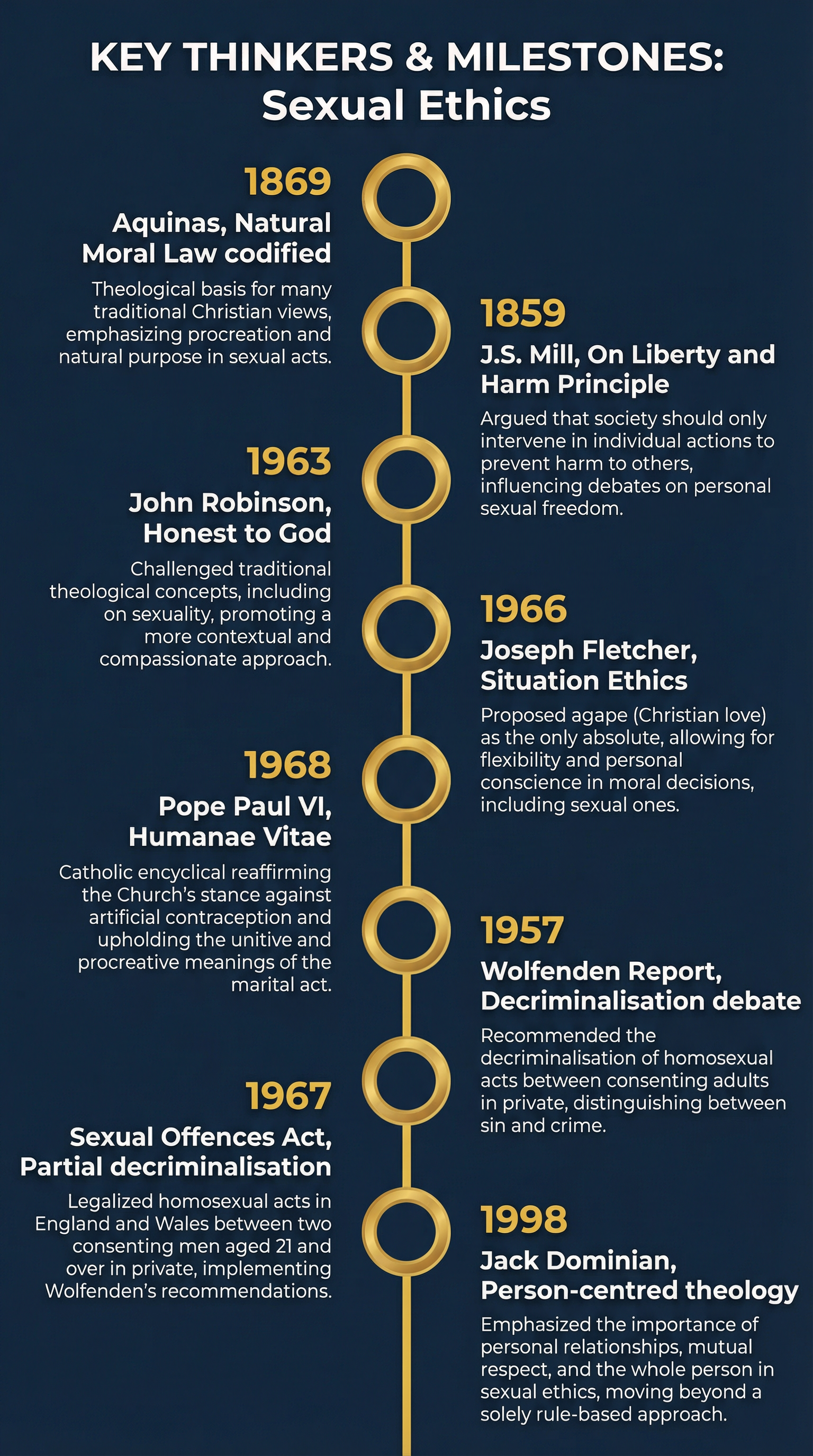
Key Thinkers & Developments
This timeline provides a framework for understanding how the conversation around sexual ethics has evolved. Tracing these developments is crucial for AO1, and using them to show change over time is a high-level AO2 skill.
Second-Order Concepts
Causation
Key causal factors in the changing landscape of sexual ethics include: the development of reliable contraception which separated sex from procreation; the rise of secularism and individualism which challenged religious authority; and the influence of key liberal thinkers like Mill and Fletcher who provided a philosophical basis for reform.
Consequence
The consequences have been profound: increased social acceptance of premarital sex and cohabitation; the legalisation and growing acceptance of same-sex relationships and marriage; and deep divisions within religious communities, particularly the Anglican Communion, over these issues.
Change & Continuity
Change: There has been a dramatic shift in societal norms away from traditional Christian teachings. The idea that sex is only permissible within heterosexual marriage is no longer the dominant view in the UK. Continuity: Despite these changes, the official teachings of the Catholic Church and many Evangelical denominations have remained consistent, holding to a traditional, scripturally-based sexual ethic.
Significance
The debate over sexual ethics is significant because it represents a key battleground between religious tradition and modern secular values. It forces a re-examination of the sources of moral authority, the nature of marriage, and the meaning of personal freedom. For the exam, its significance lies in its ability to test your understanding of the core principles of major ethical theories.
Worked Examples
3 detailed examples with solutions and examiner commentary
Practice Questions
Test your understanding — click to reveal model answers
Examine the teachings of the Natural Law tradition on extramarital sex. (10 marks)
Hint: Focus on the primary precepts and the purpose of marriage within an ordered society.
'Kantian ethics provides a helpful approach to the issue of homosexuality.' Evaluate this view. (20 marks)
Hint: Focus your evaluation on the Second Formulation of the Categorical Imperative (means/ends). Can you universalise homosexuality? Does it matter?
Examine how a follower of Utilitarianism might approach the issue of premarital sex. (10 marks)
Hint: Think about the consequences. Who is affected? What is the balance of pleasure vs. pain?
Examine the contribution of the Wolfenden Report to the debate on sexual ethics. (10 marks)
Hint: Focus on the distinction between crime and sin.
'Religious approaches to sexual ethics are no longer relevant in the 21st century.' Evaluate this view. (20 marks)
Hint: Consider the influence of religious views on law and culture, as well as the guidance they provide to believers. Contrast this with the rise of secularism.