WJEC · A-Level · Religious Studies
Arguments for the Existence of God: Design (Teleological)
This study guide delves into the Teleological Argument for God's existence, a cornerstone of WJEC A-Level Religious Studies. It traces the argument from Aquinas's medieval concept of governance to Paley's famous Watchmaker Analogy and Tennant's modern scientific updates, providing candidates with the essential knowledge and analytical skills to excel in their exams.
- 5 min read
- 3 worked examples
- 5 practice questions
- 7 key terms
Study Notes
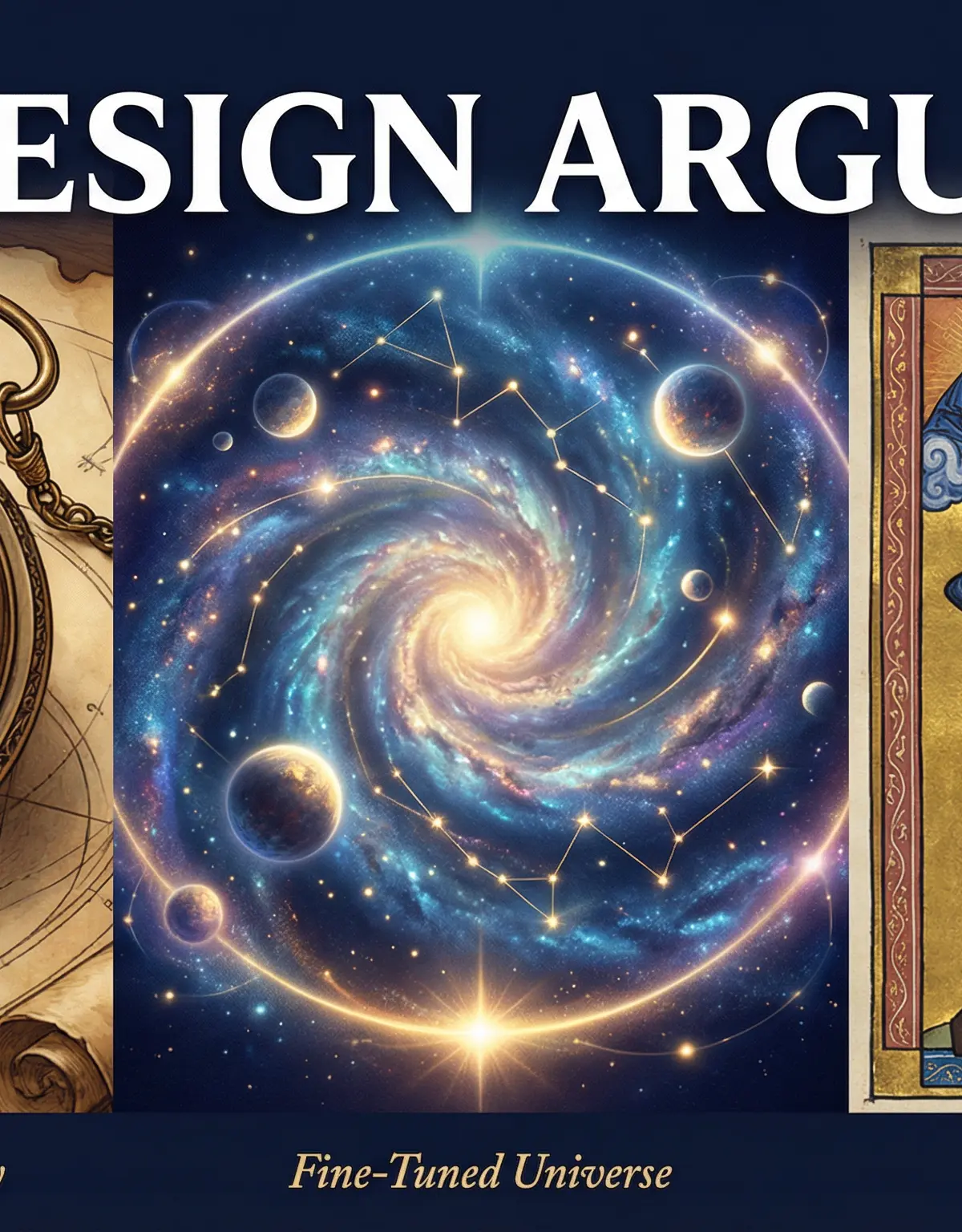
Overview
The Teleological Argument, or the Design Argument, is an inductive, a posteriori argument for the existence of God based on the apparent order, purpose, and complexity in the universe. For the WJEC A-Level, candidates must demonstrate a precise understanding of its key proponents and critics. Examiners expect a clear grasp of the argument's development from classical to contemporary forms, and the ability to critically evaluate its strengths and weaknesses. This involves not just memorising names, but understanding the logical steps of each thinker's position and how they relate to one another. High-level responses will move beyond simple description to a sustained, analytical engagement with the core philosophical issues, such as the validity of analogy, the challenge of evolution, and the nature of inductive reasoning itself. This guide will equip you with the detailed knowledge and exam technique required to achieve top marks.

Key Developments & Thinkers
St. Thomas Aquinas (c. 1225-1274)
Role: Dominican friar and philosopher who formulated five arguments for God's existence, known as the 'Five Ways'.
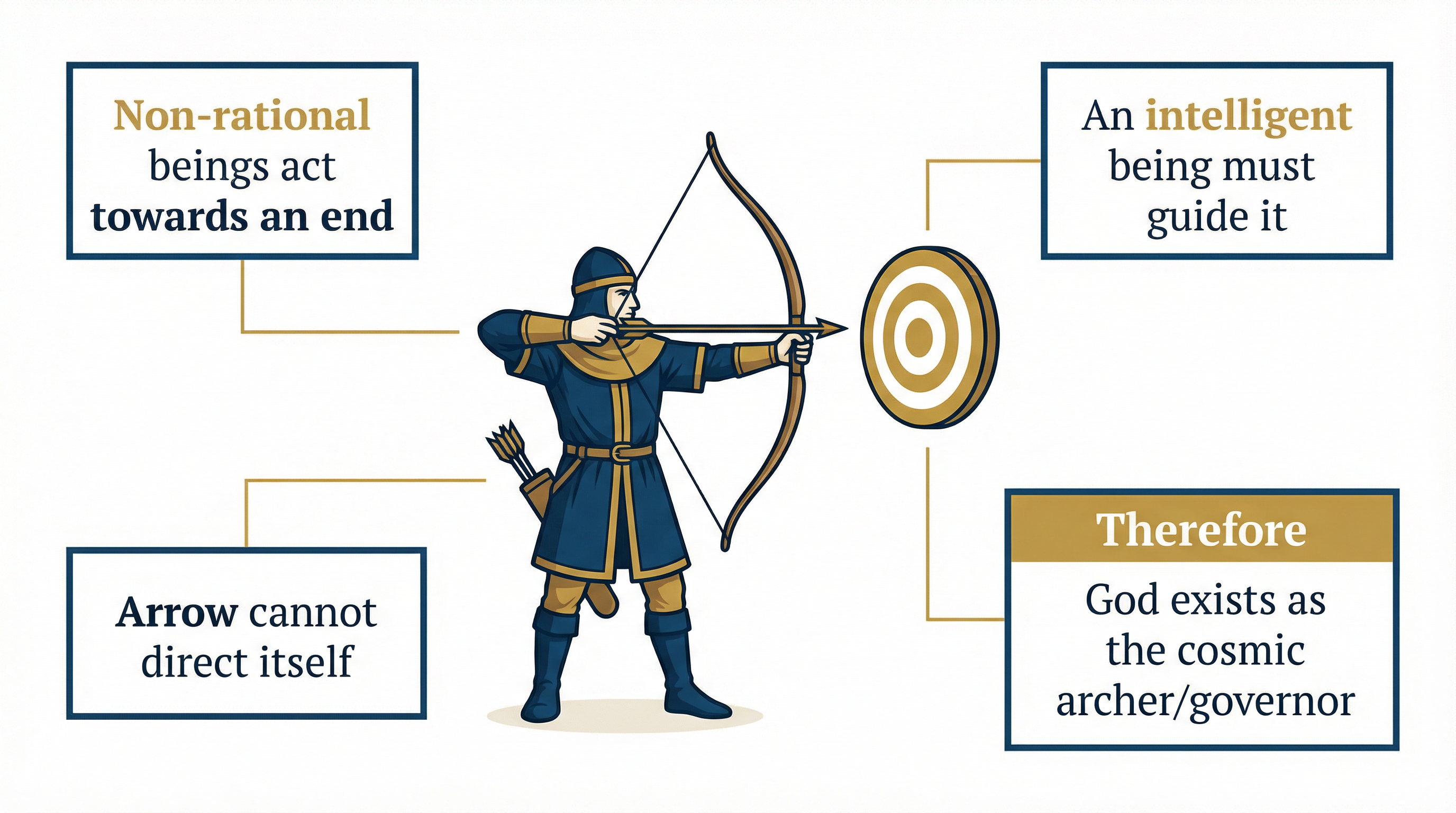
Key Actions: In his Summa Theologica, Aquinas presented the Fifth Way, the argument from the 'governance of things'. He argued that non-rational beings act towards an end or purpose, which they cannot do without guidance from an intelligent being.
Impact: Aquinas provides the classical formulation of the design argument, focusing on the idea of direction and governance rather than mechanical complexity. His archer and arrow analogy is a crucial piece of specific knowledge for exams.

William Paley (1743-1805)
Role: English clergyman and philosopher whose Natural Theology (1802) contains the most famous version of the design argument.
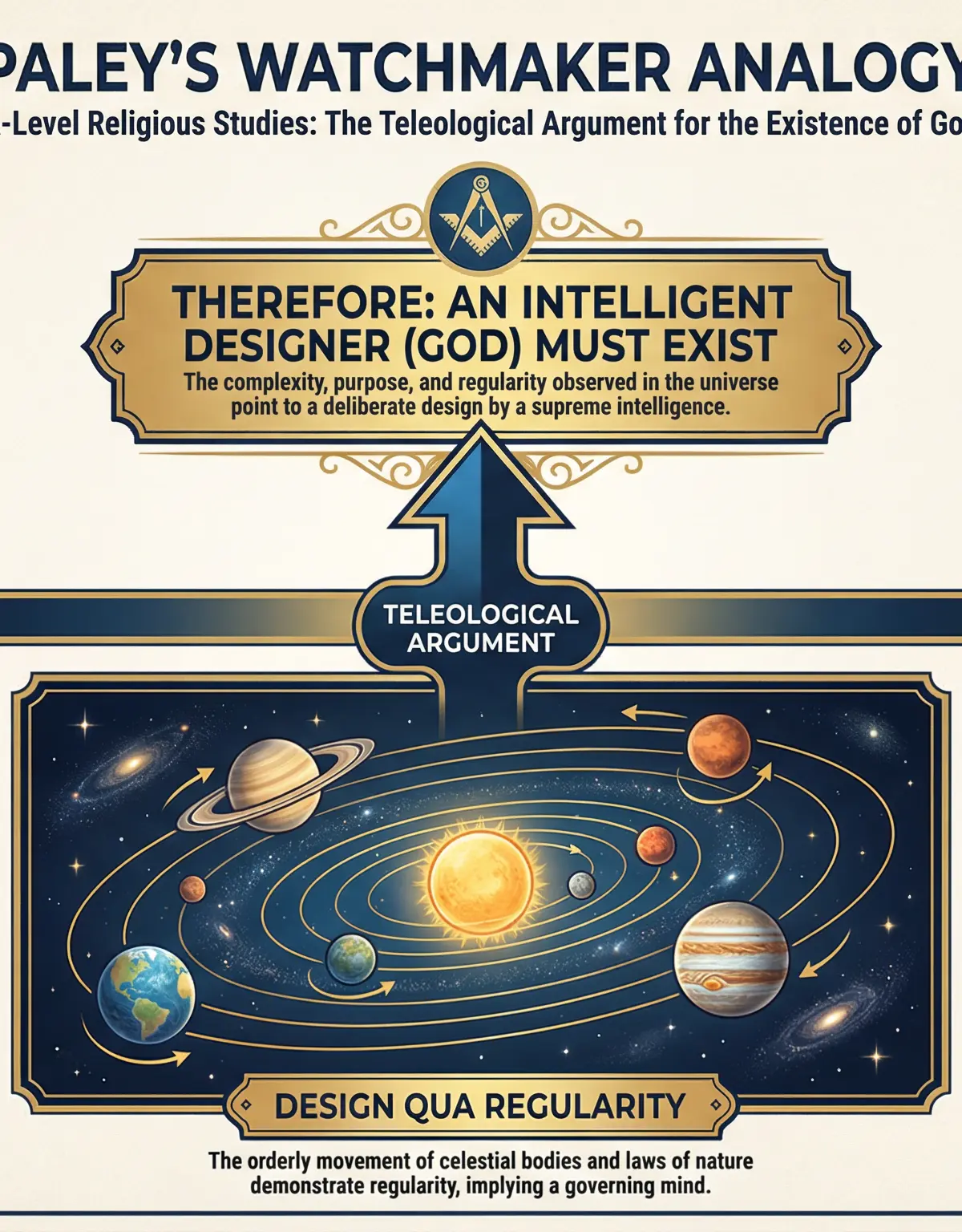
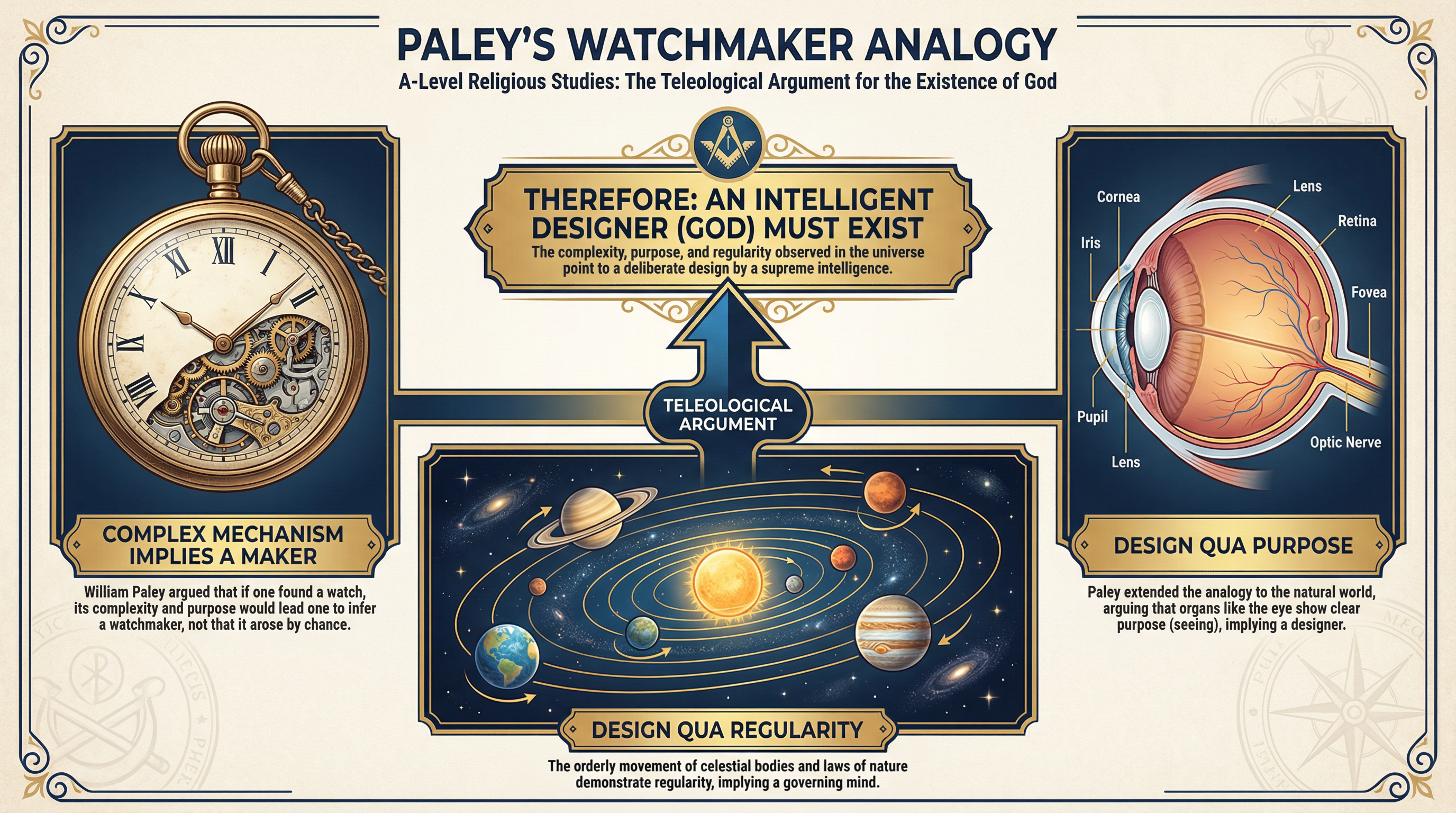
Key Actions: Paley proposed the Watchmaker Analogy. He argued that if one were to find a watch, its intricate complexity and purpose would lead one to infer a watchmaker. The natural world, being far more complex, must therefore have a divine designer.
Impact: Paley's work popularized the design argument and introduced the key distinction between 'design qua purpose' (e.g., the eye) and 'design qua regularity' (e.g., planetary orbits). This distinction is vital for AO1 marks.
F.R. Tennant (1866-1957)
Role: Cambridge philosopher of religion who updated the design argument in light of modern science in his Philosophical Theology (1930).
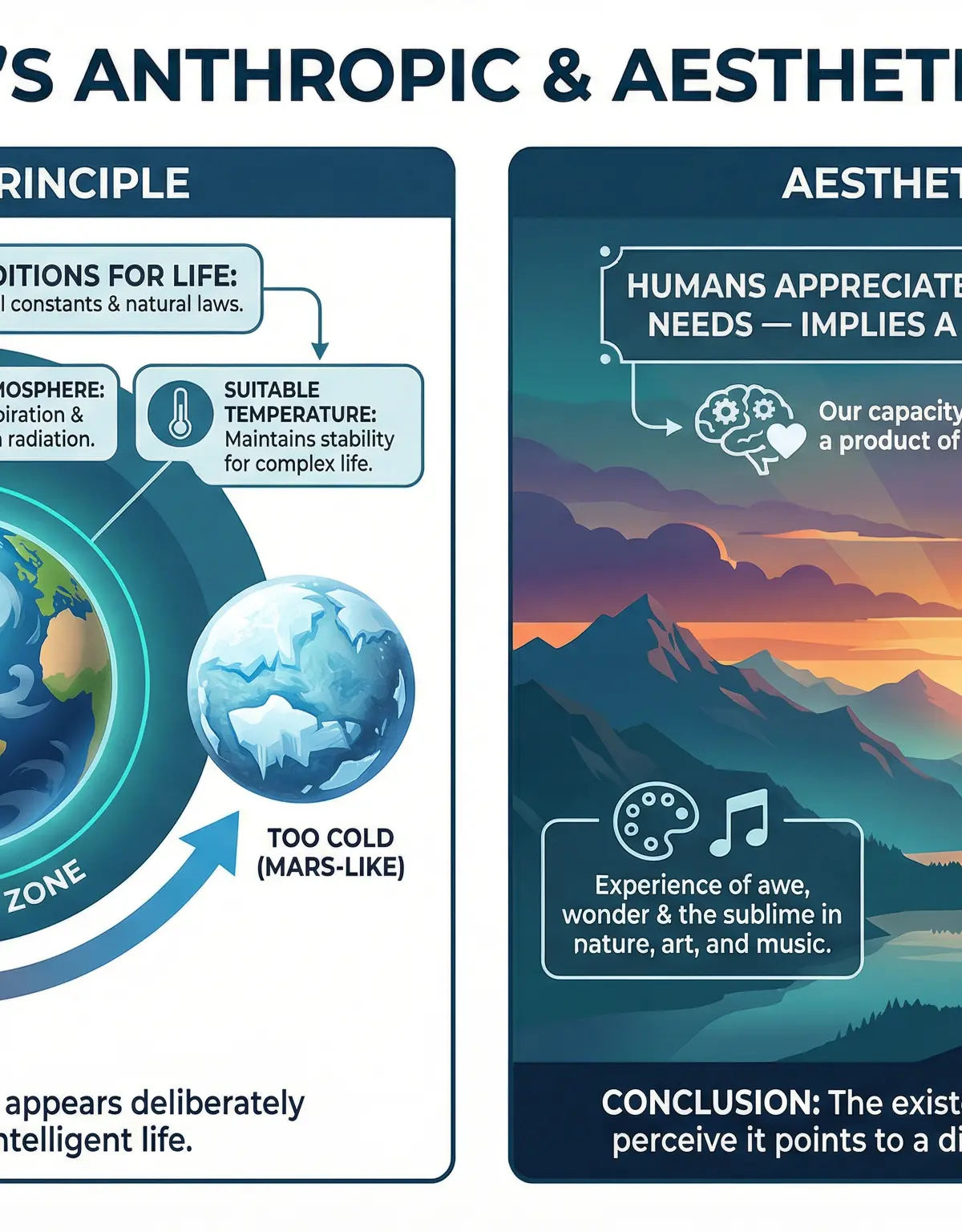
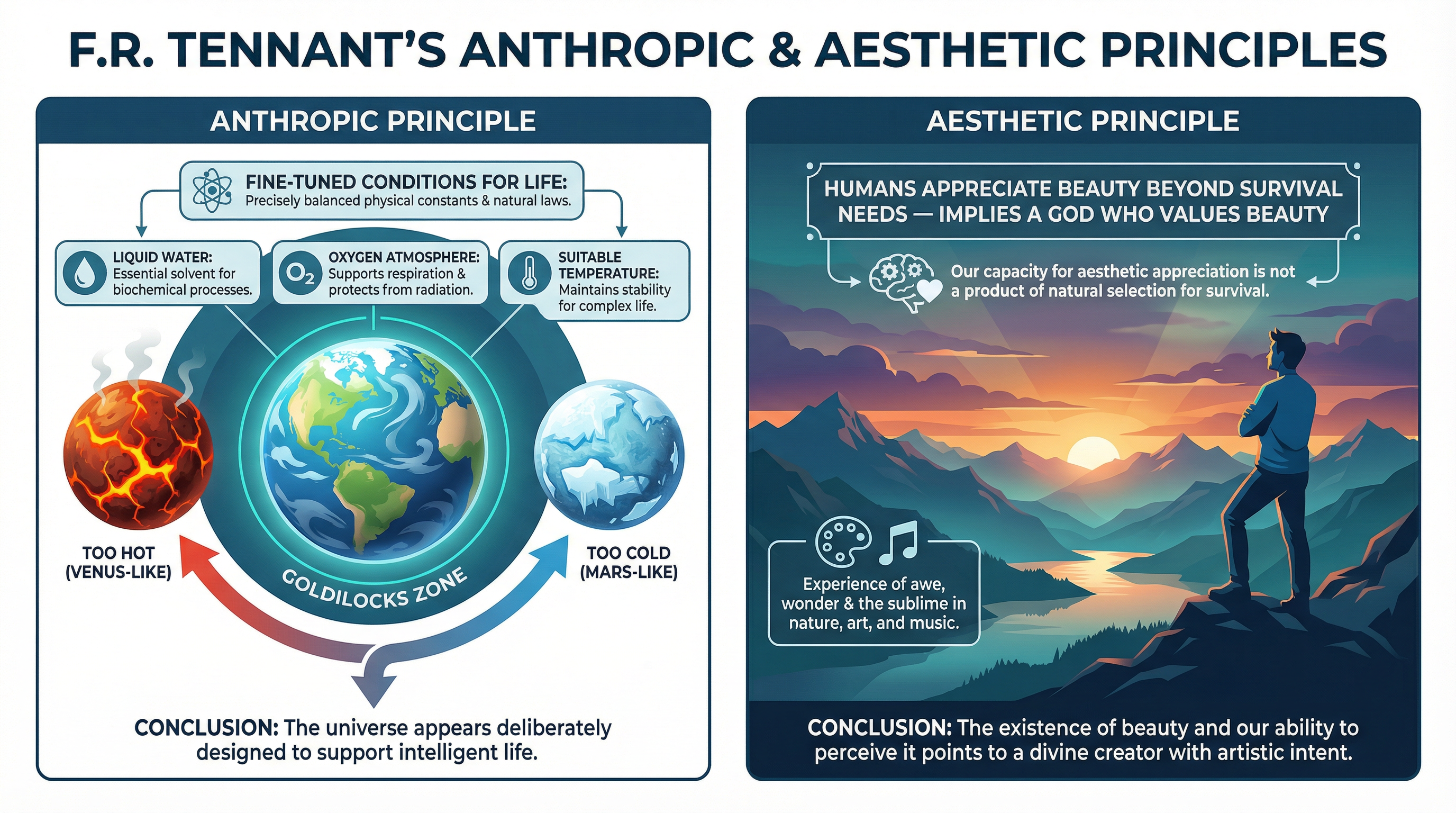
Key Actions: Tennant formulated the Anthropic and Aesthetic Principles. The Anthropic Principle argues that the universe is so finely-tuned for life that it cannot be chance. The Aesthetic Principle argues that human appreciation of beauty, which is not necessary for survival, points to a benevolent designer.
Impact: Tennant's principles provide a modern, science-informed version of the design argument that is less vulnerable to some of Darwin's criticisms. They shift the focus from biological complexity to the underlying physical laws of the cosmos and the nature of human consciousness.
David Hume (1711-1776)
Role: Scottish empiricist philosopher and a key critic of the design argument.
Key Actions: In his posthumously published Dialogues Concerning Natural Religion (1779), Hume launched a powerful critique against the logic of the design argument. He questioned the validity of the analogy between a human-made object (like a watch) and the entire universe, proposed the 'Epicurean Hypothesis' (that order could arise from chance over infinite time), and argued that even if successful, the argument does not prove the existence of the traditional God of theism.
Impact: Hume's criticisms remain the most significant philosophical challenges to the design argument. Candidates must be able to explain and apply his specific objections (e.g., Fallacy of Composition) to earn high AO2 marks.
Charles Darwin (1809-1882)
Role: English naturalist and biologist.
Key Actions: In On the Origin of Species (1859), Darwin proposed the theory of evolution by natural selection. This provided a scientific mechanism to explain the appearance of design in living organisms without recourse to a designer.
Impact: Darwin's theory directly challenges Paley's 'design qua purpose' argument by offering an alternative explanation for biological complexity. High-level evaluation requires considering whether evolution is compatible with a designer (theistic evolution) or renders the design argument redundant.
Visual Resources
3 diagrams and illustrations
Interactive Diagrams
1 interactive diagram to visualise key concepts
Conceptual Flow Outline
Flowchart showing the logical structure of the Design Argument and its key proponents and critics.
Worked Examples
3 worked examples — open one to explore the question and available guidance.
Practice Questions
Test your understanding — click to reveal model answers
Explain Paley's argument for the existence of God from design. (20 marks)
Hint: Remember to explain the watchmaker analogy and distinguish between the two types of design.
To what extent does the theory of evolution successfully challenge the design argument? (30 marks)
Hint: Consider which parts of the design argument are most affected by Darwin. Can the argument be reformulated to survive the challenge?
Explain Hume's philosophical criticisms of the Teleological Argument. (20 marks)
Hint: Focus on the logical problems Hume identifies, not just scientific ones. Use the LAME mnemonic.
‘The strengths of the Teleological Argument outweigh its weaknesses.’ Evaluate this view. (30 marks)
Hint: This is a classic AO2 question. You need to weigh up the arguments for and against. Come to a clear conclusion.
Explain Tennant's contribution to the design argument. (20 marks)
Hint: Focus on the two principles: Anthropic and Aesthetic. Explain how they are different from Paley's argument.