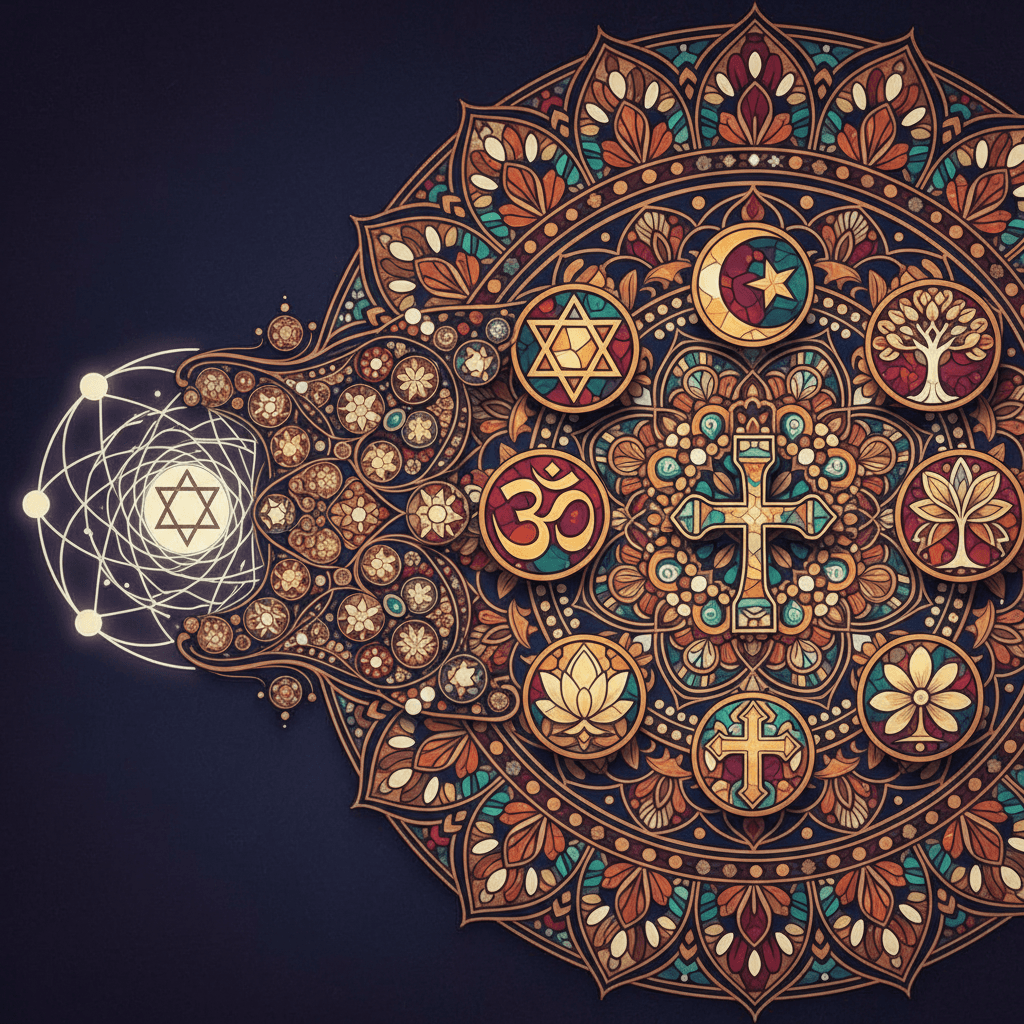
Religious Studies Revision
Examine world religions, ethics, and philosophical questions.
Starting GCSE Religious Studies this term? Every topic on your spec is here.
What is Religious Studies?
Religious Studies at GCSE and A-level in the UK goes beyond simply learning about different religions. It is a rigorous, multi-disciplinary subject that explores profound questions about human existence, ethics, and the diverse ways people understand the world. You will examine the beliefs, teachings, and practices of world religions such as Christianity, Islam, Judaism, and Buddhism, while also grappling with philosophical and ethical themes like arguments for the existence of God, the problem of evil, life after death, and contemporary moral issues including abortion, euthanasia, and crime and punishment. This blend of theology, philosophy, and ethics encourages you to think critically about your own views and those of others, developing a deep appreciation for cultural and religious diversity.
Studying Religious Studies hones a range of valuable skills. You'll learn to interpret sacred texts and scholarly arguments, evaluate competing truth claims, and construct well-reasoned essays. Lessons often involve debate and discussion, helping you to articulate your thoughts clearly and listen respectfully to differing perspectives. The subject trains you to think analytically about abstract concepts, spot logical fallacies, and support your arguments with evidence. These skills are highly transferable, fostering intellectual curiosity and the ability to handle complex, ambiguous ideas—capabilities prized by universities and employers alike.
Religious Studies connects naturally to numerous further education pathways and careers. At university, it can lead to degrees in Theology, Philosophy, Religious Studies, Law, History, Anthropology, or International Relations. The critical thinking and ethical reasoning developed are directly applicable to professions such as law, journalism, politics, medicine, education, social work, and the charity sector. Employers value the empathy, cultural awareness, and communication skills that come from engaging deeply with different worldviews. In an increasingly globalised and multicultural society, understanding religious and ethical perspectives is essential for fields ranging from diplomacy to business and healthcare.
Why Study Religious Studies?
What You'll Learn
Exam Boards & Specifications
Choose an exam board to see its current Religious Studies specification coverage.
AQA
8062
OCR
J625
WJEC
Content is being prepared
View full specificationEduqas
WJEC-GCSE-Religious-Studies
Content is being prepared
View full specificationPearson Edexcel
Pearson-GCSE-Religious-Studies
Content is being prepared
View full specificationComing Soon
Curriculum data for this subject is being prepared.
Where Religious Studies Can Take You
Career paths and opportunities for Religious Studies students
Solicitor or Barrister
The study of Religious Studies develops sharp analytical skills, the ability to construct logical arguments, and a strong sense of ethics—all fundamental for a career in law. You'll learn to interpret complex texts, identify key principles, and argue persuasively, mirroring the work of solicitors and barristers. The subject's emphasis on justice, morality, and human rights provides a solid foundation for legal practice.
Journalist
Religious Studies equips you with the critical thinking and research skills vital for investigative journalism. Understanding religious and ethical perspectives is crucial when reporting on global conflicts, social issues, and political developments. The subject trains you to question assumptions, verify sources, and present balanced arguments, making you a more insightful and responsible reporter.
Social Worker
A deep understanding of diverse religious and cultural backgrounds is essential for effective social work. Religious Studies fosters empathy, active listening, and a non-judgemental approach. You will learn to respect clients' values and beliefs while navigating complex ethical dilemmas, which is central to supporting vulnerable individuals and families in a multicultural society.
Medical Professional (Doctor, Nurse, etc.)
Medicine increasingly demands cultural competence and ethical awareness. Religious Studies gives you insight into how patients' faiths influence their healthcare decisions, from dietary requirements to end-of-life care. The subject's focus on medical ethics—such as euthanasia, abortion, and genetic engineering—prepares you to handle sensitive situations with compassion and professionalism.
Teacher or Lecturer
The subject directly prepares you for a career in education, whether teaching Religious Studies itself, Philosophy, or Citizenship. You'll develop strong communication, presentation, and classroom management skills through debates and discussions. The ability to explain complex ideas clearly and inspire critical thinking is at the heart of good teaching, and this subject nurtures precisely those talents.
University Courses
Subjects That Pair Well with Religious Studies
These subjects complement Religious Studies and are often studied together
Frequently Asked Questions
Looking for Past Papers?
Access our comprehensive library of past papers and mark schemes for AQA GCSE Religious Studies.
View all mark schemesReady to boost your Religious Studies grades?
Ace your GCSEs and A-Levels with AI-powered revision built around your exact specification.
7 days of full Premium · No card required · Free plan forever after