Biology GCSE Edexcel Past Papers: 10 Sources Worth Using
It's 9pm. Your Biology Paper 2 mock is in six days, your revision timetable is half-finished, and you've opened several tabs without working out which papers match your course. You don't need another colour-coded plan tonight. You need the right paper, its mark scheme and a clear job to do.
Edexcel GCSE Biology 1BI0 has two papers, each lasting 1 hour 45 minutes and worth 100 marks, taken at Foundation or Higher tier, as set out in the Pearson GCSE Biology specification. Picking the wrong tier, an older specification or International GCSE material can waste the time you've set aside.
Before downloading: Confirm your qualification, specification code, tier and paper against Pearson's information and your teacher's instructions. A page labelled Edexcel Biology isn't enough.
No single source is perfect. Some make downloading easy but leave you to diagnose mistakes. Others offer topic practice or feedback, but don't clearly explain which original papers they include.
The useful checks stay the same: does it match 1BI0, are both tiers and both papers available, is the matching mark scheme alongside, and are there access restrictions? Whether you're catching up or chasing a top grade, choose the resource that fits tonight's task. Don't spend your revision session collecting PDFs you won't use.
1. Features - Past Papers
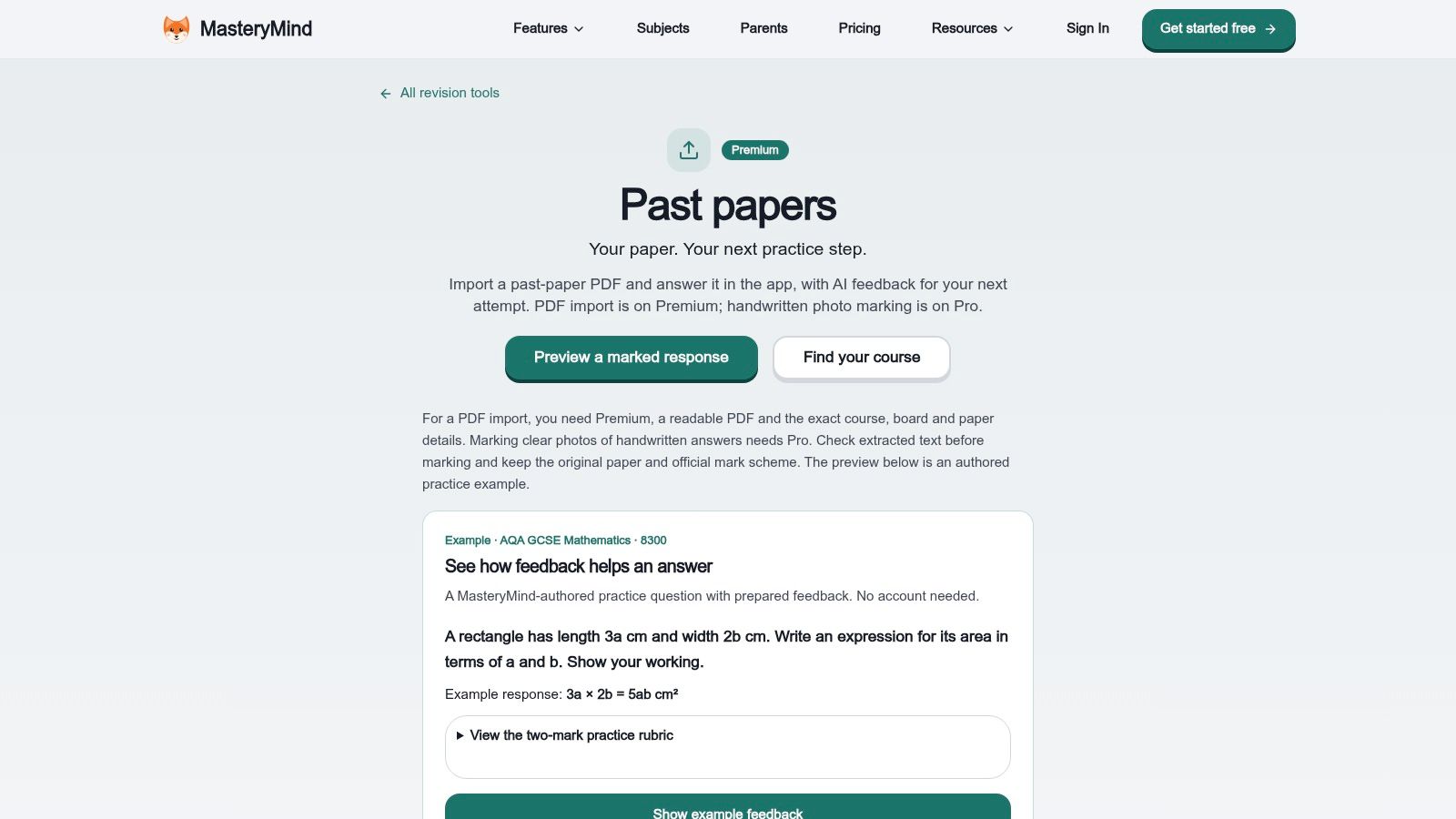
Best for turning an attempted paper into follow-up practice, rather than building a download folder. Our Past Papers feature sits within a UK revision platform aligned to AQA, Edexcel, OCR and WJEC specifications, with attention to command words and mark allocations.
Our Past Papers tool is a Premium feature: students import a past-paper PDF, answer its questions and review them with AI feedback. Practice can connect with topic-level progress tracking, adaptive revision and spaced review. Pro also marks unlimited exam-style answers, typed or handwritten, against the mark scheme.
The important distinction: A tool that helps you work through a PDF isn't automatically a verified archive of official Pearson papers.
What to check before using it
The feature page doesn't establish a complete inventory of Biology papers, subjects or exam years. It also doesn't clearly distinguish every available question as official, adapted or exam-style practice. Both papers, both tiers and the correct matching scheme must therefore be checked in the material you use.
For Tuesday night, start with a verified paper rather than an unidentified question set. Attempt it independently, then use feedback to investigate a specific weakness, such as an unsupported conclusion or missing calculation working.
Teachers should treat AI feedback as a review aid, not an examiner's decision. Check disputed marks against the official scheme, particularly where alternative wording or extended explanations need judgement.
A separate resource, Tutorbase features, is relevant to tutoring administration rather than paper selection. It shouldn't influence whether a Biology question matches your specification.
2. Pearson Edexcel Official Past-Paper Search
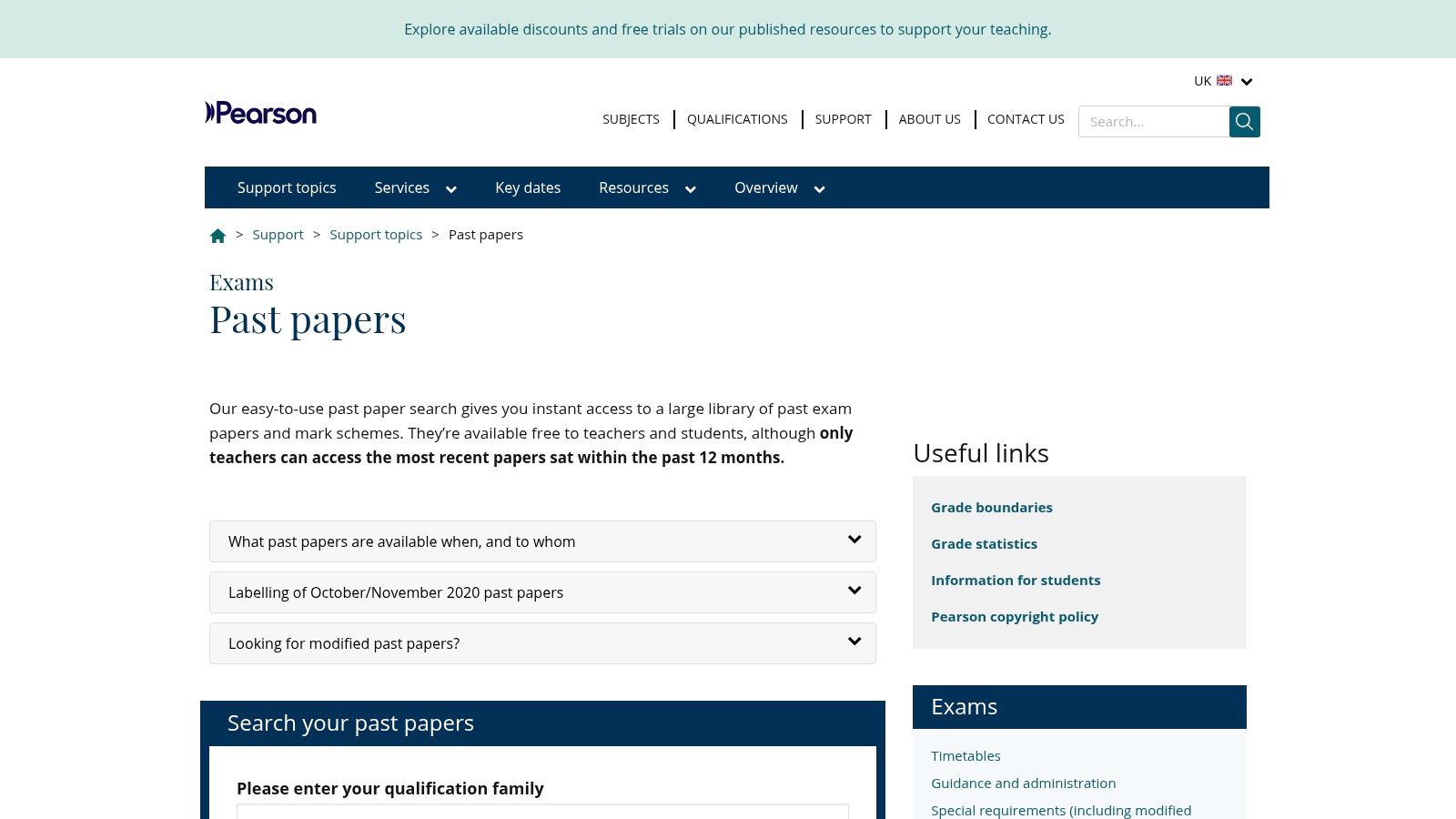
On Tuesday night, you have one hour and need a paper that matches your course. Start with Pearson's official past-paper search, which lets you search by qualification, subject and examination series for question papers, mark schemes and examiner reports where available.
Use the document itself to confirm the specification, paper and tier. Pearson's archive includes Foundation and Higher materials across examination series, though availability varies by file. It is a reliable place to check an unfamiliar download against the exam board's original materials.
Best use: Find an official paper and its matching marking guidance before beginning a timed session.
- Strength: You can use original questions, official marking guidance and examiner commentary together.
- Limitation: Recent materials may be restricted to registered teachers and centres, as Pearson explains in its past-paper access guidance.
- Tuesday-night task: Choose the paper and tier you need, download its question paper and matching mark scheme, then put the scheme aside until you finish.
The search takes more clicks than a revision site, and the latest sitting may not be available to students. If access is restricted, choose an accessible paper from another series rather than assuming the archive is broken.
For a separate marking reference, see MasteryMind's Edexcel mark scheme collection. Whichever source you use, match the scheme to the exact paper you attempted.
3. Physics & Maths Tutor (PMT)
You've finished marking and discovered that your practical-method answers are weak. PMT is useful because you can move from full papers to topic practice without changing your whole revision routine.
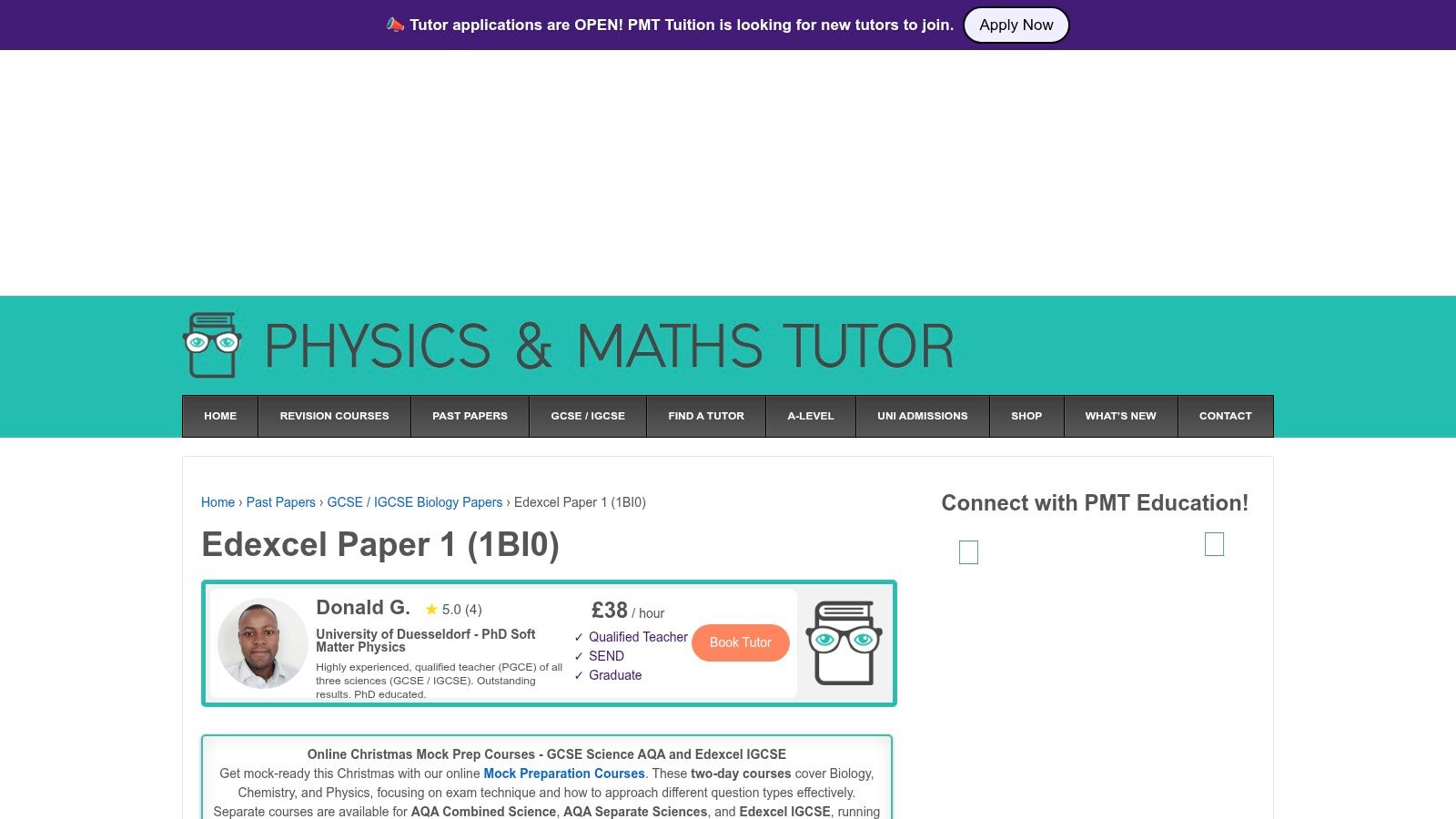
The PMT Edexcel Biology paper archive has separate pages for the different papers, with Foundation and Higher question papers and mark schemes. Its wider Biology resources include revision notes and topic questions.
Best use: Sit a paper to find the problem, then select topic questions to repair it. Don't immediately download another full paper.
Clear downloads, limited guidance
PMT's organisation makes independent practice straightforward. Choose the correct paper page, select your tier and download the corresponding question paper and scheme.
Check the document code rather than assuming every older entry matches your current course. Specimen material can be useful, but it should be recognised as specimen material rather than treated as a past examination sitting.
The trade-off is that PMT is a resource library, not a guided revision course. It won't decide whether your lost marks came from weak knowledge, poor evidence selection or misunderstanding the command word.
On Tuesday night, write that diagnosis yourself before opening the topic questions. For example, distinguish between not knowing a practical method and knowing it but failing to explain why a control variable matters.
Exam Practice for GCSE is another practice route, but keep your assessment conditions consistent whichever resource you choose.
4. Save My Exams
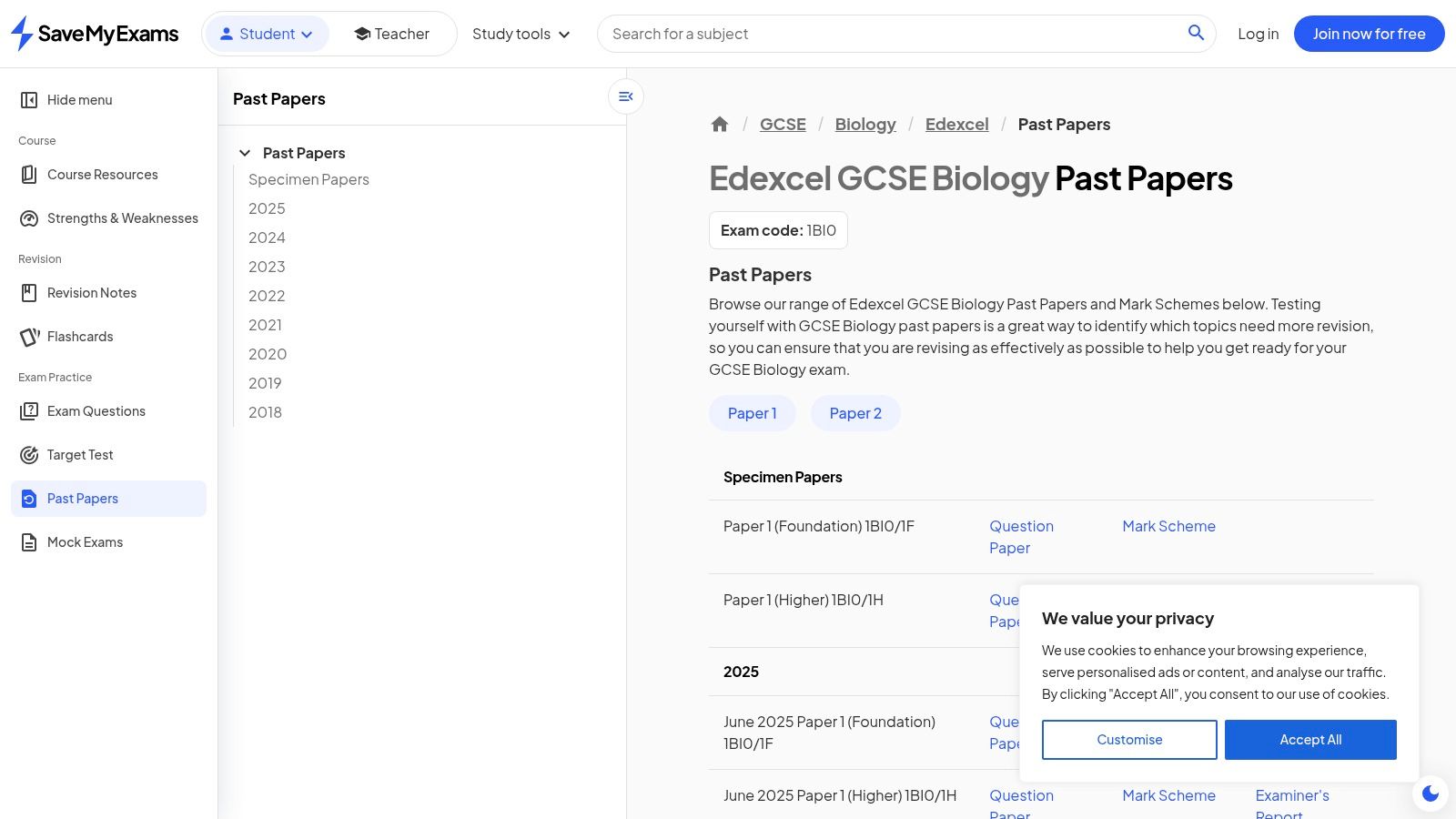
Choose Save My Exams when you want papers and supporting revision resources close together. Its Edexcel GCSE Biology past-paper page identifies the current specification and organises materials by year and tier.
The listings cover both papers at Foundation and Higher, with mark schemes and examiner reports for some sessions. Related notes and exam-question practice give you somewhere to go after marking.
Don't confuse access to a paper PDF with access to every supporting revision resource. Account and paid-plan requirements can differ.
Best for reviewing a difficult response
Say you answered an evaluation question with a conclusion but no discussion of the evidence. Start with the mark scheme to establish what was creditworthy, then consult the examiner report where one is listed.
That sequence matters. A report explains patterns in candidates' responses; it doesn't replace the scheme for your question. Use relevant notes afterwards to rebuild the biological understanding behind the answer.
The main advantage is convenience. The main drawback is that the wider collection can distract you when you only need a paper and scheme.
For Tuesday night, choose your files before opening any notes. Attempt the questions, mark them, and only then select supporting material for the weakest area.
If you also use Online Revision for GCSE, keep the same topic labels in your error log. You shouldn't need separate records of the same weakness on different platforms.
5. Revision Science
Sometimes you don't want a dashboard, an account or a suggested study path. You just want the correct paper and its marking scheme.
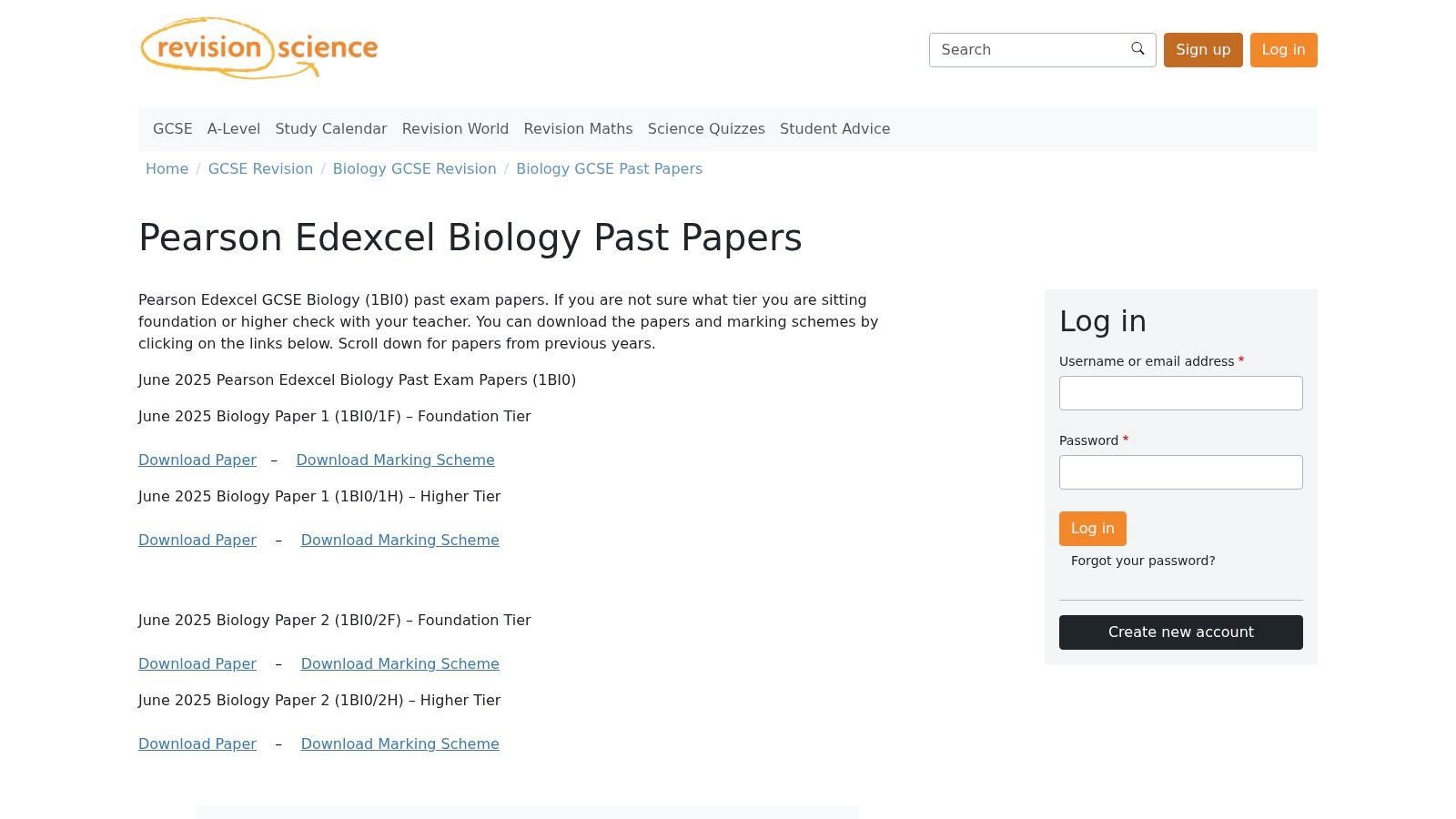
The Revision Science Edexcel Biology archive provides a direct subject-specific route to GCSE Biology materials. It lists Foundation and Higher papers with corresponding schemes, including recent examination sessions.
Practical rule: Download a matched pair of files, not a question paper now and whichever mark scheme you find later.
Best for a straightforward offline session
Check that the listing and document match your specification, paper and tier. The site also links to other examination boards, which is useful for broader teaching preparation but easy to wander into when you're tired.
- Works well: Printing a paper, completing it away from your screen and marking it afterwards.
- Works less well: Automatically tracking your progress or explaining why a particular answer earned partial credit.
- Needs care: Older materials, where the specification label and content require checking.
On Tuesday night, save the files with clear names that include the examination series, paper and tier. Keep your completed answers with the scheme so you can revisit disputed marks with your teacher.
This is primarily a download archive. You supply the diagnosis and follow-up practice.
For students planning beyond GCSE, A-Level revision subjects belong to a separate stage of preparation. Don't let browsing future courses replace the Biology work you need to finish tonight.
6. Study Mind
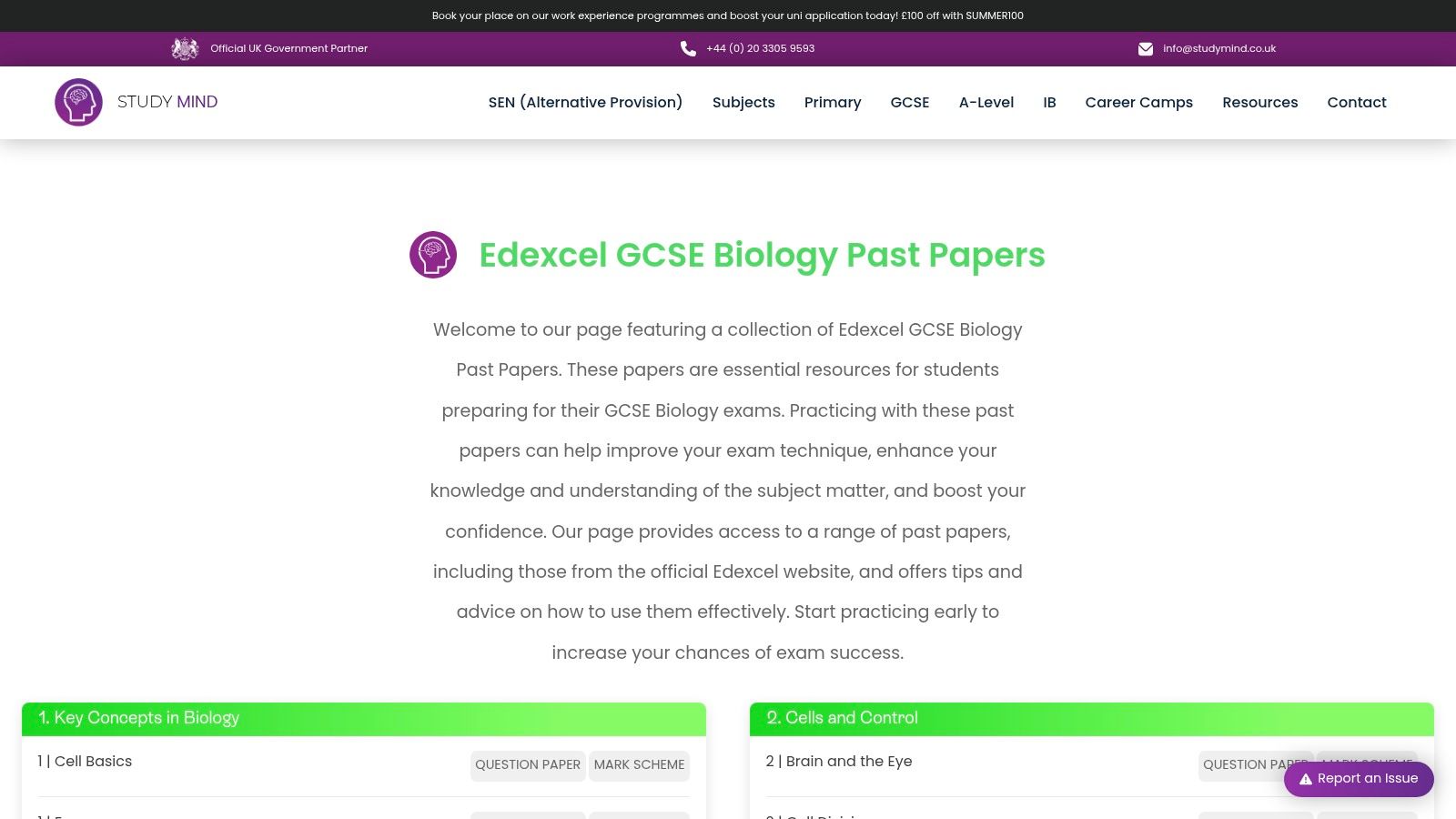
Study Mind is particularly useful for weak-topic repair. Its Edexcel GCSE Biology resources combine topic questions and mark schemes with full-paper materials from different examination sessions.
That combination suits a shorter evening. If your marked paper shows a clear weakness, you can work on that area rather than repeat everything you already understand.
Select by the skill you need to improve, not just the topic heading. A recall question won't fully repair a weakness in interpreting practical results.
Use the archive selectively
The collection includes older Edexcel Biology material as well as current-specification papers. That breadth is helpful for teachers assembling practice, but students need to inspect the specification and tier before treating a file as realistic mock preparation.
Check both paper groups and both tiers in the full-paper listings. Also distinguish a topic-question booklet from a complete examination paper, even when both come with mark schemes.
A useful Tuesday-night task is to take a marked data question and identify precisely what went wrong. Did you miss the trend, ignore an exception, omit units or draw a conclusion stronger than the evidence allowed?
Choose follow-up questions that test that same demand. Don't merely reread the surrounding topic notes and assume the problem has gone.
The limitation is navigation. A long archive offers plenty of material, but it can take time to find the right file. Decide your target before opening the page.
7. Revisely
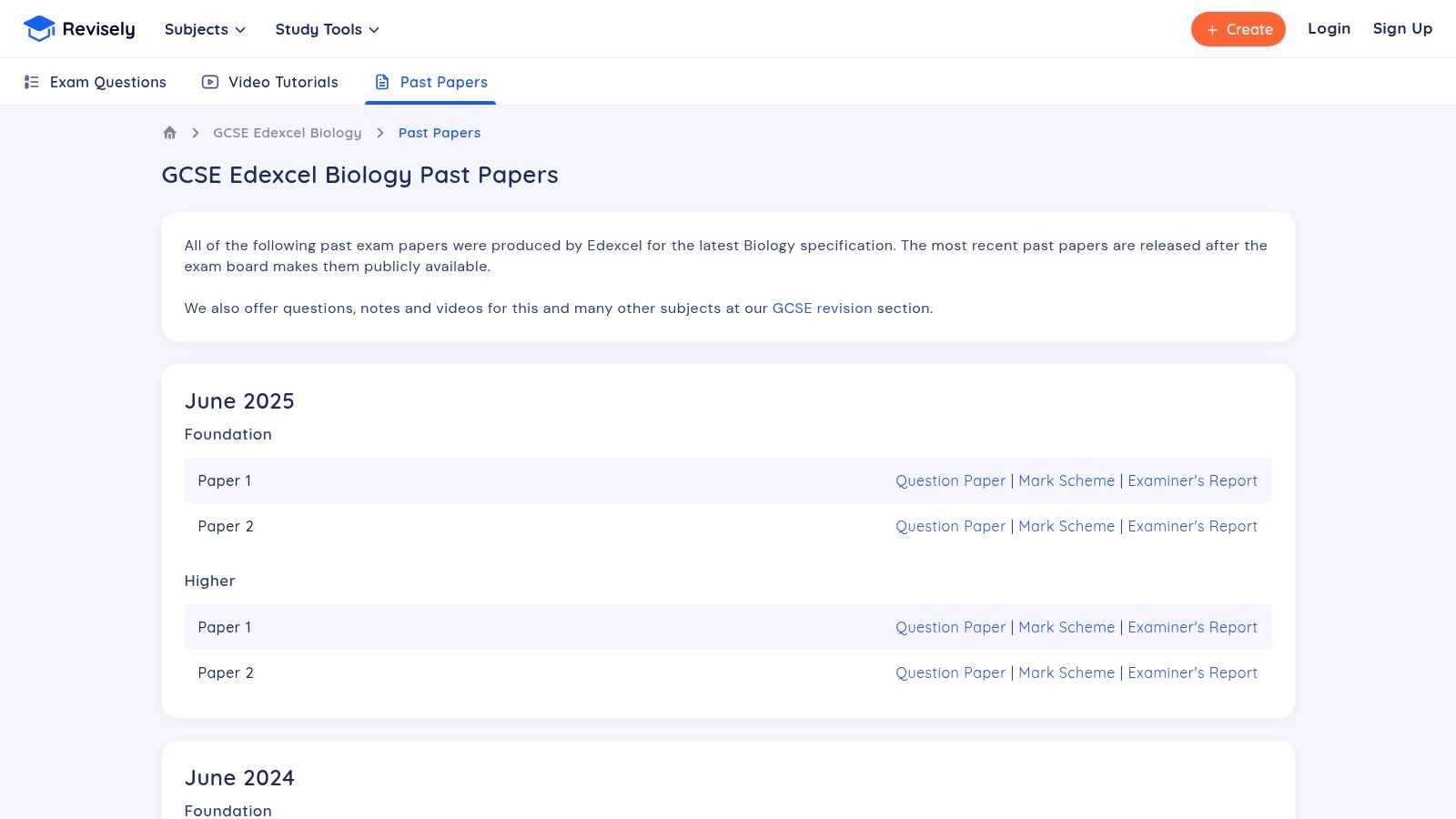
The Revisely Edexcel GCSE Biology archive suits students who prefer a clean examination-session layout. It lists Foundation and Higher materials, with question papers, mark schemes and examiner reports where available.
Revisely states that its listed papers follow the latest Biology specification. Even so, check the document itself, including whether you've selected UK GCSE rather than International GCSE.
A clearly organised archive saves navigation time. It doesn't remove the need to check the qualification printed on the paper.
Best for paper, scheme and report together
Choose the required paper and tier, then see whether an examiner report accompanies the session. Read the report after marking so you can connect its comments to an answer you wrote.
Don't expect a public archive to contain protected assessment materials. Pearson's UK qualifications bulletin explains the controlled release of recent papers and describes ResultsPlus question-level analysis for teachers.
That gives teachers a useful distinction: a public download library supports practice, while school assessment analysis can help identify patterns across a class. Neither function should be assumed to exist merely because a website lists PDFs.
For Tuesday night, use Revisely to assemble a complete released assessment package. Mark your attempt, then write a short repair note for each recurring weakness.
Its supplementary revision resources are separate from the core paper list. You'll still need to choose the follow-up task yourself.
8. The Tuition Centre
The Tuition Centre is useful when you want full-paper practice followed by topic questions. Its Edexcel GCSE Biology archive brings together Foundation and Higher papers and mark schemes, with separate topic-question practice.
The listed materials are free to view or download. The archive includes both current and older-specification material, so careful selection matters more than the size of the collection.
Watch the specification: An older question can help practise a biological idea without being suitable for a current-specification timed mock.
Best for teacher-selected follow-up
A teacher or tutor can select relevant questions from older material after checking the content. A student working alone should begin with clearly labelled current-specification papers and matching schemes.
Check the paper number as well as the tier. A downloadable Biology booklet isn't necessarily the component your teacher has chosen for the mock.
The useful workflow is simple:
- Attempt: Complete an appropriate full paper without consulting notes.
- Diagnose: Mark it and name the actual weakness, such as explaining a method or interpreting a graph.
- Repair: Choose topic questions that require that same skill in a different context.
The Tuition Centre isn't an interactive test or automated marking platform. That isn't a problem if you're comfortable marking carefully and keeping your own error log.
For Tuesday night, avoid downloading the whole archive. Leave with a paper, its scheme and a relevant follow-up task. A smaller, correctly chosen set is easier to finish and review.
9. GCSE Genius
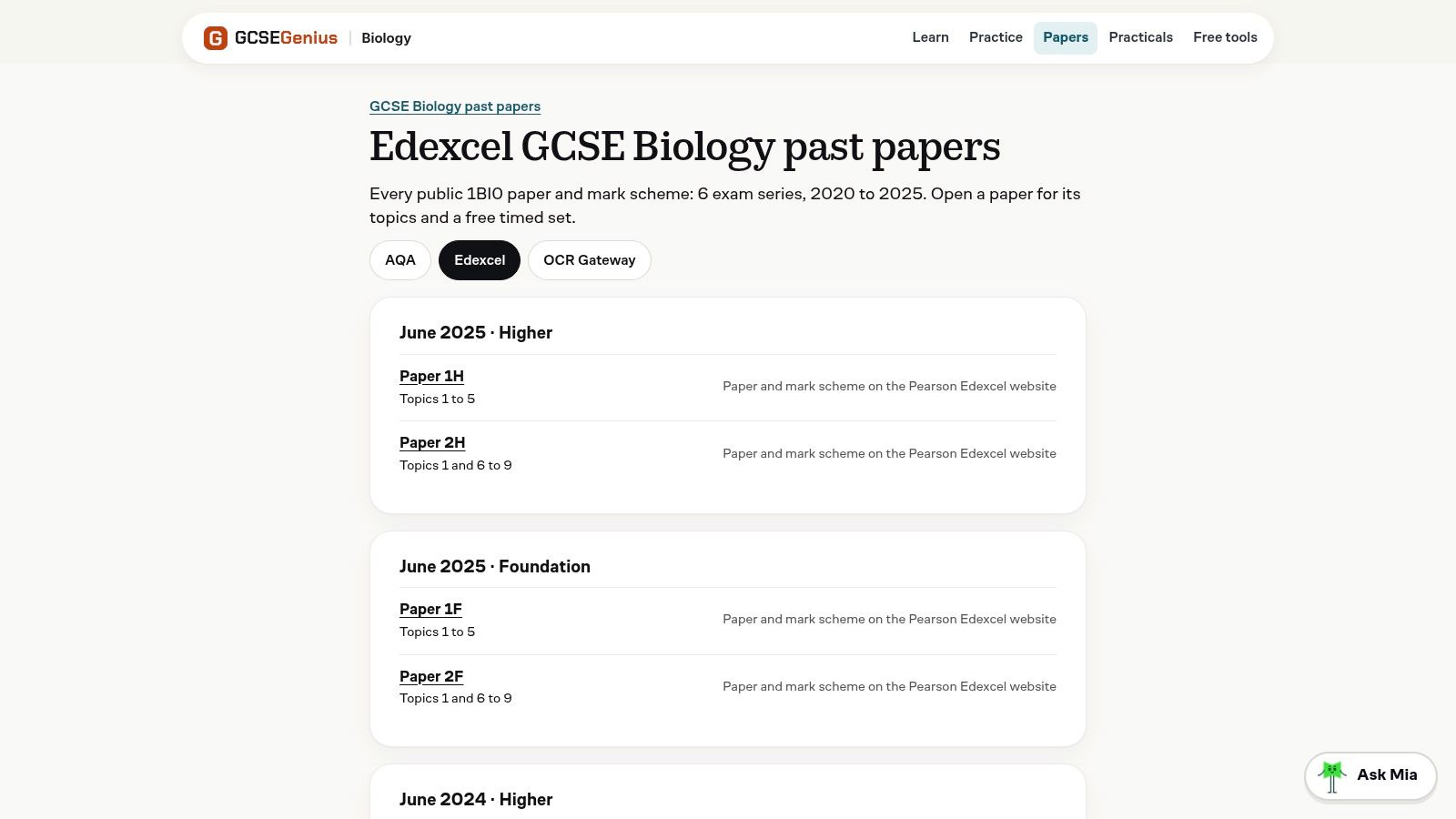
GCSE Genius works best as a signposting resource. Its Edexcel GCSE Biology past-paper page identifies the specification and directs students to paper and mark-scheme resources, including Pearson materials.
That can be helpful if you want a science-focused starting point rather than a broad qualification search. The wider GCSE science content can support revision after you've marked your work.
Follow each download through to the document. The page title alone doesn't confirm the paper, tier or matching mark scheme.
Best for finding your way to official materials
Some resources lead to Pearson rather than being hosted directly on GCSE Genius. That is not a weakness by itself, but it means access depends partly on the destination.
Check that both required paper groups and your tier are available in the links you intend to use. Don't assume that a paper grouping on the page guarantees every examination session is included.
Qualification confusion deserves particular care. The Pearson International GCSE Biology teaching guide describes a different, untiered qualification, so International GCSE materials shouldn't automatically substitute for UK GCSE practice.
For Tuesday night, open the paper and matching scheme before settling down to work. If a destination is restricted or doesn't match, choose another released paper rather than spending the evening searching for access.
The archive may be less extensive than larger collections. Its value is relevant direction, not necessarily maximum coverage.
10. Sherpa Study
Sherpa Study is worth opening when you want a paper and shorter follow-up activities in the same place. Its Edexcel GCSE Biology past-paper page identifies the specification and pairs papers with official mark schemes.
Topic questions and flashcards accompany the archive. Sherpa states that these resources are free to use without a subscription or paywall.
Flashcards can help you recall an idea. They can't establish whether you can apply it in an unfamiliar examination question.
Best for combining recall with application
Start by checking the actual paper listing for your component and tier. The stated specification is useful, but it doesn't establish that every year, both tiers and every paper are present.
Use the different resources for different jobs. Flashcards suit checking terminology and core facts; topic questions suit applying that knowledge; a full paper tests your work under examination conditions.
For Tuesday night, let your previous mistakes decide where to begin. If you couldn't recall the biology, review it before attempting fresh questions. If you knew the facts but struggled to use the evidence, go directly to questions requiring interpretation.
The archive may cover fewer years than a larger collection, so cross-check paper availability against the exam board when necessary. A smaller archive can still be useful if it contains an appropriate unattempted paper.
The strongest choice isn't always the largest website. It's the resource that gives you the right question, the right scheme and a manageable next step.
Edexcel GCSE Biology Past Paper Sources Compared
Every source here gets the same four checks: the 1BI0 specification, both tiers, Papers 1 and 2, and a mark scheme beside the questions. The last column names the job each one does best.
| Item | Tier and Paper Labels | Mark Schemes | Access Notes | Best For |
|---|---|---|---|---|
| Features - Past Papers | Coverage is the official paper you import; check the PDF front page for 1BI0, Foundation or Higher, Paper 1 or 2 | Answers reviewed with AI feedback | Premium tool; the questions come from the past-paper PDF you supply | Importing an official paper and reviewing your answers with AI feedback |
| Pearson Edexcel, Official Past-Paper Search | Foundation and Higher; Papers 1 and 2, searched by exam series | Official mark schemes and examiner reports where available | Free to students when accessible; some recent papers are restricted to teachers and exams officers | Finding authoritative Edexcel papers and marking materials |
| Physics & Maths Tutor (PMT) | Foundation and Higher; Biology Papers 1 and 2 | Listed separately from question papers | Archive includes recent and specimen papers; check older papers against the current specification | Clearly organised paper and tier downloads with topic practice |
| Save My Exams | Foundation and Higher; Biology Papers 1 and 2, organised by year | Included; examiner reports for some sessions | Some supplementary resources may require an account or paid plan | Finding papers by year and tier alongside revision resources |
| Revision Science | Foundation and Higher; Edexcel Biology 1BI0 | Paired with papers | Check dates and specification labels for older materials | Direct access to Edexcel Biology papers across tiers |
| Study Mind | Edexcel Biology full papers and topic questions; open a full-paper listing to confirm the Foundation or Higher and Paper 1 or 2 label | Linked alongside questions | Older specifications are included; check materials before use | Combining focused topic practice with full-paper revision |
| Revisely | Foundation and Higher; organised by exam session | Mark schemes and examiner reports where available | Public archive may not include unreleased papers; distinguish GCSE from International GCSE | Session-based paper practice with marking resources |
| The Tuition Centre | Foundation and Higher; current and older specifications | Included with papers | Listed papers and mark schemes are free to view or download; select specifications carefully | Free papers with topic-level follow-up practice |
| GCSE Genius | Specification 1BI0; paper and topic groupings | Links to mark schemes | Some resources link to Pearson; check that each link matches the intended paper and tier | Finding GCSE science resources for Edexcel Biology |
| Sherpa Study | Edexcel GCSE Biology 1BI0; check the archive listing shows Foundation and Higher across both papers | Official mark schemes paired with papers | Resources are stated to be free without a subscription or paywall | Free full-paper practice with topic questions and flashcards |
Check the tier before anything else. A Higher paper downloaded the night before a Foundation exam rehearses the wrong exam.
Where a cell tells you to confirm a label, open one PDF and read the front cover. The specification code, paper number and tier are all printed there, and thirty seconds of checking beats an evening spent on the wrong paper.
Turning Old Papers Into Better Marks Over the Next Six Weeks
Start by confirming 1BI0, your tier and the required paper. Then sit each selected paper under timed conditions, using the stated duration: 1 hour 45 minutes, no notes and no phone. Keep the mark scheme out of sight until you finish.
Mark in a different colour and log every lost mark against its topic. Labels such as cell biology, bioenergetics, homeostasis, inheritance or ecology can help organise your notes, but check precise coverage against your specification.
A mark you award yourself generously is a mark the examiner will not.
Separate the topic from the mistake
Record the assessment demand alongside the topic. Missing a fact, misreading a graph and failing to justify a conclusion each need a different repair, and grouping them together hides which one is costing you marks.
Check command words early. A describe response needs the relevant features or pattern; a compare response needs both sides; an explain response needs a reasoned link. Students with secure content knowledge still drop marks here, so treat command-word slips as their own category in the log.
- During each week: Aim for a full timed paper, followed by a small set of topic questions on the weakest area.
- After marking: Write down the missing idea or reasoning step behind each lost mark, in your own words rather than copying the mark-scheme phrasing.
- The following week: Return to that weakness using an unfamiliar question, so you are testing recall rather than memory of the answer.
Alternate the papers across your preparation and adjust the workload around other subjects. If your error log keeps growing, spend more time repairing weaknesses before adding further full papers.
Make the marking trustworthy
Teachers should build in a short check-in before the mock. Ask students to bring an original answer, their marking and a corrected explanation, then check whether they are awarding credit accurately.
For AI-supported review, keep the official scheme as the authority and take disputed decisions to a teacher. The free plan is a sensible starting point for exploring the wider platform, but PDF-based Past Papers practice requires Premium.
If you are preparing for a resit in England, plan around the correct examination window. The government's post-examination guidance explains that Biology normally waits until the following summer rather than using the autumn English and Maths resit route.
Tonight's useful outcome is concrete: a correctly chosen paper, honest marking and a specific repair task. Finish that cycle before collecting more resources.
MasteryMind offers specification-aligned revision and AI-supported answer review to help you work on the weaknesses your Edexcel Biology papers reveal. Visit MasteryMind to explore the free plan, then choose the practice tools that fit your next revision session.
Choose your next course task
Use this idea with Biology. Confirm the qualification, awarding organisation and course version before choosing practice, assignment preparation or evidence planning.
Choose your Biology course