Master Retention Scheduling for GCSE & A-Level
You're sat at 11:07pm, the Biology mock is tomorrow, and the same page has been open for an hour. You've re-read the enzymes bit three times, told yourself it's “going in”, and still couldn't explain it without the textbook in front of you. That feeling is horrible, and it's also familiar, because a lot of GCSE and A-Level revision is just hard work pointed in the wrong direction.
A Year 11 student can cram for six hours and still wake up with half the chapter missing because the timing was off, not because they were lazy. That's the part many overlook. Retention scheduling fixes the timing by making revision happen when your brain is just about ready to lose the memory, not when the exam is already breathing down your neck.
The Night Before the Biology Mock
The student opens the Biology book again, underlines a few lines, and flips back to the same diagram of enzymes. It feels productive. It isn't landing, though, because rereading gives a comforting sense of recognition without forcing real recall.
That's why the night before often feels useless by the next morning. The work was real, but the memory was never given enough chances to stick. In GCSE and A-Level subjects, that gap shows up fast, especially in topics with lots of linked ideas, like Biology, Chemistry, History, or English Literature.
Retention scheduling is the answer to that exact problem. It's the difference between “I've seen this” and “I can pull this out when I need it”. If you want a quick practice example to pair with a schedule, Exam Practice for GCSE is a useful place to see how timed questions feel in exam mode.
Practical rule: if a topic only lives in tonight's panic revision, it's not scheduled, it's just borrowed.
The good news is that this is fixable. You don't need a magic memory. You need a plan that tells you when to come back, what to test, and how to stop facts drifting away overnight.
What Retention Scheduling Actually Means
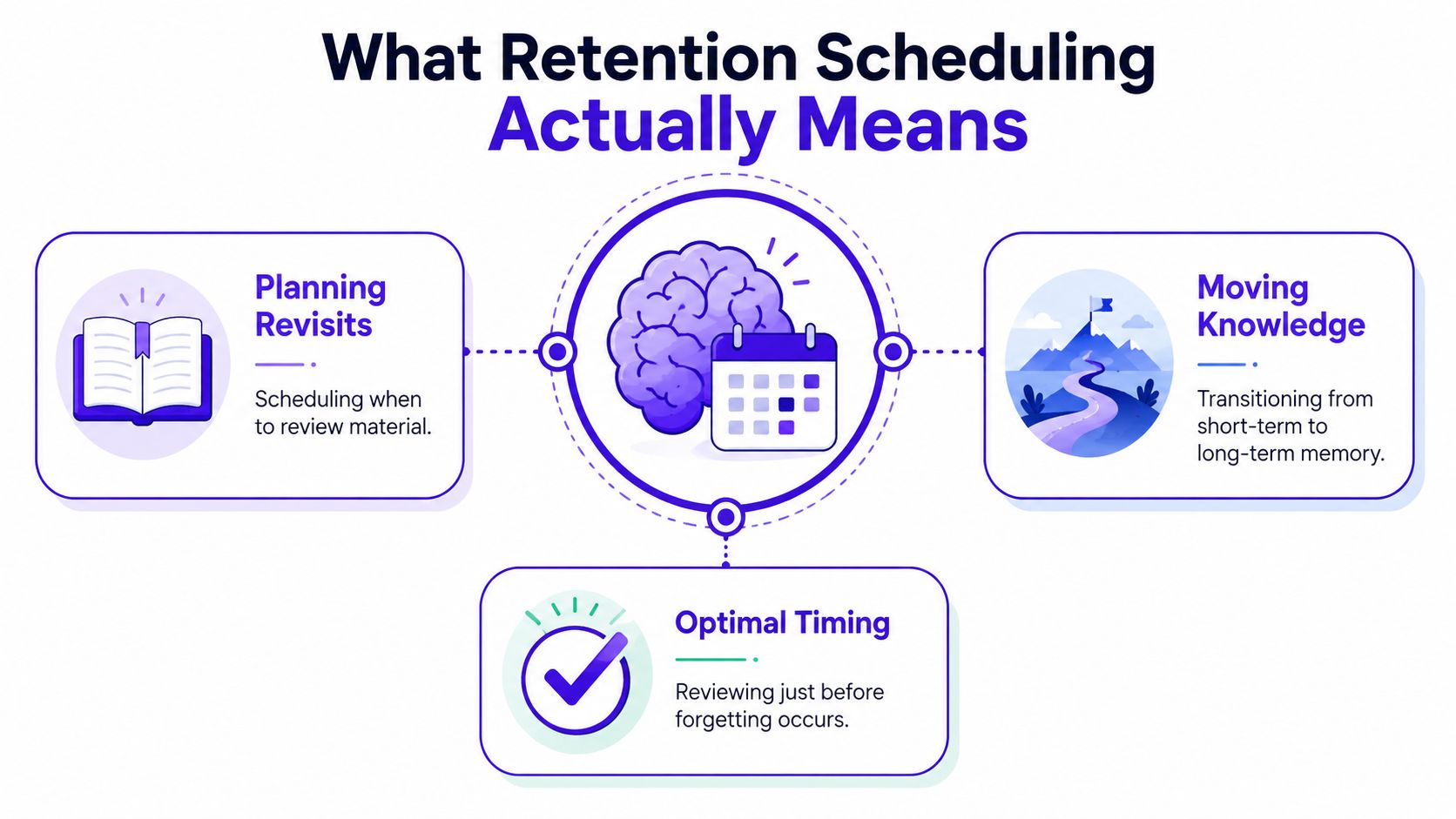
Retention scheduling means deciding when you will revisit each topic so it moves from short-term memory into long-term memory before you forget it. In plain English, it's a timetable for remembering. You're not just revising more, you're revising at better moments.
A library book requires returning it on time to keep the information fresh. A good retention schedule acts as the reminder slip, specifying when to review, which sections to check, and if another look is needed before the final test.
The two pieces underneath it
The first piece is spacing. That means leaving a gap between study sessions instead of cramming the same topic back-to-back. The second piece is retrieval, which means trying to remember something without looking at the answer first.
Those two ideas work together. If you space the reviews, the memory gets a little harder to reach, which is exactly what makes it stronger. If you retrieve instead of re-read, you force your brain to do the work that exam questions demand.
If you want a broader set of study ideas to sit beside this, proven exam revision techniques is a handy companion read. For GCSE students who want the spacing idea turned into something usable, spaced repetition for GCSEs shows how the method works across subjects rather than just on flashcards.
A schedule matters because dates beat hope. If the review is written down, it happens on purpose instead of by luck.
You should be able to explain retention scheduling to a friend in two sentences now. It's a plan for revisiting learning at set times, so it has a better chance of lasting. The whole point is to make remembering predictable.
The Science Behind Forgetting and Remembering
Hermann Ebbinghaus showed that memory fades quickly after learning unless you do something with it. That's the rough shape students feel the night before a mock, when a fact that seemed obvious yesterday suddenly feels slippery today. The fix is not more staring, it's more retrieval spread across time.
The spacing effect explains why a gap helps. When you leave time between sessions, the memory has to be rebuilt instead of just recognised, and that rebuild makes it sturdier. Each time you bring a fact back, the next forgetting drop is less severe than the one before.
For a GCSE-style example, take the French irregular verbs être, avoir, aller, and faire. On day one, you learn them from scratch. On day two, you test yourself without notes and probably miss a few. Three days later, you try again and recall more, because the gap has already done some work. A week later, the same set feels less fragile, not because you've stared at it more, but because you've had to pull it back repeatedly.
Forgetting is not the enemy. Forgetting is the signal that tells you when to review.
A lot of students assume memory should feel easy if revision is “working”. It usually feels a bit awkward instead. That awkwardness is useful, because it means your brain is being asked to rebuild the path, not just admire it.
If you want a simple way to practise that rebuilding with questions rather than passive reading, active recall study tips is a sensible place to start. The main point is steady and boring in the best way. The gap matters, the test matters, and the combination is what makes learning last.
Two Real Revision Schedules You Can Steal
A good schedule isn't a giant list of things you “should” do. It's a week on the calendar. For most students in the middle of revision, a workable balance is roughly 60% review, 30% new material, and 10% past papers. In the final fortnight, that shifts towards 40% review, 20% new material, and 40% past papers.
A 12-week GCSE plan
On Monday, do old topics first, then one new topic. On Tuesday, quiz yourself on last week's content, then move into a fresh subject area. Wednesday is for mixed review, especially the bits you got wrong, and Thursday can be another new topic with a short retrieval block at the start. Friday leans back into review, Saturday is where you stretch into past-paper questions, and Sunday is lighter catch-up or rest if the week went sideways.
That rhythm matters more than perfection. A student taking five or six GCSEs cannot keep every subject equally alive every day, so the schedule has to rotate. One week, English Literature gets the longer review slot. The next week, Biology takes it. The point is to keep everything moving through the cycle.
A 16-week A-Level plan
With three A-Levels, the content is deeper, so the spacing has to be steadier. Monday can be new learning in one subject, Tuesday mixed recall in another, Wednesday a longer written response, Thursday fresh content again, and Friday a short quiz on older material. The weekend is the place for longer retrieval practice and timed exam questions.
Final two weeks look different. Old topics dominate, recent learning gets checked rather than re-taught, and full exam practice takes over more of the week. If you need a bank of questions to pull from, GCSE Past Papers can help turn the calendar into actual exam-style practice.
Miss a day and move on. Don't restart the whole system because Tuesday went badly.
The reason this works is simple. The calendar stops you from guessing what to do next, and that's what makes the habit sustainable when school, clubs, part-time work, and family life all compete for the same hours.
A Real Student Story of Going from 5 to 7
Maya started Year 13 with a predicted grade 5 in Chemistry and wanted a 7 badly enough to stop treating revision like a weekend emergency. She didn't suddenly become “naturally talented”. She just followed a 16-week spaced review plan and stuck to it longer than she used to stick to motivation.
Her week had a rhythm. Monday was new content on organic chemistry. Tuesday was a mixed-topic quiz on Year 12 inorganic. Wednesday was a long-answer response marked against AQA-style expectations. Thursday and Friday went back to new content, and the weekend was for retrieval practice and fixing weak spots.
What changed in practice
The first big win came when a topic she had last touched seven weeks earlier appeared in a mock. She didn't know everything, but she knew enough to rebuild the answer quickly instead of staring at the page in panic. That mattered more than any “perfect” study session she'd done in the past.
She also had one rough week when she fell behind on the spacing intervals. Her recall dipped because the gaps got too long, and the next mock showed it. Once she caught up, the structure worked again. That's the part students often need to hear, because a schedule is forgiving in a way panic revision isn't.
This is also why experienced tutors keep pushing spaced review. They've seen what happens when a student revisits the right content at the right time, instead of rereading whatever feels urgent that night. If you want to compare your own habit to a tracker while you do it, Tools - Progress Tracker is the kind of companion resource that can make the plan visible rather than fuzzy.
By the end of the year, Maya's grades moved because her memory held under pressure. The schedule didn't remove the hard work. It made the hard work land.
Why Teachers Are Right to Be Sceptical of AI Revision Tools
Teachers are right to be wary. A lot of AI revision tools spit out questions that look intelligent but don't match the specification, and that's a problem when students need exam-board accuracy, not vague confidence. If a tool gives feedback that is too generous, it can leave a student thinking they're ready when they're not.
The bigger issue is ethics and assessment. The JCQ rules exist because coursework and non-exam assessment have to be the student's own work, and a tool that rewrites or supplies answers crosses a line. That is not help. It's risk.
What a trustworthy tool has to do
It has to align questions and mark schemes to the right exam board, whether that's AQA, Edexcel, OCR, or WJEC. It needs to give examiner-style feedback, not praise for the sake of it. It should refuse to rewrite coursework, and for subjects like maths or computer science it should show the working, not just dump the final answer.
Teachers also need to know the platform can handle awkward subject-specific details. A good system will break essays into assessment objectives, check unseen poetry against the right criteria, and treat trace tables or binary problems with proper step-by-step verification. If it can't do that, it's not revision support, it's noise.
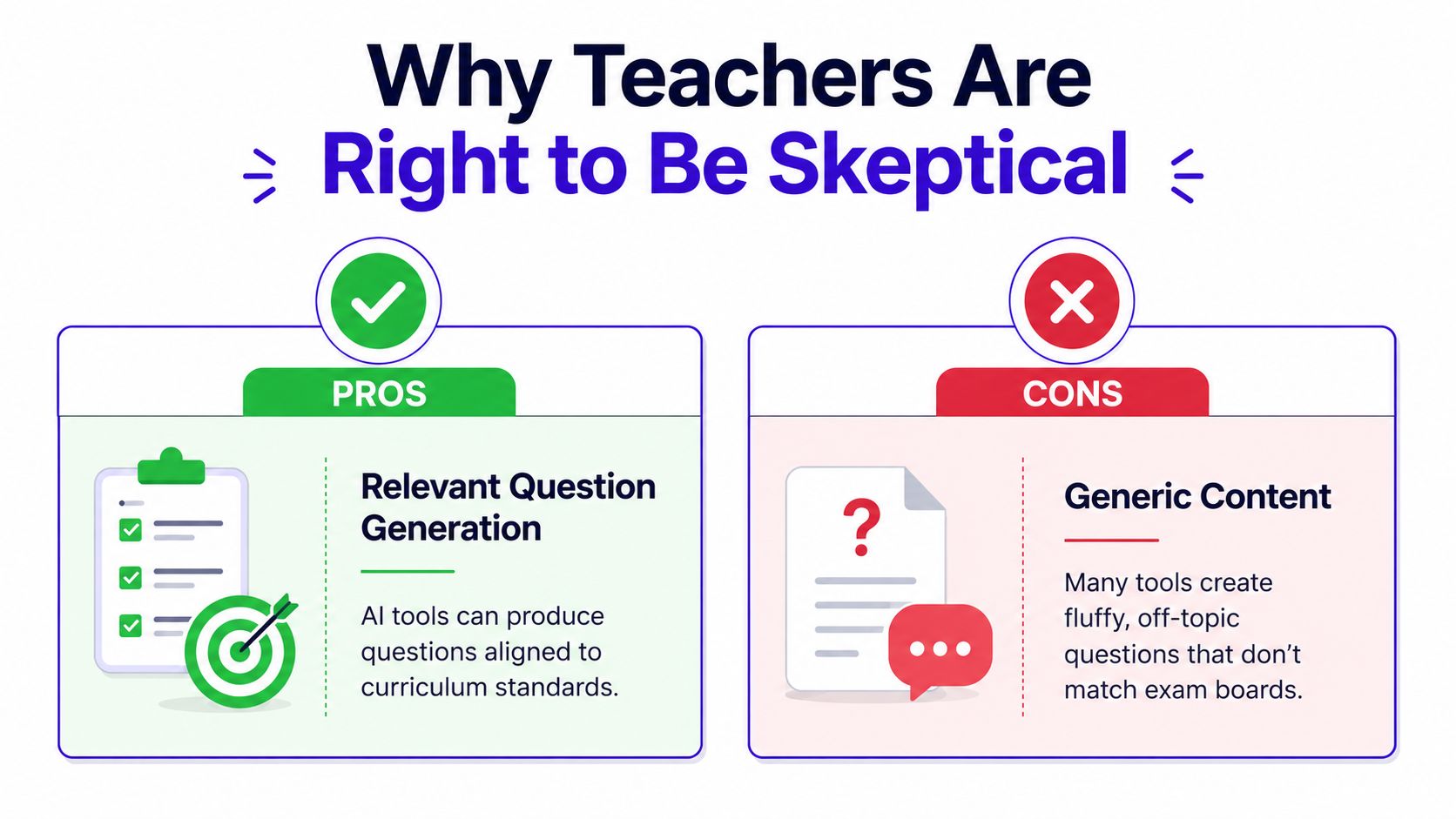
The scepticism makes sense because students do need guardrails. AI can help generate practice, but the content still has to be tied to the spec, checked against the mark scheme, and used in a way that keeps the student doing the thinking.
How MasteryMind Builds Retention Scheduling Into Practice
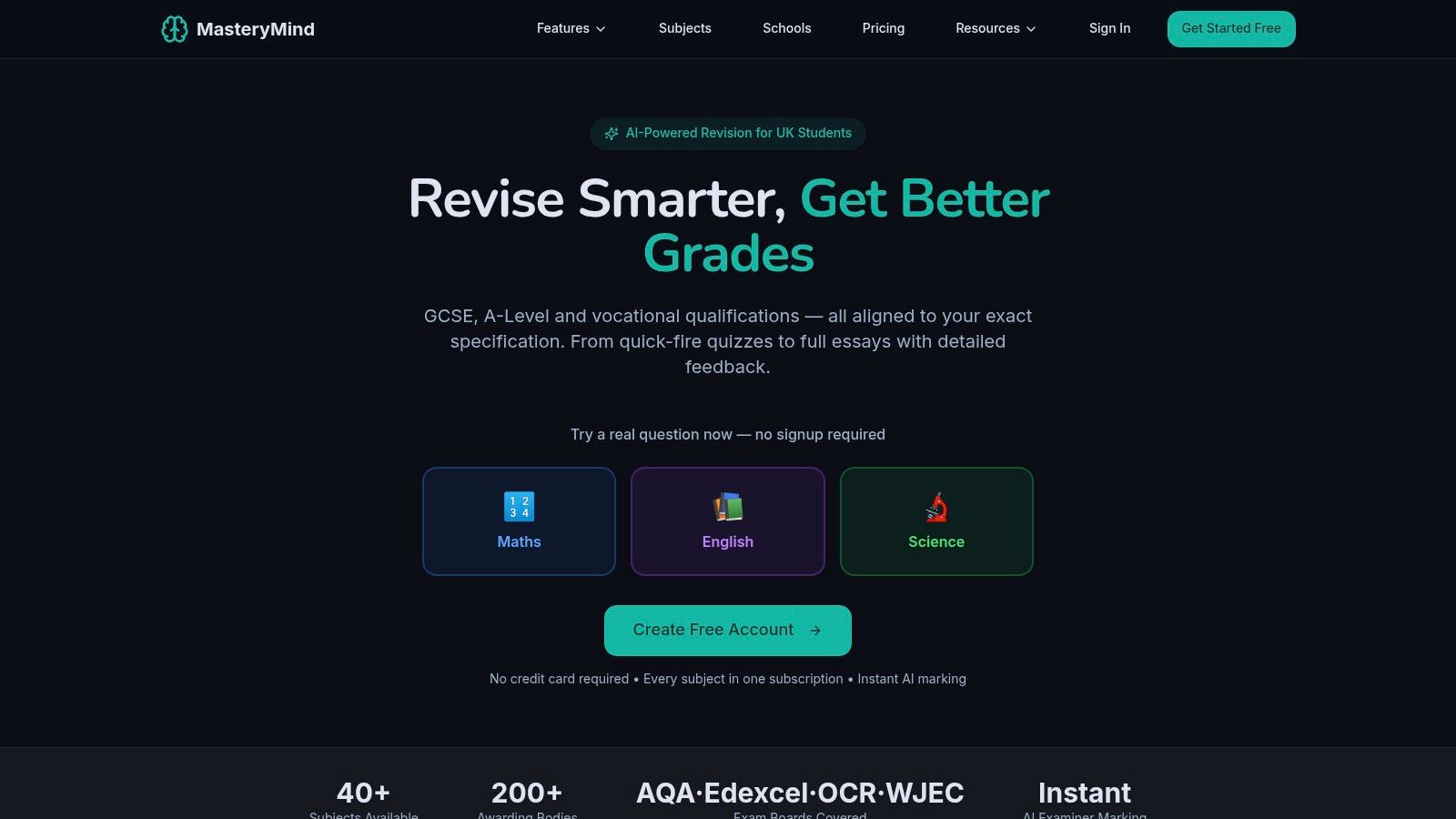
MasteryMind turns retention scheduling into something that happens while a student is doing revision, not something they have to manage by hand. A topic studied today can reappear in a quiz three days later, then a week later, then three weeks later, then six weeks later, with the intervals adjusted for subject and difficulty. That makes the schedule part of the practice instead of an extra admin job.
What that looks like in use
A student might begin with quick recall questions, then move into mixed-topic quizzes, then into longer written responses as confidence builds. That progression matters because the brain has to tell similar ideas apart, not just recognise one topic on its own. That's also why past-paper style practice is so effective.
For written work, the platform returns AO breakdowns, examiner-style commentary, and structured feedback rather than a vague “good job”. For maths, it can show step-by-step verification. For computer science, it can handle trace tables and binary or hexadecimal problems. For unseen poetry and essays, the feedback stays tied to the mark scheme rather than drifting into generic encouragement.
Useful test: if the feedback would still make sense after changing the exam board, it's probably too generic.
The coursework side matters too. NEA Coach uses a Socratic approach and doesn't rewrite the work for the student. That keeps the learner inside the rules while still giving them guidance they can use.
For a progress view that keeps the schedule from disappearing into the background, the platform also pairs well with AI Powered Revision. The point is not just more questions. The point is questions that come back on a schedule, in mixed forms, until the knowledge sticks.
If you like the idea of watching progress build over time, a tracker can make that easier to see. The schedule becomes less abstract when every return visit shows up on the page, and that helps students and teachers keep an eye on what has been retained.
Your First Retention Schedule and Common Questions
Start tonight with three simple moves. Pick your subjects. List the topics you've already covered. Write the next review date next to each topic in a calendar, then block out three 25-minute retrieval sessions a week so the reviews actually happen.
A basic version can be messy and still work. English on Monday, Biology on Wednesday, History on Saturday is enough to begin with. The key is that each topic has a next date, not just a vague feeling that you'll “come back to it”.
Quick questions parents and teachers usually ask
How long does this take each week?
Not as much as students fear, because the work is spread out. Once the calendar is set, the main job is just showing up for the session that's already there.
What happens if a session gets missed?
Move it to the next sensible slot. Don't scrap the schedule. The system is meant to survive real life, not pretend life never gets in the way.
Is this worth doing for Year 10 mocks?
Yes, especially if the student tends to cram. Earlier habits are easier to build when the stakes are lower, and that makes later revision less chaotic.
What about last-minute cramming?
It still has a place for top-up recall, but it works better when the schedule has already done the heavy lifting. Cramming should support memory, not replace the months before it.
The first fortnight is the hardest because the habit isn't automatic yet. After that, the dates start doing more of the work for you, and revision stops feeling like starting from zero every time.
If you want a revision setup that keeps topics coming back at the right time, MasteryMind gives UK GCSE and A-Level learners spaced review, mixed-topic practice, and examiner-aligned feedback in one place. It's built for the exact problem this article is about, turning study from a one-night scramble into a pattern you can keep up.
Ready to master this topic?
Practise with quizzes, blurt exercises and exam questions on MasteryMind.
7 days Premium · Then free forever · No card, no charge