Unseen Poetry Practice: Examiner-Aligned Plan for GCSE
You know the moment. The paper lands in front of you, the poem looks unfamiliar, and for a few seconds your brain does that annoying thing where it pretends it's forgotten everything you've ever been taught. If you're a student, that panic can feel like proof you're unprepared. If you're a teacher, you've probably watched capable pupils freeze just because the poem isn't one they've seen before.
That reaction is normal, but it isn't the end of the story. Unseen poetry practice works because the exam is not testing whether you already know the poem. It's testing whether you can read carefully, make a defensible judgement, and support it with evidence under pressure. That's good news, because method beats memory here, every time.
The harder truth is that poetry is unevenly accessed outside school. In 2025, 24.2% of children and young people aged 8 to 18 said they read poetry in their free time at least once a month, almost unchanged from 24.1% in 2024, while 51.2% said they do not currently engage with poetry in any way, according to the National Literacy Trust's 2025 report on poetry engagement in the UK, Children and Young People's Engagement with Poetry in 2025. That gap matters. It explains why some students walk in with a stronger instinct for poetic language, while others need a routine that makes unfamiliar poems feel manageable.
Why Unseen Poetry Feels Impossible and How to Fix It
The first time you see an unseen poem in an exam, it can feel unfair. There's no revising the exact poem, no hoping the teacher guessed right, and no comfort in recognising a quote from last night's notes. That's why so many students think the question is about luck, when it's really about whether they can make sense of a text they've never met before.
What makes this manageable is that unseen poetry has a predictable shape. AQA's teaching guidance for unseen poetry recommends moving through first impressions, then patterns, then a more focused reading of the poem's language and structure, and that basic rhythm is what strong answers follow, even when the poem itself is tricky. The poem may be ambiguous, but the method is not. Once students accept that they are not expected to “know” the poem, they can stop fighting the blank page and start doing the job the examiner rewards.
Ambiguity is not a trap
A deliberately open poem can unsettle students because it doesn't hand them a single obvious meaning. They worry that if they don't pin it down quickly, they'll write something “wrong”. In reality, ambiguity gives them room to argue, as long as they can defend what they say with the words on the page.
Practical rule: if a poem could mean two things, pick the reading that best fits the evidence you can actually quote.
That's where structured practice closes the gap. The National Literacy Trust data shows that poetry engagement is uneven, so plenty of students are starting from different levels of familiarity, National Literacy Trust poetry engagement report. A routine gives everyone the same entry point. It turns “I don't get it” into “I can see two possible readings, and here's why I prefer this one”. That's the shift examiners notice.
The other part students miss is that unseen poetry isn't a memory test, it's a thinking test. If you can explain how the poem works, you're already doing the right thing, even if your interpretation isn't flashy. Teachers know this instinctively, because marked scripts usually lose marks when they go vague, not when they go sensible.
Building a Repeatable Reading and Annotation Routine
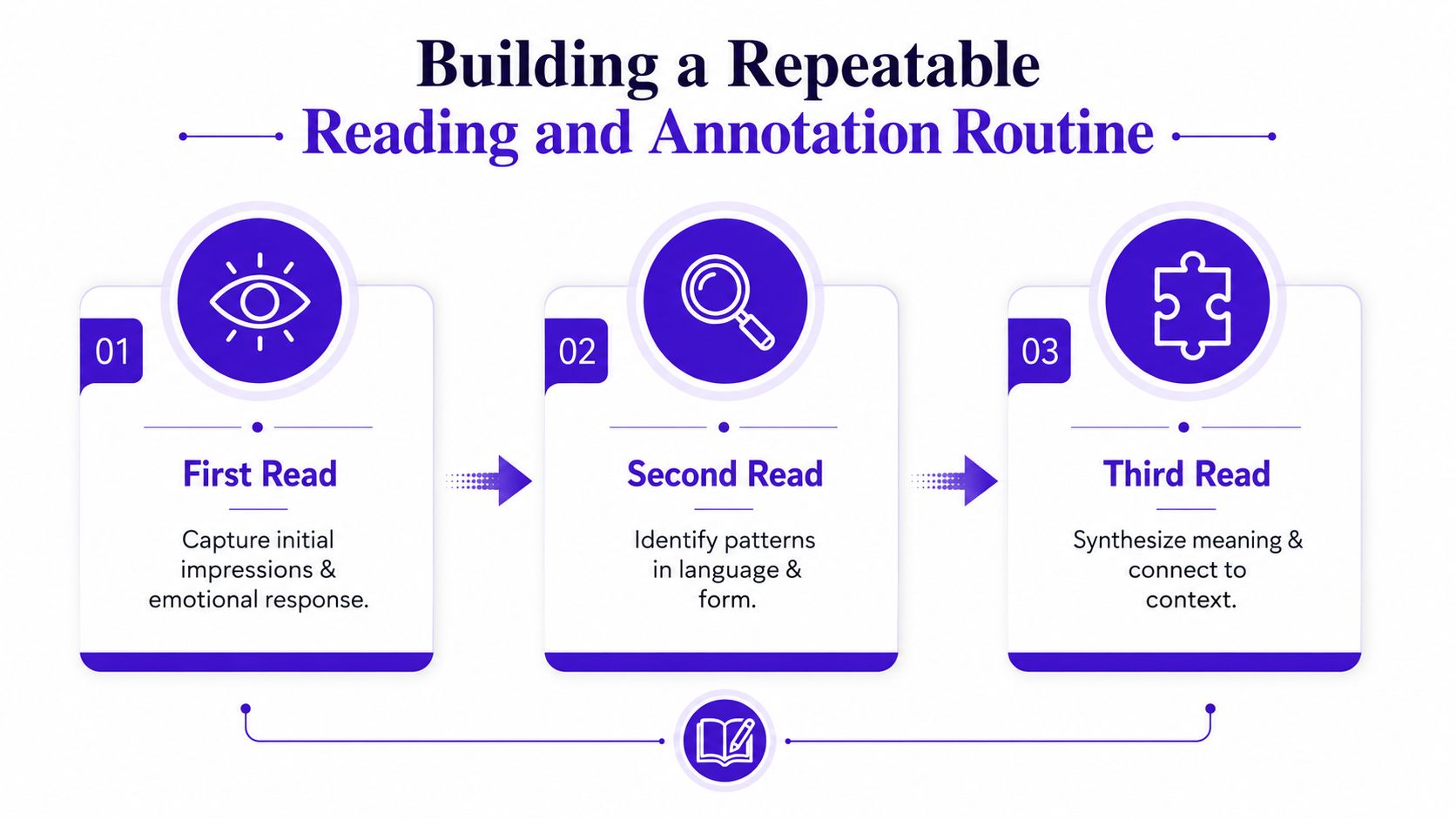
A good routine stops students from scribbling everything they notice and hoping something useful appears later. It gives them a way to read with purpose, then narrow their thinking until they can defend a reading under time pressure. AQA-oriented guidance recommends a sequence of first read, second read, and third reading, and that sequence helps students move from first reaction to sharper judgement, AQA unseen poetry teacher guide.
First read, get the emotional shape
On the first read, students should ask one simple question, what is this poem's mood doing to me? They do not need to solve every symbol or force one final meaning. They need to notice whether the voice feels calm, bitter, lonely, tender, tense, or reflective, then mark a few words that create that impression.
A short underline, a brief note in the margin, and maybe one arrow to a striking word is enough. Over-marking often hides the poem's shape rather than revealing it. The title matters here too, because it can frame the whole poem before the first line even begins. If the title suggests loss, pressure, memory, or conflict, that is a clue worth writing beside it.
Second read, look for patterns and form
The second read is where students begin to sort impression from evidence. They should look for repetition, contrasts, line breaks, stanza shifts, rhyme, rhythm, and any sudden change in tone. White space matters here as well, because silence on the page can be as meaningful as a word.
This read should also test how the poem holds together. If a line runs on unexpectedly, that may create urgency or uncertainty. If a stanza ends sharply, that break might matter more than a single metaphor. The point is not to name every feature, it is to notice which ones are doing real work and which ones are just decorations.
A tidy page beats a crowded one. Annotate only what you can explain later.
Third read, choose evidence for the question
By the third read, the question should be doing the filtering. Students need to circle or star the quotations that best fit the theme or focus they have been asked about, then reject anything that is interesting but off-topic. That decision matters because a defensible argument starts with selection, not with panic.
Ambiguity needs careful handling. If a poem seems to point in two directions, students should choose the reading that best fits the evidence they can quote, then note briefly why the other reading is less convincing. That keeps the answer controlled. It also shows the examiner that the student has made a judgement, not just collected ideas.
For students who want extra guided practice between lessons, Online Revision for GCSE is one option for building that habit with structured tasks. Used well, the routine becomes automatic. The goal is not to look busy, it is to be selective, because selective readers usually write stronger answers.
Moving from Feature Spotting to Real Analysis

A student can name enjambment, metaphor, or alliteration and still leave marks on the table. The label matters far less than the explanation that follows. Examiners want to see what that choice suggests about meaning, mood, tone, or the writer's idea, and that is the point many revision guides rush past.
Start with the question, not the device
A weak response often begins with the first technique the student notices. A stronger one begins with the theme in the question. If the task asks about conflict, memory, isolation, or power, students should keep that focus in mind and ask which quotations best support it. That keeps the response purposeful.
Examiner logic: if the point does not answer the question, it does not matter how clever the technique name sounds.
The decision-making gap most resources ignore appears when a poem feels unclear on purpose. Students need to choose what they can defend, not just collect possible meanings. The AQA unseen poetry teacher guide sets out that kind of reading approach, because strong answers are built from theme, evidence, and pattern, AQA unseen poetry teacher guide. A poem may suggest two readings at once, and the student's job is to decide which one fits the evidence best, then show why that choice is more convincing.
Use evidence to build a defensible interpretation
Build the answer in three parts, what you notice, how the writer creates that impression, and why it matters to the question. That order keeps the writing analytical instead of descriptive. If a line break isolates a word, students should explain what that isolation does. If a repeated phrase sounds obsessive, they should connect it to emotion or thought, not just name repetition and move on.
A useful habit is to write one sentence that begins with the quotation and one that begins with the effect. That stops the answer turning into a list. It also helps students avoid the common trap of retelling the poem instead of explaining why the poet has shaped it that way.
For students who want a digital way to practise this thinking, AI-powered revision study guides can sit alongside class notes. Used properly, they support clearer judgement by asking students to sort, test, and refine ideas rather than merely spot features.
A Timed Practice Template for Exam Conditions
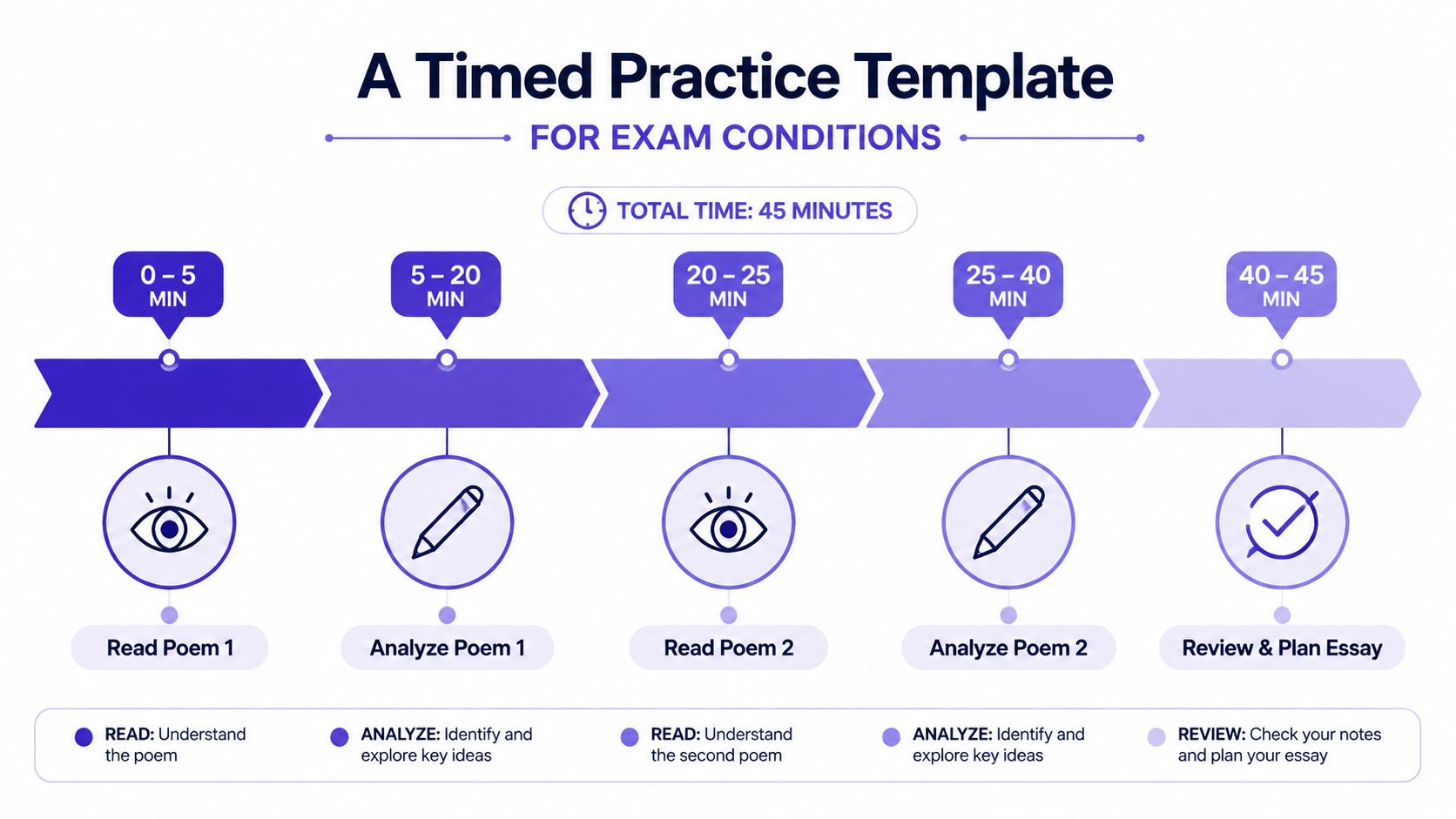
A common exam-room problem is not a lack of ideas. It is losing time to the first poem, then reaching the comparison with half a plan and a lot of panic. Timing matters because unseen poetry rewards students who can make a judgement quickly, support it with evidence, and keep going even when the poem seems slippery at first glance. The exam-board-aligned structure used in GCSE revision guidance is simple and effective, 5 minutes reading and annotating, 3 minutes planning, 20 minutes writing the higher-mark response, 5 minutes reading the comparison poem and planning, 10 minutes writing the comparison, and 2 minutes checking, The English Hub unseen poetry timing guide.
A sensible 45-minute practice rhythm
A timed routine should feel like a script students can follow under pressure. The point is not to rush. It is to stop them spending too long chasing every possible meaning in a poem that may be deliberately ambiguous, then running out of room to justify the reading they choose. Used well, Exam Practice for GCSE gives pupils a chance to rehearse that decision-making under realistic conditions.
- 0 to 5 minutes, first poem: read once for mood and meaning, then mark the title, key words, and any sharp shifts.
- 5 to 20 minutes, first response: write the main analysis, because the exam gives the most reward here.
- 20 to 25 minutes, second poem: read with comparison in mind, not as a fresh mini-essay.
- 25 to 40 minutes, comparison writing: keep it focused on the clearest links and differences.
- 40 to 45 minutes, check: fix missed quotations, awkward phrasing, and any point that drifted away from the question.
The weighting matters. The first poem gets the bulk of the time because the assessment does. For AQA GCSE English Literature unseen poetry, the section is split into a 24-mark single-poem analysis and an 8-mark comparison, AQA mark split summary. That tells students where their effort should go. A clear, defensible reading of the first poem usually secures more marks than a rushed comparison built on guesswork.
If you are teaching this in class, repeated runs matter more than telling pupils to “manage time better”. Most students do not need a lecture on discipline. They need a clock, a fixed routine, and practice that shows how to choose one interpretation, stick with it, and support it clearly before the timer runs out.
Tackling the Comparison Question Without Losing Marks
The comparison question is shorter, but it still catches students out because they treat it like a second full essay. It is not. The examiner wants a clear, concise comparison that shows two poems being connected with control, not two separate mini-analyses that never meet.
Read the second poem with a purpose
By the time students reach the comparison poem, they should already know what they are looking for. They do not need to start from zero. They need to scan for two or three strong links, perhaps tone, subject, structure, or attitude, then shape those into a focused response. If the comparison focus is sadness, conflict, or memory, they should keep that idea in view from the first line.
A useful way to explain this is to compare it to carrying a question into the second reading. The question does the sorting for them. One poem may sound reflective while the other feels sharper or more personal, and that difference becomes part of the argument. Deliberately ambiguous poems are not a trap if students decide early what reading they can defend and then stay consistent with the evidence.
The easiest way to lose marks is to write poem one, then poem two, and only compare them in the final sentence. That produces a weak, stitched-together answer. Strong comparison happens line by line or paragraph by paragraph, so the examiner can see the link immediately.
Keep the paragraphs lean and explicit
Comparison language should do real work. Words like similarly, whereas, in contrast, and both poems are useful because they make the relationship between the texts visible. The sentence does not need to be long. It needs to be clear.
Use this shape: point about poem one, evidence, effect, direct comparison to poem two, evidence, effect.
That structure avoids waffle and keeps the answer balanced. Students often think comparison means every sentence must mention both poems, but that can make the writing clumsy. It is enough to establish a point in one poem, then turn directly to the other and make the contrast or link obvious.
A strong comparison also avoids repeating the same depth as the main answer. The task is shorter for a reason. It wants brevity with control, not another full-scale interpretation. When the meaning is uncertain, the best answers do not pretend the poem has only one possible reading. They choose a defensible line of argument, show where the language supports it, and keep comparing with that same thread in mind.
Teachers can make this easier by pairing practice responses with mark schemes, including GCSE Past Papers, so students can see what the exam rewards. That habit helps them notice how concise comparisons are credited when they stay focused, use evidence precisely, and avoid turning the task into two separate essays.
Common Pitfalls and How to Avoid Them
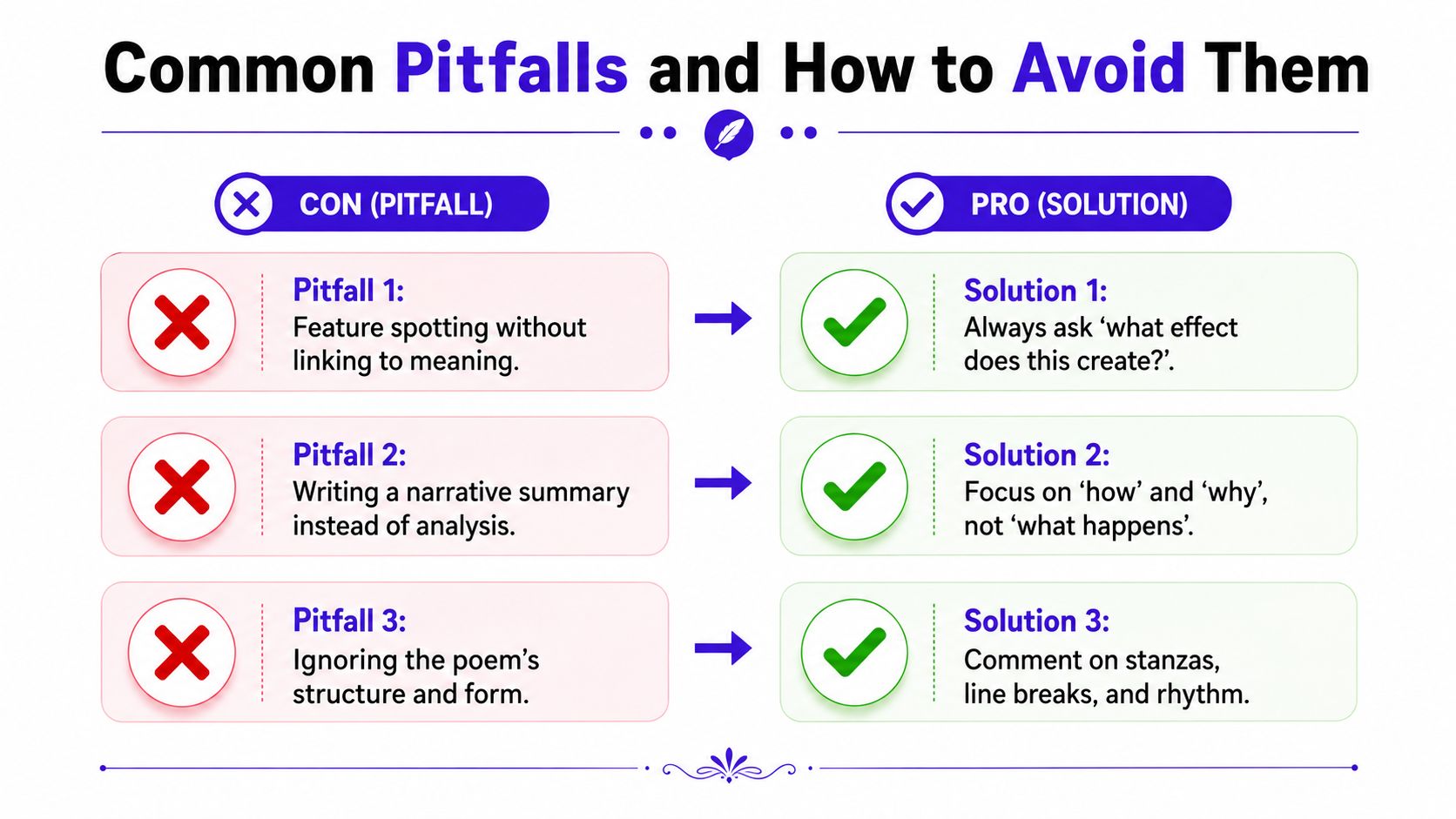
Some mistakes show up again and again, even in students who clearly understand the poem. They're usually not knowledge problems. They're judgement problems.
The most common errors
- Feature spotting without meaning. A student writes “there is enjambment” and stops there. The fix is simple, ask what that line break does to pace, tension, or emphasis.
- Summary instead of analysis. A student retells the poem in different words. The correction is to stay on the question, not the plot.
- Ignoring structure. A student only talks about words and misses stanzas, rhythm, or shifts in tone. The correction is to comment on how the poem moves, not just what it says.
Teachers can use those three checks as a fast marking checklist for peer review. Students can use them after every practice response. If the page reads like a story summary, they need to go back and replace one “what happens” sentence with a “how and why” sentence.
The other mistake is running out of time on the comparison. That usually happens when the first answer sprawls. The fix is not to write faster, it's to protect the first section's time so the second task still has a clear shape. In unseen poetry, discipline in the first half protects the marks in the second.
Tracking Your Progress and Staying Motivated
Progress only feels real when you can see it. That's why students should keep a simple record of each practice attempt, what question type felt hardest, which techniques they spotted quickly, where they lost time, and which interpretation felt most defensible. The pattern matters more than one good or bad essay.
Teachers can make this even more useful by pairing past papers with mark schemes and one clear target for the next attempt. A student doesn't need five targets. They need one fix, like linking devices to meaning, or using the question focus more precisely. That keeps revision honest and avoids the illusion of progress.
Unseen poetry gets easier through repeated, deliberate practice. The poems don't become predictable, but the student does become steadier. And steadier usually means better.
If you want structured unseen poetry practice, model answers, and examiner-aligned English revision that helps students move from guessing to clear analysis, visit MasteryMind and try it as part of your GCSE preparation. It's built to support the exact kind of timed, focused practice that makes unfamiliar poems feel less frightening and more doable.
Ready to master this topic?
Practise with quizzes, blurt exercises and exam questions on MasteryMind.
7 days Premium · Then free forever · No card, no charge