Pearson Edexcel · GCSE · Arabic
Theme 1: Identity and culture
Theme 1: Identity and Culture covers essential vocabulary for daily life, family, and hobbies. It tests your ability to use past, present, and future tenses, while requiring justified opinions on topics like technology and traditions across all four exam skills.
- 14 min read
- 4 worked examples
- 6 practice questions
- 8 key terms
Study Notes
Overview
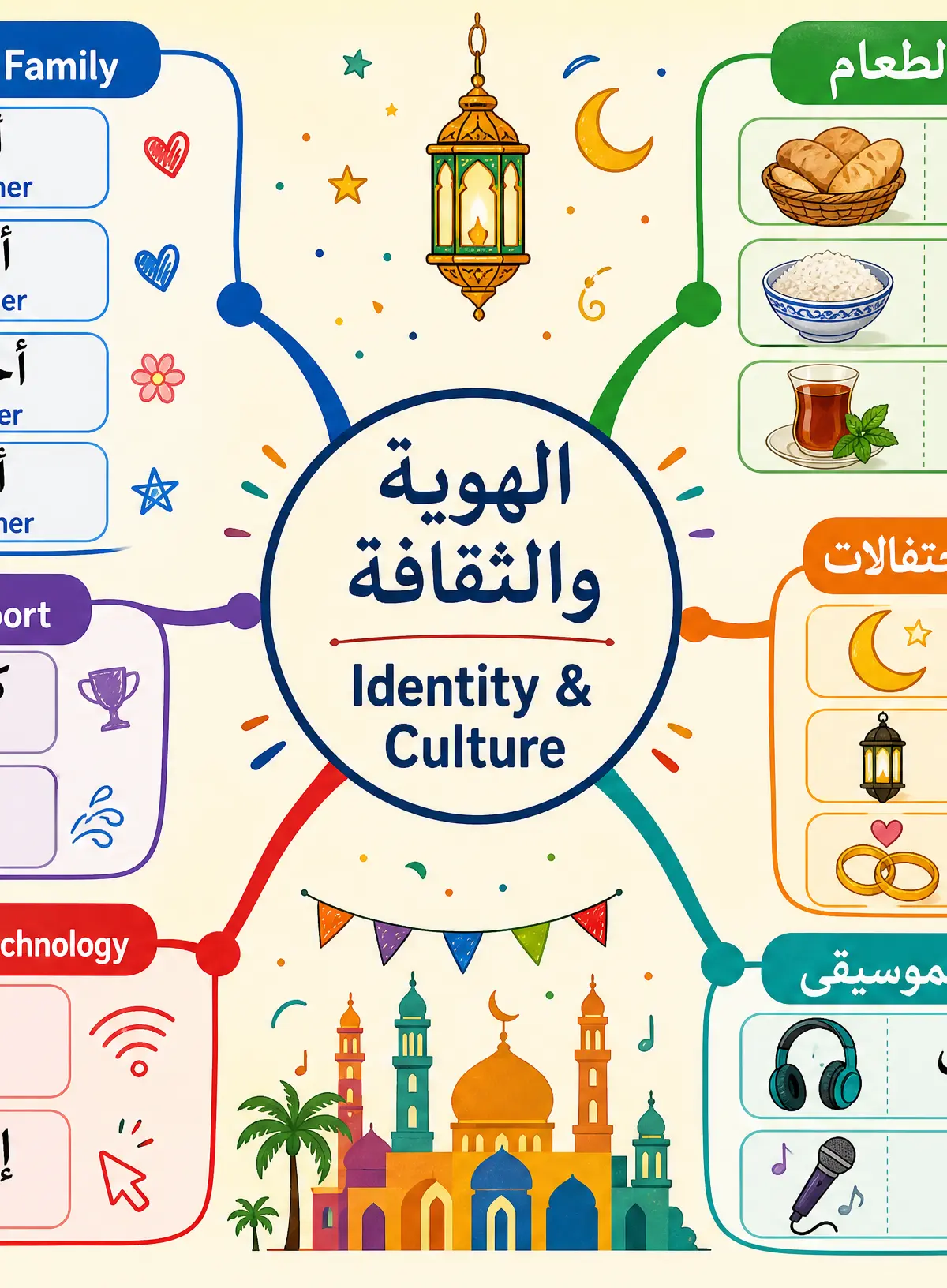
Theme 1: Identity and culture is a foundational pillar of your GCSE Arabic specification. It covers three critical areas: 'Who am I?' (relationships, family, role models), 'Daily life' (customs, food, technology), and 'Cultural life' (celebrations, music, sport).
This theme is ubiquitous—it appears across all four papers (Listening, Speaking, Reading, and Writing). Mastering this vocabulary and the associated grammar (particularly the three timeframes and adjective agreements) is essential for accessing the higher mark bands. Examiners consistently reward candidates who can confidently express and justify opinions about their personal lives and cultural experiences.
Listen to the podcast episode for this topic below:

📖 Essential Vocabulary
Tier 1 — Foundation Core
| Arabic | English | Gender | Example Sentence |
|---|---|---|---|
| أُسْرَة (usra) | family | f | أُحِبُّ أُسْرَتِي كَثِيراً (I love my family a lot) |
| أَب (ab) | father | m | أَبِي يَعْمَلُ فِي مُسْتَشْفَى (My father works in a hospital) |
| أُمّ (umm) | mother | f | أُمِّي طَيِّبَةٌ جِدّاً (My mother is very kind) |
| أَخ (akh) | brother | m | عِنْدِي أَخٌ وَاحِدٌ (I have one brother) |
| أُخْت (ukht) | sister | f | أُخْتِي تَدْرُسُ فِي الجَامِعَةِ (My sister studies at university) |
| صَدِيق (sadiq) | friend | m | هُوَ صَدِيقِي المُفَضَّلُ (He is my best friend) |
| طَعَام (ta'am) | food | m | الطَّعَامُ لَذِيذٌ (The food is delicious) |
| مَاء (ma') | water | m | أَشْرَبُ المَاءَ كُلَّ يَوْمٍ (I drink water every day) |
| هَاتِف (hatif) | phone | m | هَاتِفِي جَدِيدٌ (My phone is new) |
| حَاسُوب (hasub) | computer | m | أَسْتَخْدِمُ الحَاسُوبَ لِلدِّرَاسَةِ (I use the computer for studying) |
| رِيَاضَة (riyada) | sport | f | أَلْعَبُ الرِّيَاضَةَ فِي عُطْلَةِ نِهَايَةِ الأُسْبُوعِ (I play sport at the weekend) |
| مُوسِيقَى (musiqa) | music | f | أَسْتَمِعُ إِلَى المُوسِيقَى (I listen to music) |
| بَيْت (bayt) | house | m | بَيْتُنَا كَبِيرٌ (Our house is big) |
| مَدْرَسَة (madrasa) | school | f | أَذْهَبُ إِلَى المَدْرَسَةِ بِالحَافِلَةِ (I go to school by bus) |
| وَقْت (waqt) | time | m | لَيْسَ عِنْدِي وَقْتٌ (I don't have time) |
Tier 2 — Higher Tier
| Arabic | English | Gender | Example Sentence |
|---|---|---|---|
| قُدْوَة (qudwa) | role model | f | أَبِي هُوَ قُدْوَتِي فِي الحَيَاةِ (My father is my role model in life) |
| شَخْصِيَّة (shakhsiyya) | personality | f | لَدَيْهَا شَخْصِيَّةٌ قَوِيَّةٌ (She has a strong personality) |
| تَقَالِيد (taqalid) | traditions | f/pl | نَحْتَفِلُ حَسَبَ التَّقَالِيدِ العَرَبِيَّةِ (We celebrate according to Arabic traditions) |
| مُسْتَقْبَل (mustaqbal) | future | m | أُرِيدُ أَنْ أُصْبِحَ طَبِيباً فِي المُسْتَقْبَلِ (I want to become a doctor in the future) |
| تَوَاصُل اِجْتِمَاعِيّ (tawasul ijtima'i) | social media | m | أَقْضِي وَقْتاً طَوِيلاً عَلَى وَسَائِلِ التَّوَاصُلِ الاِجْتِمَاعِيِّ (I spend a long time on social media) |
| مُشْكِلَة (mushkila) | problem | f | التَّنَمُّرُ مُشْكِلَةٌ كَبِيرَةٌ (Bullying is a big problem) |
| اِحْتِفَال (ihtifal) | celebration | m | كَانَ الاِحْتِفَالُ رَائِعاً (The celebration was wonderful) |
| مُفِيد (mufid) | useful | adj | التِّكْنُولُوجْيَا مُفِيدَةٌ جِدّاً (Technology is very useful) |
| مُضِرّ (mudirr) | harmful | adj | التَّدْخِينُ مُضِرٌّ بِالصِّحَّةِ (Smoking is harmful to health) |
| بِالإِضَافَةِ إِلَى ذَلِكَ (bil-idafati ila dhalik) | in addition to that | phrase | بِالإِضَافَةِ إِلَى ذَلِكَ، أُحِبُّ القِرَاءَةَ (In addition to that, I like reading) |
High-Frequency Words & Phrases
| Phrase | English | Usage Context |
|---|---|---|
| فِي رَأْيِي (fi ra'yi) | in my opinion | Introducing an opinion (essential for Higher tier) |
| أَعْتَقِدُ أَنَّ (a'taqid anna) | I think that | Expressing a belief or thought |
| أُفَضِّلُ (ufaddil) | I prefer | Comparing choices |
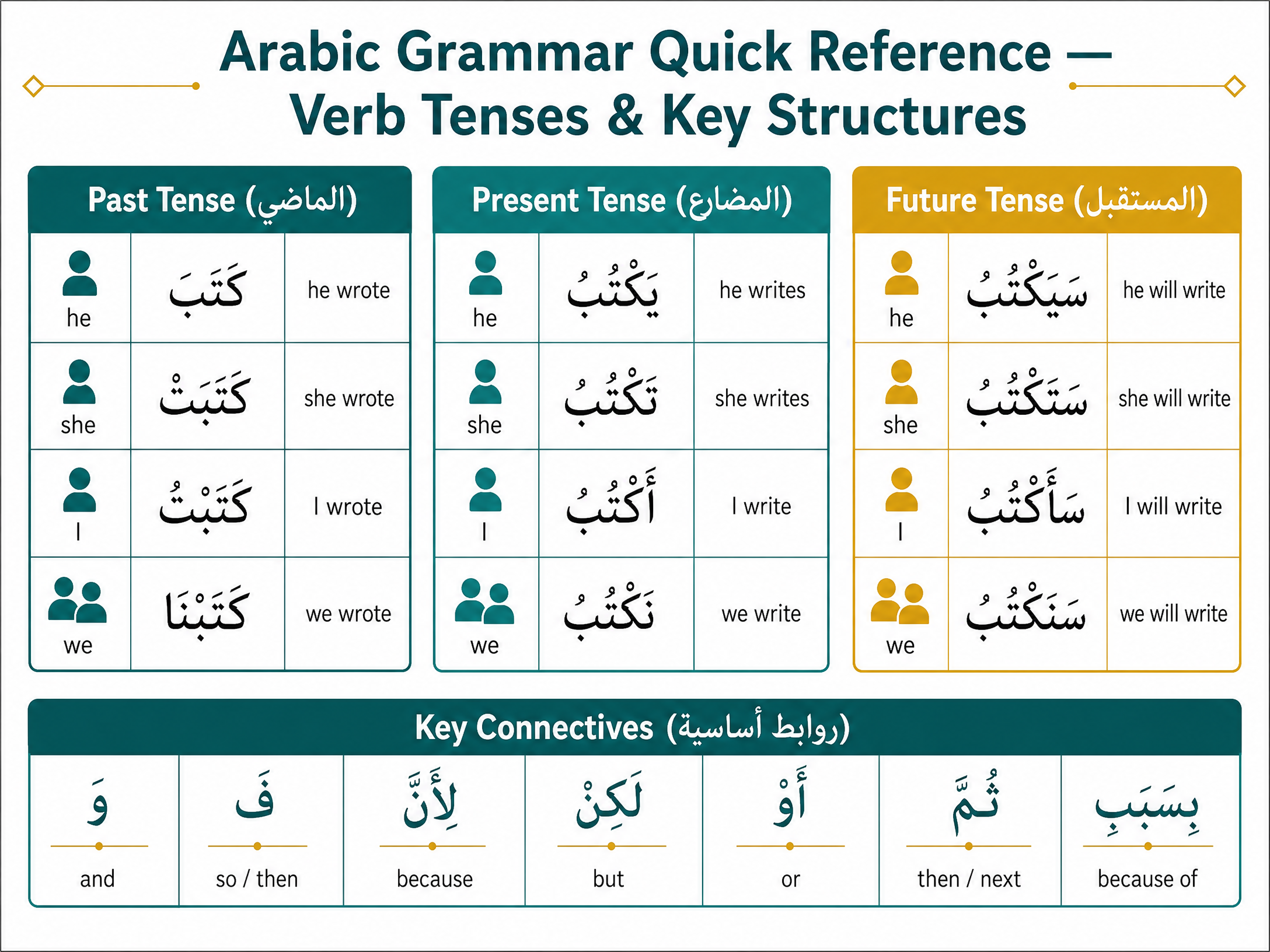
| لِأَنَّ (li'anna) | because | Justifying an opinion (crucial for accessing top marks) |
| لَكِن (lakin) | but / however | Introducing contrast |
| مِنْ نَاحِيَةٍ أُخْرَى (min nahiyat ukhra) | on the other hand | Structuring a balanced argument |
| بِسَبَبِ (bisabab) | because of | Explaining a reason (followed by a noun) |
| عَادَةً ('adatan) | usually | Describing routines |
| أَحْيَاناً (ahyanan) | sometimes | Describing frequency |
| فِي المَاضِي (fi al-madi) | in the past | Setting a past timeframe context |
📝 Grammar Focus
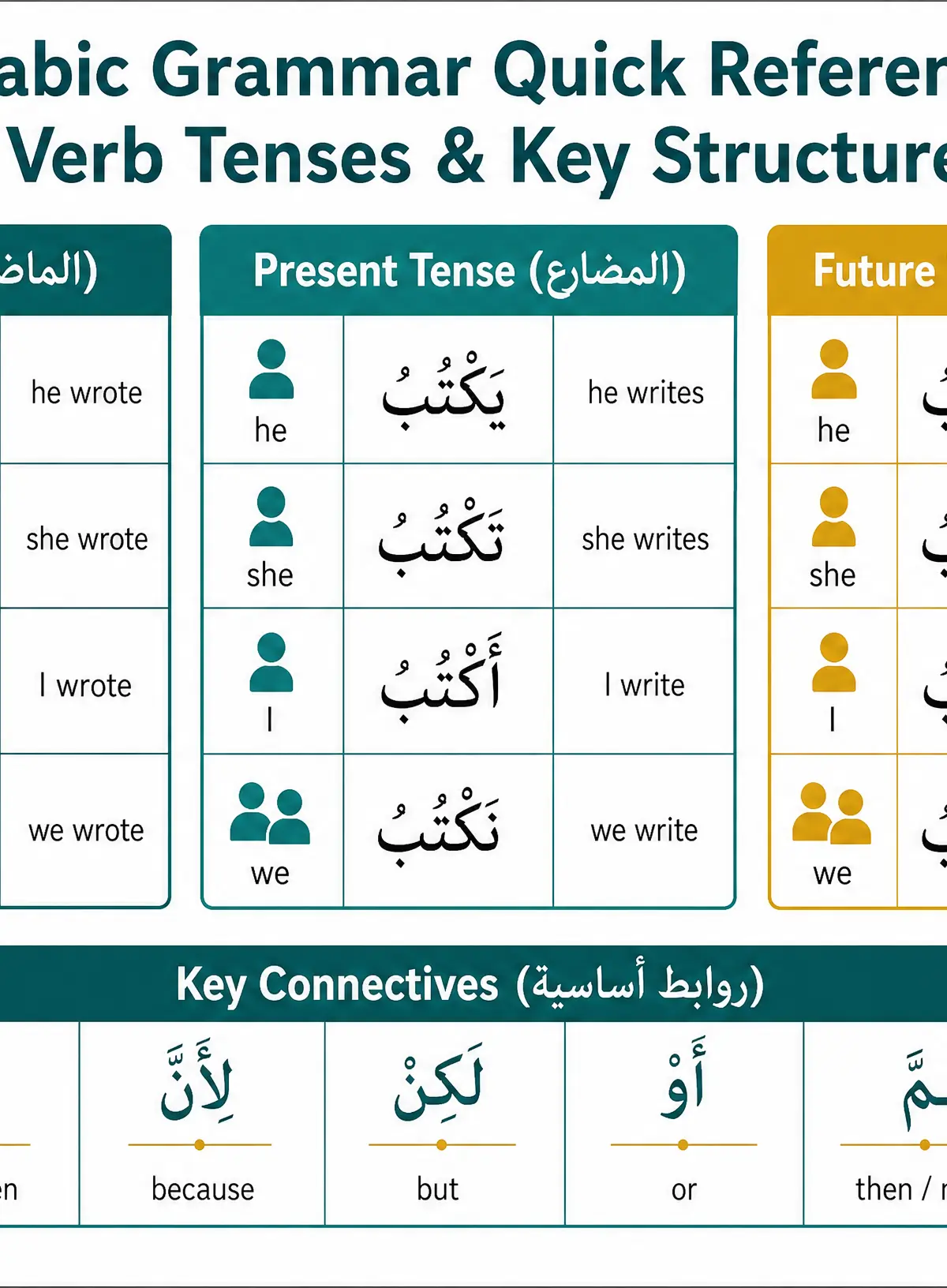
Key Structure 1: The Past Tense (الماضي - Al-Madi)
When to use it: To describe events that have already happened, such as a recent holiday, a past celebration, or what you did last weekend. Examiners require references to the past for top marks.
Conjugation Table (Verb: كَتَبَ - to write)
| Subject | Verb Form | English |
|---|---|---|
| أَنَا (I) | كَتَبْتُ (katabtu) | I wrote |
| أَنْتَ (you - m) | كَتَبْتَ (katabta) | you wrote |
| أَنْتِ (you - f) | كَتَبْتِ (katabti) | you wrote |
| هُوَ (he) | كَتَبَ (kataba) | he wrote |
| هِيَ (she) | كَتَبَتْ (katabat) | she wrote |
| نَحْنُ (we) | كَتَبْنَا (katabna) | we wrote |
Irregulars to learn:
- كَانَ (kana - he was) -> كُنْتُ (kuntu - I was)
- ذَهَبَ (dhahaba - he went) is regular but high frequency!
Key Structure 2: The Present Tense (المضارع - Al-Mudari')
When to use it: To describe current habits, routines, and general facts. This is your default tense for describing daily life and expressing current opinions.
Conjugation Table (Verb: يَكْتُبُ - to write)
| Subject | Verb Form | English |
|---|---|---|
| أَنَا (I) | أَكْتُبُ (aktub) | I write |
| أَنْتَ (you - m) | تَكْتُبُ (taktub) | you write |
| أَنْتِ (you - f) | تَكْتُبِينَ (taktubin) | you write |
| هُوَ (he) | يَكْتُبُ (yaktub) | he writes |
| هِيَ (she) | تَكْتُبُ (taktub) | she writes |
| نَحْنُ (we) | نَكْتُبُ (naktub) | we write |
Irregulars to learn:
- يَقُولُ (yaqul - he says)
- يَبِيعُ (yabi' - he sells)
Key Structure 3: The Future Tense (المستقبل - Al-Mustaqbal)
When to use it: To discuss plans, intentions, and future events. Essential for the 'future plans' bullet point often found in writing and speaking tasks.
How to form it: Simply add the prefix سَـ (sa-) or the word سَوْفَ (sawfa) before the present tense verb.
Conjugation Table (Verb: سَيَكْتُبُ - will write)
| Subject | Verb Form | English |
|---|---|---|
| أَنَا (I) | سَأَكْتُبُ (sa-aktub) | I will write |
| أَنْتَ (you - m) | سَتَكْتُبُ (sa-taktub) | you will write |
| أَنْتِ (you - f) | سَتَكْتُبِينَ (sa-taktubin) | you will write |
| هُوَ (he) | سَيَكْتُبُ (sa-yaktub) | he will write |
| هِيَ (she) | سَتَكْتُبُ (sa-taktub) | she will write |
| نَحْنُ (we) | سَنَكْتُبُ (sa-naktub) | we will write |
🎧 Listening Skills
What to Expect
The listening exam will feature native speakers discussing topics like family relationships, technology use, and cultural festivals. You will hear dialogues, announcements, and interviews. Foundation tier focuses on extracting key facts; Higher tier requires inferring meaning and identifying complex opinions.
Listening Strategies
- Anticipate vocabulary: Use the reading time to look at the questions and predict which Arabic words you might hear.
- Listen for qualifiers: Pay attention to words like جِدّاً (very), قَلِيلاً (a little), or أَبَداً (never) as they change the meaning of opinions.
- Identify the tense: Listen for the سَـ (sa-) prefix for the future, or the -tu/-ta/-ti suffixes for the past tense to correctly place the timeframe.
Common Listening Traps
- Negatives: Missing the word لا (la - no/not) or لَيْسَ (laysa - is not) can completely reverse your understanding of a speaker's opinion.
- False friends: Assuming a word that sounds similar to English means the same thing.
- Distractors: Speakers often mention two options before settling on one (e.g., "I wanted to play football, but it rained, so I read a book"). The question will ask what they actually did.
🗣️ Speaking Skills
Role Play Scenarios
Scenario: Buying a mobile phone
- Teacher: أَيَّ نَوْعٍ مِنَ الهَوَاتِفِ تُرِيدُ؟ (What type of phone do you want?)
- Student: أُرِيدُ هَاتِفاً ذَكِيّاً جَدِيداً مِنْ فَضْلِكَ. (I want a new smartphone, please.)
- Teacher: مَا هُوَ لَوْنُكَ المُفَضَّلُ؟ (What is your favourite colour?)
- Student: أُفَضِّلُ اللَّوْنَ الأَسْوَدَ لِأَنَّهُ أَنِيقٌ. (I prefer black because it is elegant.)
Photo Card Practice
Model Photo Card Response (A family eating dinner):
- Qu 1 (Description): مَاذَا تَرَى فِي الصُّورَةِ؟ (What do you see in the photo?)
Model: أَرَى عَائِلَةً تَتَنَاوَلُ العَشَاءَ مَعاً. هُنَاكَ أَبٌ وَأُمٌّ وَطِفْلَانِ. (I see a family eating dinner together. There is a father, mother, and two children.) - Qu 2 (Opinion): هَلْ تُحِبُّ تَنَاوُلَ الطَّعَامِ مَعَ عَائِلَتِكَ؟ لِمَاذَا؟ (Do you like eating with your family? Why?)
Model: نَعَمْ، أُحِبُّ ذَلِكَ لِأَنَّنَا نَتَحَدَّثُ عَنْ يَوْمِنَا وَنَقْضِي وَقْتاً مُمْتِعاً. (Yes, I like that because we talk about our day and spend enjoyable time.) - Qu 3 (Past/Future): مَاذَا أَكَلْتَ أَمْسِ؟ (What did you eat yesterday?)
Model: أَمْسِ، أَكَلْتُ الدَّجَاجَ مَعَ الأَرُزِّ، وَكَانَ لَذِيذاً جِدّاً. (Yesterday, I ate chicken with rice, and it was very delicious.)
General Conversation Questions
| Question (Arabic) | Model Answer | English Translation |
|---|---|---|
| صِفْ عَائِلَتَكَ. (Describe your family.) | عَائِلَتِي صَغِيرَةٌ. عِنْدِي أَخٌ وَاحِدٌ اسْمُهُ أَحْمَدُ. هُوَ ذَكِيٌّ وَلَطِيفٌ. | My family is small. I have one brother named Ahmed. He is smart and kind. |
| مَاذَا تَفْعَلُ فِي وَقْتِ فَرَاغِكَ؟ (What do you do in your free time?) | فِي وَقْتِ فَرَاغِي، أَلْعَبُ كُرَةَ القَدَمِ مَعَ أَصْدِقَائِي لِأَنَّهَا مُفِيدَةٌ لِلصِّحَّةِ. | In my free time, I play football with my friends because it is good for health. |
| كَيْفَ تَسْتَخْدِمُ التِّكْنُولُوجْيَا؟ (How do you use technology?) | أَسْتَخْدِمُ هَاتِفِي كُلَّ يَوْمٍ لِلتَّوَاصُلِ مَعَ أَصْدِقَائِي وَلِمُشَاهَدَةِ الفِيدْيُوهَاتِ. | I use my phone every day to communicate with my friends and to watch videos. |
| مَا هُوَ عِيدُكَ المُفَضَّلُ؟ لِمَاذَا؟ (What is your favourite festival? Why?) | عِيدِي المُفَضَّلُ هُوَ عِيدُ الفِطْرِ لِأَنَّنَا نَزُورُ العَائِلَةَ وَنَأْكُلُ حَلَوِيَّاتٍ لَذِيذَةً. | My favourite festival is Eid al-Fitr because we visit family and eat delicious sweets. |
| مَاذَا سَتَفْعَلُ مَعَ أَصْدِقَائِكَ فِي عُطْلَةِ نِهَايَةِ الأُسْبُوعِ القَادِمَةِ؟ (What will you do with your friends next weekend?) | سَنَذْهَبُ إِلَى السِّينِمَا لِمُشَاهَدَةِ فِيلْمٍ جَدِيدٍ، ثُمَّ سَنَتَنَاوَلُ البِيتْزَا. | We will go to the cinema to watch a new film, then we will eat pizza. |
✍️ Writing Skills
Translation Practice
English → Arabic:
| English | Arabic | Key Grammar |
|---|---|---|
| I have a small family. | عِنْدِي عَائِلَةٌ صَغِيرَةٌ. | Noun-adjective agreement (feminine) |
| I love my phone because it is useful. | أُحِبُّ هَاتِفِي لِأَنَّهُ مُفِيدٌ. | Pronoun suffixes and justification |
| Yesterday, I went to the cinema. | أَمْسِ، ذَهَبْتُ إِلَى السِّينِمَا. | Past tense (1st person) |
| Next week, I will play tennis. | فِي الأُسْبُوعِ القَادِمِ، سَأَلْعَبُ التِّنِسَ. | Future tense prefix (sa-) |
| I think that technology is important, but it is sometimes harmful. | أَعْتَقِدُ أَنَّ التِّكْنُولُوجْيَا مُهِمَّةٌ، لَكِنَّهَا مُضِرَّةٌ أَحْيَاناً. | Complex sentences with connectives |
Extended Writing
Model 90-word response (Foundation):
Task: Write about your free time and technology.
أُحِبُّ وَقْتَ الفَرَاغِ كَثِيراً. عَادَةً، أَلْعَبُ كُرَةَ القَدَمِ مَعَ أَصْدِقَائِي فِي الحَدِيقَةِ لِأَنَّهَا مُمْتِعَةٌ جِدّاً. أَيْضاً، أَسْتَخْدِمُ هَاتِفِي كُلَّ يَوْمٍ. أُحِبُّ مُشَاهَدَةَ الفِيدْيُوهَاتِ عَلَى الإِنْتَرْنِت. أَمْسِ، شَاهَدْتُ فِيلْماً رَائِعاً مَعَ عَائِلَتِي فِي المَسَاءِ. فِي عُطْلَةِ نِهَايَةِ الأُسْبُوعِ القَادِمَةِ، سَأَذْهَبُ إِلَى المَرْكَزِ التِّجَارِيِّ مَعَ أُخْتِي لِشِرَاءِ هَاتِفٍ جَدِيدٍ. فِي رَأْيِي، التِّكْنُولُوجْيَا مُفِيدَةٌ جِدّاً، لَكِنْ يَجِبُ أَلَّا نَسْتَخْدِمَهَا طَوَالَ الوَقْتِ.
Model 150-word response (Higher):
Task: Write an article about the impact of social media and modern lifestyle.
فِي عَصْرِنَا الحَالِي، أَصْبَحَتِ التِّكْنُولُوجْيَا جُزْءاً أَسَاسِيّاً مِنْ حَيَاتِنَا اليَوْمِيَّةِ. بِالنِّسْبَةِ لِي، أَسْتَخْدِمُ وَسَائِلَ التَّوَاصُلِ الاِجْتِمَاعِيِّ كُلَّ يَوْمٍ لِلتَّوَاصُلِ مَعَ أَصْدِقَائِي فِي جَمِيعِ أَنْحَاءِ العَالَمِ. أَعْتَقِدُ أَنَّ هَذَا مُفِيدٌ جِدّاً لِأَنَّهُ يَجْعَلُ العَالَمَ قَرْيَةً صَغِيرَةً.
مِنْ نَاحِيَةٍ أُخْرَى، هُنَاكَ بَعْضُ السَّلْبِيَّاتِ. عَلَى سَبِيلِ المِثَالِ، يَقْضِي بَعْضُ الشَّبَابِ وَقْتاً طَوِيلاً أَمَامَ الشَّاشَاتِ، مِمَّا يُؤَثِّرُ سَلْباً عَلَى صِحَّتِهِمْ وَدِرَاسَتِهِمْ. فِي المَاضِي، كَانَ النَّاسُ يَقْضُونَ وَقْتاً أَكْثَرَ مَعَ عَائِلَاتِهِمْ وَيَلْعَبُونَ الرِّيَاضَةَ فِي الخَارِجِ.
أَمْسِ، قَرَّرْتُ أَنْ أَتْرُكَ هَاتِفِي فِي البَيْتِ وَذَهَبْتُ لِلْمَشْيِ مَعَ أَبِي. كَانَتْ تَجْرِبَةً مُمْتِعَةً جِدّاً لِأَنَّنَا تَحَدَّثْنَا كَثِيراً بَدَلاً مِنَ النَّظَرِ إِلَى الشَّاشَاتِ. فِي المُسْتَقْبَلِ، سَأُحَاوِلُ تَقْلِيلَ اسْتِخْدَامِي لِلْإِنْتَرْنِت خِلَالَ عُطْلَةِ نِهَايَةِ الأُسْبُوعِ لِأُخَصِّصَ مَزِيداً مِنَ الوَقْتِ لِهِوَايَاتِي مِثْلَ القِرَاءَةِ وَالرَّسْمِ. فِي النِّهَايَةِ، يَجِبُ أَنْ نَسْتَخْدِمَ التِّكْنُولُوجْيَا بِحِكْمَةٍ.
Writing Checklist
- ✅ Used at least three tenses (Past, Present, Future)
- ✅ Included opinions (في رأيي، أعتقد أن)
- ✅ Justified opinions with reasons (لأن، بسبب)
- ✅ Used connectives to link ideas (و، لكن، لذلك، من ناحية أخرى)
- ✅ Checked adjective agreements (gender and number)
📚 Reading Skills
Key Strategies
- Skim first: Read the text quickly to grasp the overall topic (e.g., is it about a festival or a new phone?) before looking at the questions.
- Context clues: If you don't know a word, look at the words around it. Is it a positive or negative context?
- Read the question carefully: Does it ask for who, what, when, or why?
False Friends & Tricky Words
| Word | Looks/Sounds Like | Actually Means |
|---|---|---|
| مُمْتَاز (mumtaz) | mum / tas | Excellent |
| بَيْت (bayt) | bait | House |
| فِيلْم (film) | film | Film (Cognate - good!) |
| بَنْطَلُون (bantalun) | pantaloons | Trousers (Cognate - good!) |
🌍 Cultural Knowledge
Understanding the cultural context of Arabic-speaking countries enriches your answers and demonstrates deeper engagement with the subject:
- Family structure: In Arab culture, the extended family (العائلة الممتدة) is often very close-knit, and respect for elders is paramount. Mentioning this in speaking tasks shows cultural awareness.
- Festivals: Eid al-Fitr (celebrating the end of Ramadan) and Eid al-Adha are major celebrations involving new clothes, visiting relatives, and special foods.
- Food: Hospitality is a core value. Meals are often shared from a central dish, and offering food and tea (شاي) or coffee (قهوة) to guests is essential.
- Names: Arabic names often include the father's and grandfather's names, reflecting the importance of lineage.
Visual Resources
2 diagrams and illustrations
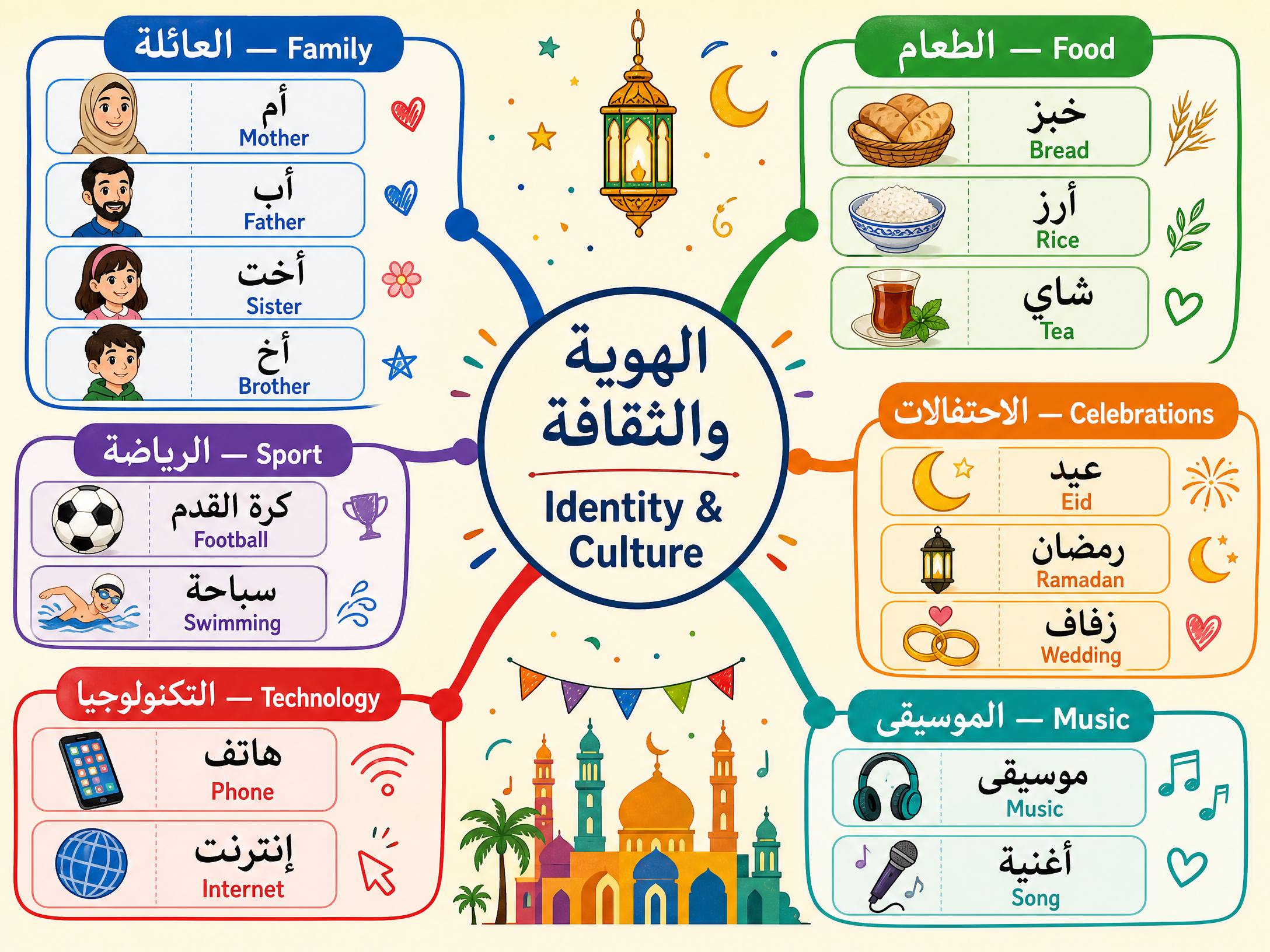
Interactive Diagrams
1 interactive diagram to visualise key concepts
Conceptual Flow Outline
Checklist for Higher Tier Writing and Speaking
Worked Examples
4 worked examples — open one to explore the question and available guidance.
Practice Questions
Test your understanding — click to reveal model answers
Writing: Write an email to your penpal about your family and hobbies. Include: details about your family, what you like doing in your free time, what you did last weekend, and what you will do next week. (Approx 90 words).
Hint: Ensure you cover all four bullet points. Use 'I like... because...' and make sure your past and future verbs are correct.
Reading: Read the text and answer in English. 'أَقْضِي وَقْتاً طَوِيلاً عَلَى الإِنْتَرْنِت كُلَّ يَوْمٍ. أُمِّي تَقُولُ إِنَّ هَذَا مُضِرٌّ بِالصِّحَّةِ، لَكِنَّنِي أَعْتَقِدُ أَنَّهُ مُفِيدٌ لِدِرَاسَتِي.' What is the mother's opinion, and what is the writer's opinion?
Hint: Look for the contrasting words 'mudirr' (harmful) and 'mufid' (useful).
Speaking (Conversation): هَلْ تُفَضِّلُ قَضَاءَ الوَقْتِ مَعَ العَائِلَةِ أَمِ الأَصْدِقَاءِ؟ لِمَاذَا؟ (Do you prefer spending time with family or friends? Why?)
Hint: Give a balanced answer using 'on the other hand' (min nahiyat ukhra).
Translation: Translate into Arabic: 'Technology is very important in modern life. I use my computer to do homework.'
Hint: Remember that 'technology' is feminine, so 'important' must be feminine too.
Listening: Listen to the announcement. (Audio: سَيَبْدَأُ المَهْرَجَانُ الثَّقَافِيُّ يَوْمَ السَّبْتِ القَادِمِ فِي السَّاعَةِ الخَامِسَةِ مَسَاءً.) When does the festival start?
Hint: Listen for the day of the week and the time.
Writing (Translation): Translate into English: 'شَاهَدْتُ فِيلْماً مُضْحِكاً مَعَ أَصْدِقَائِي أَمْسِ، وَغَداً سَنَلْعَبُ كُرَةَ القَدَمِ.'
Hint: Pay attention to the tense changes.