AQA · A-Level · Biology
Alteration of the Sequence of Bases
Unlock top marks by mastering how a single change in a DNA base can have catastrophic effects on a protein's structure and function. This guide breaks down the complete causal chain, from mutation to non-functional enzyme, giving you the precise language and exam technique AQA rewards.
- 6 min read
- 3 worked examples
- 5 practice questions
- 6 key terms
Study Notes
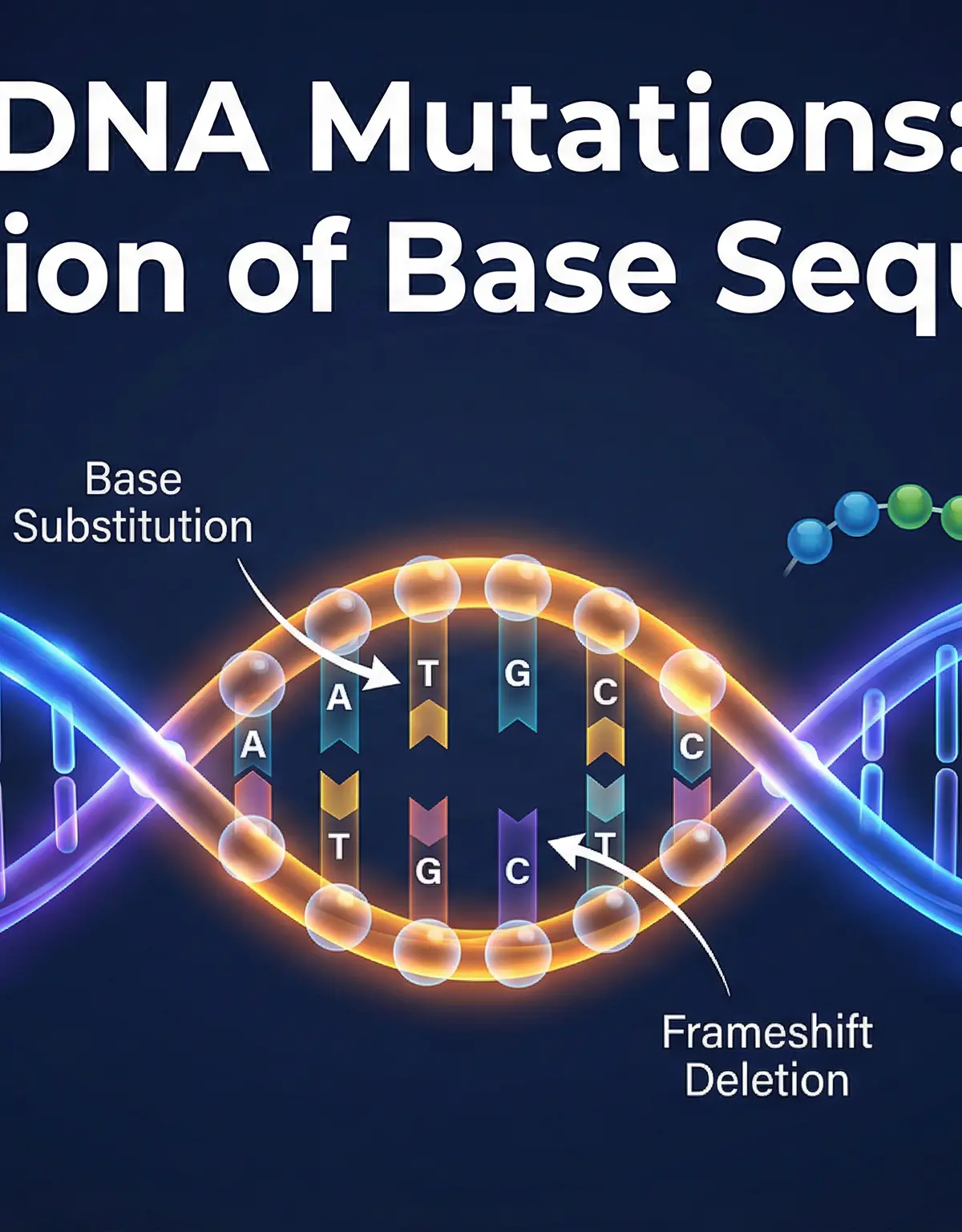
Overview
Welcome to AQA A-Level Biology topic 8.1: Alteration of the Sequence of Bases. This topic is fundamental to genetics and protein synthesis, exploring how tiny changes in our DNA can lead to significant, observable differences in an organism. A gene mutation is a change in the sequence of nucleotide bases in DNA, which can alter the primary structure of a polypeptide. This, in turn, affects the protein's final 3D shape and function. Understanding this causal chain is not just crucial for your biological knowledge; it's a frequent source of high-mark questions in the exam. Examiners expect you to link the molecular change (DNA) to the functional outcome (protein) with precision. This guide will equip you with the key concepts, terminology, and exam strategies to tackle any question on this topic with confidence.
Key Concepts
Concept 1: Gene Mutations - Substitution, Deletion, and Addition
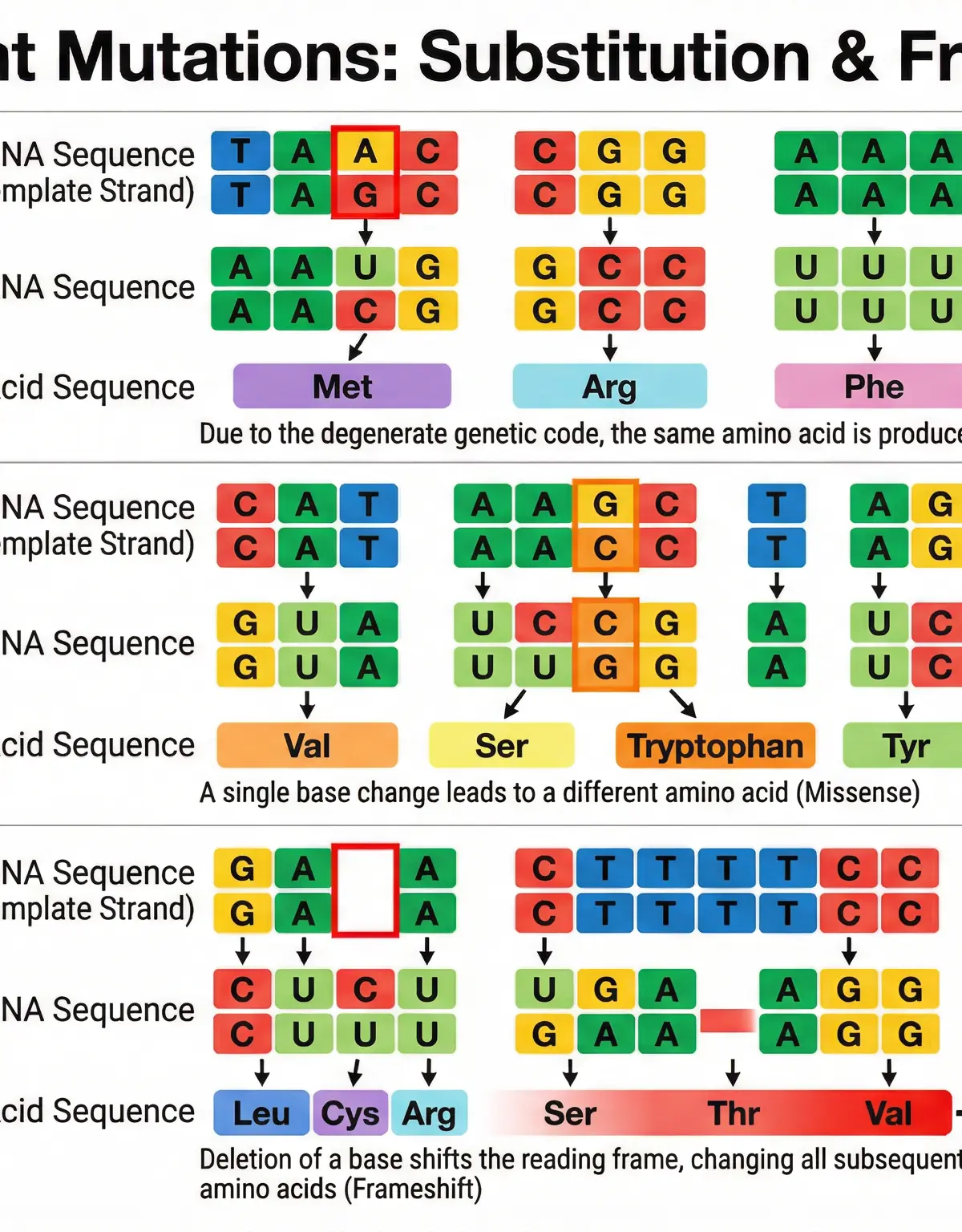
A gene mutation is a change in the nucleotide base sequence of a gene. There are three main types you need to know:
- Substitution: One base is swapped for another. For example, a DNA triplet of GCA becomes GCG. This is a 'point mutation' as it affects a single point in the sequence.
- Deletion: One or more bases are removed from the sequence. For example, GCA becomes GA.
- Addition: One or more bases are inserted into the sequence. For example, GCA becomes GCTA.
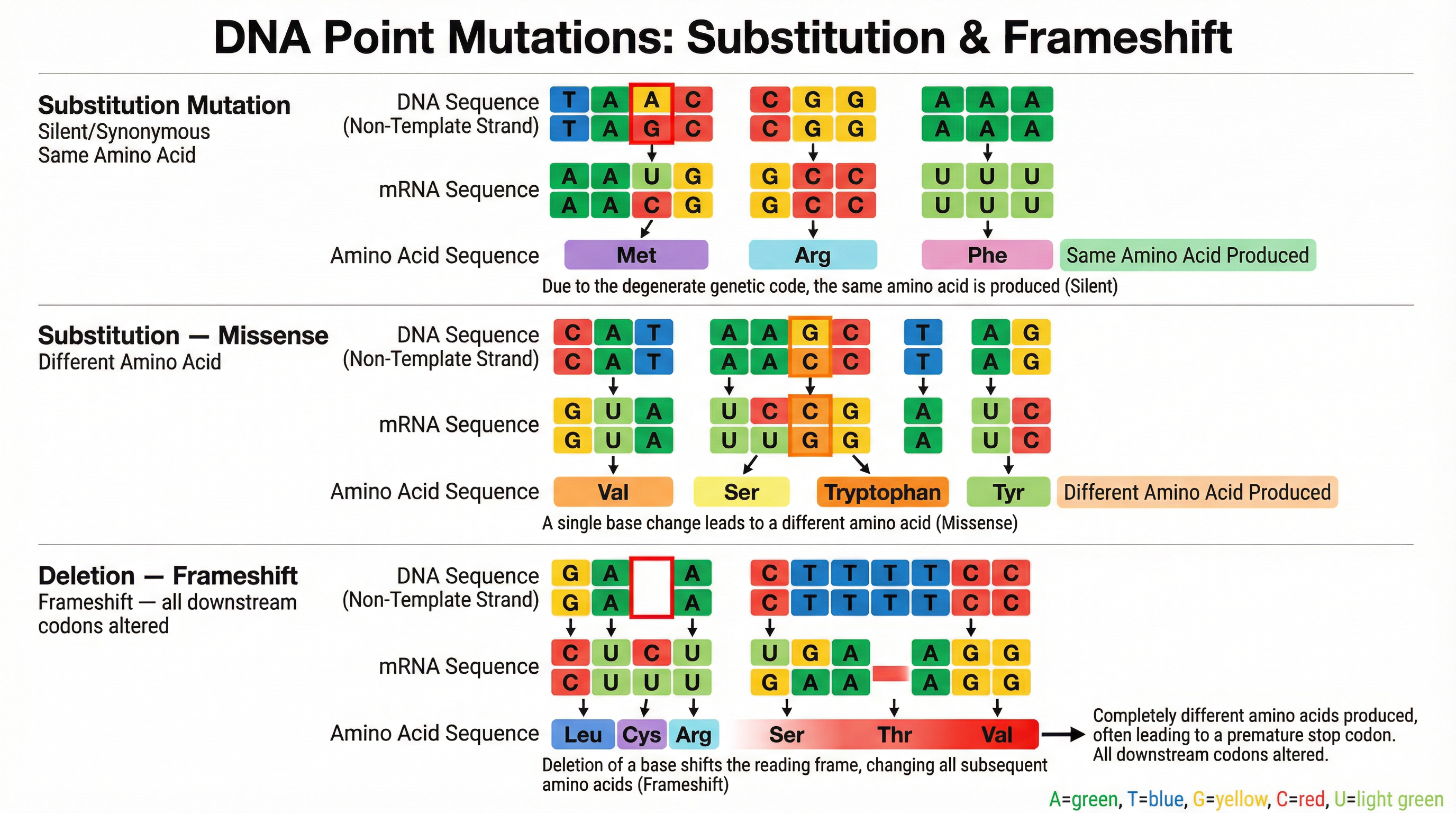
Deletion and addition are known as frameshift mutations. Because DNA is read in non-overlapping triplets (codons), adding or removing a base shifts the entire 'reading frame' from that point onwards. This has a major knock-on effect, altering every subsequent codon and therefore every amino acid in the polypeptide chain. Substitutions, by contrast, only affect a single codon.
Concept 2: The Consequences of Mutations
The effect of a mutation depends on its type and location.
- Silent (Synonymous) Mutations: A substitution may result in a new codon that still codes for the same amino acid. This is possible because the genetic code is degenerate – most amino acids are coded for by more than one codon. For example, both CCG and CCA code for Proline. In this case, the primary structure of the polypeptide is unchanged, and the mutation has no effect.
- Missense Mutations: A substitution that results in a codon for a different amino acid. This changes the primary structure of the polypeptide. The effect can be minor if the new amino acid has similar properties to the original, or major if it's very different (e.g., changing a non-polar amino acid to a charged one).
- Nonsense Mutations: A substitution that results in a 'stop' codon. This prematurely terminates translation, leading to a truncated, and almost always non-functional, polypeptide.
- Frameshift Mutations: As explained above, these change every codon downstream of the mutation, leading to a completely different amino acid sequence and a non-functional protein.
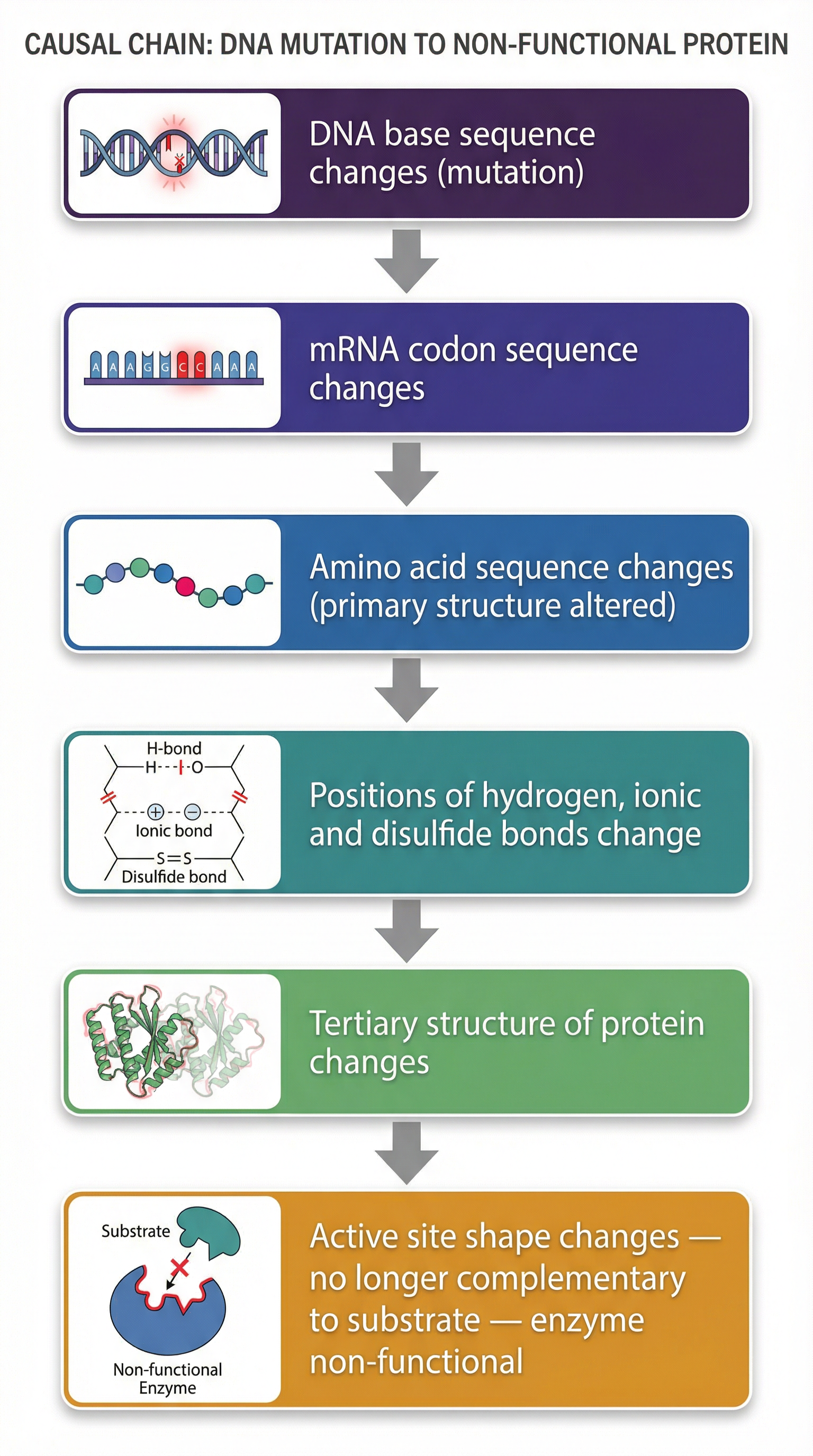
Concept 3: The Causal Chain - From DNA to Non-Functional Protein
This is the most important logical sequence in the topic and is frequently tested in 5-6 mark questions. You must be able to explain the entire process, from the initial mutation to the final outcome, typically a non-functional enzyme.
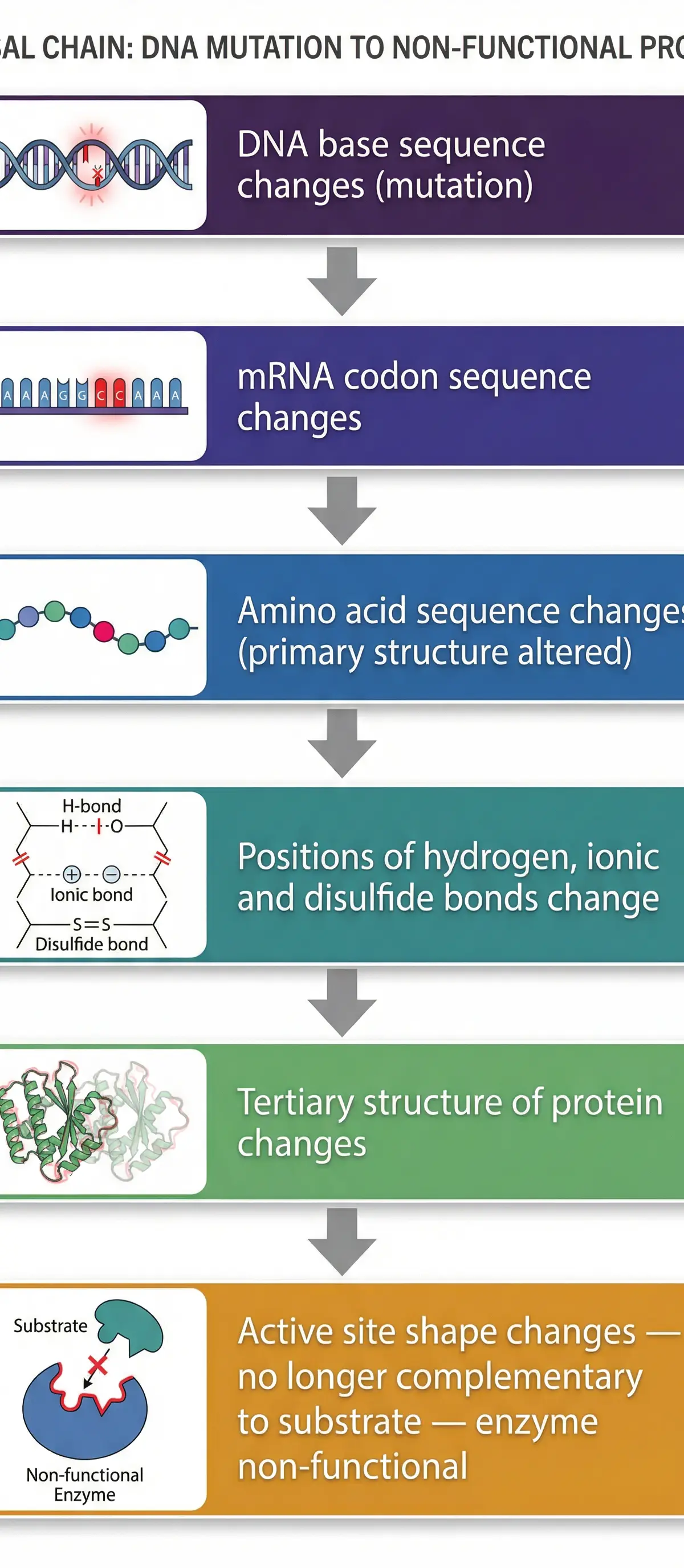
- Change in DNA Base Sequence: The mutation occurs (e.g., substitution, deletion).
- Change in mRNA Codon Sequence: The altered DNA is transcribed into a complementary mRNA strand, so the codon sequence is now different.
- Change in Amino Acid Sequence: The mRNA is translated at the ribosome. The different codon sequence results in a different sequence of amino acids being joined together. The primary structure of the polypeptide is altered.
- Change in Bonding: The primary structure dictates how the polypeptide folds. A different amino acid sequence means the R-groups are in different positions. This alters the position of hydrogen, ionic, and disulfide bonds that form between these R-groups.
- Change in Tertiary Structure: With the bonds forming in different places, the polypeptide folds into a different 3D shape. The tertiary structure is altered.
- Non-Functional Protein: For an enzyme, the tertiary structure determines the specific shape of the active site. If the tertiary structure changes, the active site shape changes and is no longer complementary to its substrate. Enzyme-substrate complexes cannot form, and the enzyme is non-functional.
Mathematical/Scientific Relationships
There are no specific mathematical formulas in this topic. The key relationship is the biological one: the direct causal link between the sequence of bases in DNA and the sequence of amino acids in a protein, which in turn determines the protein's final structure and function.
Practical Applications
Understanding gene mutations is critical for medicine and biotechnology. Many genetic disorders, such as sickle-cell anaemia and cystic fibrosis, are caused by specific gene mutations. For example, sickle-cell anaemia is caused by a single substitution mutation in the gene for haemoglobin. This changes one amino acid in the beta-globin chain, causing the haemoglobin molecules to stick together and form rigid fibres, deforming the red blood cells into a sickle shape. This demonstrates how a tiny change at the DNA level can have a massive impact on the phenotype of an organism.
Visual Resources
2 diagrams and illustrations
Interactive Diagrams
2 interactive diagrams to visualise key concepts
Conceptual Flow Outline
Flowchart showing the possible outcomes of a substitution mutation.
Conceptual Flow Outline
A simplified concept map illustrating the causal chain from a DNA mutation to a non-functional protein.
Worked Examples
3 worked examples — open one to explore the question and available guidance.
Practice Questions
Test your understanding — click to reveal model answers
Explain why a deletion mutation is more likely to result in a change to an organism than a substitution mutation. (4 marks)
Hint: Think about how many codons are affected by each type of mutation.
A mutation in the gene for the enzyme catalase occurs in an intron. Explain the effect this will have on the enzyme produced. (2 marks)
Hint: What happens to introns before translation?
Explain how a single substitution mutation can cause sickle-cell anaemia. (6 marks)
Hint: Apply the full causal chain to the specific context of haemoglobin.
Describe three ways that a mutation can be silent. (3 marks)
Hint: Think about the genetic code, non-coding DNA, and protein function.
Explain why addition and deletion mutations are known as frameshift mutations. (2 marks)
Hint: How is the genetic code read?