AQA · A-Level · Biology
Course version: 7402 · Version from Sept 2016
A single molecule of adenosine triphosphate (ATP) is a nucleotide…
Full specification wording
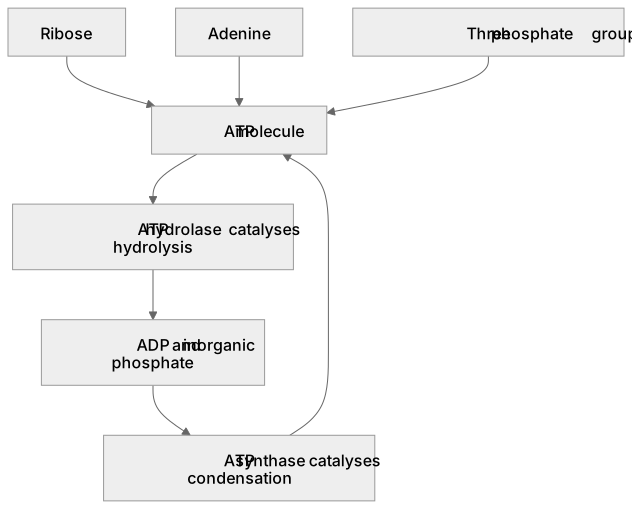
ATP: A single molecule of adenosine triphosphate (ATP) is a nucleotide derivative and is formed from a molecule of ribose, a molecule of adenine and three phosphate groups.
ATP is a phosphorylated nucleotide derivative comprising the organic base adenine, the pentose sugar ribose, and a chain of three phosphate groups.
Checked against the AQA 7402 specification (opens in a new tab) on .
- Point 1 of 3
- 4 key terms
Study notes
From the checked teaching notes for this specification point.
The idea
ATP is a phosphorylated nucleotide derivative comprising the organic base adenine, the pentose sugar ribose, and a chain of three phosphate groups. It serves as the immediate energy source for biological processes. The bonds between the phosphate groups are unstable. While breaking the terminal phosphate bond requires a small input of activation energy, the overall hydrolysis reaction to form ADP and inorganic phosphate is highly exergonic, releasing approximately 30.5 kJ mol⁻¹ of usable energy. This provides a small, manageable packet of energy, preventing thermal damage to the cell. ATP hydrolase catalyses this breakdown, while ATP synthase re-forms ATP from ADP and Pi during respiration and photosynthesis, ensuring continuous recycling.
What earns the marks
- Name the three components of ATP: adenine, ribose, and three phosphate groups.
- Identify ATP as a nucleotide derivative and the immediate energy source of the cell.
- State that ATP hydrolase catalyses the hydrolysis of ATP to ADP and inorganic phosphate, releasing energy.
- State that ATP synthase catalyses the condensation reaction that re-forms ATP from ADP and inorganic phosphate.
- Explain that ATP releases energy in small, manageable amounts, making it a suitable immediate energy source.
Common mistakes and how to put them right
Naming the base as adenosine.
Put it right by specifying the base is adenine, while adenosine refers to the base plus the ribose sugar.
Stating that ATP contains deoxyribose.
Put it right by identifying ribose as the pentose sugar in ATP.
Claiming the phosphate bonds 'store' large amounts of energy.
Put it right by explaining that the bonds are unstable and it is the overall hydrolysis reaction that releases energy.
Exam tips
- Ensure you name the specific enzymes for each direction: ATP hydrolase for breakdown and ATP synthase for synthesis.
- When evaluating ATP's suitability, contrast its small, immediate energy release with the large, slower energy release from oxidising a whole glucose molecule.
Try the lesson
The start of the ATP: A single molecule of adenosine triphosphate (ATP) is a nucleotide derivative and is formed from a molecule of ribose, a molecule of adenine and three phosphate groups. lesson, made from checked teaching notes for this specification point.
Have a go first
Which statement correctly describes the components that form a single molecule of adenosine triphosphate (ATP)?
Listen
ATP is a phosphorylated nucleotide derivative comprising the organic base adenine, the pentose sugar ribose, and a chain of three phosphate groups. It serves as the immediate energy source for biological processes. The bonds between the phosphate groups are unstable. While breaking the terminal phosphate bond requires a small input of activation energy, the overall hydrolysis reaction to form ADP and inorganic phosphate is highly exergonic, releasing approximately 30.5 kJ mol⁻¹ of usable energy. This provides a small, manageable packet of energy, preventing thermal damage to the cell. ATP hydrolase catalyses this breakdown, while ATP synthase re-forms ATP from ADP and Pi during respiration and photosynthesis, ensuring continuous recycling. A strong answer earns marks for these points. Name the three components of ATP: adenine, ribose, and three phosphate groups. Identify ATP as a nucleotide derivative and the immediate energy source of the cell. State that ATP hydrolase catalyses the hydrolysis of ATP to ADP and inorganic phosphate, releasing energy. State that ATP synthase catalyses the condensation reaction that re-forms ATP from ADP and inorganic phosphate. A common slip: Naming the base as adenosine. Instead, specifying the base is adenine, while adenosine refers to the base plus the ribose sugar. Exam tip: Ensure you name the specific enzymes for each direction: ATP hydrolase for breakdown and ATP synthase for synthesis.
See it
Key words
Say what each word means before you turn the card.
nucleotide derivative
Try answering aloud or in your head before turning the card.
adenine and ribose
Try answering aloud or in your head before turning the card.
three phosphate groups
Try answering aloud or in your head before turning the card.
immediate energy source
Try answering aloud or in your head before turning the card.
See every definition
- nucleotide derivative
- A single molecule of adenosine triphosphate is one of these, formed from ribose, adenine and three phosphate groups.
- adenine and ribose
- The organic base and the pentose sugar that, together with three phosphate groups, form a molecule of ATP.
- three phosphate groups
- The chain that, with adenine and ribose, makes up a molecule of ATP.
- immediate energy source
- The role ATP serves for biological processes, releasing energy in small, manageable amounts.
Label the diagram
Some boxes have lost their names. Pick the right name for each number.
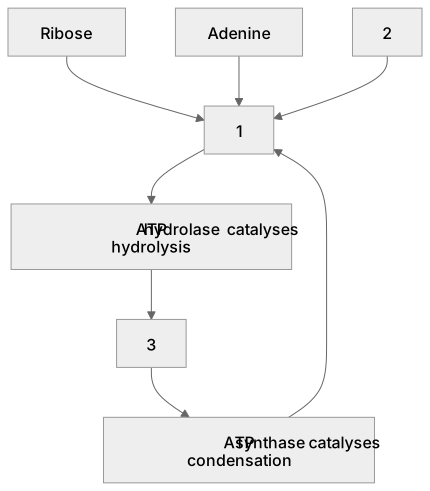
1Box 1
2Box 2
3Box 3
There is more to this lesson
The full lesson goes on to check your understanding and help you earn the marks. Create a free account to carry on, with your progress saved.
A week of Premium from your first lesson · Then the free plan continues · No card, no charge
Test your understanding of ATP: A single molecule of adenosine triphosphate (ATP) is a nucleotide derivative and is formed from a molecule of ribose, a molecule of adenine and three phosphate groups.
Active recall beats re-reading. Take an instant quiz now to test what you’ve learned and lock it into long-term memory.
A week of Premium from your first lesson · Then the free plan continues · No card, no charge