AQA · A-Level · Biology
Course version: 7402 · Version from Sept 2016
The hydrolysis of ATP can be coupled to energy-requiring reactions within…
Full specification wording
ATP: The hydrolysis of ATP can be coupled to energy-requiring reactions within cells.
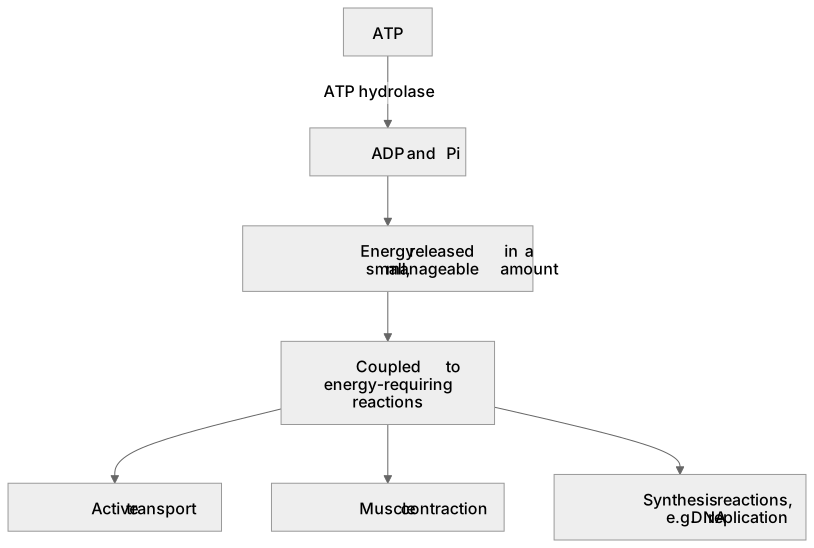
ATP hydrolase catalyses ATP hydrolysis to ADP and Pi, releasing energy in a small, manageable amount.
Checked against the AQA 7402 specification (opens in a new tab) on .
- Point 2 of 3
- 4 key terms
Study notes
From the checked teaching notes for this specification point.
The idea
ATP hydrolase catalyses ATP hydrolysis to ADP and Pi, releasing energy in a small, manageable amount. This reaction is coupled to energy-requiring processes, so energy is used directly rather than lost as heat. In muscle contraction, ATP binding causes the myosin head to detach from actin. ATP hydrolysis then provides energy to 'cock' the myosin head back to its resting position, while the power stroke follows ADP and Pi release. In active transport, carrier proteins hydrolyse ATP to change shape and move ions against their gradient. Synthesis reactions like DNA replication also require ATP.
What earns the marks
- ATP being hydrolysed to ADP and inorganic phosphate by ATP hydrolase, releasing energy.
- That energy being used directly in a named energy-requiring process, such as active transport, muscle contraction or the synthesis of a named molecule.
- Hydrolysis of ATP providing energy to 'cock' the myosin head back to its resting position.
- The attachment of a new ATP molecule to each myosin head causing the head to detach from actin.
- ATP releasing a small amount of energy at a time, so little is lost as heat, and being rapidly resynthesised.
Common mistakes and how to put them right
Writing that ATP is used for respiration, which examiners reject, since respiration is what produces ATP.
Saying ATP creates or produces energy rather than releasing it.
Stating that hydrolysis of ATP causes the myosin head to bend (the power stroke), when hydrolysis actually re-cocks the head and the power stroke follows ADP and Pi release.
Confusing ATP hydrolase with ATP synthase when naming the enzyme.
Exam tips
- Always follow 'energy is released' with 'used for', then a named process; the second half carries the mark.
- Have three named uses ready from different topics, for instance active transport, muscle contraction and protein synthesis.
- If the question is about an organism saving ATP, say what else that ATP can now be used for, such as growth or synthesis.
Try the lesson
The start of the ATP: The hydrolysis of ATP can be coupled to energy-requiring reactions within cells. lesson, made from checked teaching notes for this specification point.
Have a go first
In a cell, the hydrolysis of ATP is coupled to an energy-requiring reaction. What is the main advantage of this coupling?
Listen
ATP hydrolase catalyses ATP hydrolysis to ADP and Pi, releasing energy in a small, manageable amount. This reaction is coupled to energy-requiring processes, so energy is used directly rather than lost as heat. In muscle contraction, ATP binding causes the myosin head to detach from actin. ATP hydrolysis then provides energy to 'cock' the myosin head back to its resting position, while the power stroke follows ADP and Pi release. In active transport, carrier proteins hydrolyse ATP to change shape and move ions against their gradient. Synthesis reactions like DNA replication also require ATP. A strong answer earns marks for these points. ATP being hydrolysed to ADP and inorganic phosphate by ATP hydrolase, releasing energy. that energy being used directly in a named energy-requiring process, such as active transport, muscle contraction or the synthesis of a named molecule. hydrolysis of ATP providing energy to 'cock' the myosin head back to its resting position. the attachment of a new ATP molecule to each myosin head causing the head to detach from actin. Exam tip: Always follow 'energy is released' with 'used for', then a named process; the second half carries the mark.
See it
Key words
Say what each word means before you turn the card.
ATP hydrolysis
Try answering aloud or in your head before turning the card.
coupled reactions
Try answering aloud or in your head before turning the card.
ATP hydrolase
Try answering aloud or in your head before turning the card.
active transport
Try answering aloud or in your head before turning the card.
See every definition
- ATP hydrolysis
- The breakdown of ATP to ADP and inorganic phosphate by ATP hydrolase, releasing energy in a small, manageable amount.
- coupled reactions
- The linking of ATP hydrolysis to energy-requiring reactions within cells, so energy is used directly rather than lost as heat.
- ATP hydrolase
- The enzyme that catalyses ATP hydrolysis to ADP and Pi, releasing energy.
- active transport
- A process in which carrier proteins hydrolyse ATP to change shape and move ions against their gradient.
Label the diagram
Some boxes have lost their names. Pick the right name for each number.
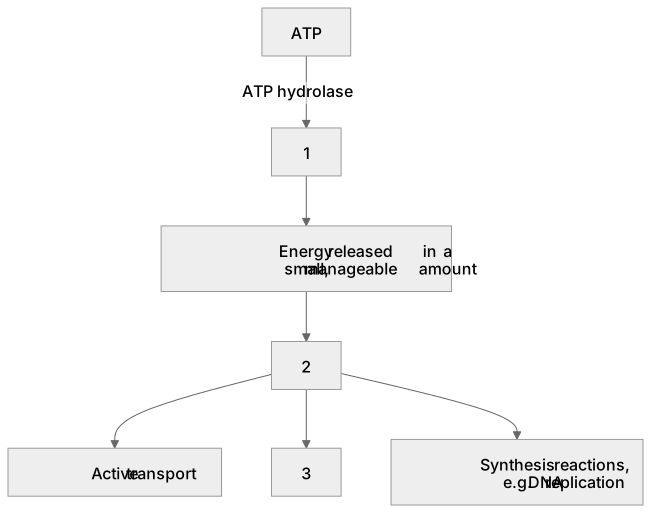
1Box 1
2Box 2
3Box 3
There is more to this lesson
The full lesson goes on to check your understanding and help you earn the marks. Create a free account to carry on, with your progress saved.
A week of Premium from your first lesson · Then the free plan continues · No card, no charge
Test your understanding of ATP: The hydrolysis of ATP can be coupled to energy-requiring reactions within cells.
Active recall beats re-reading. Take an instant quiz now to test what you’ve learned and lock it into long-term memory.
A week of Premium from your first lesson · Then the free plan continues · No card, no charge