AQA · A-Level · Biology
Course version: 7402 · Version from Sept 2016
How HIV causes the symptoms of AIDS. Why antibiotics are ineffective…
Full specification wording
Cell recognition and the immune system: How HIV causes the symptoms of AIDS. Why antibiotics are ineffective against viruses.
HIV replication destroys helper T cells.
Checked against the AQA 7402 specification (opens in a new tab) on .
- Point 14 of 18
- 4 key terms
Study notes
From the checked teaching notes for this specification point.
The idea
HIV replication destroys helper T cells. Because these cells release cytokines that stimulate phagocytes, cytotoxic T cells, and B cells, their depletion collapses the specific immune response. Consequently, B cells are poorly activated, reducing plasma cell and antibody production. The patient cannot fight off pathogens, leading to AIDS. Symptoms are caused by opportunistic secondary infections (e.g., tuberculosis), not HIV directly. AIDS is diagnosed by a low CD4 count or an AIDS-defining illness, as an antibody test only shows infection. Antibiotics are ineffective against viruses because viruses lack the bacterial structures and metabolic processes (like murein cell walls) that antibiotics target.
What earns the marks
- State that HIV replication destroys helper T cells, leading to a significant fall in their numbers.
- Explain that fewer helper T cells means reduced activation of B cells and cytotoxic T cells, resulting in decreased antibody production.
- Attribute the symptoms of AIDS to secondary or opportunistic infections rather than the direct action of HIV.
- Note that diagnosis of AIDS requires a low helper T cell (CD4) count or an AIDS-defining illness, not simply the presence of antibodies.
- Clarify that antibiotics are ineffective against viruses because viruses lack bacterial structures or metabolic processes, such as a murein cell wall or ribosomes, for the drugs to target.
Common mistakes and how to put them right
Stating HIV causes the symptoms of AIDS directly, instead of through infections the weakened immune system cannot fight.
Put it right: Attribute symptoms to opportunistic secondary infections.
Writing that antibiotics cannot get inside the virus, rather than that viruses lack the bacterial structures and metabolic processes antibiotics disrupt.
Put it right: Name a bacterial target such as the murein cell wall or ribosomes that viruses lack.
Confusing antibiotic resistance with immunity.
Put it right: Use 'resistant' for bacteria and 'immune' for the host.
Treating a positive HIV antibody test as proof that a person has AIDS.
Put it right: State that AIDS requires a low CD4 count or an AIDS-defining illness.
Exam tips
- When asked why antibiotics are ineffective against viruses, always name a specific bacterial target the virus lacks, such as a murein cell wall or metabolic enzymes.
- Open an AIDS pathogenesis answer by attributing the symptoms to secondary infections, then explain the underlying fall in helper T cells that prevents antibody production.
- If a question asks what else is needed to diagnose AIDS, give a low helper T cell count or an AIDS-defining illness, not just an antibody test.
Try the lesson
The start of the Cell recognition and the immune system: How HIV causes the symptoms of AIDS. Why antibiotics are ineffective against viruses. lesson, made from checked teaching notes for this specification point.
Have a go first
Why do the symptoms of AIDS typically appear only after many years of HIV infection?
Listen
HIV replication destroys helper T cells. Because these cells release cytokines that stimulate phagocytes, cytotoxic T cells, and B cells, their depletion collapses the specific immune response. Consequently, B cells are poorly activated, reducing plasma cell and antibody production. The patient cannot fight off pathogens, leading to AIDS. Symptoms are caused by opportunistic secondary infections (e.g., tuberculosis), not HIV directly. AIDS is diagnosed by a low CD4 count or an AIDS-defining illness, as an antibody test only shows infection. Antibiotics are ineffective against viruses because viruses lack the bacterial structures and metabolic processes (like murein cell walls) that antibiotics target. A strong answer earns marks for these points. State that HIV replication destroys helper T cells, leading to a significant fall in their numbers. Explain that fewer helper T cells means reduced activation of B cells and cytotoxic T cells, resulting in decreased antibody production. Attribute the symptoms of AIDS to secondary or opportunistic infections rather than the direct action of HIV. Note that diagnosis of AIDS requires a low helper T cell (CD4) count or an AIDS-defining illness, not simply the presence of antibodies. A common slip: Stating HIV causes the symptoms of AIDS directly, instead of through infections the weakened immune system cannot fight. Instead, Attribute symptoms to opportunistic secondary infections. Exam tip: When asked why antibiotics are ineffective against viruses, always name a specific bacterial target the virus lacks, such as a murein cell wall or metabolic enzymes.
See it
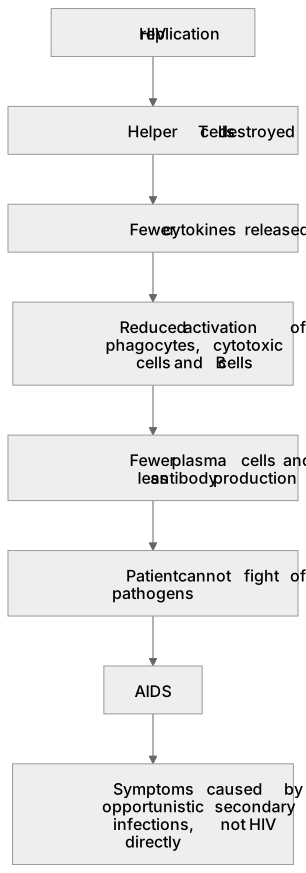
Put it in order
Put these steps in the order they happen.
- 1. Fewer plasma cells and less antibody production
- 2. Symptoms caused by opportunistic secondary infections, not HIV directly
- 3. Patient cannot fight off pathogens
- 4. HIV replication
- 5. Helper T cells destroyed
- 6. AIDS
- 7. Fewer cytokines released
- 8. Reduced activation of phagocytes, cytotoxic T cells and B cells
Key words
Say what each word means before you turn the card.
Destruction of helper T cells
Try answering aloud or in your head before turning the card.
Opportunistic secondary infections
Try answering aloud or in your head before turning the card.
Collapse of the specific response
Try answering aloud or in your head before turning the card.
Diagnosis of AIDS
Try answering aloud or in your head before turning the card.
See every definition
- Destruction of helper T cells
- HIV replication destroys these cells, leading to a significant fall in their numbers.
- Opportunistic secondary infections
- These cause the symptoms of AIDS rather than the direct action of HIV.
- Collapse of the specific response
- Fewer helper T cells means reduced activation of B cells and cytotoxic T cells, resulting in decreased antibody production.
- Diagnosis of AIDS
- Requires a low helper T cell (CD4) count or an AIDS-defining illness, not simply the presence of antibodies.
Label the diagram
Some boxes have lost their names. Pick the right name for each number.
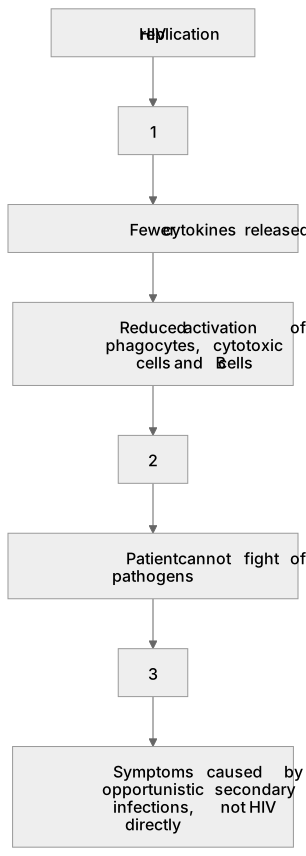
1Box 1
2Box 2
3Box 3
There is more to this lesson
The full lesson goes on to check your understanding and help you earn the marks. Create a free account to carry on, with your progress saved.
A week of Premium from your first lesson · Then the free plan continues · No card, no charge
Test your understanding of Cell recognition and the immune system: How HIV causes the symptoms of AIDS. Why antibiotics are ineffective against viruses.
Active recall beats re-reading. Take an instant quiz now to test what you’ve learned and lock it into long-term memory.
A week of Premium from your first lesson · Then the free plan continues · No card, no charge