AQA · A-Level · Biology
Course version: 7402 · Version from Sept 2016
Students should be able to: discuss ethical issues associated with the use…
Full specification wording
Cell recognition and the immune system: Students should be able to: discuss ethical issues associated with the use of vaccines and monoclonal antibodies evaluate methodology, evidence and data relating to the use of vaccines and monoclonal antibodies.
Evaluating data on vaccines and monoclonal antibodies (mAbs) requires analysing methodology and evidence.
Checked against the AQA 7402 specification (opens in a new tab) on .
- Point 18 of 18
Study notes
From the checked teaching notes for this specification point.
The idea
Evaluating data on vaccines and monoclonal antibodies (mAbs) requires analysing methodology and evidence. When assessing data, consider sample sizes, control groups, and study duration. While overlapping standard deviations suggest differences might not be significant, a statistical test is required for confirmation. Ethical issues must also be discussed. For vaccines, this includes animal testing during development, compulsory vaccination debates, and side effects. For mAbs, ethical concerns involve the use of mice to produce antibodies and the risks of human clinical trials, such as unexpected immune responses.
What earns the marks
- Identify specific methodological limitations in vaccine or mAb trials, such as small sample sizes, lack of a control group, or short study duration.
- State that overlapping standard deviations indicate differences may not be significant, but a statistical test is needed to confirm if differences are due to chance.
- Discuss ethical concerns of vaccines, such as the use of animals in development, side effects, or the balance between individual risk and herd immunity.
- Explain ethical issues with monoclonal antibodies, including the use of mice to produce B cells (e.g., injecting mice with antigens) or the risks associated with early human clinical trials.
Common mistakes and how to put them right
Stating that overlapping error bars definitively prove there is no significant difference.
Put it right: State that overlap suggests the difference might not be significant, but a statistical test is required for proof.
Ignoring ethical issues regarding animal use in mAb production.
Put it right: Explicitly mention that producing mAbs often involves injecting mice with antigens, raising animal welfare concerns.
Providing a one-sided evaluation of vaccine data.
Put it right: Evaluate both supporting and conflicting evidence when assessing data on vaccine efficacy or safety.
Exam tips
- When evaluating data, always quote specific figures from the provided tables or graphs to support your arguments.
- If asked to discuss ethics, ensure you mention both the benefits (e.g., herd immunity, targeted cancer treatment) and the drawbacks (e.g., animal testing, side effects).
Try the lesson
The start of the Cell recognition and the immune system: Students should be able to: discuss ethical issues associated with the use of vaccines and monoclonal antibodies evaluate methodology, evidence and data relating to the use of vaccines and monoclonal antibodies. lesson, made from checked teaching notes for this specification point.
Have a go first
Which of the following is an ethical issue raised by the use of vaccines in a population?
Listen
Evaluating data on vaccines and monoclonal antibodies (mAbs) requires analysing methodology and evidence. When assessing data, consider sample sizes, control groups, and study duration. While overlapping standard deviations suggest differences might not be significant, a statistical test is required for confirmation. Ethical issues must also be discussed. For vaccines, this includes animal testing during development, compulsory vaccination debates, and side effects. For mAbs, ethical concerns involve the use of mice to produce antibodies and the risks of human clinical trials, such as unexpected immune responses. A strong answer earns marks for these points. Identify specific methodological limitations in vaccine or mAb trials, such as small sample sizes, lack of a control group, or short study duration. State that overlapping standard deviations indicate differences may not be significant, but a statistical test is needed to confirm if differences are due to chance. Discuss ethical concerns of vaccines, such as the use of animals in development, side effects, or the balance between individual risk and herd immunity. Explain ethical issues with monoclonal antibodies, including the use of mice to produce B cells (e.g., injecting mice with antigens) or the risks associated with early human clinical trials. A common slip: Stating that overlapping error bars definitively prove there is no significant difference. Instead, State that overlap suggests the difference might not be significant, but a statistical test is required for proof. Exam tip: When evaluating data, always quote specific figures from the provided tables or graphs to support your arguments.
See it
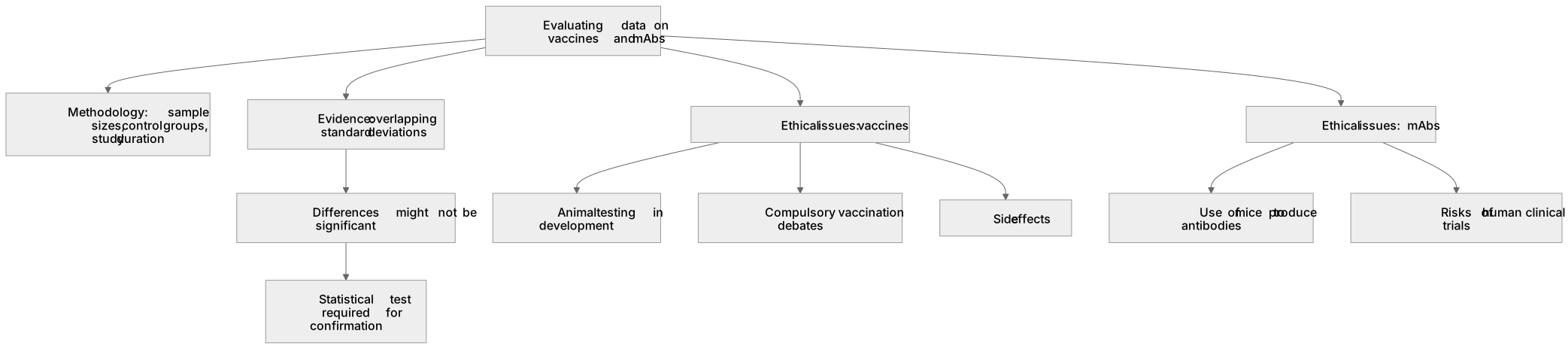
Label the diagram
Some boxes have lost their names. Pick the right name for each number.
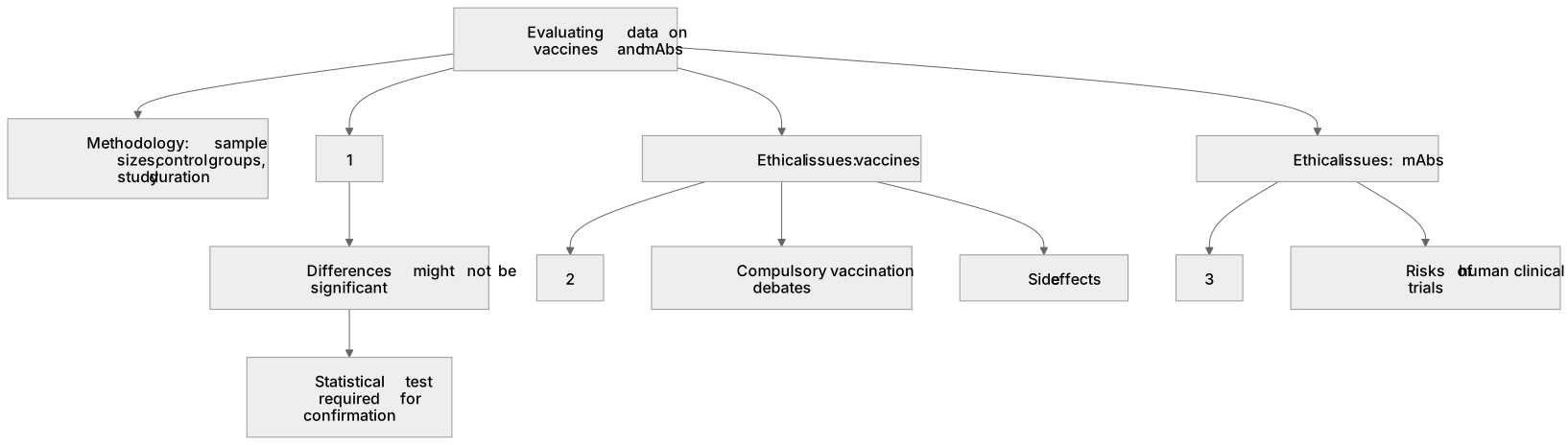
1Box 1
2Box 2
3Box 3
There is more to this lesson
The full lesson goes on to check your understanding and help you earn the marks. Create a free account to carry on, with your progress saved.
A week of Premium from your first lesson · Then the free plan continues · No card, no charge
Test your understanding of Cell recognition and the immune system: Students should be able to: discuss ethical issues associated with the use of vaccines and monoclonal antibodies evaluate methodology, evidence and data relating to the use of vaccines and monoclonal antibodies.
Active recall beats re-reading. Take an instant quiz now to test what you’ve learned and lock it into long-term memory.
A week of Premium from your first lesson · Then the free plan continues · No card, no charge