AQA · A-Level · Biology
Course version: 7402 · Version from Sept 2016
Students should be able to evaluate the positions of health advisers and…
Full specification wording
Control of blood glucose concentration (A-level only): Students should be able to evaluate the positions of health advisers and the food industry in relation to the increased incidence of type II diabetes.
Evaluation means weighing evidence and reaching a justified conclusion, not simply stating an opinion.
Checked against the AQA 7402 specification (opens in a new tab) on .
- Point 8 of 9
- 4 key terms
Study notes
From the checked teaching notes for this specification point.
The idea
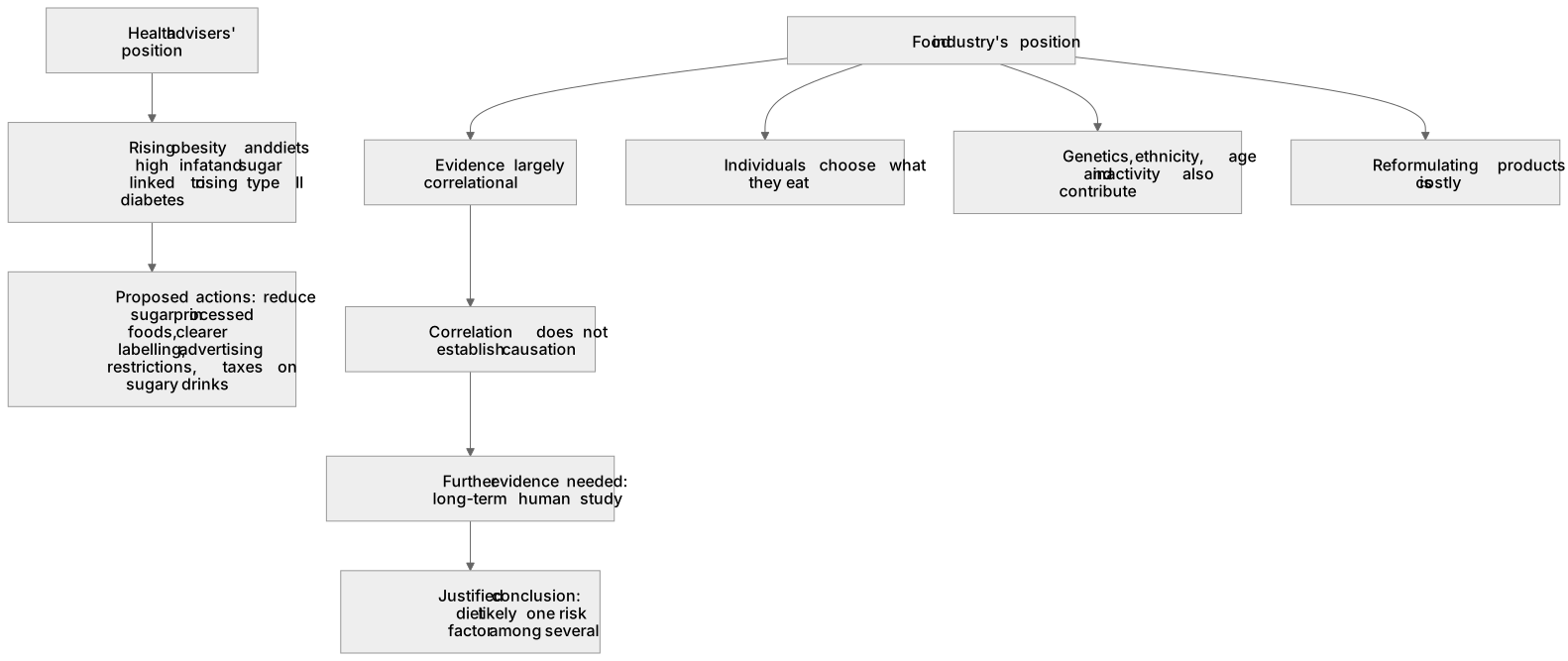
Evaluation means weighing evidence and reaching a justified conclusion, not simply stating an opinion. Health advisers link the rising incidence of type II diabetes to rising obesity and to diets high in fat and sugar, and argue that reducing sugar in processed foods, clearer labelling, restrictions on advertising and taxes on sugary drinks would lower incidence. The food industry replies that such evidence is largely correlational, that individuals choose what they eat, that genetics, ethnicity, age and inactivity also contribute, and that reformulating products is costly. A strong answer uses any data supplied, distinguishes correlation from causation, and states what further evidence, such as a long-term human study, would help settle the question.
What earns the marks
- An argument supporting the health advisers' position that uses data or evidence supplied, for example linking a rise in sugar consumption or obesity to a rise in type II diabetes incidence.
- An argument supporting the food industry's position that uses data or evidence supplied, for example noting that many people with high sugar intake do not develop type II diabetes.
- An explicit statement that a correlation between diet and type II diabetes does not by itself establish causation, because other variables may be involved.
- A valid limitation of the evidence, such as the study being on animals rather than humans, too short to show long-term effects, or not controlling for genetics, age or inactivity.
- A justified conclusion that follows from the evidence discussed, for example that diet is likely to be one risk factor among several rather than the sole cause.
- Reference to at least one other risk factor for type II diabetes, such as genetics, ethnicity, age or inactivity, and an explanation of how it weakens a simple dietary explanation.
Common mistakes and how to put them right
Writing an opinion piece that never refers to the data or evidence supplied.
Put it right: Quote specific figures or findings from the table or graph in each paragraph.
Giving only one side when the command word asks for an evaluation.
Put it right: Structure the answer as for, against, therefore, covering both positions before concluding.
Claiming that the data prove sugar causes type II diabetes.
Put it right: State that the data show a correlation, and that correlation does not establish causation.
Dismissing a whole study because the sample was small, without explaining why this matters.
Put it right: Explain that a small sample may not be representative, so conclusions cannot be generalised.
Confusing a risk factor with a cause in the conclusion.
Put it right: Describe diet as a risk factor that increases probability, not as a proven cause.
Exam tips
- Structure the answer as for, against, therefore; ensure both sides are covered before writing the conclusion.
- Quote figures from the table or graph rather than describing the pattern in words alone, and say what each figure shows.
- State what further evidence would settle the question, such as a long-term controlled study on humans that accounts for genetics and lifestyle.
Try the lesson
The start of the Control of blood glucose concentration (A-level only): Students should be able to evaluate the positions of health advisers and the food industry in relation to the increased incidence of type II diabetes. lesson, made from checked teaching notes for this specification point.
Have a go first
A food manufacturer introduces a new range of fruit juices, claiming they are a "healthy alternative" to fizzy drinks because they contain natural sugars and added vitamins. Health advisers argue these juices still contribute to the rising incidence of type II diabetes. Which statement provides the most valid evaluation of these conflicting positions?
Listen
Evaluation means weighing evidence and reaching a justified conclusion, not simply stating an opinion. Health advisers link the rising incidence of type II diabetes to rising obesity and to diets high in fat and sugar, and argue that reducing sugar in processed foods, clearer labelling, restrictions on advertising and taxes on sugary drinks would lower incidence. The food industry replies that such evidence is largely correlational, that individuals choose what they eat, that genetics, ethnicity, age and inactivity also contribute, and that reformulating products is costly. A strong answer uses any data supplied, distinguishes correlation from causation, and states what further evidence, such as a long-term human study, would help settle the question. A strong answer earns marks for these points. An argument supporting the health advisers' position that uses data or evidence supplied, for example linking a rise in sugar consumption or obesity to a rise in type II diabetes incidence. An argument supporting the food industry's position that uses data or evidence supplied, for example noting that many people with high sugar intake do not develop type II diabetes. An explicit statement that a correlation between diet and type II diabetes does not by itself establish causation, because other variables may be involved. A valid limitation of the evidence, such as the study being on animals rather than humans, too short to show long-term effects, or not controlling for genetics, age or inactivity. A common slip: Writing an opinion piece that never refers to the data or evidence supplied. Instead, quote specific figures or findings from the table or graph in each paragraph. Exam tip: Structure the answer as for, against, therefore; ensure both sides are covered before writing the conclusion.
See it
Key words
Say what each word means before you turn the card.
correlation against causation
Try answering aloud or in your head before turning the card.
risk factors
Try answering aloud or in your head before turning the card.
evaluating evidence
Try answering aloud or in your head before turning the card.
justified conclusions
Try answering aloud or in your head before turning the card.
See every definition
- correlation against causation
- A correlation between diet and type II diabetes does not by itself establish causation, because other variables may be involved.
- risk factors
- Diet is likely to be one risk factor among several rather than the sole cause, and genetics, ethnicity, age or inactivity also contribute.
- evaluating evidence
- Weighing evidence and reaching a justified conclusion, not simply stating an opinion, using any data supplied and stating what further evidence would help settle the question.
- justified conclusions
- A conclusion that follows from the evidence discussed, for example that diet is likely to be one risk factor among several rather than the sole cause.
Label the diagram
Some boxes have lost their names. Pick the right name for each number.
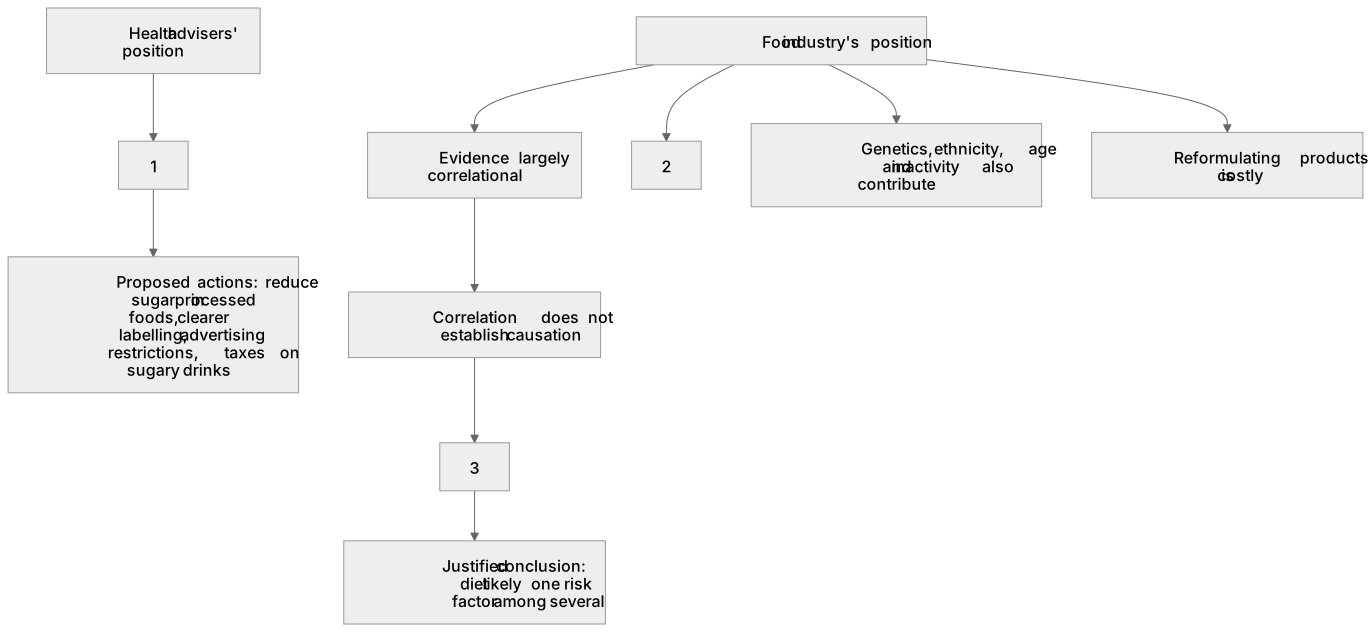
1Box 1
2Box 2
3Box 3
There is more to this lesson
The full lesson goes on to check your understanding and help you earn the marks. Create a free account to carry on, with your progress saved.
A week of Premium from your first lesson · Then the free plan continues · No card, no charge
Test your understanding of Control of blood glucose concentration (A-level only): Students should be able to evaluate the positions of health advisers and the food industry in relation to the increased incidence of type II diabetes.
Active recall beats re-reading. Take an instant quiz now to test what you’ve learned and lock it into long-term memory.
A week of Premium from your first lesson · Then the free plan continues · No card, no charge