AQA · A-Level · Biology
Course version: 7402 · Version from Sept 2016
The role of adrenaline by: attaching to receptors on the surfaces of…
Full specification wording
Control of blood glucose concentration (A-level only): The role of adrenaline by: attaching to receptors on the surfaces of target cells activating enzymes involved in the conversion of glycogen to glucose.
Adrenaline is secreted by the adrenal glands during stress or exercise.
Checked against the AQA 7402 specification (opens in a new tab) on .
- Point 5 of 9
- 3 key terms
Study notes
From the checked teaching notes for this specification point.
The idea
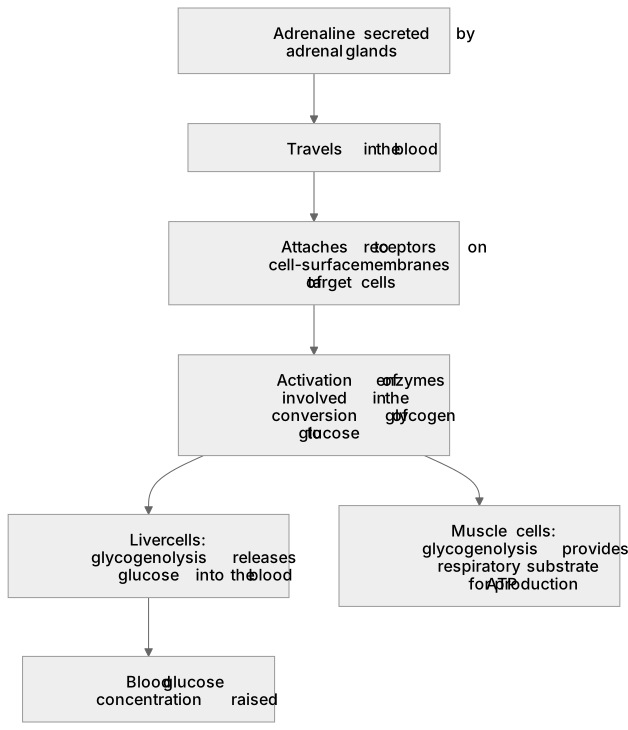
Adrenaline is secreted by the adrenal glands during stress or exercise. It travels in the blood and attaches to receptors on the cell-surface membranes of target cells. In liver cells, binding activates enzymes via a second messenger model. These enzymes catalyse glycogenolysis, using phosphorolysis to break glycogen into glucose-1-phosphate, which is then converted to free glucose. This glucose diffuses into the blood, raising blood glucose concentration. In muscle cells, glycogenolysis provides glucose-6-phosphate directly for respiration, producing ATP for muscle contraction without raising blood glucose. Adrenaline also inhibits glycogenesis.
What earns the marks
- Adrenaline attaches to specific receptors on the cell-surface membranes of target cells.
- Binding causes the activation of enzymes involved in the conversion of glycogen to glucose.
- In liver cells, glycogenolysis releases glucose into the blood, raising blood glucose concentration.
- In muscle cells, glycogenolysis provides respiratory substrate for rapid ATP production during stress or exercise.
Common mistakes and how to put them right
Stating adrenaline hydrolyses glycogen.
Put it right: Adrenaline activates enzymes that catalyse phosphorolysis, not hydrolysis.
Claiming muscle glycogenolysis raises blood glucose.
Put it right: Muscle cells lack the enzyme to release free glucose, so they use the breakdown products internally for respiration.
Suggesting adrenaline enters the cell to act.
Put it right: Adrenaline binds to cell-surface receptors and acts via a second messenger system.
Exam tips
- When describing adrenaline's action, explicitly state it binds to cell-surface receptors and activates enzymes, rather than acting directly.
- Distinguish between liver cells (which release glucose into the blood) and muscle cells (which use the glucose internally for ATP production).
Try the lesson
The start of the Control of blood glucose concentration (A-level only): The role of adrenaline by: attaching to receptors on the surfaces of target cells activating enzymes involved in the conversion of glycogen to glucose. lesson, made from checked teaching notes for this specification point.
Have a go first
On which part of a liver cell does adrenaline attach to begin its action?
Listen
Adrenaline is secreted by the adrenal glands during stress or exercise. It travels in the blood and attaches to receptors on the cell-surface membranes of target cells. In liver cells, binding activates enzymes via a second messenger model. These enzymes catalyse glycogenolysis, using phosphorolysis to break glycogen into glucose-1-phosphate, which is then converted to free glucose. This glucose diffuses into the blood, raising blood glucose concentration. In muscle cells, glycogenolysis provides glucose-6-phosphate directly for respiration, producing ATP for muscle contraction without raising blood glucose. Adrenaline also inhibits glycogenesis. A strong answer earns marks for these points. Adrenaline attaches to specific receptors on the cell-surface membranes of target cells. Binding causes the activation of enzymes involved in the conversion of glycogen to glucose. In liver cells, glycogenolysis releases glucose into the blood, raising blood glucose concentration. In muscle cells, glycogenolysis provides respiratory substrate for rapid ATP production during stress or exercise. A common slip: Stating adrenaline hydrolyses glycogen. Instead, adrenaline activates enzymes that catalyse phosphorolysis, not hydrolysis. Exam tip: When describing adrenaline's action, explicitly state it binds to cell-surface receptors and activates enzymes, rather than acting directly.
See it
Key words
Say what each word means before you turn the card.
cell-surface receptors
Try answering aloud or in your head before turning the card.
enzyme activation
Try answering aloud or in your head before turning the card.
glycogenolysis
Try answering aloud or in your head before turning the card.
See every definition
- cell-surface receptors
- Adrenaline attaches to these on the cell-surface membranes of target cells, rather than entering the cell to act.
- enzyme activation
- Binding of adrenaline causes the activation of enzymes involved in the conversion of glycogen to glucose.
- glycogenolysis
- The breakdown of glycogen, releasing glucose into the blood in liver cells and providing respiratory substrate in muscle cells.
Label the diagram
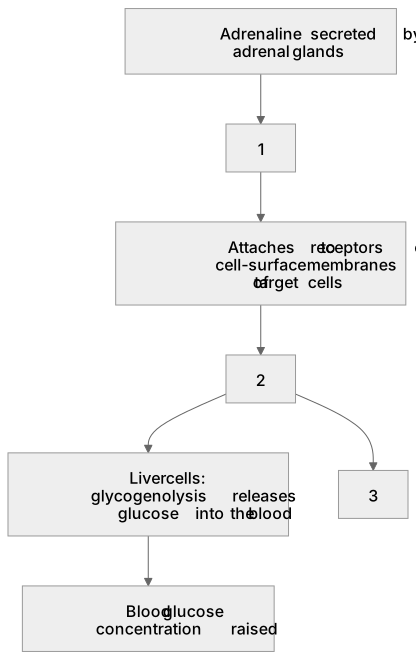
Some boxes have lost their names. Pick the right name for each number.
1Box 1
2Box 2
3Box 3
There is more to this lesson
The full lesson goes on to check your understanding and help you earn the marks. Create a free account to carry on, with your progress saved.
A week of Premium from your first lesson · Then the free plan continues · No card, no charge
Test your understanding of Control of blood glucose concentration (A-level only): The role of adrenaline by: attaching to receptors on the surfaces of target cells activating enzymes involved in the conversion of glycogen to glucose.
Active recall beats re-reading. Take an instant quiz now to test what you’ve learned and lock it into long-term memory.
A week of Premium from your first lesson · Then the free plan continues · No card, no charge