AQA · A-Level · Biology
Course version: 7402 · Version from Sept 2016
Together a DNA molecule and its associated proteins form a chromosome.
Full specification wording
DNA, genes and chromosomes: Together a DNA molecule and its associated proteins form a chromosome.
A chromosome consists of one long, linear DNA molecule wrapped around histone proteins.
Checked against the AQA 7402 specification (opens in a new tab) on .
- Point 3 of 11
- 2 key terms
Study notes
From the checked teaching notes for this specification point.
The idea
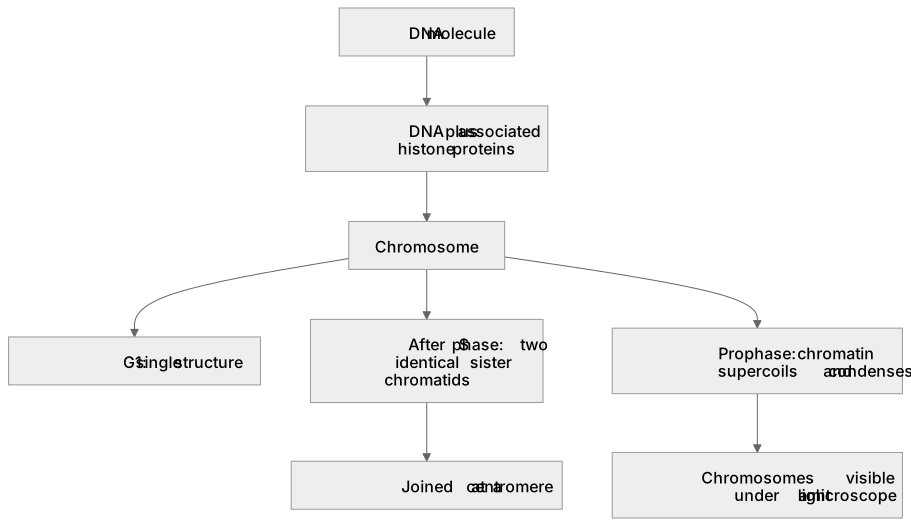
A chromosome consists of one long, linear DNA molecule wrapped around histone proteins. During most of the cell cycle, it exists as extended chromatin and cannot be resolved with a light microscope. In G₁, each chromosome is a single structure. After DNA replication in S phase, it consists of two identical sister chromatids joined at a centromere. During prophase, chromatin supercoils and condenses, making chromosomes visible. Therefore, seeing condensed chromosomes in a micrograph confirms the cell is dividing. Homologous chromosomes are pairs carrying the same genes at the same loci, one from each parent, though alleles may differ and sex chromosomes may differ in size.
What earns the marks
- Stating a eukaryotic chromosome consists of DNA and associated histone proteins.
- Explaining that after S phase, a chromosome consists of two identical sister chromatids.
- Identifying that sister chromatids are joined at a centromere.
- Defining homologous chromosomes as a pair carrying the same genes at the same loci.
Common mistakes and how to put them right
Saying a chromosome is made only of genes or DNA, omitting the essential histone proteins.
Assuming all visible chromosomes always have two chromatids.
Put it right: During anaphase, sister chromatids separate to become individual chromosomes.
Confusing a homologous pair (one maternal, one paternal) with a pair of identical sister chromatids.
Exam tips
- A complete definition of a eukaryotic chromosome must include both DNA and histone proteins.
- When counting chromosomes, count the centromeres; a chromosome may consist of one or two chromatids depending on the cell cycle stage.
Try the lesson
The start of the DNA, genes and chromosomes: Together a DNA molecule and its associated proteins form a chromosome. lesson, made from checked teaching notes for this specification point.
Have a go first
Which combination of molecules forms a chromosome?
Listen
A chromosome consists of one long, linear DNA molecule wrapped around histone proteins. During most of the cell cycle, it exists as extended chromatin and cannot be resolved with a light microscope. In G₁, each chromosome is a single structure. After DNA replication in S phase, it consists of two identical sister chromatids joined at a centromere. During prophase, chromatin supercoils and condenses, making chromosomes visible. Therefore, seeing condensed chromosomes in a micrograph confirms the cell is dividing. Homologous chromosomes are pairs carrying the same genes at the same loci, one from each parent, though alleles may differ and sex chromosomes may differ in size. A strong answer earns marks for these points. stating a eukaryotic chromosome consists of DNA and associated histone proteins. explaining that after S phase, a chromosome consists of two identical sister chromatids. identifying that sister chromatids are joined at a centromere. defining homologous chromosomes as a pair carrying the same genes at the same loci. Exam tip: A complete definition of a eukaryotic chromosome must include both DNA and histone proteins.
See it
Key words
Say what each word means before you turn the card.
sister chromatids
Try answering aloud or in your head before turning the card.
homologous pairs
Try answering aloud or in your head before turning the card.
See every definition
- sister chromatids
- After DNA replication in S phase, a chromosome consists of two identical sister chromatids joined at a centromere.
- homologous pairs
- Pairs carrying the same genes at the same loci, one from each parent, though alleles may differ and sex chromosomes may differ in size.
Label the diagram
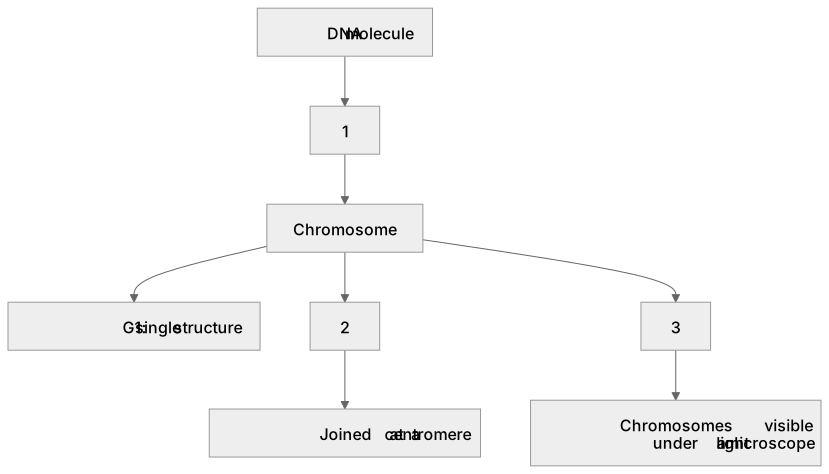
Some boxes have lost their names. Pick the right name for each number.
1Box 1
2Box 2
3Box 3
There is more to this lesson
The full lesson goes on to check your understanding and help you earn the marks. Create a free account to carry on, with your progress saved.
A week of Premium from your first lesson · Then the free plan continues · No card, no charge
Test your understanding of DNA, genes and chromosomes: Together a DNA molecule and its associated proteins form a chromosome.
Active recall beats re-reading. Take an instant quiz now to test what you’ve learned and lock it into long-term memory.
A week of Premium from your first lesson · Then the free plan continues · No card, no charge