AQA · A-Level · Biology
Course version: 7402 · Version from Sept 2016
Genetic diversity within, or between species, can be made by comparing:…
Full specification wording
Investigating diversity: Genetic diversity within, or between species, can be made by comparing: the frequency of measurable or observable characteristics the base sequence of DNA the base sequence of mRNA the amino acid sequence of the proteins encoded by DNA and mRNA.
Genetic diversity is compared using four methods.
Checked against the AQA 7402 specification (opens in a new tab) on .
- Point 1 of 3
- 3 key terms
Study notes
From the checked teaching notes for this specification point.
The idea
Genetic diversity is compared using four methods. Originally, scientists measured the frequency of observable characteristics. However, most traits are polygenic and modified by the environment, making phenotypes an indirect guide to genotypes. Modern methods compare molecules directly. Comparing DNA base sequences is the most direct; fewer differences indicate closer relatedness. Comparing mRNA base sequences works similarly, as mRNA is complementary to the DNA template strand. Finally, comparing the amino acid sequences of proteins encoded by DNA and mRNA also reveals diversity. Because the genetic code is degenerate, amino acid sequences may underestimate DNA differences, but they still provide clear evidence of evolutionary relationships.
What earns the marks
- Naming the base sequence of DNA, the base sequence of mRNA, or the amino acid sequence of a protein as the comparison made.
- Stating that the more similar the sequences, the smaller the genetic diversity or the closer the evolutionary relationship.
- Explaining that mRNA sequences reflect DNA sequences because mRNA is transcribed from the DNA template strand.
- Explaining that the DNA base sequence determines the amino acid sequence, allowing proteins to be compared.
- Identifying the limitation that observable characteristics are polygenic and influenced by the environment.
Common mistakes and how to put them right
Writing 'compare the DNA' without specifying that it is the base sequence being compared.
Put it right by stating 'base sequence'.
Forgetting that the genetic code is degenerate, meaning two different base sequences can produce the same amino acid sequence.
Put it right by noting this limitation.
Stating mRNA is identical to DNA rather than complementary to the template strand.
Put it right by specifying it is complementary with uracil replacing thymine.
Treating observable characteristics as a direct readout of the genotype.
Put it right by explaining the role of the environment and polygenic inheritance.
Comparing different proteins between two species instead of comparing the same protein.
Put it right by specifying the comparison of homologous proteins.
Exam tips
- Always write 'base sequence' or 'amino acid sequence'; the unqualified word DNA or protein is insufficient for marks.
- If a question provides sequence data, count the exact number of differences and explicitly state what this count means about relatedness.
Try the lesson
The start of the Investigating diversity: Genetic diversity within, or between species, can be made by comparing: the frequency of measurable or observable characteristics the base sequence of DNA the base sequence of mRNA the amino acid sequence of the proteins encoded by DNA and mRNA. lesson, made from checked teaching notes for this specification point.
Have a go first
Which comparison gives a direct measure of genetic diversity because it examines the inherited code itself?
Listen
Genetic diversity is compared using four methods. Originally, scientists measured the frequency of observable characteristics. However, most traits are polygenic and modified by the environment, making phenotypes an indirect guide to genotypes. Modern methods compare molecules directly. Comparing DNA base sequences is the most direct; fewer differences indicate closer relatedness. Comparing mRNA base sequences works similarly, as mRNA is complementary to the DNA template strand. Finally, comparing the amino acid sequences of proteins encoded by DNA and mRNA also reveals diversity. Because the genetic code is degenerate, amino acid sequences may underestimate DNA differences, but they still provide clear evidence of evolutionary relationships. A strong answer earns marks for these points. Naming the base sequence of DNA, the base sequence of mRNA, or the amino acid sequence of a protein as the comparison made. Stating that the more similar the sequences, the smaller the genetic diversity or the closer the evolutionary relationship. Explaining that mRNA sequences reflect DNA sequences because mRNA is transcribed from the DNA template strand. Explaining that the DNA base sequence determines the amino acid sequence, allowing proteins to be compared. A common slip: Writing 'compare the DNA' without specifying that it is the base sequence being compared. Instead, stating 'base sequence'. Exam tip: Always write 'base sequence' or 'amino acid sequence'; the unqualified word DNA or protein is insufficient for marks.
See it
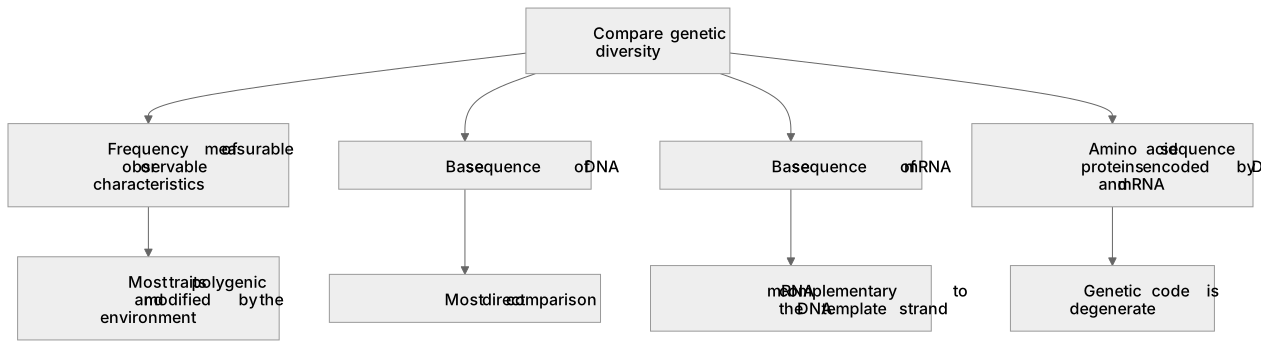
Key words
Say what each word means before you turn the card.
mRNA sequences
Try answering aloud or in your head before turning the card.
amino acid sequences
Try answering aloud or in your head before turning the card.
polygenic characteristics
Try answering aloud or in your head before turning the card.
See every definition
- mRNA sequences
- Comparing the base sequence of mRNA works similarly to DNA, as mRNA is complementary to the DNA template strand.
- amino acid sequences
- Comparing the amino acid sequence of the proteins encoded by DNA and mRNA also reveals diversity.
- polygenic characteristics
- Most traits are polygenic and modified by the environment, making phenotypes an indirect guide to genotypes.
Label the diagram
Some boxes have lost their names. Pick the right name for each number.
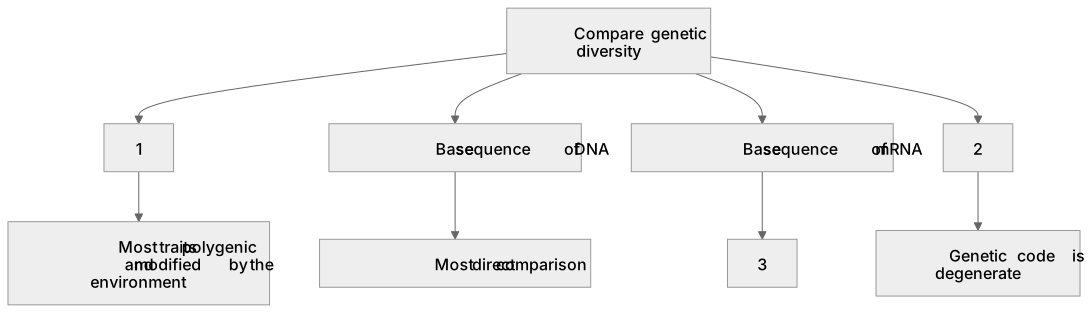
1Box 1
2Box 2
3Box 3
There is more to this lesson
The full lesson goes on to check your understanding and help you earn the marks. Create a free account to carry on, with your progress saved.
A week of Premium from your first lesson · Then the free plan continues · No card, no charge
Test your understanding of Investigating diversity: Genetic diversity within, or between species, can be made by comparing: the frequency of measurable or observable characteristics the base sequence of DNA the base sequence of mRNA the amino acid sequence of the proteins encoded by DNA and mRNA.
Active recall beats re-reading. Take an instant quiz now to test what you’ve learned and lock it into long-term memory.
A week of Premium from your first lesson · Then the free plan continues · No card, no charge