AQA · A-Level · Biology
Course version: 7402 · Version from Sept 2016
The general pattern of blood circulation in a mammal.
Full specification wording
Mass transport in animals: The general pattern of blood circulation in a mammal.
Mammals have a double circulatory system: blood passes through the heart twice for every complete circuit of the body.
Checked against the AQA 7402 specification (opens in a new tab) on .
- Point 7 of 14
- 4 key terms
Study notes
From the checked teaching notes for this specification point.
The idea
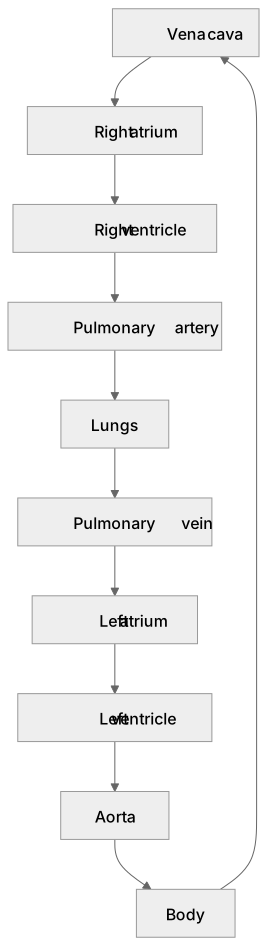
Mammals have a double circulatory system: blood passes through the heart twice for every complete circuit of the body. In the pulmonary circuit, deoxygenated blood leaves the right ventricle via the pulmonary artery to the lungs and returns, oxygenated, via the pulmonary vein to the left atrium. In the systemic circuit, oxygenated blood leaves the left ventricle via the aorta to the body and returns, deoxygenated, via the vena cava to the right atrium. Blood flows through these circuits in series. Because blood returns to the heart after being oxygenated, its pressure is restored before it is pumped to the body. This ensures blood reaches respiring tissues quickly, supporting a mammal's high metabolic rate. The septum keeps oxygenated and deoxygenated blood separate.
What earns the marks
- A mammal has four chambers: two atria and two ventricles.
- Blood passes through the heart twice for every complete circuit of the body, defining the double circulation.
- Blood returns to the heart after being oxygenated, restoring its pressure before it is pumped to the systemic circuit.
- The right side of the heart pumps deoxygenated blood to the lungs via the pulmonary artery, while the left side pumps oxygenated blood to the body via the aorta.
- Oxygenated and deoxygenated blood are kept separate by the septum.
- Name the major vessels in sequence: vena cava → right atrium → right ventricle → pulmonary artery → lungs → pulmonary vein → left atrium → left ventricle → aorta → body.
Common mistakes and how to put them right
Writing double circulation without saying that blood passes through the heart twice per circuit.
Put it right: The definition needs the twice-per-circuit idea.
Confusing the simultaneous contraction of the ventricles with the overall flow of blood.
Put it right: Blood flows through the pulmonary and systemic circuits in series (one after the other), even though the two ventricles pump simultaneously.
Assuming the pulmonary artery carries oxygenated blood because arteries usually do.
Put it right: The pulmonary artery carries deoxygenated blood to the lungs.
Omitting the names of major vessels when tracing the circulation.
Put it right: Include vena cava, pulmonary artery, pulmonary vein and aorta in the correct sequence.
Exam tips
- In a comparison table, every row must state both sides of the same difference; unlinked statements score nothing.
- The pressure mark is about blood reaching the body capillaries, so explicitly state that pressure is restored at the heart before entering the systemic circuit.
- When asked to trace the circulation, name the chambers and major vessels in order: vena cava → right atrium → right ventricle → pulmonary artery → lungs → pulmonary vein → left atrium → left ventricle → aorta → body.
Try the lesson
The start of the Mass transport in animals: The general pattern of blood circulation in a mammal. lesson, made from checked teaching notes for this specification point.
Have a go first
In the general pattern of blood circulation in a mammal, what is the name of the circulation that carries blood from the heart to the lungs and back to the heart?
Listen
Mammals have a double circulatory system: blood passes through the heart twice for every complete circuit of the body. In the pulmonary circuit, deoxygenated blood leaves the right ventricle via the pulmonary artery to the lungs and returns, oxygenated, via the pulmonary vein to the left atrium. In the systemic circuit, oxygenated blood leaves the left ventricle via the aorta to the body and returns, deoxygenated, via the vena cava to the right atrium. Blood flows through these circuits in series. Because blood returns to the heart after being oxygenated, its pressure is restored before it is pumped to the body. This ensures blood reaches respiring tissues quickly, supporting a mammal's high metabolic rate. The septum keeps oxygenated and deoxygenated blood separate. A strong answer earns marks for these points. A mammal has four chambers: two atria and two ventricles. Blood passes through the heart twice for every complete circuit of the body, defining the double circulation. Blood returns to the heart after being oxygenated, restoring its pressure before it is pumped to the systemic circuit. The right side of the heart pumps deoxygenated blood to the lungs via the pulmonary artery, while the left side pumps oxygenated blood to the body via the aorta. A common slip: Writing double circulation without saying that blood passes through the heart twice per circuit. Instead, the definition needs the twice-per-circuit idea. Exam tip: In a comparison table, every row must state both sides of the same difference; unlinked statements score nothing.
See it
Key words
Say what each word means before you turn the card.
double circulation
Try answering aloud or in your head before turning the card.
pulmonary and systemic circuits
Try answering aloud or in your head before turning the card.
four chambers
Try answering aloud or in your head before turning the card.
separation of oxygenated and deoxygenated blood
Try answering aloud or in your head before turning the card.
See every definition
- double circulation
- Blood passes through the heart twice for every complete circuit of the body.
- pulmonary and systemic circuits
- Blood flows through these circuits in series, with blood passing through the heart twice for every complete circuit of the body.
- four chambers
- A mammal has two atria and two ventricles.
- separation of oxygenated and deoxygenated blood
- Oxygenated and deoxygenated blood are kept separate by the septum.
Label the diagram
Some boxes have lost their names. Pick the right name for each number.
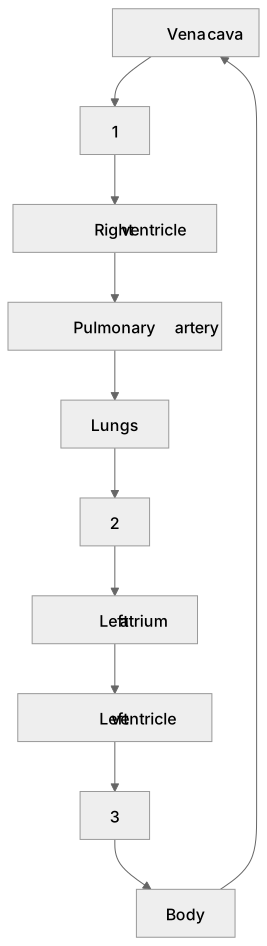
1Box 1
2Box 2
3Box 3
There is more to this lesson
The full lesson goes on to check your understanding and help you earn the marks. Create a free account to carry on, with your progress saved.
A week of Premium from your first lesson · Then the free plan continues · No card, no charge
Test your understanding of Mass transport in animals: The general pattern of blood circulation in a mammal.
Active recall beats re-reading. Take an instant quiz now to test what you’ve learned and lock it into long-term memory.
A week of Premium from your first lesson · Then the free plan continues · No card, no charge