AQA · A-Level · Biology
Course version: 7402 · Version from Sept 2016
Pluripotent stem cells can divide in unlimited numbers and can be used in…
Full specification wording
Most of a cell’s DNA is not translated (A-level only): Pluripotent stem cells can divide in unlimited numbers and can be used in treating human disorders.
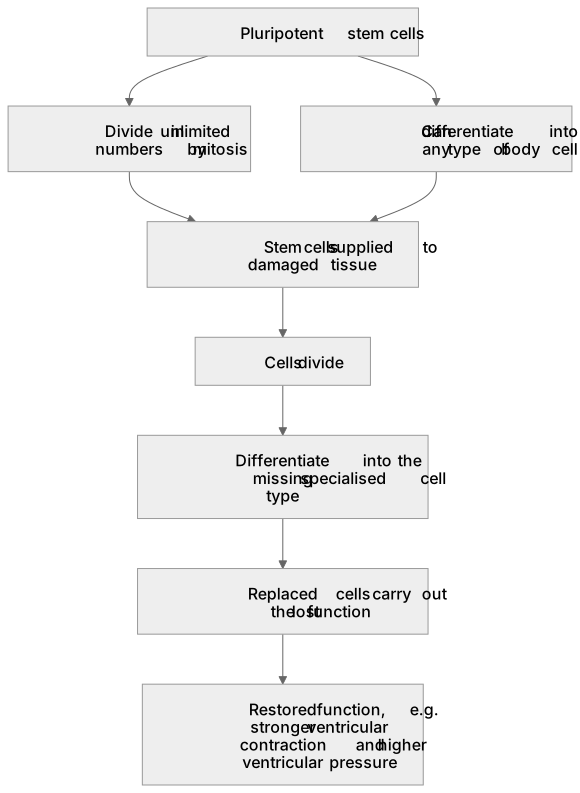
Pluripotent cells have two properties that matter therapeutically: they self-renew, dividing by mitosis in unlimited numbers, and they can differentiate into any type of body cell.
Checked against the AQA 7402 specification (opens in a new tab) on .
- Point 5 of 8
- 4 key terms
Study notes
From the checked teaching notes for this specification point.
The idea
Pluripotent cells have two properties that matter therapeutically: they self-renew, dividing by mitosis in unlimited numbers, and they can differentiate into any type of body cell. In principle this allows replacement of cells that a tissue cannot replace itself. A proposed treatment follows a general sequence: stem cells are supplied to damaged tissue, divide, and differentiate into the missing specialised cell type, which then carries out the lost function. After a heart attack, cardiac muscle cells die and are replaced by non-contractile scar tissue; research aims to supply stem cells that differentiate into cardiomyocytes, so that more of the ventricle wall contracts and ventricular pressure rises. This therapy remains experimental, so data from trials must be interpreted cautiously, comparing treated and control groups and linking any cell replacement to the measured function.
What earns the marks
- Pluripotent cells divide in unlimited numbers by mitosis (self-renewal).
- Pluripotent cells can differentiate into any type of body cell.
- A named lost cell type is replaced, e.g. cardiomyocytes replacing cells lost as scar tissue after a heart attack.
- The replaced cells are linked to restored function, e.g. stronger ventricular contraction and higher ventricular pressure.
- Differentiation is controlled by a signalling molecule binding to a receptor and switching on specific genes.
- Data are interpreted by comparing treated and control groups and linking any difference to differentiation and restored function.
Common mistakes and how to put them right
Writing that stem cells repair damaged cells directly.
Put it right: They divide and differentiate to replace lost cells.
Treating movement of stem cells to the damaged site as the whole explanation.
Put it right: The differentiation step into the required cell type must also be stated.
Claiming pluripotent cells can form a whole organism including placental tissue.
Put it right: They cannot form extra-embryonic tissues; that is totipotency.
Presenting stem-cell therapy for heart attack as established.
Put it right: It remains experimental, so conclusions should be cautious and data-based.
Reading partial recovery in data as proof of complete repair.
Put it right: State the extent of recovery shown and avoid overclaiming.
Exam tips
- In data questions, compare the treated group with the control and state what the difference shows about differentiation.
- Finish with function: cells replaced, tissue works, measurable change in the data.
- Quote figures from the graph or table when justifying that the treatment had an effect.
Try the lesson
The start of the Most of a cell’s DNA is not translated (A-level only): Pluripotent stem cells can divide in unlimited numbers and can be used in treating human disorders. lesson, made from checked teaching notes for this specification point.
Have a go first
What name is given to stem cells that can divide in unlimited numbers and can differentiate into almost any cell type of the human body?
Listen
Pluripotent cells have two properties that matter therapeutically: they self-renew, dividing by mitosis in unlimited numbers, and they can differentiate into any type of body cell. In principle this allows replacement of cells that a tissue cannot replace itself. A proposed treatment follows a general sequence: stem cells are supplied to damaged tissue, divide, and differentiate into the missing specialised cell type, which then carries out the lost function. After a heart attack, cardiac muscle cells die and are replaced by non-contractile scar tissue; research aims to supply stem cells that differentiate into cardiomyocytes, so that more of the ventricle wall contracts and ventricular pressure rises. This therapy remains experimental, so data from trials must be interpreted cautiously, comparing treated and control groups and linking any cell replacement to the measured function. A strong answer earns marks for these points. Pluripotent cells divide in unlimited numbers by mitosis (self-renewal). Pluripotent cells can differentiate into any type of body cell. A named lost cell type is replaced, e.g. cardiomyocytes replacing cells lost as scar tissue after a heart attack. The replaced cells are linked to restored function, e.g. stronger ventricular contraction and higher ventricular pressure. A common slip: Writing that stem cells repair damaged cells directly. Instead, they divide and differentiate to replace lost cells. Exam tip: In data questions, compare the treated group with the control and state what the difference shows about differentiation.
See it
Key words
Say what each word means before you turn the card.
self-renewal
Try answering aloud or in your head before turning the card.
differentiation
Try answering aloud or in your head before turning the card.
cardiomyocyte replacement
Try answering aloud or in your head before turning the card.
restored function
Try answering aloud or in your head before turning the card.
See every definition
- self-renewal
- Pluripotent cells divide by mitosis in unlimited numbers.
- differentiation
- Pluripotent cells can differentiate into any type of body cell.
- cardiomyocyte replacement
- Stem cells differentiate into cardiomyocytes, replacing cells lost as scar tissue after a heart attack.
- restored function
- Replaced cells are linked to restored function, such as stronger ventricular contraction and higher ventricular pressure.
Label the diagram
Some boxes have lost their names. Pick the right name for each number.
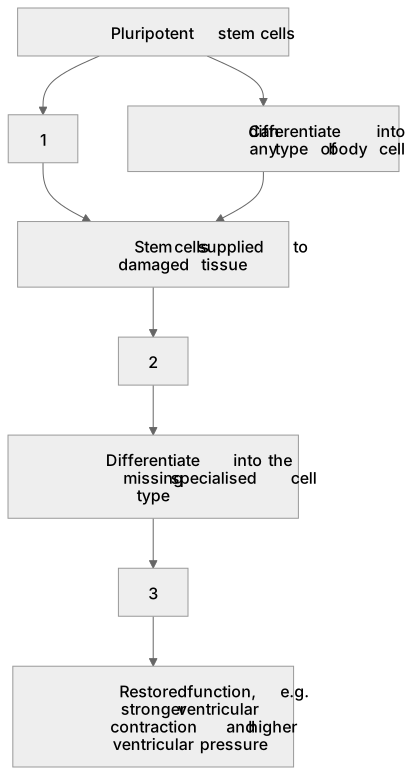
1Box 1
2Box 2
3Box 3
There is more to this lesson
The full lesson goes on to check your understanding and help you earn the marks. Create a free account to carry on, with your progress saved.
A week of Premium from your first lesson · Then the free plan continues · No card, no charge
Test your understanding of Most of a cell’s DNA is not translated (A-level only): Pluripotent stem cells can divide in unlimited numbers and can be used in treating human disorders.
Active recall beats re-reading. Take an instant quiz now to test what you’ve learned and lock it into long-term memory.
A week of Premium from your first lesson · Then the free plan continues · No card, no charge