AQA · A-Level · Biology
Course version: 7402 · Version from Sept 2016
The hydrolysis of ATP, also from the light-dependent reaction, provides…
Full specification wording
Photosynthesis (A-level only): The hydrolysis of ATP, also from the light-dependent reaction, provides the additional energy for this reaction.
Reduced NADP supplies the hydrogen for the reduction of glycerate 3-phosphate, but reduction also needs energy, and that comes from ATP made in the light-dependent reaction.
Checked against the AQA 7402 specification (opens in a new tab) on .
- Point 3 of 7
- 4 key terms
Study notes
From the checked teaching notes for this specification point.
The idea
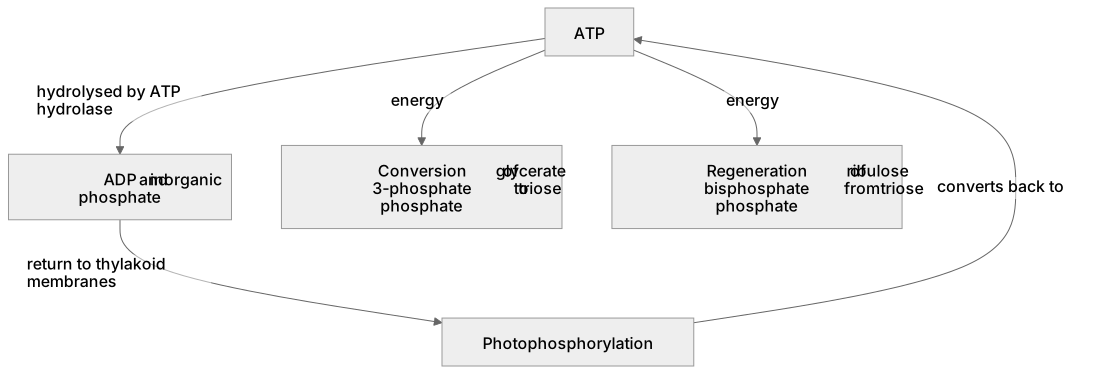
Reduced NADP supplies the hydrogen for the reduction of glycerate 3-phosphate, but reduction also needs energy, and that comes from ATP made in the light-dependent reaction. ATP is hydrolysed to ADP and inorganic phosphate by ATP hydrolase, releasing energy in a small, immediately usable amount, and the inorganic phosphate released can phosphorylate other compounds and make them more reactive. Two of the three ATP molecules used in each turn of the Calvin cycle drive the conversion of GP to triose phosphate; the third is used in regenerating ribulose bisphosphate from triose phosphate, a step with an energy cost of its own. The ADP and phosphate produced return to the thylakoid membranes, where photophosphorylation converts them back to ATP, so the two halves of photosynthesis continuously recycle the same pool of nucleotide and coenzyme.
What earns the marks
- ATP being hydrolysed to ADP and inorganic phosphate, releasing energy.
- That energy being used, together with reduced NADP, to convert glycerate 3-phosphate to triose phosphate.
- ATP also being used to regenerate ribulose bisphosphate from triose phosphate.
- ADP and phosphate returning to the light-dependent reaction to be used in photophosphorylation.
- One mark, in a limiting factor question, for less ATP causing less GP to be reduced and less RuBP to be regenerated.
Common mistakes and how to put them right
Saying ATP 'gives energy' without naming its hydrolysis to ADP and inorganic phosphate.
Crediting ATP with the reduction itself, when the hydrogen comes from reduced NADP.
Forgetting that ATP is also needed to regenerate RuBP, not only to reduce GP.
Describing ATP as a long-term energy store rather than an immediate energy source.
Writing that ATP is broken down by respiration inside the chloroplast rather than hydrolysed by ATP hydrolase.
Exam tips
- Pair the two requirements in one sentence: reduced NADP provides the hydrogen, hydrolysed ATP provides the energy.
- Name both uses of ATP in the Calvin cycle whenever the question is worth two marks or more.
- Track ADP and phosphate back to the light-dependent reaction to show that you understand the cycle is closed.
Try the lesson
The start of the Photosynthesis (A-level only): The hydrolysis of ATP, also from the light-dependent reaction, provides the additional energy for this reaction. lesson, made from checked teaching notes for this specification point.
Have a go first
In the light-independent reaction, ATP is hydrolysed to provide energy. Name the products formed when one molecule of ATP is hydrolysed.
Listen
Reduced NADP supplies the hydrogen for the reduction of glycerate 3-phosphate, but reduction also needs energy, and that comes from ATP made in the light-dependent reaction. ATP is hydrolysed to ADP and inorganic phosphate by ATP hydrolase, releasing energy in a small, immediately usable amount, and the inorganic phosphate released can phosphorylate other compounds and make them more reactive. Two of the three ATP molecules used in each turn of the Calvin cycle drive the conversion of GP to triose phosphate; the third is used in regenerating ribulose bisphosphate from triose phosphate, a step with an energy cost of its own. The ADP and phosphate produced return to the thylakoid membranes, where photophosphorylation converts them back to ATP, so the two halves of photosynthesis continuously recycle the same pool of nucleotide and coenzyme. A strong answer earns marks for these points. ATP being hydrolysed to ADP and inorganic phosphate, releasing energy. that energy being used, together with reduced NADP, to convert glycerate 3-phosphate to triose phosphate. ATP also being used to regenerate ribulose bisphosphate from triose phosphate. ADP and phosphate returning to the light-dependent reaction to be used in photophosphorylation. Exam tip: Pair the two requirements in one sentence: reduced NADP provides the hydrogen, hydrolysed ATP provides the energy.
See it
Key words
Say what each word means before you turn the card.
ATP hydrolysis
Try answering aloud or in your head before turning the card.
energy for reduction
Try answering aloud or in your head before turning the card.
RuBP regeneration
Try answering aloud or in your head before turning the card.
ADP recycling
Try answering aloud or in your head before turning the card.
See every definition
- ATP hydrolysis
- ATP is hydrolysed to ADP and inorganic phosphate by ATP hydrolase, releasing energy in a small, immediately usable amount.
- energy for reduction
- The additional energy needed for the reduction of glycerate 3-phosphate comes from the hydrolysis of ATP made in the light-dependent reaction.
- RuBP regeneration
- The third ATP molecule used in each turn of the Calvin cycle is used in regenerating ribulose bisphosphate from triose phosphate, a step with an energy cost of its own.
- ADP recycling
- The ADP and phosphate produced return to the thylakoid membranes, where photophosphorylation converts them back to ATP.
Label the diagram
Some boxes have lost their names. Pick the right name for each number.
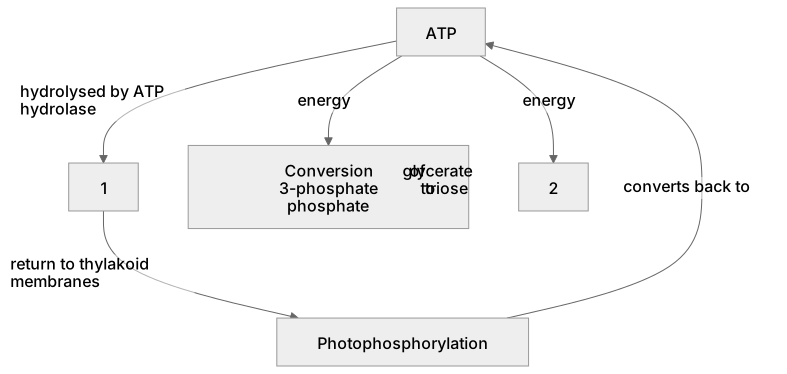
1Box 1
2Box 2
There is more to this lesson
The full lesson goes on to check your understanding and help you earn the marks. Create a free account to carry on, with your progress saved.
A week of Premium from your first lesson · Then the free plan continues · No card, no charge
Test your understanding of Photosynthesis (A-level only): The hydrolysis of ATP, also from the light-dependent reaction, provides the additional energy for this reaction.
Active recall beats re-reading. Take an instant quiz now to test what you’ve learned and lock it into long-term memory.
A week of Premium from your first lesson · Then the free plan continues · No card, no charge