AQA · A-Level · Biology
Course version: 7402 · Version from Sept 2016
An ecosystem supports a certain size of population of a species, called…
Full specification wording
Populations in ecosystems (A-level only): An ecosystem supports a certain size of population of a species, called the carrying capacity. This population size can vary as a result of: the effect of abiotic factors interactions between organisms: interspecific and intraspecific competition and predation.
Carrying capacity is the maximum population size an ecosystem can support over time.
Checked against the AQA 7402 specification (opens in a new tab) on .
- Point 5 of 14
- 4 key terms
Study notes
From the checked teaching notes for this specification point.
The idea
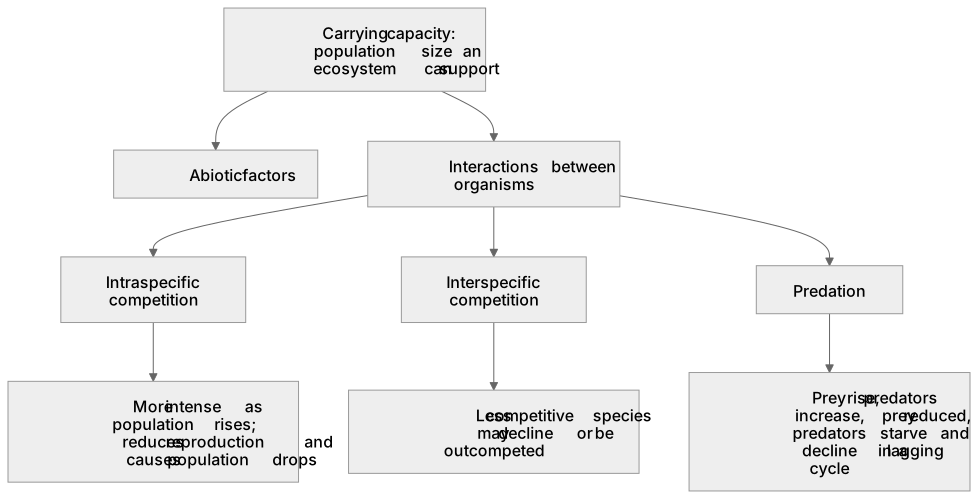
Carrying capacity is the maximum population size an ecosystem can support over time. Abiotic factors set the limit: temperature and light affect photosynthesis, while water and pH affect growth. Biotic factors cause fluctuations around this limit. Intraspecific competition (between members of the same species) intensifies as numbers rise, reducing reproduction and causing population drops. Interspecific competition (between different species) occurs when they share resources; the less competitive species may decline or be outcompeted. Predation also drives fluctuations: as prey numbers rise, predators have more food and increase, which then reduces prey numbers, causing predators to starve and decline in a lagging cycle.
What earns the marks
- Carrying capacity as the maximum population size that an ecosystem can support over a prolonged period.
- Naming an abiotic factor and linking it to survival or reproduction, for example temperature closer to the optimum increasing enzyme activity and growth.
- Intraspecific competition as competition between members of the same species for the same resource, becoming more intense as the population rises.
- Interspecific competition reducing the population size of one or both species, or excluding one species.
- The predator-prey sequence in the correct order, with the predator peak lagging behind the prey peak.
Common mistakes and how to put them right
Writing competition for food without saying whether the competition is intraspecific or interspecific.
Stating that predators kill all the prey, rather than reducing prey numbers until predators starve.
Treating carrying capacity as a fixed property of the species rather than of that ecosystem.
Saying the population stops growing because it has reached the carrying capacity, with no mechanism given.
Drawing or describing predator and prey peaks as coinciding.
Exam tips
- Describe a fluctuating graph in the order prey then predator, quoting figures and units from the axes.
- Answer explain questions about abiotic factors as a chain: factor, effect on the organism, effect on survival or reproduction, effect on population size.
- Always label competition as intraspecific or interspecific; the label itself often carries the mark.
Try the lesson
The start of the Populations in ecosystems (A-level only): An ecosystem supports a certain size of population of a species, called the carrying capacity. This population size can vary as a result of: the effect of abiotic factors interactions between organisms: interspecific and intraspecific competition and predation. lesson, made from checked teaching notes for this specification point.
Have a go first
What name is given to the maximum population size of a species that an ecosystem can support?
Listen
Carrying capacity is the maximum population size an ecosystem can support over time. Abiotic factors set the limit: temperature and light affect photosynthesis, while water and pH affect growth. Biotic factors cause fluctuations around this limit. Intraspecific competition (between members of the same species) intensifies as numbers rise, reducing reproduction and causing population drops. Interspecific competition (between different species) occurs when they share resources; the less competitive species may decline or be outcompeted. Predation also drives fluctuations: as prey numbers rise, predators have more food and increase, which then reduces prey numbers, causing predators to starve and decline in a lagging cycle. A strong answer earns marks for these points. carrying capacity as the maximum population size that an ecosystem can support over a prolonged period. naming an abiotic factor and linking it to survival or reproduction, for example temperature closer to the optimum increasing enzyme activity and growth. intraspecific competition as competition between members of the same species for the same resource, becoming more intense as the population rises. interspecific competition reducing the population size of one or both species, or excluding one species. Exam tip: Describe a fluctuating graph in the order prey then predator, quoting figures and units from the axes.
See it
Key words
Say what each word means before you turn the card.
carrying capacity
Try answering aloud or in your head before turning the card.
abiotic factors
Try answering aloud or in your head before turning the card.
intraspecific competition
Try answering aloud or in your head before turning the card.
interspecific competition
Try answering aloud or in your head before turning the card.
See every definition
- carrying capacity
- The maximum population size that an ecosystem can support over a prolonged period.
- abiotic factors
- Factors that set the limit on population size, such as temperature and light affecting photosynthesis, and water and pH affecting growth.
- intraspecific competition
- Competition between members of the same species for the same resource, becoming more intense as the population rises.
- interspecific competition
- Competition between different species when they share resources, reducing the population size of one or both species or excluding one species.
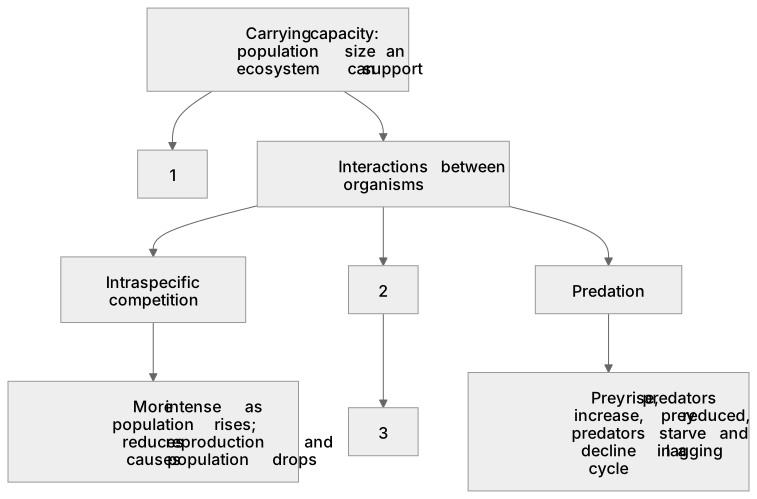
Label the diagram
Some boxes have lost their names. Pick the right name for each number.
1Box 1
2Box 2
3Box 3
There is more to this lesson
The full lesson goes on to check your understanding and help you earn the marks. Create a free account to carry on, with your progress saved.
A week of Premium from your first lesson · Then the free plan continues · No card, no charge
Test your understanding of Populations in ecosystems (A-level only): An ecosystem supports a certain size of population of a species, called the carrying capacity. This population size can vary as a result of: the effect of abiotic factors interactions between organisms: interspecific and intraspecific competition and predation.
Active recall beats re-reading. Take an instant quiz now to test what you’ve learned and lock it into long-term memory.
A week of Premium from your first lesson · Then the free plan continues · No card, no charge