AQA · A-Level · Biology
Course version: 7402 · Version from Sept 2016
At each stage in succession, certain species may be recognised which…
Full specification wording
Populations in ecosystems (A-level only): At each stage in succession, certain species may be recognised which change the environment so that it becomes more suitable for other species with different adaptations.
The engine of succession is that organisms change their own abiotic environment.
Checked against the AQA 7402 specification (opens in a new tab) on .
- Point 9 of 14
Study notes
From the checked teaching notes for this specification point.
The idea
The engine of succession is that organisms change their own abiotic environment. Lichens on bare rock release acids that break the rock down and hold moisture at the surface; when they die, decomposition by saprobionts adds humus, so a thin soil forms. That soil holds water and mineral ions, reduces the extremes of surface temperature and gives an anchorage for roots, which are exactly the conditions mosses and small herbs need and which they could not have tolerated earlier. Those plants are larger, so they produce more dead organic matter and a deeper soil, which in turn supports grasses, then shrubs, then trees. The species arriving at each stage have different adaptations from the last: drought-tolerant pioneers with no true roots, such as lichens and mosses with rhizoids, give way to deeper-rooted species with higher water and mineral ion demands.
What earns the marks
- Organisms changing the abiotic environment, with the change named, such as soil formation, greater water retention, more mineral ions, reduced wind exposure or shade.
- That change making conditions less hostile so species with different adaptations can now survive.
- Naming an adaptation of a species at a later seral stage, such as deeper roots or greater height.
- A greater number of niches leading to increased species diversity.
- Increased biomass, soil depth or stability as succession proceeds.
Common mistakes and how to put them right
Writing that species evolve into the next stage, when the new species colonise from elsewhere.
Crediting climate rather than the organisms for the change between one seral stage and the next.
Confusing more suitable for other species with more suitable for the species already there.
Describing the change without naming the abiotic factor that changed.
Assuming every earlier species survives alongside the later ones.
Exam tips
- Name the abiotic factor that changed and then name the adaptation the next species has; both are separate marks.
- In explain answers, keep to a three-step chain: organism, abiotic change, new species able to survive.
- If the question gives a table of seral stages, quote the stage names from it.
Try the lesson
The start of the Populations in ecosystems (A-level only): At each stage in succession, certain species may be recognised which change the environment so that it becomes more suitable for other species with different adaptations. lesson, made from checked teaching notes for this specification point.
Have a go first
During succession, what effect do the species present at each stage have on the environment?
Listen
The engine of succession is that organisms change their own abiotic environment. Lichens on bare rock release acids that break the rock down and hold moisture at the surface; when they die, decomposition by saprobionts adds humus, so a thin soil forms. That soil holds water and mineral ions, reduces the extremes of surface temperature and gives an anchorage for roots, which are exactly the conditions mosses and small herbs need and which they could not have tolerated earlier. Those plants are larger, so they produce more dead organic matter and a deeper soil, which in turn supports grasses, then shrubs, then trees. The species arriving at each stage have different adaptations from the last: drought-tolerant pioneers with no true roots, such as lichens and mosses with rhizoids, give way to deeper-rooted species with higher water and mineral ion demands. A strong answer earns marks for these points. organisms changing the abiotic environment, with the change named, such as soil formation, greater water retention, more mineral ions, reduced wind exposure or shade. that change making conditions less hostile so species with different adaptations can now survive. naming an adaptation of a species at a later seral stage, such as deeper roots or greater height. a greater number of niches leading to increased species diversity. Exam tip: Name the abiotic factor that changed and then name the adaptation the next species has; both are separate marks.
See it
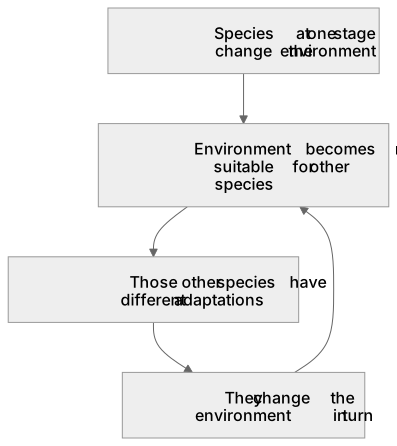
Label the diagram
Some boxes have lost their names. Pick the right name for each number.
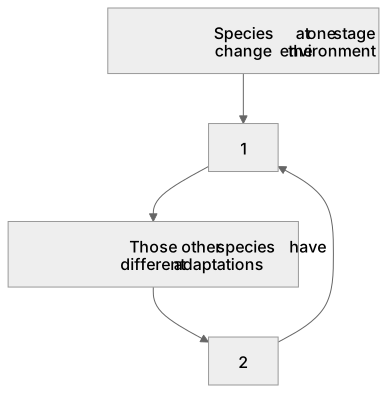
1Box 1
2Box 2
There is more to this lesson
The full lesson goes on to check your understanding and help you earn the marks. Create a free account to carry on, with your progress saved.
A week of Premium from your first lesson · Then the free plan continues · No card, no charge
Test your understanding of Populations in ecosystems (A-level only): At each stage in succession, certain species may be recognised which change the environment so that it becomes more suitable for other species with different adaptations.
Active recall beats re-reading. Take an instant quiz now to test what you’ve learned and lock it into long-term memory.
A week of Premium from your first lesson · Then the free plan continues · No card, no charge