AQA · A-Level · Biology
Course version: 7402 · Version from Sept 2016
Determining the genome of simpler organisms allows the sequences of the…
Full specification wording
Using genome projects (A-level only): Determining the genome of simpler organisms allows the sequences of the proteins that derive from the genetic code (the proteome) of the organism to be determined.
The proteome is the full range of proteins that a cell, genome or organism can produce.
Checked against the AQA 7402 specification (opens in a new tab) on .
- Point 2 of 5
Study notes
From the checked teaching notes for this specification point.
The idea
The proteome is the full range of proteins that a cell, genome or organism can produce. In simple organisms like bacteria, the proteome can be determined directly from the genome sequence. This is because prokaryotic DNA does not contain non-coding sections (introns) within genes, and there is very little non-coding DNA between genes. Therefore, almost the entire base sequence codes directly for amino acids. Once the genome sequence is known, scientists can read the bases in triplets, apply the genetic code, and determine the primary structure of every polypeptide the organism can make. This has important applications, such as identifying potential surface proteins to use as antigens in vaccine development against pathogens.
What earns the marks
- The proteome is defined as the full range of proteins that a cell, genome or organism is able to produce.
- In simple organisms like prokaryotes, the genome can be used to directly determine the proteome because their DNA does not contain introns.
- The absence of non-coding DNA means the base sequence can be read in triplets using the genetic code to determine the exact amino acid sequence (primary structure).
- Determining the proteome of pathogenic bacteria allows for the identification of surface proteins that can act as antigens for vaccine development.
Common mistakes and how to put them right
Defining the proteome simply as 'the number of proteins a cell produces'.
Put it right: State that it is the 'full range of proteins' a cell or organism can produce, as 'number' alone is insufficient.
Stating that the proteome is the proteins a cell is making at a specific moment.
Put it right: The proteome encompasses all the proteins a cell can produce, not just those currently being expressed.
Claiming that bacterial genomes must undergo splicing before the proteome can be determined.
Put it right: Prokaryotic DNA does not contain introns, so no splicing occurs and the sequence translates directly.
Exam tips
- Always pair the definitions in your notes: the genome is the complete set of genes in a cell, whereas the proteome is the full range of proteins that the cell can produce.
- If asked why a bacterial proteome is easier to determine from its genome than a eukaryotic one, explicitly state the absence of introns and non-coding DNA.
Try the lesson
The start of the Using genome projects (A-level only): Determining the genome of simpler organisms allows the sequences of the proteins that derive from the genetic code (the proteome) of the organism to be determined. lesson, made from checked teaching notes for this specification point.
Have a go first
Why is it relatively easy to determine the proteome of a simple organism from its genome sequence?
Listen
The proteome is the full range of proteins that a cell, genome or organism can produce. In simple organisms like bacteria, the proteome can be determined directly from the genome sequence. This is because prokaryotic DNA does not contain non-coding sections (introns) within genes, and there is very little non-coding DNA between genes. Therefore, almost the entire base sequence codes directly for amino acids. Once the genome sequence is known, scientists can read the bases in triplets, apply the genetic code, and determine the primary structure of every polypeptide the organism can make. This has important applications, such as identifying potential surface proteins to use as antigens in vaccine development against pathogens. A strong answer earns marks for these points. The proteome is defined as the full range of proteins that a cell, genome or organism is able to produce. In simple organisms like prokaryotes, the genome can be used to directly determine the proteome because their DNA does not contain introns. The absence of non-coding DNA means the base sequence can be read in triplets using the genetic code to determine the exact amino acid sequence (primary structure). Determining the proteome of pathogenic bacteria allows for the identification of surface proteins that can act as antigens for vaccine development. A common slip: Defining the proteome simply as 'the number of proteins a cell produces'. Instead, State that it is the 'full range of proteins' a cell or organism can produce, as 'number' alone is insufficient. Exam tip: Always pair the definitions in your notes: the genome is the complete set of genes in a cell, whereas the proteome is the full range of proteins that the cell can produce.
See it
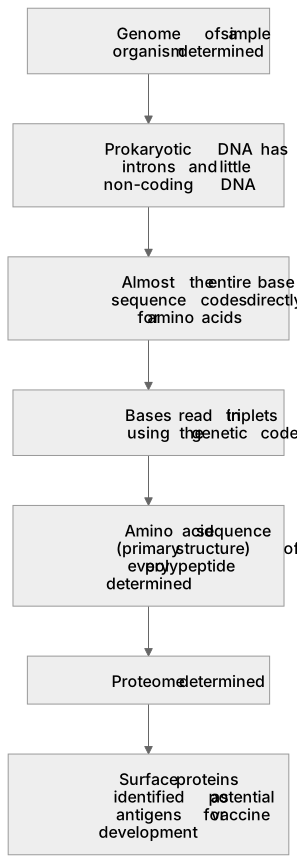
Put it in order
Put these steps in the order they happen.
- 1. Surface proteins identified as potential antigens for vaccine development
- 2. Proteome determined
- 3. Almost the entire base sequence codes directly for amino acids
- 4. Amino acid sequence (primary structure) of every polypeptide determined
- 5. Genome of a simple organism determined
- 6. Prokaryotic DNA has no introns and little non-coding DNA
- 7. Bases read in triplets using the genetic code
Label the diagram
Some boxes have lost their names. Pick the right name for each number.
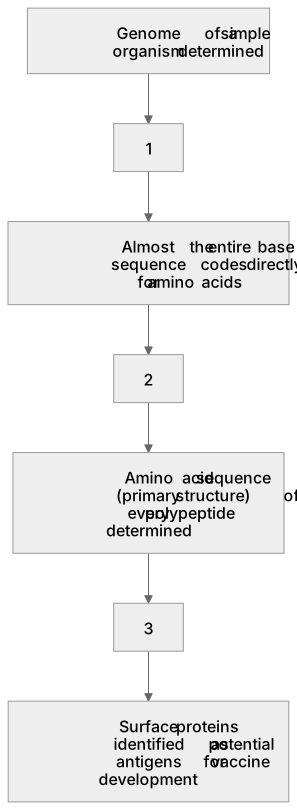
1Box 1
2Box 2
3Box 3
There is more to this lesson
The full lesson goes on to check your understanding and help you earn the marks. Create a free account to carry on, with your progress saved.
A week of Premium from your first lesson · Then the free plan continues · No card, no charge
Test your understanding of Using genome projects (A-level only): Determining the genome of simpler organisms allows the sequences of the proteins that derive from the genetic code (the proteome) of the organism to be determined.
Active recall beats re-reading. Take an instant quiz now to test what you’ve learned and lock it into long-term memory.
A week of Premium from your first lesson · Then the free plan continues · No card, no charge