
Study Notes
Overview
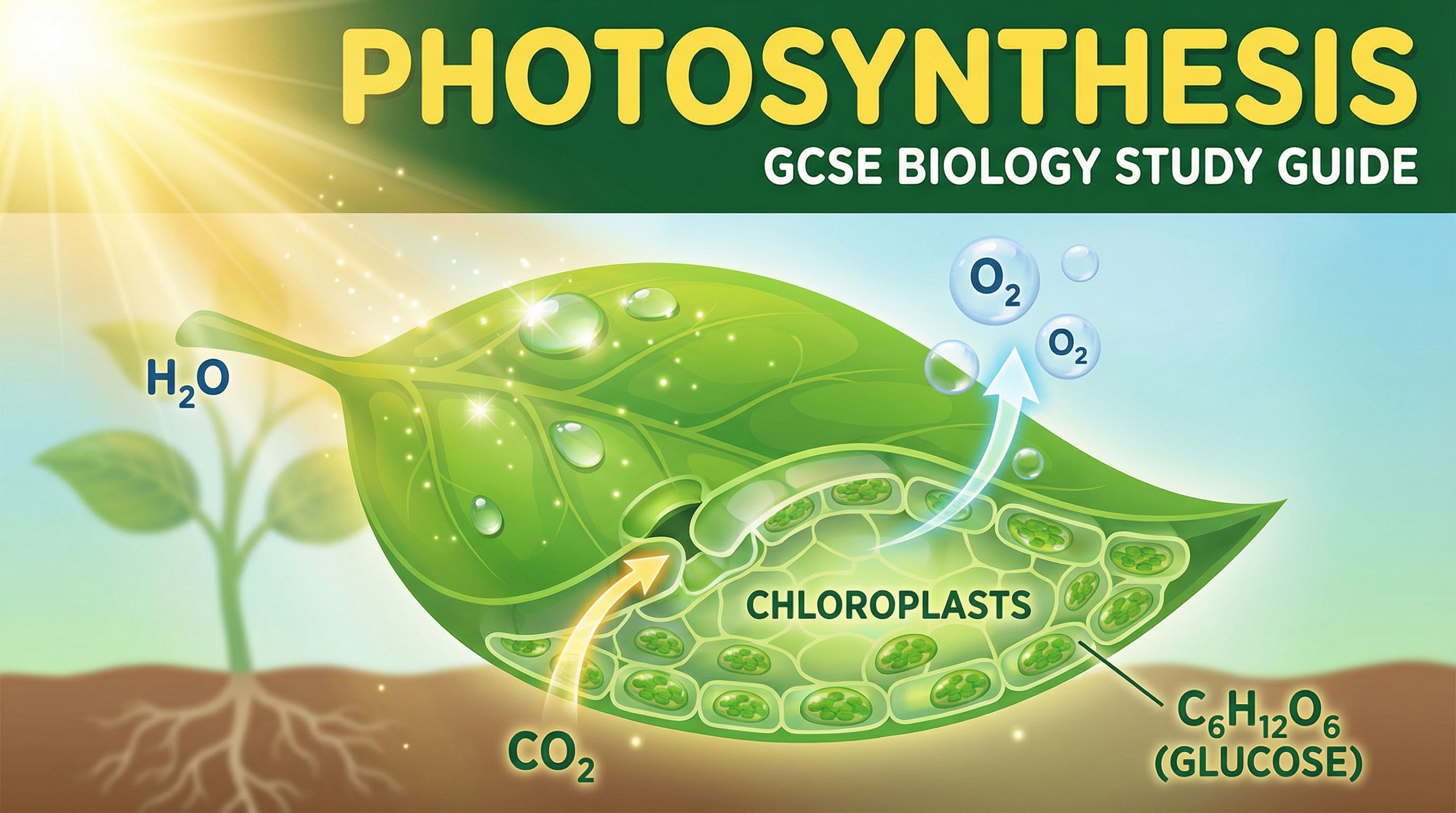
Photosynthesis is the cornerstone of life on Earth and a fundamental topic in your AQA GCSE Biology specification. It's the process by which green plants and algae synthesise their own food, using light energy to convert simple inorganic molecules—carbon dioxide and water—into energy-rich glucose. This process not only sustains the plant but also releases the oxygen that most living organisms, including us, need for respiration. In your exam, expect to see questions ranging from simple recall of the equation to complex data interpretation involving limiting factors. A solid understanding here is crucial as it forms synoptic links with topics like Respiration (4.2), Ecology (7.1), and Inheritance, Variation and Evolution (6.2). This guide will equip you with the knowledge to tackle any question with confidence.
Key Concepts
The Photosynthesis Equation
At its heart, photosynthesis is a chemical reaction. You must memorise both the word and balanced symbol equations. This is an endothermic reaction, meaning it takes in energy from the surroundings (in this case, light energy).
**Word Equation:**Carbon Dioxide + Water --(Light & Chlorophyll)--> Glucose + Oxygen
Balanced Symbol Equation:
6CO₂ + 6H₂O --(Light & Chlorophyll)--> C₆H₁₂O₆ + 6O₂
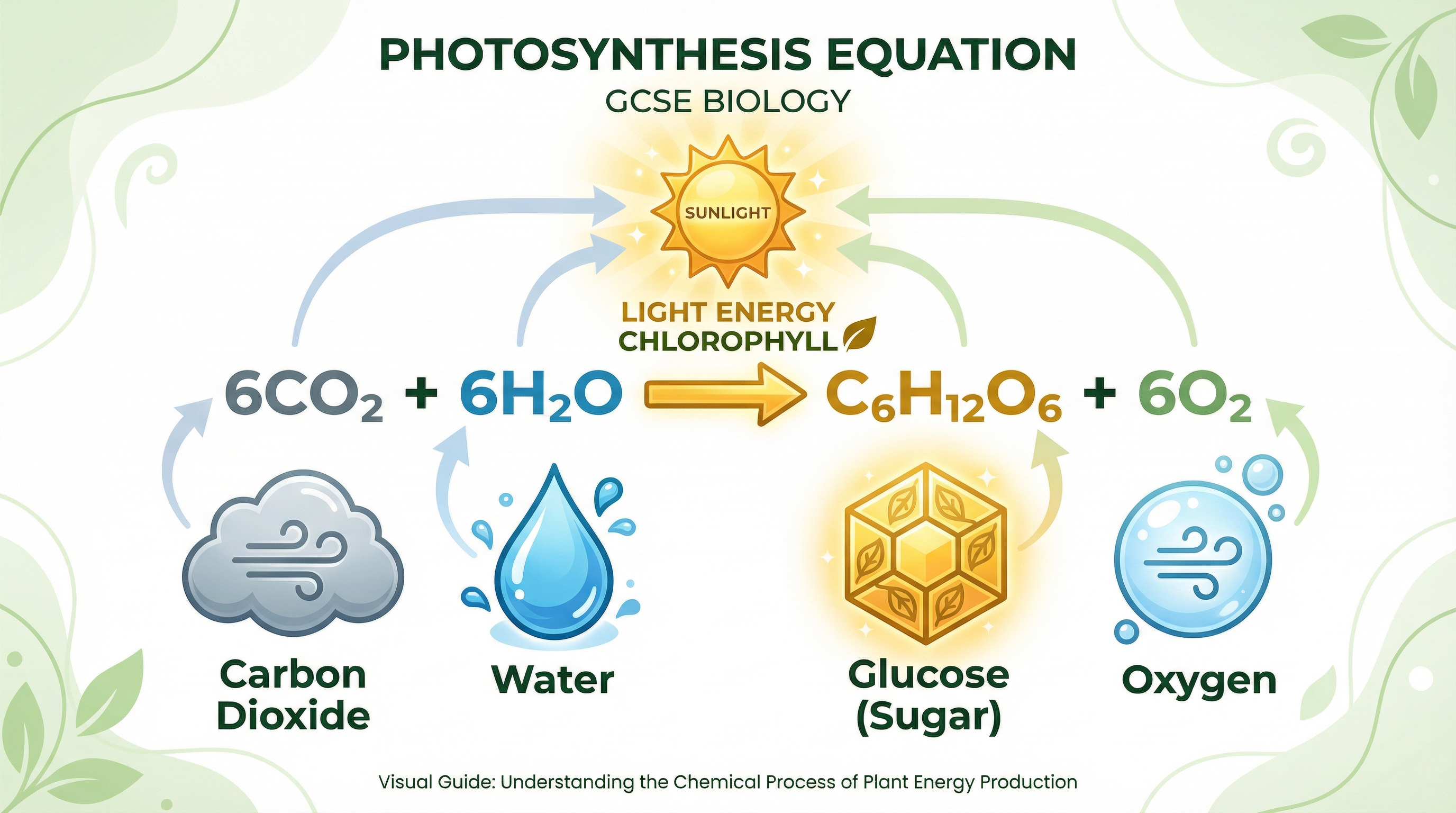
- CO₂ (Carbon Dioxide): Enters the leaf from the atmosphere through tiny pores called stomata.
- H₂O (Water): Absorbed from the soil by the roots and transported to the leaves.
- Light Energy: Absorbed by the green pigment chlorophyll, found in chloroplasts. This provides the energy to drive the reaction.
- C₆H₁₂O₆ (Glucose): A simple sugar that is the plant's immediate source of energy.
- O₂ (Oxygen): A waste product for the plant, which is released into the atmosphere.
The Site of Photosynthesis: The Chloroplast
Photosynthesis takes place inside specialised organelles within plant cells called chloroplasts. These are concentrated in the palisade mesophyll cells, located near the top surface of the leaf to maximise light absorption.
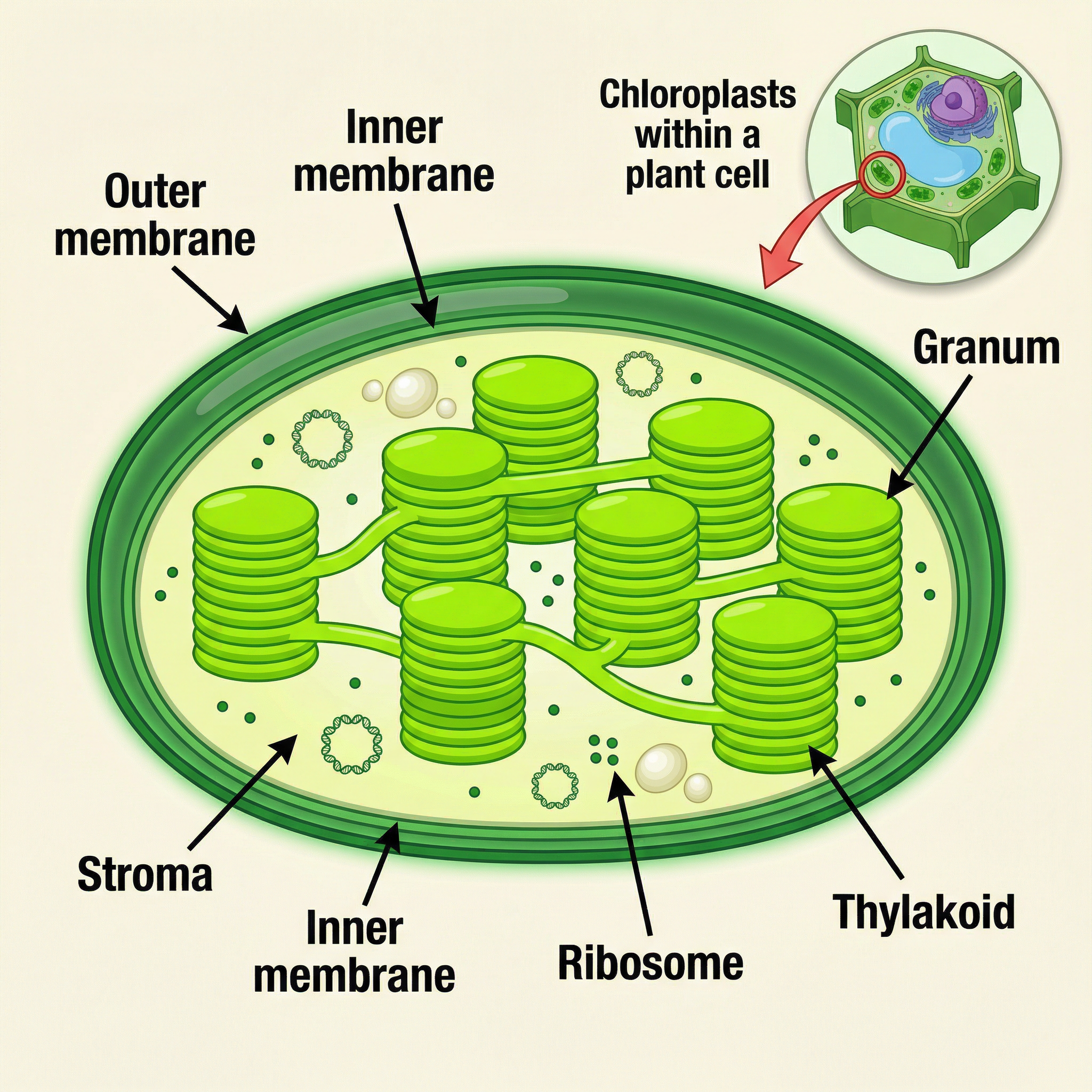
Chloroplasts contain chlorophyll, the pigment that not only gives plants their green colour but, more importantly, absorbs the light energy needed for the reaction. The leaf is perfectly adapted for this role: it is broad and flat to provide a large surface area, has veins to transport water and glucose, and contains stomata to allow for gas exchange.
Uses of Glucose
Glucose is the primary product of photosynthesis, and plants use it in several vital ways. Examiners frequently ask for these uses, so be prepared to list and explain them:
- For Respiration: This is the most important use. Glucose is broken down to release energy, which powers all the plant's metabolic activities. (Synoptic link: Topic 4.2 Respiration).
- Converted to Starch for Storage: Glucose is soluble in water, which would affect the cell's water balance. Plants convert it into insoluble starch to be stored in the leaves, stem, and roots. This acts as an energy reserve for when light is unavailable (e.g., at night).
- Converted to Cellulose for Strength: Glucose is used to build cellulose, a strong structural carbohydrate that makes up the plant's cell walls, providing support and rigidity.
- To Make Fats and Oils: Glucose can be converted into lipids (fats and oils), which are often stored in seeds as a dense energy source for the new plant embryo.
- To Make Proteins: To make amino acids, the building blocks of proteins, plants combine glucose with nitrate ions absorbed from the soil. Proteins are essential for growth and repair (e.g., as enzymes).
Limiting Factors of Photosynthesis (Higher Tier Content indicated)
A limiting factor is any factor that, when in short supply, restricts the rate of a process. For photosynthesis, the main limiting factors are light intensity, carbon dioxide concentration, and temperature. (Higher Tier candidates must be able to interpret graphs and experimental data related to these factors).
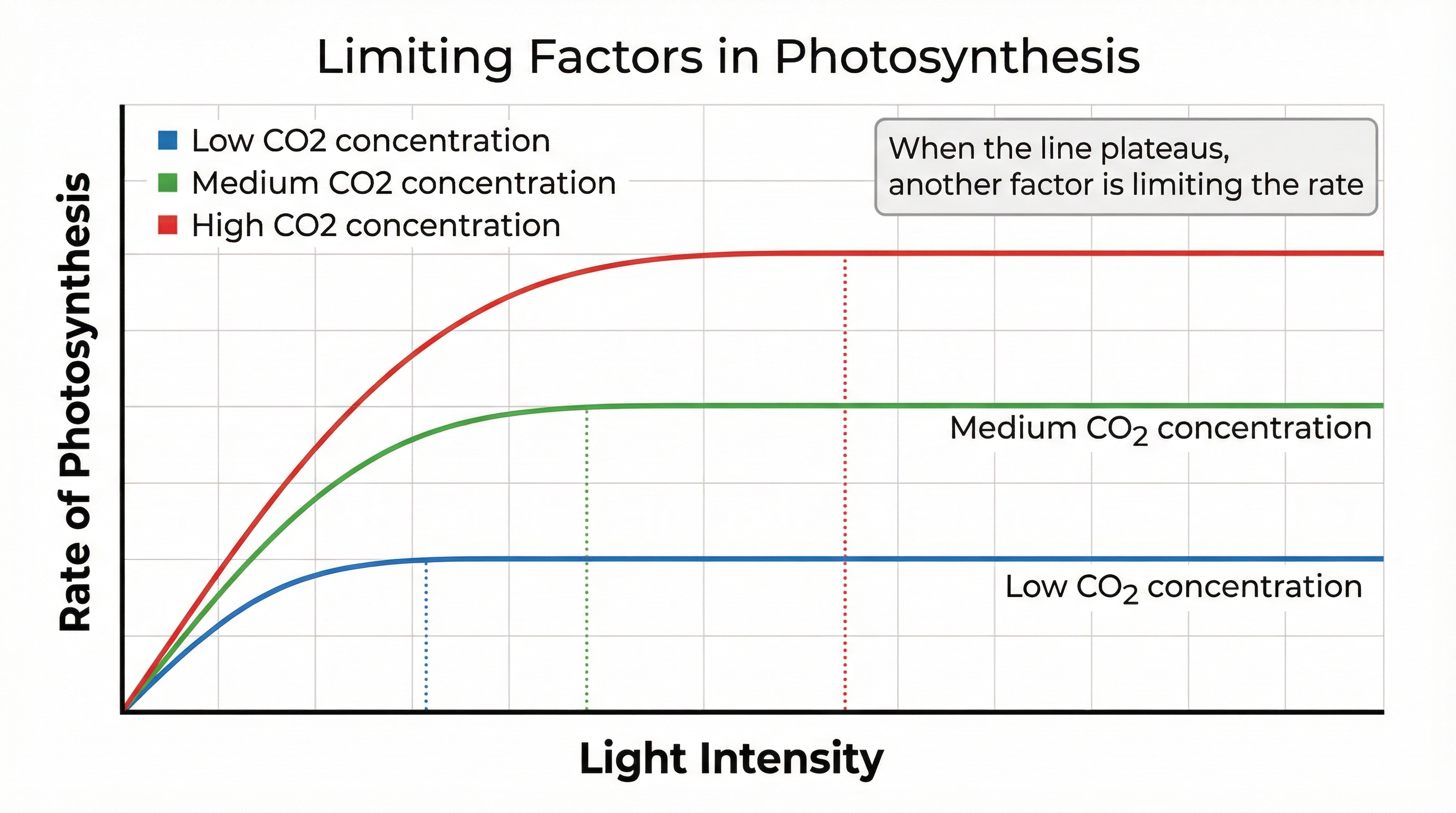
- Light Intensity: At low light levels, the rate of photosynthesis is directly proportional to light intensity. As light increases, so does the rate. However, at a certain point, the rate plateaus because another factor (e.g., CO₂ concentration) has become limiting.
- Carbon Dioxide Concentration: Similar to light, increasing CO₂ concentration will increase the rate of photosynthesis up to a point. Once the rate plateaus, a different factor is limiting the reaction.
- Temperature: Photosynthesis is controlled by enzymes. As temperature increases towards the optimum (usually 25-30°C), the rate increases as enzymes work more efficiently. Beyond the optimum, the enzymes begin to denature, their active site changes shape, and the rate of photosynthesis rapidly decreases.
Understanding the interplay between these factors is a key skill. For example, on a bright, sunny day (high light intensity), the limiting factor is likely to be CO₂ concentration. Commercial farmers often manipulate these factors in greenhouses to maximise their crop yield and profit, for instance, by using artificial lighting, paraffin heaters (which produce CO₂), and temperature controls.
Required Practical: Investigating the Effect of Light Intensity on the Rate of Photosynthesis
This is a classic experiment you must know inside out.
- Apparatus: A beaker of water, a source of white light (e.g., a lamp), a ruler, a test tube, a funnel, and a piece of aquatic plant (e.g., Elodea or Cabomba).
- Method:
- Set up the apparatus with the pondweed under the funnel in the beaker of water.
- Place the lamp a set distance (e.g., 10 cm) from the beaker.
- Allow the plant to acclimatise for 5 minutes.
- Count the number of oxygen bubbles produced in one minute. This is a measure of the rate of photosynthesis.
- Repeat the count twice more and calculate a mean.
- Move the lamp to different distances (e.g., 20 cm, 30 cm, 40 cm) and repeat steps 3-5.
- Control variables: Ensure the temperature of the water and the concentration of carbon dioxide (by adding a small amount of sodium hydrogen carbonate) remain constant.
- Expected Results: As the distance of the lamp increases, the light intensity decreases, and therefore the number of bubbles produced per minute will decrease. Light intensity is proportional to 1/distance² (the inverse square law - a key point for Higher Tier).
- Common Errors: Miscounting bubbles, the plant not being given enough time to acclimatise, and changes in water temperature from the lamp's heat. Using an LED lamp can reduce heat transfer. Collecting the gas in a measuring cylinder over a set time period is a more accurate way to measure the volume of oxygen produced.