AQA · GCSE · Biology
Course version: 8461 · Version from Sept 2018
It gives a distinctive ‘mosaic’ pattern of discolouration on the leaves…
Full specification wording
Viral diseases: It gives a distinctive ‘mosaic’ pattern of discolouration on the leaves which affects the growth of the plant due to lack of photosynthesis.
When tobacco mosaic virus infects a plant, leaf cells become damaged and discoloured, producing a patchwork of light and dark areas described as a mosaic pattern.
Checked against the AQA 8461 specification (opens in a new tab) on .
- Point 9 of 9
Study notes
From the checked teaching notes for this specification point.
The idea
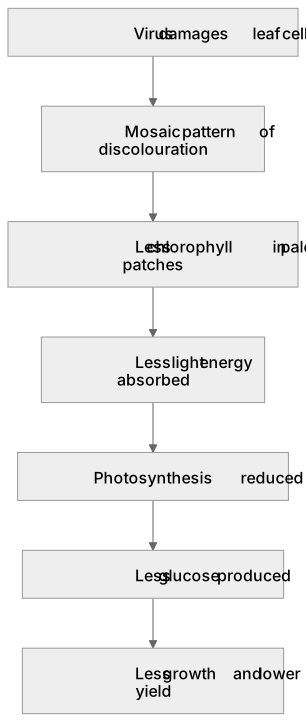
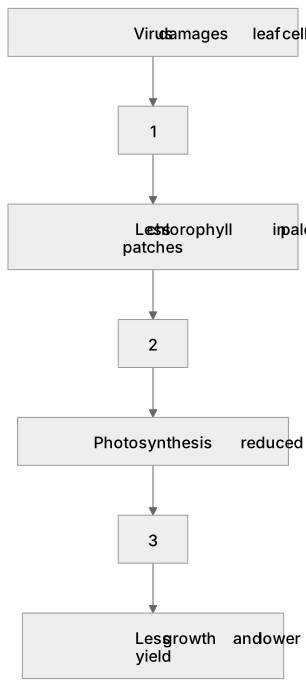
When tobacco mosaic virus infects a plant, leaf cells become damaged and discoloured, producing a patchwork of light and dark areas described as a mosaic pattern. The pale patches contain less chlorophyll, the green pigment that absorbs light for photosynthesis. Because photosynthesis is reduced, less glucose is made, so the plant has less energy and material for growth. The plant may be stunted, produce fewer or smaller leaves and yield less fruit. This links the visible symptom directly to a cellular cause: damaged cells mean less chlorophyll, less photosynthesis, less growth. A useful method is to compare an infected leaf with a healthy leaf and note the pale patches, then explain the consequence for glucose production and growth.
What earns the marks
- The mosaic pattern is a patchy discolouration of the leaves.
- Discoloured areas contain less chlorophyll, so less light energy is absorbed.
- Reduced photosynthesis means less glucose is produced for growth.
- The plant therefore grows less well, often appearing stunted with reduced yield.
- The symptom is caused by virus damage to leaf cells, not by a nutrient shortage.
Common mistakes and how to put them right
Saying the plant cannot photosynthesise at all.
Put it right: Photosynthesis is reduced because some chlorophyll remains, so growth slows rather than stopping instantly.
Writing that the mosaic pattern directly kills the plant.
Put it right: The pattern reduces photosynthesis, which reduces growth and yield.
Confusing discolouration with wilting caused by lack of water.
Put it right: The mosaic pattern is a specific patchy colour change linked to chlorophyll loss.
Exam tips
- Use the phrase 'less chlorophyll' rather than 'no chlorophyll' to keep the biology accurate.
- Chain your answer: discolouration, less chlorophyll, less photosynthesis, less glucose, less growth.
- Refer to the leaf as the organ where photosynthesis occurs to show precise knowledge.
Try the lesson
The start of the Viral diseases: It gives a distinctive ‘mosaic’ pattern of discolouration on the leaves which affects the growth of the plant due to lack of photosynthesis. lesson, made from checked teaching notes for this specification point.
Have a go first
A tomato plant is infected with a widespread viral pathogen. What distinctive appearance does this virus cause on the leaves?
Listen
When tobacco mosaic virus infects a plant, leaf cells become damaged and discoloured, producing a patchwork of light and dark areas described as a mosaic pattern. The pale patches contain less chlorophyll, the green pigment that absorbs light for photosynthesis. Because photosynthesis is reduced, less glucose is made, so the plant has less energy and material for growth. The plant may be stunted, produce fewer or smaller leaves and yield less fruit. This links the visible symptom directly to a cellular cause: damaged cells mean less chlorophyll, less photosynthesis, less growth. A useful method is to compare an infected leaf with a healthy leaf and note the pale patches, then explain the consequence for glucose production and growth. A strong answer earns marks for these points. The mosaic pattern is a patchy discolouration of the leaves. Discoloured areas contain less chlorophyll, so less light energy is absorbed. Reduced photosynthesis means less glucose is produced for growth. The plant therefore grows less well, often appearing stunted with reduced yield. A common slip: Saying the plant cannot photosynthesise at all. Instead, photosynthesis is reduced because some chlorophyll remains, so growth slows rather than stopping instantly. Exam tip: Use the phrase 'less chlorophyll' rather than 'no chlorophyll' to keep the biology accurate.
See it
Put it in order
Put these steps in the order they happen.
- 1. Less growth and lower yield
- 2. Less glucose produced
- 3. Less chlorophyll in pale patches
- 4. Photosynthesis reduced
- 5. Virus damages leaf cells
- 6. Mosaic pattern of discolouration
- 7. Less light energy absorbed
Label the diagram
Some boxes have lost their names. Pick the right name for each number.
1Box 1
2Box 2
3Box 3
There is more to this lesson
The full lesson goes on to check your understanding and help you earn the marks. Create a free account to carry on, with your progress saved.
A week of Premium from your first lesson · Then the free plan continues · No card, no charge
Test your understanding of Viral diseases: It gives a distinctive ‘mosaic’ pattern of discolouration on the leaves which affects the growth of the plant due to lack of photosynthesis.
Active recall beats re-reading. Take an instant quiz now to test what you’ve learned and lock it into long-term memory.
A week of Premium from your first lesson · Then the free plan continues · No card, no charge