AQA · GCSE · Biology
Course version: 8461 · Version from Sept 2018
Measles is a viral disease showing symptoms of fever and a red skin rash.…
Full specification wording
Viral diseases: Measles is a viral disease showing symptoms of fever and a red skin rash. Measles is a serious illness that can be fatal if complications arise.
Measles is caused by a virus and is spread by inhaling droplets from an infected person's coughs or sneezes, or by direct contact with contaminated surfaces.
Checked against the AQA 8461 specification (opens in a new tab) on .
- Point 1 of 9
- 4 key terms
Study notes
From the checked teaching notes for this specification point.
The idea
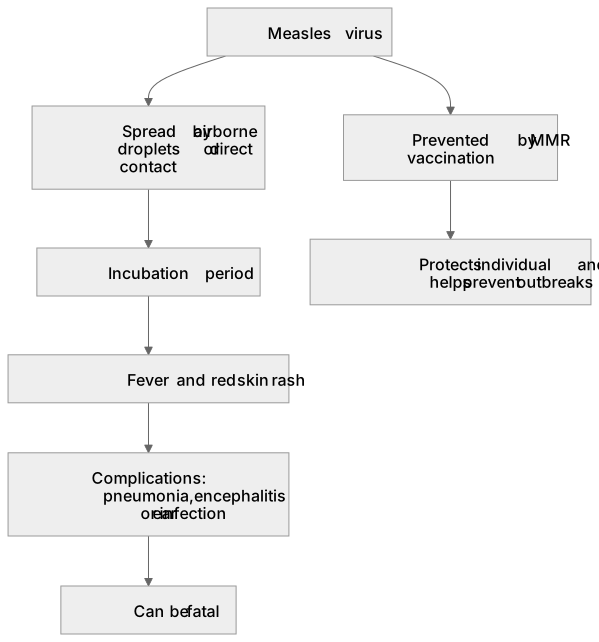
Measles is caused by a virus and is spread by inhaling droplets from an infected person's coughs or sneezes, or by direct contact with contaminated surfaces. After an incubation period, the infected person develops a fever and a red skin rash. The rash is a visible sign of the body's immune response and viral damage. Measles is serious because it can lead to complications such as pneumonia, encephalitis (brain inflammation) or ear infections, and in severe cases it can be fatal, especially in malnourished children or those with weakened immunity. There is no specific antiviral treatment, so care is supportive. Because measles is highly contagious, most young children are vaccinated against it, usually as part of the MMR vaccine, which protects the individual and helps prevent outbreaks through herd immunity.
What earns the marks
- Measles is caused by a virus, not a bacterium.
- Typical symptoms include fever and a red skin rash.
- Complications can include pneumonia, encephalitis or ear infection.
- Measles can be fatal if complications arise, particularly in vulnerable individuals.
- Vaccination with the MMR vaccine is used to prevent measles.
Common mistakes and how to put them right
Stating that measles is caused by bacteria.
Put it right by naming it as a viral disease.
Thinking the rash is the only symptom.
Put it right by including fever and mentioning possible complications.
Assuming measles is always mild.
Put it right by explaining it can be fatal if complications such as pneumonia or encephalitis develop.
Exam tips
- Name both key symptoms — fever and red skin rash — in your answer.
- Mention at least one complication to show why measles is described as serious.
- Link prevention to vaccination, naming the MMR vaccine where appropriate.
Try the lesson
The start of the Viral diseases: Measles is a viral disease showing symptoms of fever and a red skin rash. Measles is a serious illness that can be fatal if complications arise. lesson, made from checked teaching notes for this specification point.
Have a go first
Which two symptoms are most commonly associated with the viral disease measles?
Listen
Measles is caused by a virus and is spread by inhaling droplets from an infected person's coughs or sneezes, or by direct contact with contaminated surfaces. After an incubation period, the infected person develops a fever and a red skin rash. The rash is a visible sign of the body's immune response and viral damage. Measles is serious because it can lead to complications such as pneumonia, encephalitis (brain inflammation) or ear infections, and in severe cases it can be fatal, especially in malnourished children or those with weakened immunity. There is no specific antiviral treatment, so care is supportive. Because measles is highly contagious, most young children are vaccinated against it, usually as part of the MMR vaccine, which protects the individual and helps prevent outbreaks through herd immunity. A strong answer earns marks for these points. Measles is caused by a virus, not a bacterium. Typical symptoms include fever and a red skin rash. Complications can include pneumonia, encephalitis or ear infection. Measles can be fatal if complications arise, particularly in vulnerable individuals. A common slip: Stating that measles is caused by bacteria. Instead, naming it as a viral disease. Exam tip: Name both key symptoms — fever and red skin rash — in your answer.
See it
Key words
Say what each word means before you turn the card.
Viral disease
Try answering aloud or in your head before turning the card.
Transmission and symptoms
Try answering aloud or in your head before turning the card.
Complications and risk
Try answering aloud or in your head before turning the card.
Vaccination and prevention
Try answering aloud or in your head before turning the card.
See every definition
- Viral disease
- Measles is a viral disease showing symptoms of fever and a red skin rash.
- Transmission and symptoms
- Spread by inhaling droplets from an infected person's coughs or sneezes, or by direct contact with contaminated surfaces, then after an incubation period a fever and red skin rash develop.
- Complications and risk
- A serious illness that can be fatal if complications arise, such as pneumonia, encephalitis or ear infections, especially in malnourished children or those with weakened immunity.
- Vaccination and prevention
- Most young children are vaccinated, usually as part of the MMR vaccine, which protects the individual and helps prevent outbreaks through herd immunity.
Label the diagram
Some boxes have lost their names. Pick the right name for each number.
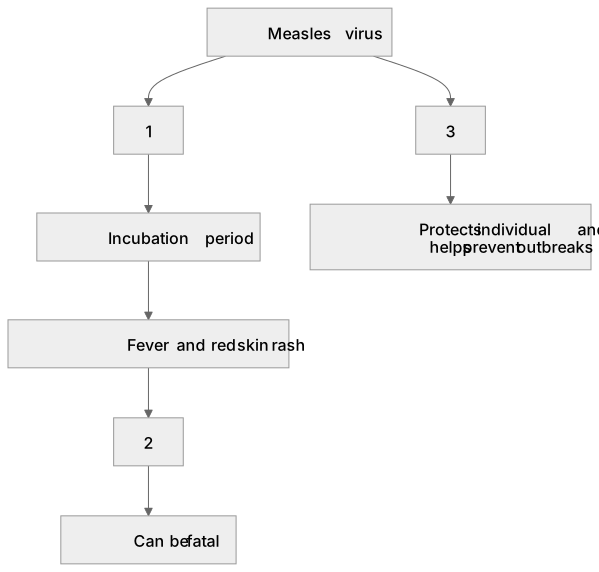
1Box 1
2Box 2
3Box 3
There is more to this lesson
The full lesson goes on to check your understanding and help you earn the marks. Create a free account to carry on, with your progress saved.
A week of Premium from your first lesson · Then the free plan continues · No card, no charge
Test your understanding of Viral diseases: Measles is a viral disease showing symptoms of fever and a red skin rash. Measles is a serious illness that can be fatal if complications arise.
Active recall beats re-reading. Take an instant quiz now to test what you’ve learned and lock it into long-term memory.
A week of Premium from your first lesson · Then the free plan continues · No card, no charge