AQA · GCSE · Biology
Course version: 8461 · Version from Sept 2018
Rapid growth in the human population and an increase in the standard of…
Full specification wording
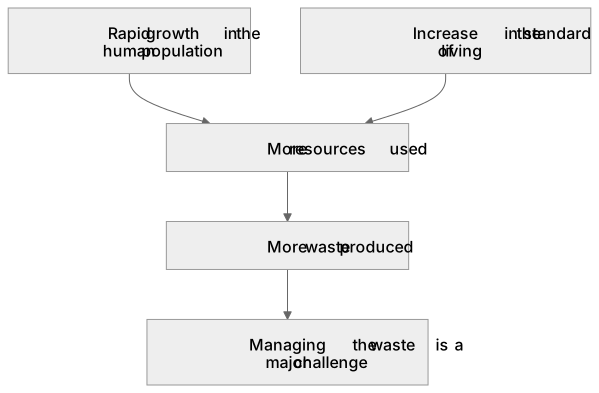
Waste management: Rapid growth in the human population and an increase in the standard of living mean that increasingly more resources are used and more waste is produced.
The human population is growing quickly, and more people need food, water, energy and materials.
Checked against the AQA 8461 specification (opens in a new tab) on .
- Point 1 of 4
- 3 key terms
Study notes
From the checked teaching notes for this specification point.
The idea
The human population is growing quickly, and more people need food, water, energy and materials. At the same time, many people expect a higher standard of living, which means owning more goods, travelling more and using more energy. Each person therefore uses more resources than before. For example, more people eating more meat requires more land, water and fuel. More manufacturing and transport use more fossil fuels and raw materials. As resources are used, waste is produced: packaging, food waste, old electronics, sewage and gases from burning fuels. The total amount of waste rises because there are more people and each person produces more waste. Managing this waste is a major challenge.
What earns the marks
- Rapid growth in the human population increases the total demand for resources such as food, water, energy and materials.
- An increase in the standard of living means each person uses more resources and produces more waste.
- More resource use leads to more waste, including packaging, food waste, sewage and waste gases.
- The combined effect of more people and higher consumption causes a greater total use of resources and production of waste.
- Managing the increasing waste is a challenge because it can pollute water, air and land if not handled properly.
Common mistakes and how to put them right
Thinking only population size matters.
Put it right: Higher living standards also increase resource use per person.
Confusing resources with waste.
Put it right: Resources are used to make goods and waste is what is left after use.
Assuming waste only comes from homes.
Put it right: Industry, farming and transport also produce large amounts of waste.
Exam tips
- Use the phrase per person when explaining how a higher standard of living increases resource use.
- Give a named example of a resource and a named example of the waste it produces.
- Link population growth and living standards together rather than describing them separately.
Try the lesson
The start of the Waste management: Rapid growth in the human population and an increase in the standard of living mean that increasingly more resources are used and more waste is produced. lesson, made from checked teaching notes for this specification point.
Have a go first
According to the principles of waste management, which two factors are the main causes of increasingly more resources being used and more waste being produced globally?
Listen
The human population is growing quickly, and more people need food, water, energy and materials. At the same time, many people expect a higher standard of living, which means owning more goods, travelling more and using more energy. Each person therefore uses more resources than before. For example, more people eating more meat requires more land, water and fuel. More manufacturing and transport use more fossil fuels and raw materials. As resources are used, waste is produced: packaging, food waste, old electronics, sewage and gases from burning fuels. The total amount of waste rises because there are more people and each person produces more waste. Managing this waste is a major challenge. A strong answer earns marks for these points. Rapid growth in the human population increases the total demand for resources such as food, water, energy and materials. An increase in the standard of living means each person uses more resources and produces more waste. More resource use leads to more waste, including packaging, food waste, sewage and waste gases. The combined effect of more people and higher consumption causes a greater total use of resources and production of waste. A common slip: Thinking only population size matters. Instead, higher living standards also increase resource use per person. Exam tip: Use the phrase per person when explaining how a higher standard of living increases resource use.
See it
Key words
Say what each word means before you turn the card.
Population growth and resource demand
Try answering aloud or in your head before turning the card.
Waste production and management
Try answering aloud or in your head before turning the card.
Human impact on the environment
Try answering aloud or in your head before turning the card.
See every definition
- Population growth and resource demand
- Rapid growth in the human population increases the total demand for resources such as food, water, energy and materials.
- Waste production and management
- More resource use leads to more waste, including packaging, food waste, sewage and waste gases, and managing this increasing waste is a challenge.
- Human impact on the environment
- The combined effect of more people and higher consumption causes a greater total use of resources and production of waste.
Label the diagram
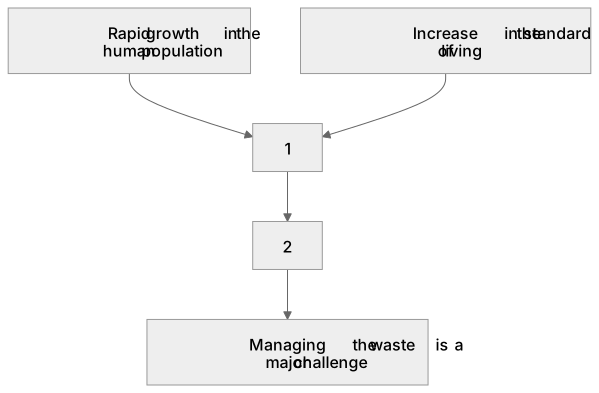
Some boxes have lost their names. Pick the right name for each number.
1Box 1
2Box 2
There is more to this lesson
The full lesson goes on to check your understanding and help you earn the marks. Create a free account to carry on, with your progress saved.
A week of Premium from your first lesson · Then the free plan continues · No card, no charge
Test your understanding of Waste management: Rapid growth in the human population and an increase in the standard of living mean that increasingly more resources are used and more waste is produced.
Active recall beats re-reading. Take an instant quiz now to test what you’ve learned and lock it into long-term memory.
A week of Premium from your first lesson · Then the free plan continues · No card, no charge