Pearson Edexcel · A-Level · Biology
Topic 1: Lifestyle, Health and Risk
This topic uses the genetic condition cystic fibrosis to explore fundamental biological principles. You will learn how cell membranes work, how DNA codes for proteins, and how characteristics are inherited, giving you the foundation to tackle high-mark synoptic questions.
- 6 min read
- 3 worked examples
- 5 practice questions
- 6 key terms
Study Notes
Overview
Topic 1: Lifestyle, Health and Risk is a cornerstone of your GCSE Biology specification. Rather than learning isolated facts, this topic uses cystic fibrosis (CF) as a central context to connect multiple biological systems.
By understanding how one faulty gene affects the whole body, you will master the structure of cell membranes, the mechanisms of transport, the intricate processes of DNA replication and protein synthesis, and the principles of monohybrid inheritance. Examiners love this topic because it allows them to ask synoptic questions—questions that test your ability to link different areas of biology together. For example, you might be asked to explain how a mutation in DNA (genetics) leads to a faulty channel protein (membranes), which then reduces the rate of diffusion in the lungs (gas exchange).
Listen to our comprehensive 11-minute revision podcast covering all the key concepts in this topic!
Key Concepts
Concept 1: The Fluid Mosaic Model of Cell Membranes
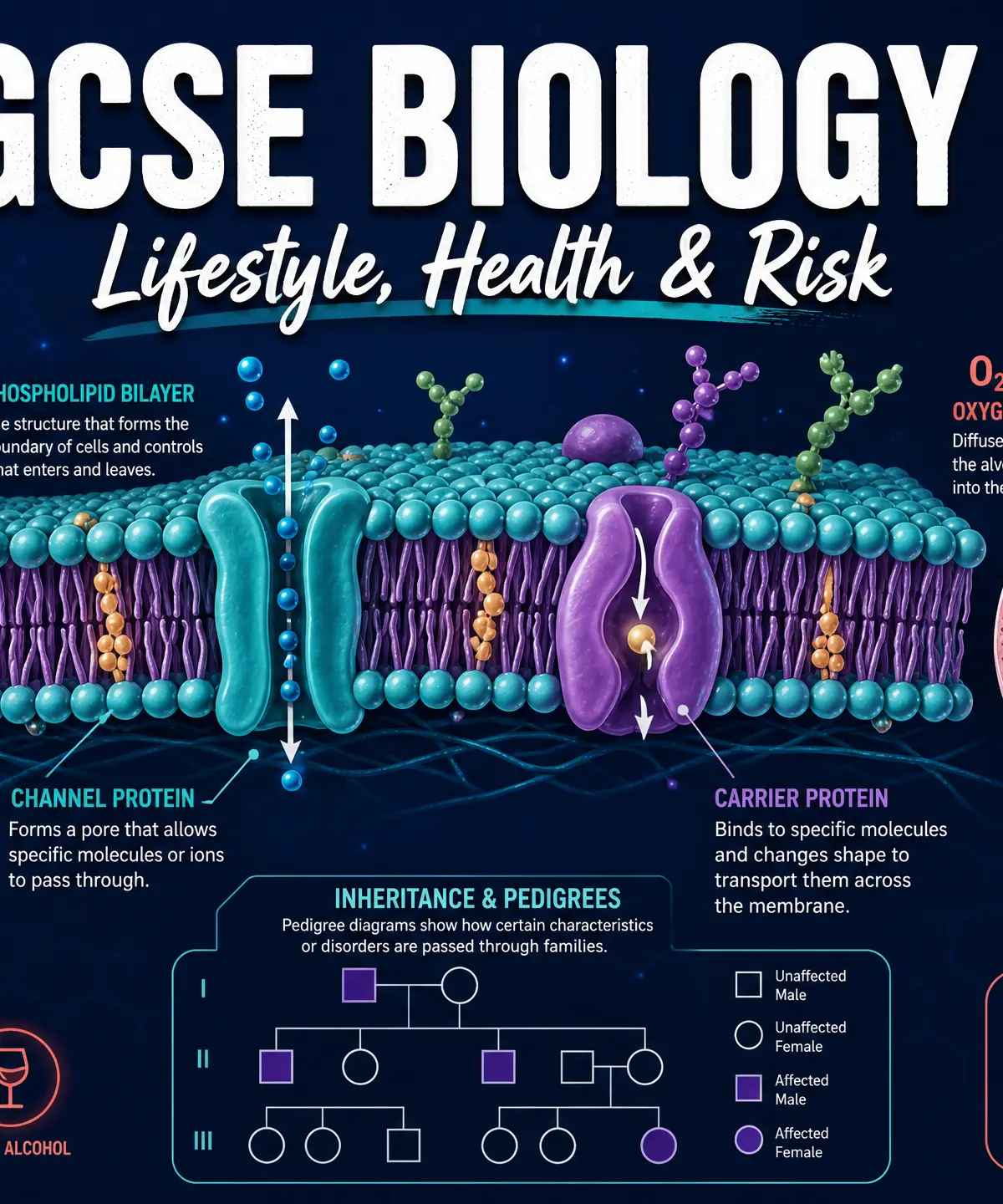
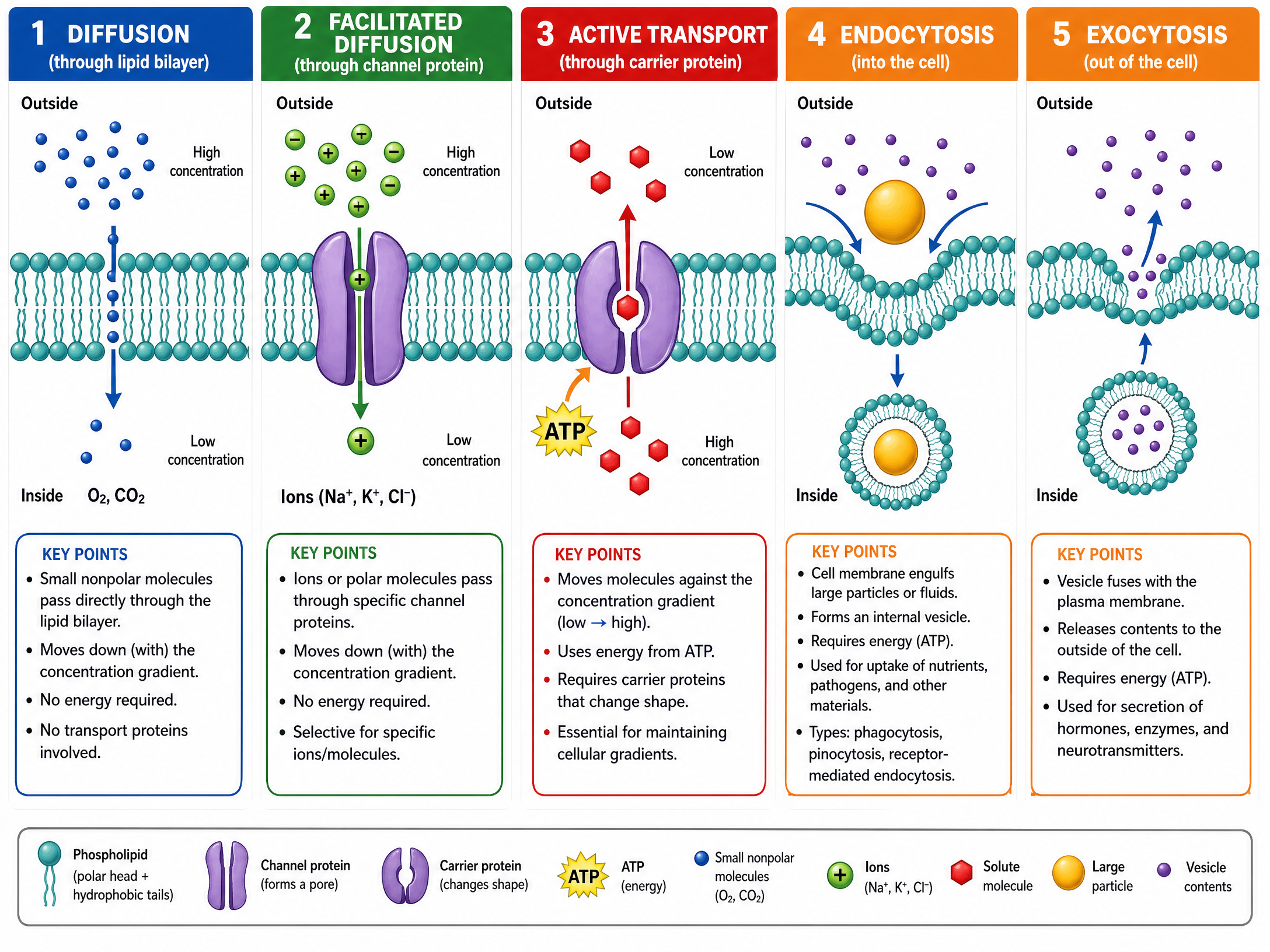
The cell membrane is not a static wall; it is a dynamic, flexible barrier. It is primarily composed of a phospholipid bilayer. Each phospholipid molecule has a hydrophilic (water-loving) phosphate head and two hydrophobic (water-hating) fatty acid tails. In a watery environment, they automatically arrange themselves tail-to-tail, with the heads facing outward.
Embedded within this sea of lipids are proteins. This is where you must be precise for the examiner:
- Channel proteins form fixed pores that allow specific ions or polar molecules to pass through.
- Carrier proteins bind to specific molecules, change their 3D shape, and release the molecule on the other side.
We call this the fluid mosaic model because the phospholipids can move laterally (fluid), and the proteins are scattered throughout like tiles in a mosaic.
Concept 2: Mechanisms of Transport
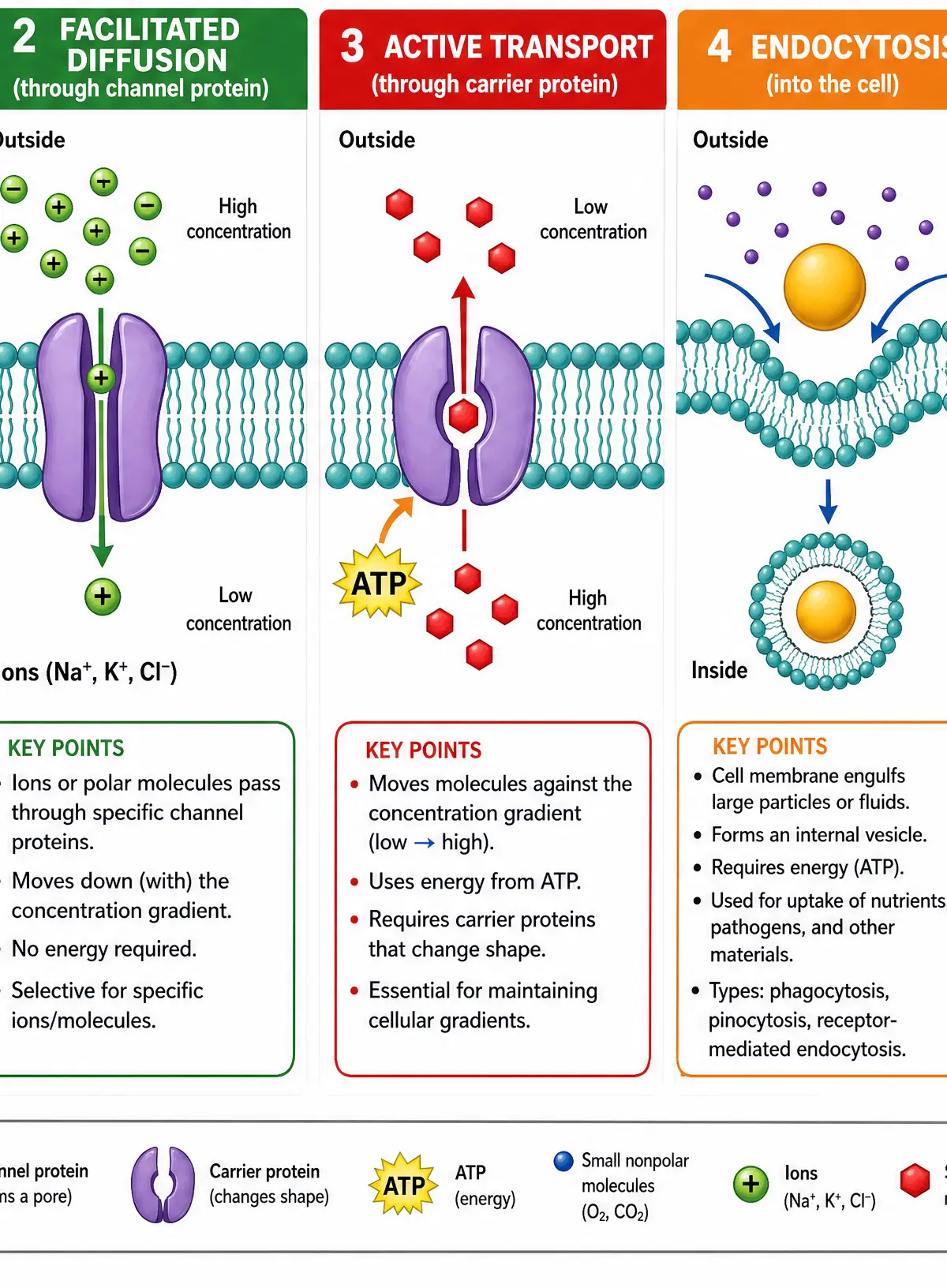
Substances must cross the membrane to keep the cell alive. Examiners will expect you to categorise these into passive (no ATP required) and active (requires ATP) processes.
Passive Processes:
- Simple Diffusion: The net movement of small, non-polar molecules (like O₂ and CO₂) from a region of higher concentration to lower concentration directly through the phospholipid bilayer.
- Facilitated Diffusion: The movement of larger or charged molecules down their concentration gradient via specific channel or carrier proteins.
Active Processes:
3. Active Transport: The movement of substances against their concentration gradient (from low to high). This requires energy in the form of ATP and relies exclusively on carrier proteins changing shape.
4. Endocytosis & Exocytosis: Bulk transport mechanisms where the membrane engulfs material to form a vesicle (endocytosis) or a vesicle fuses with the membrane to release its contents (exocytosis).
Concept 3: DNA Structure and Protein Synthesis
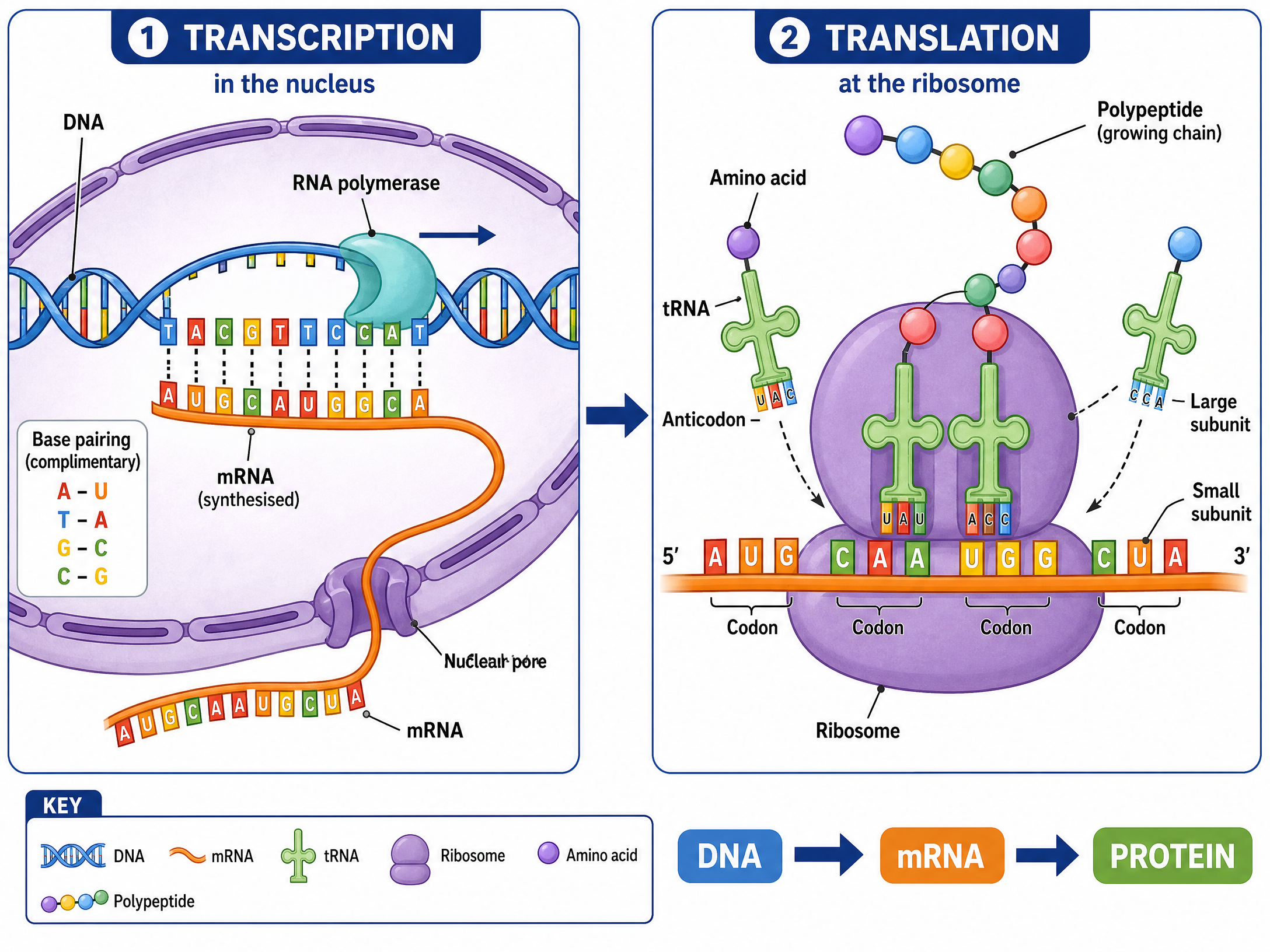
DNA is a polynucleotide—a polymer made of repeating mononucleotide monomers. Each mononucleotide consists of a deoxyribose sugar, a phosphate group, and a nitrogenous base (Adenine, Thymine, Guanine, or Cytosine). The two strands run antiparallel and are held together by hydrogen bonds between complementary base pairs (A-T and G-C).
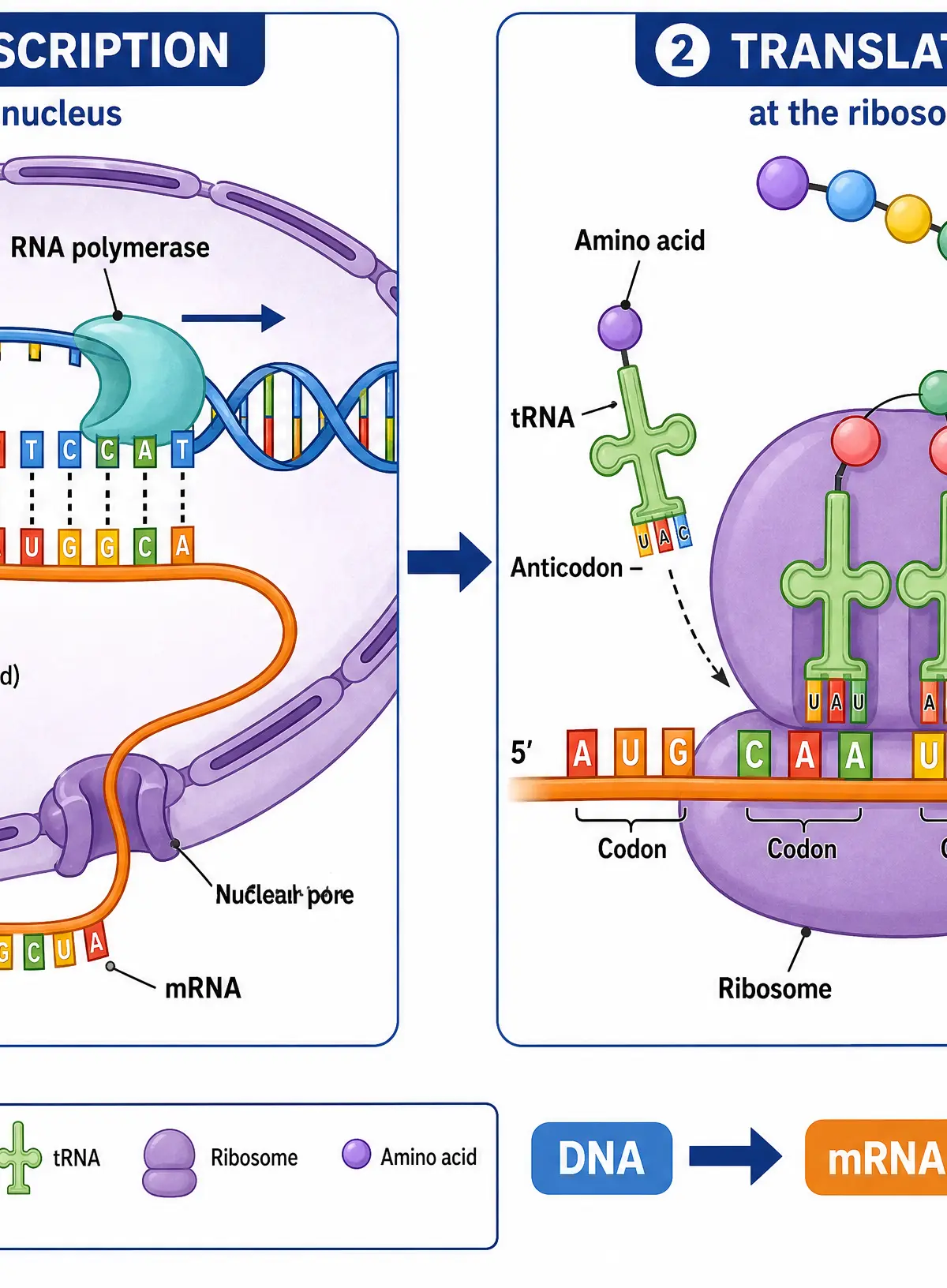
Protein synthesis occurs in two distinct stages:
**Transcription (in the nucleus):**The DNA double helix unwinds. The enzyme RNA polymerase moves along the template strand, joining RNA nucleotides to form a single-stranded messenger RNA (mRNA) molecule. Remember that in RNA, Uracil (U) replaces Thymine (T).
**Translation (at the ribosome):**The mRNA leaves the nucleus and attaches to a ribosome. The ribosome reads the mRNA in groups of three bases called codons. Transfer RNA (tRNA) molecules bring specific amino acids to the ribosome. Each tRNA has an anticodon that is complementary to the mRNA codon. The amino acids are joined by peptide bonds to form a polypeptide chain.
Concept 4: Monohybrid Inheritance and Cystic Fibrosis
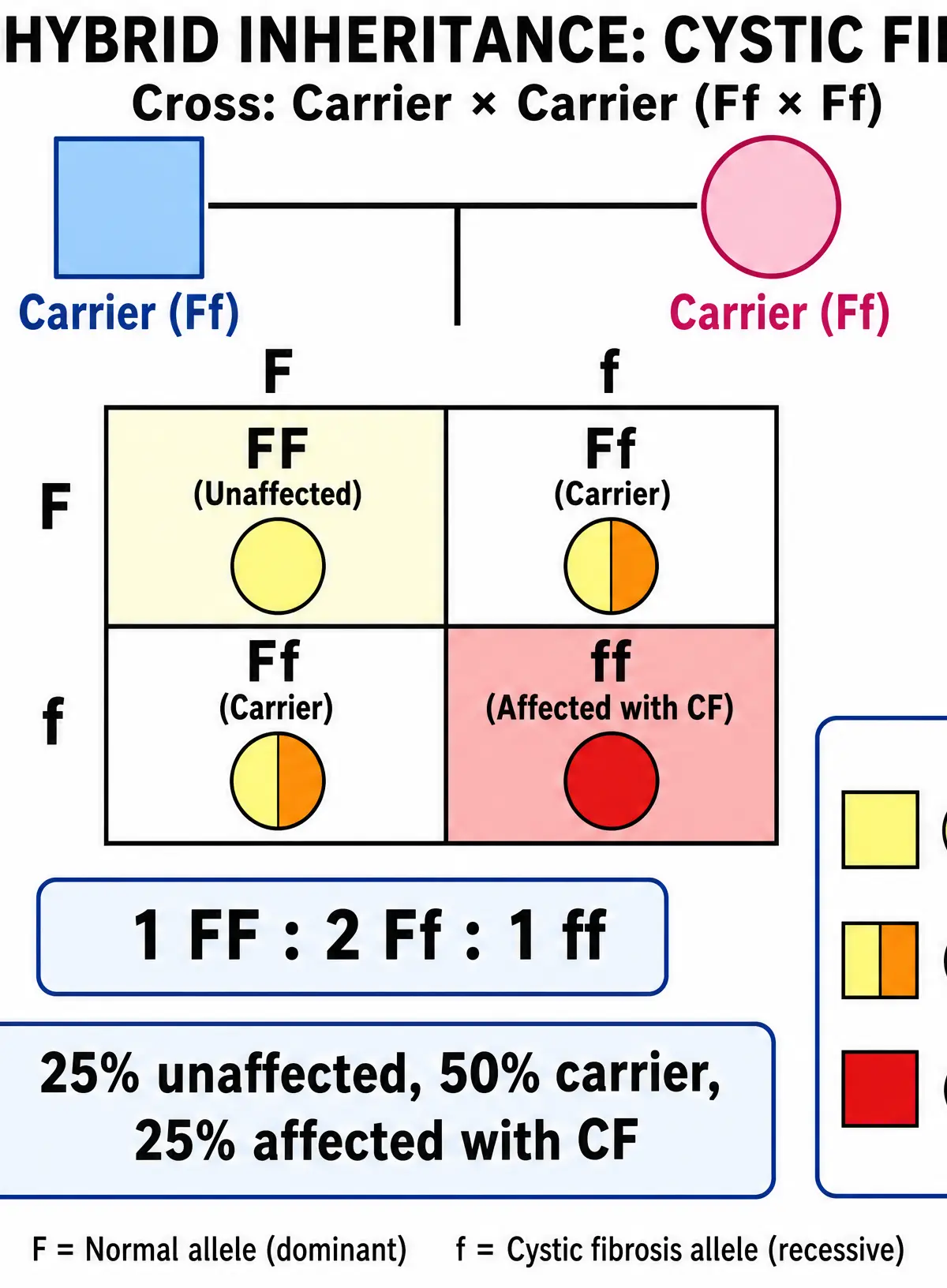
Cystic fibrosis is caused by a mutation in the CFTR gene, which codes for a chloride ion channel protein. It is an autosomal recessive condition.
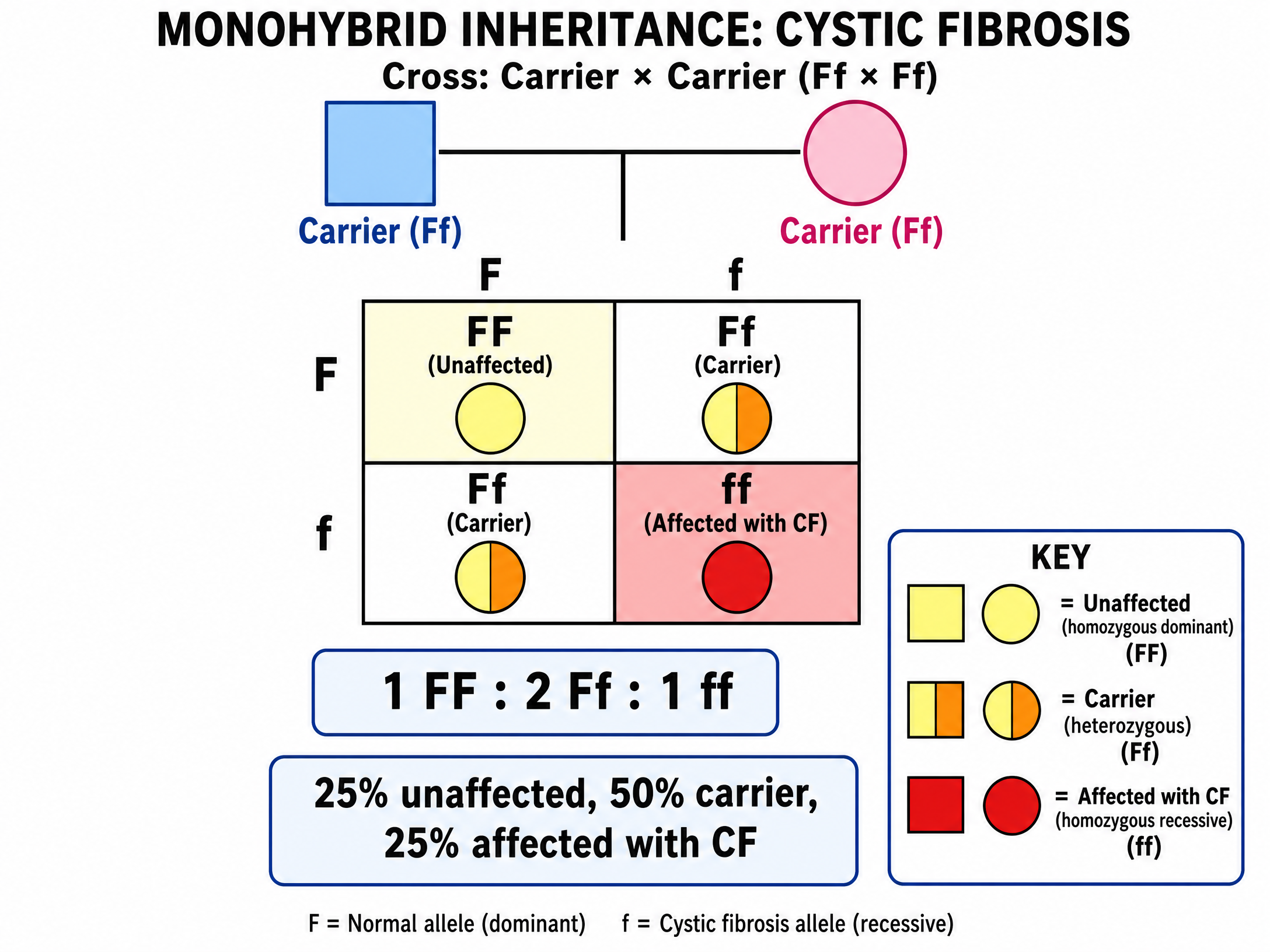
This means a person must inherit two copies of the faulty allele (genotype ff) to have the disease. If they inherit one normal allele and one faulty allele (genotype Ff), they are a carrier. They have a normal phenotype (no symptoms) but can pass the faulty allele to their offspring.
If two carriers have a child, a Punnett square shows a 1:2:1 genotype ratio (1 FF : 2 Ff : 1 ff), meaning there is a 25% chance the child will have cystic fibrosis.
Mathematical/Scientific Relationships
Fick's Law of Diffusion
Fick's Law states that the rate of diffusion is proportional to the surface area and concentration difference, and inversely proportional to the thickness of the exchange surface.
Rate of Diffusion ∝ (Surface Area × Concentration Difference) / Thickness of Exchange Surface
When to use it: Use Fick's Law to explain respiratory adaptations or diseases. For example, in cystic fibrosis, thick sticky mucus builds up in the alveoli. This increases the diffusion distance (thickness) and reduces the efficiency of gas exchange, explaining why CF patients suffer from breathlessness.
Practical Applications
**Genetic Screening:**Understanding inheritance allows for genetic screening. This can be carrier testing (identifying if prospective parents carry the CF allele), pre-implantation genetic diagnosis (testing IVF embryos before implantation), or prenatal testing (amniocentesis or chorionic villus sampling). Examiners frequently ask you to evaluate the social and ethical implications of these technologies, such as the risk of miscarriage versus the right to make informed reproductive choices.
Visual Resources
3 diagrams and illustrations
Interactive Diagrams
2 interactive diagrams to visualise key concepts
Conceptual Flow Outline
Flowchart showing the sequence of events in protein synthesis from DNA to polypeptide.
Conceptual Flow Outline
Probability outcomes for monohybrid inheritance of a recessive condition between two carriers.
Worked Examples
3 worked examples — open one to explore the question and available guidance.
Practice Questions
Test your understanding — click to reveal model answers
Compare the processes of facilitated diffusion and active transport. (3 marks)
Hint: Use comparative words like 'whereas' or 'both'. Think about concentration gradients, energy, and proteins.
Explain how a mutation in the CFTR gene leads to breathing difficulties in cystic fibrosis patients. (5 marks)
Hint: Start with the DNA, move to the protein, then the cellular effect (osmosis), and finally apply Fick's Law.
Describe the role of tRNA in protein synthesis. (2 marks)
Hint: What does tRNA carry, and what does it attach to?
State three properties of the genetic code. (3 marks)
Hint: Think about how many bases make a code, whether they overlap, and if multiple codes can make the same amino acid.
A woman who is a carrier for cystic fibrosis and a man who does not carry the allele wish to have a child. Determine the probability that their child will be a carrier. (3 marks)
Hint: Draw a Punnett square crossing Ff with FF.