Pearson Edexcel · A-Level · Biology
Topic 2: Genes and Health
Master the fundamentals of cell transport, DNA structure, and inheritance through the real-world context of cystic fibrosis. This topic is essential for understanding how our genes control our bodies and how genetic conditions are passed down.
- 7 min read
- 3 worked examples
- 5 practice questions
- 6 key terms
Study Notes
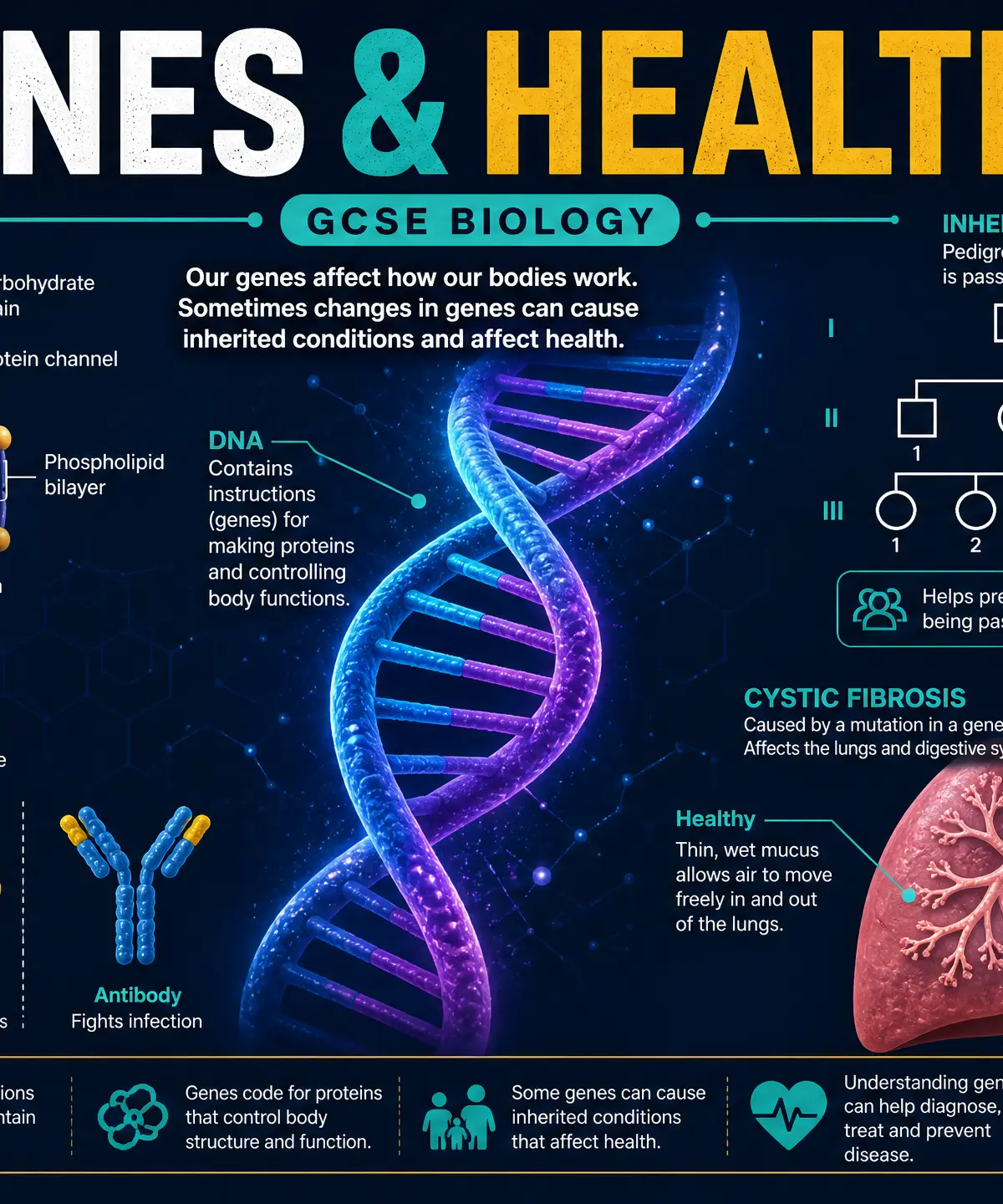
Overview
Welcome to Topic 2: Genes and Health. This is a foundational topic in GCSE Biology that bridges the gap between molecular biology and human health. You will explore the structure of cell membranes and how substances move across them, the intricate details of DNA and protein synthesis, and the principles of monohybrid inheritance.
Crucially, this topic uses cystic fibrosis (CF) as a central, real-world context. Examiners love this because it allows them to test your understanding of abstract concepts (like membrane proteins or recessive alleles) in a concrete, medical scenario. You can expect questions ranging from simple recall of DNA structure to complex, multi-mark evaluations of genetic screening. Understanding why processes happen—not just what they are—is the key to unlocking the top grades.
Key Concepts
Concept 1: The Cell Membrane and Transport
The cell membrane controls what enters and leaves the cell. It is described by the fluid mosaic model.
Imagine a sea of phospholipid molecules. Each has a hydrophilic (water-loving) head and two hydrophobic (water-hating) tails. They form a bilayer, with tails pointing inwards away from water. Embedded within this fluid sea are proteins—some spanning the whole membrane (integral), others just on the surface (peripheral). Because the proteins can move around and are dotted throughout like tiles, it's a "fluid mosaic".
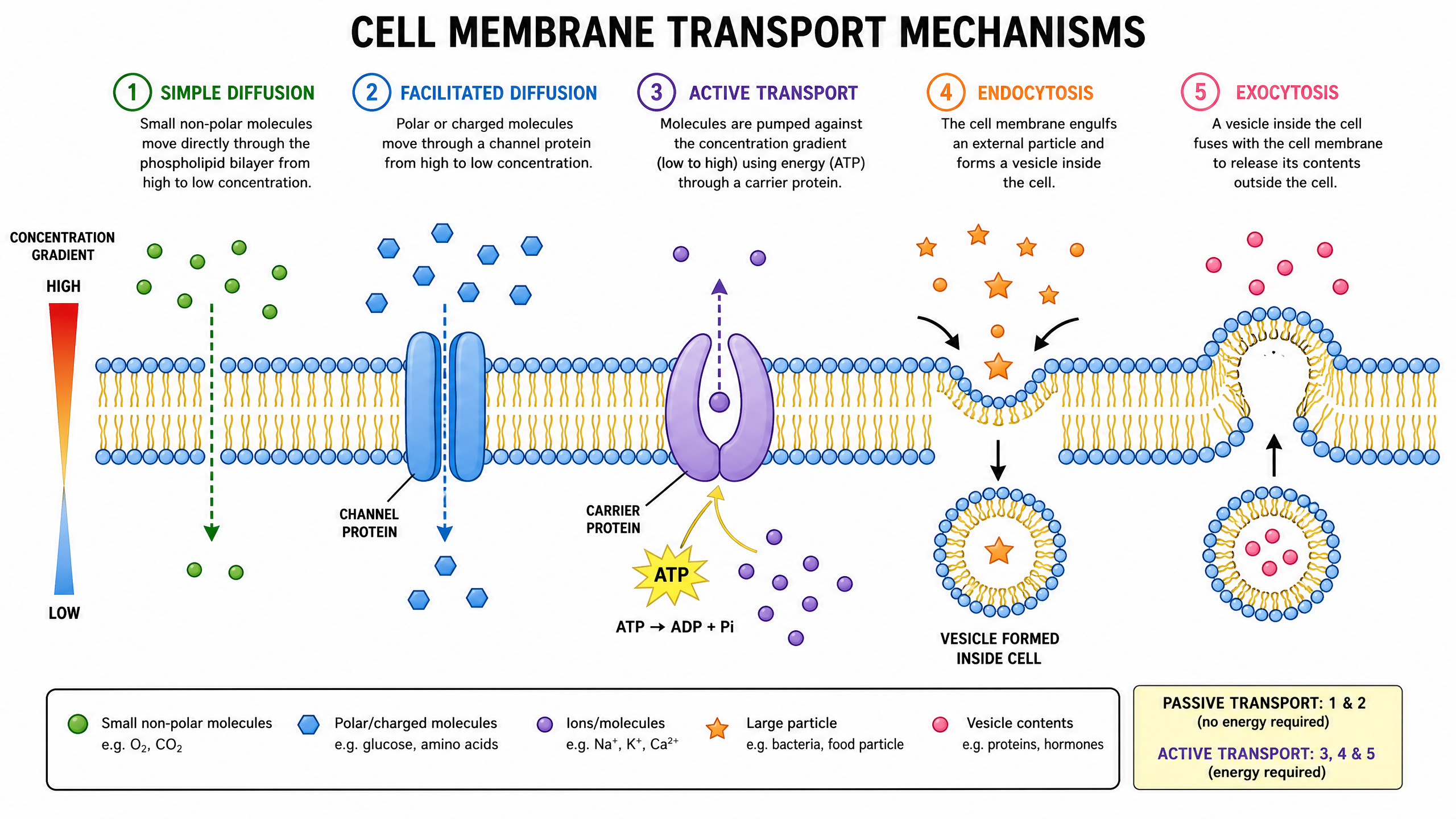
Substances cross this membrane in five main ways:
- Simple Diffusion: Small, non-polar molecules (like O₂ and CO₂) pass directly through the phospholipid bilayer from high to low concentration. Passive (no energy).
- Facilitated Diffusion: Larger or charged molecules (like glucose or ions) move from high to low concentration through specific channel or carrier proteins. Passive.
- Active Transport: Molecules are pumped against the concentration gradient (low to high) using a carrier protein. This requires energy in the form of ATP.
- Endocytosis: The membrane engulfs a large particle to bring it into the cell in a vesicle.
- Exocytosis: A vesicle fuses with the membrane to release its contents out of the cell.
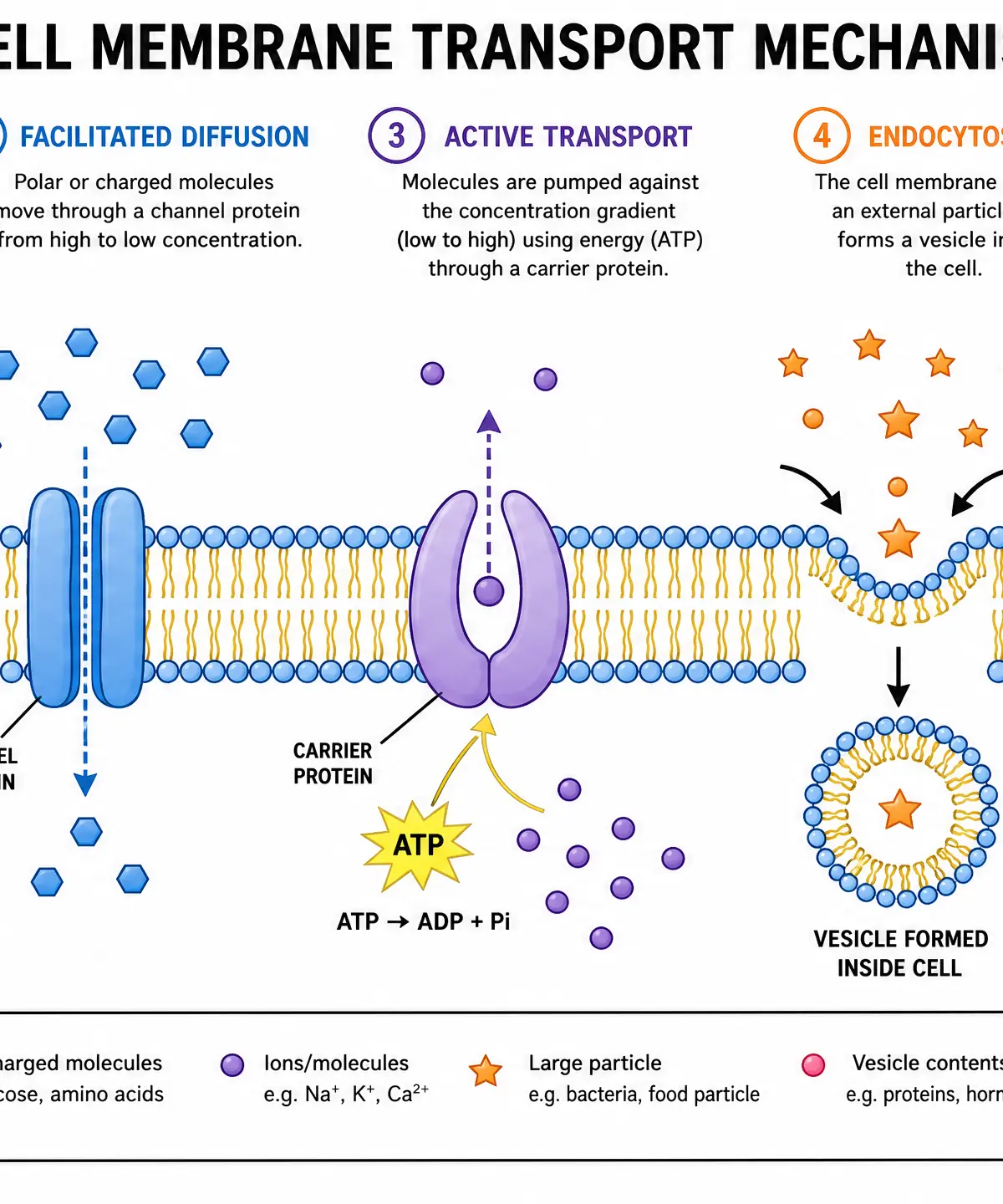
Example: In cystic fibrosis, a specific channel protein called the CFTR protein is faulty. It normally transports chloride ions out of cells via facilitated diffusion. When it fails, water doesn't follow by osmosis, resulting in thick, sticky mucus.
Concept 2: DNA Structure and Protein Synthesis
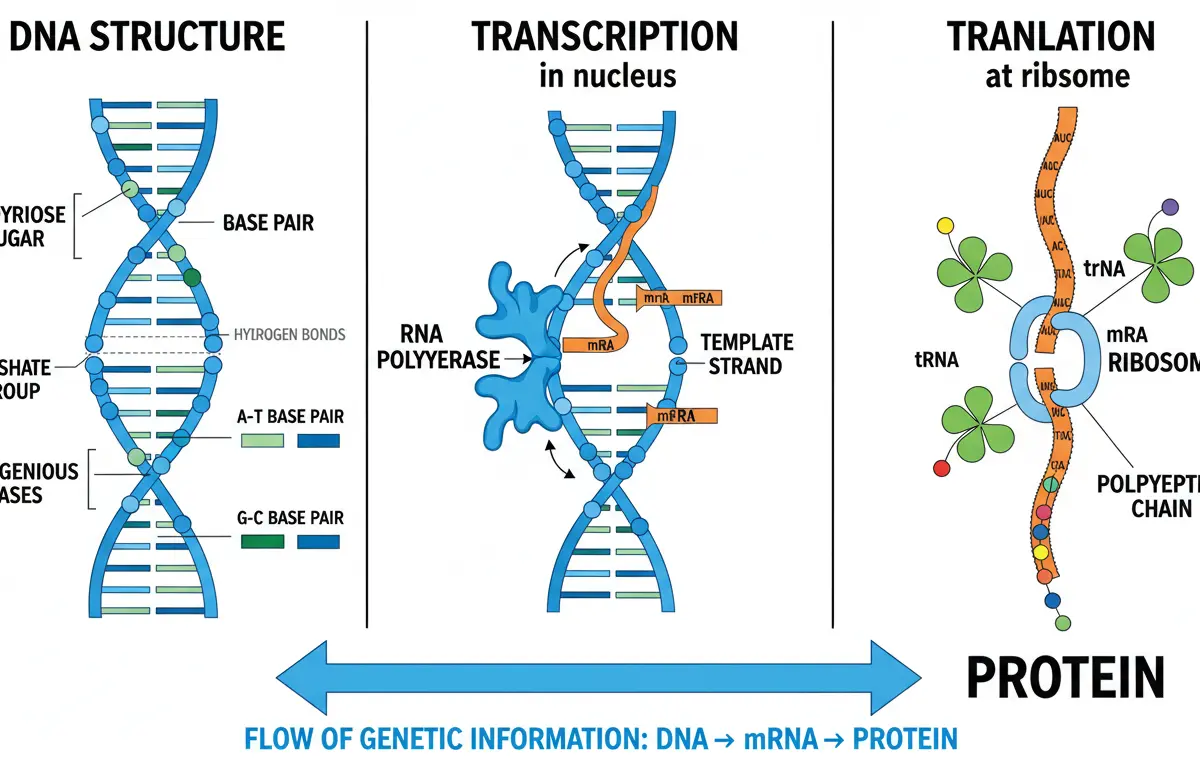
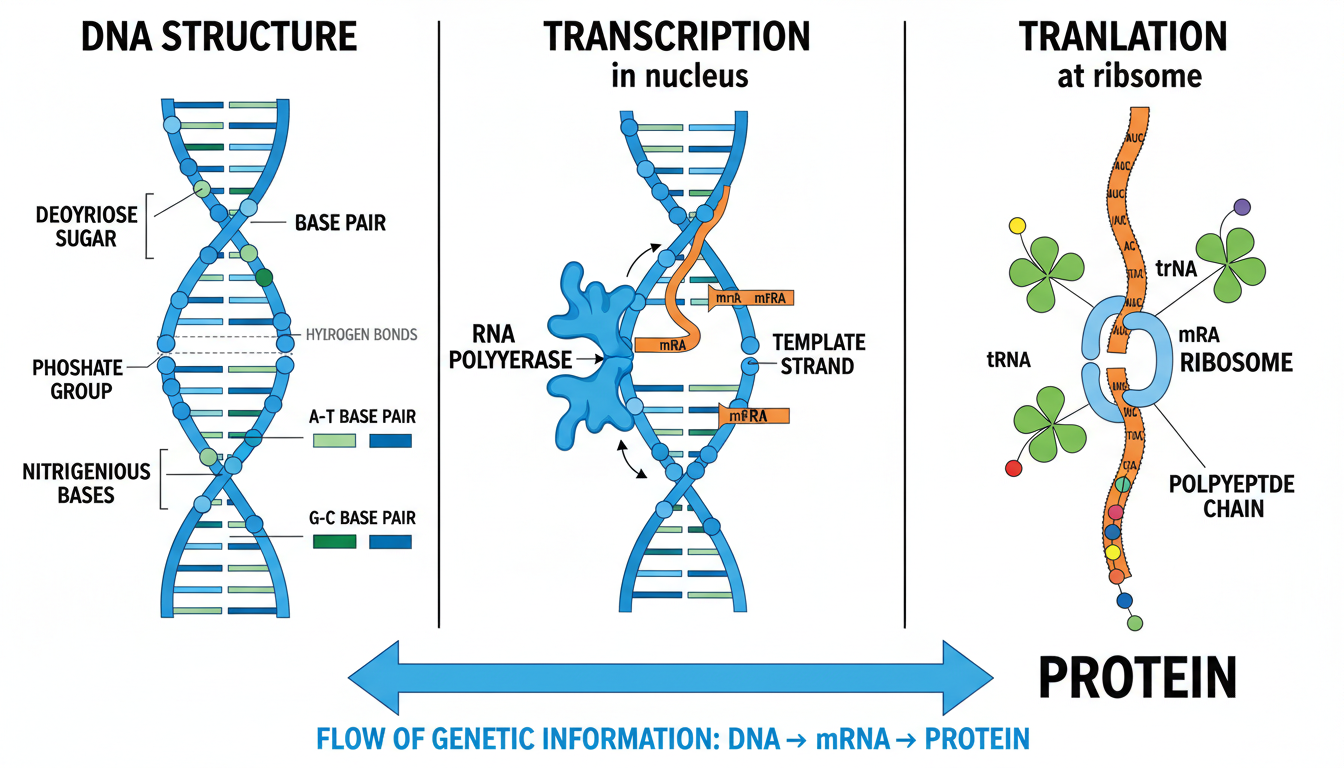
DNA is a double helix made of two polynucleotide strands. Each nucleotide has three parts: a deoxyribose sugar, a phosphate group, and a nitrogenous base (Adenine, Thymine, Guanine, or Cytosine). The strands are held together by hydrogen bonds between complementary base pairs: A always pairs with T, and G always pairs with C.
A gene is a sequence of bases that codes for a specific protein. The genetic code is:
- Triplet: Three bases (a codon) code for one amino acid.
- Non-overlapping: Each base is read only once.
- Degenerate: Multiple codons can code for the same amino acid, protecting against some mutations.
Protein Synthesis occurs in two stages:
- Transcription (in the nucleus): DNA unwinds. RNA polymerase builds a complementary messenger RNA (mRNA) strand using the template DNA strand. (Note: RNA uses Uracil instead of Thymine).
- Translation (at the ribosome): The mRNA attaches to a ribosome. Transfer RNA (tRNA) molecules bring specific amino acids. The tRNA anticodons bind to complementary mRNA codons. The amino acids are joined by peptide bonds to form a polypeptide chain.
Concept 3: Enzymes and Proteins
Proteins are either globular (spherical, soluble, e.g., enzymes, antibodies) or fibrous (long, structural, e.g., collagen). Their function depends entirely on their 3D shape.
Enzymes are biological catalysts. They have a specifically shaped active site that binds to a specific substrate (the lock and key / induced fit model). If temperature or pH exceeds the optimum, the bonds holding the 3D shape break. The active site changes shape, and the enzyme is denatured.
Concept 4: DNA Replication (Meselson-Stahl)
DNA replication is semi-conservative. The double helix unwinds, hydrogen bonds break, and both strands act as templates. Free nucleotides pair up (A-T, G-C), and DNA polymerase joins them. The result is two identical DNA molecules, each containing one original strand and one newly synthesised strand.
The Meselson-Stahl experiment proved this by growing bacteria in heavy nitrogen (¹⁵N) then transferring them to light nitrogen (¹⁴N). After one replication, all DNA was intermediate density (one heavy strand, one light strand), ruling out conservative replication.
Concept 5: Monohybrid Inheritance
Inheritance involves the passing of alleles (different versions of a gene).
- Genotype: The alleles you have (e.g., Ff).
- Phenotype: The physical characteristic expressed (e.g., unaffected carrier).
- Dominant: Expressed even if only one copy is present (F).
- Recessive: Expressed only if two copies are present (f).
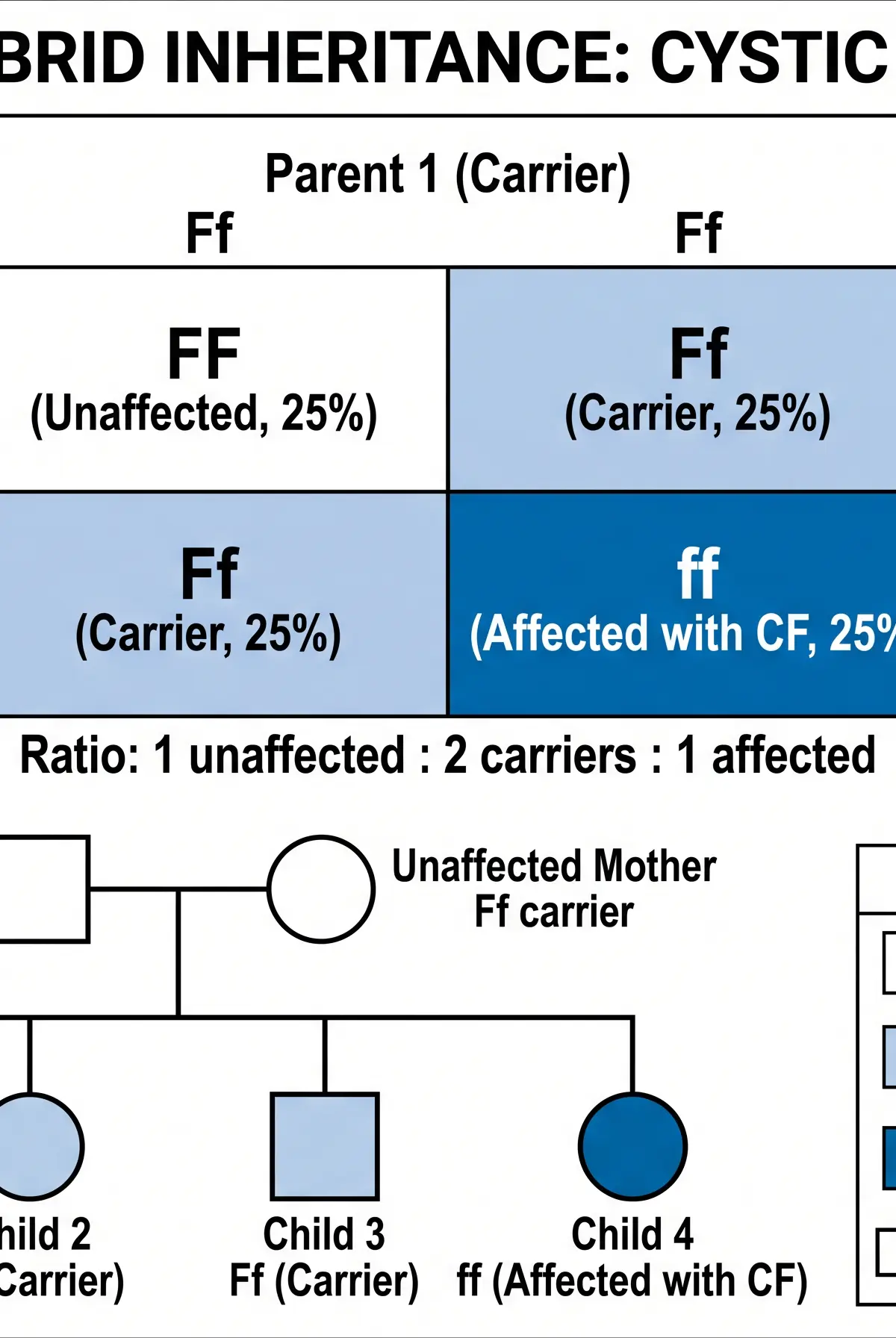
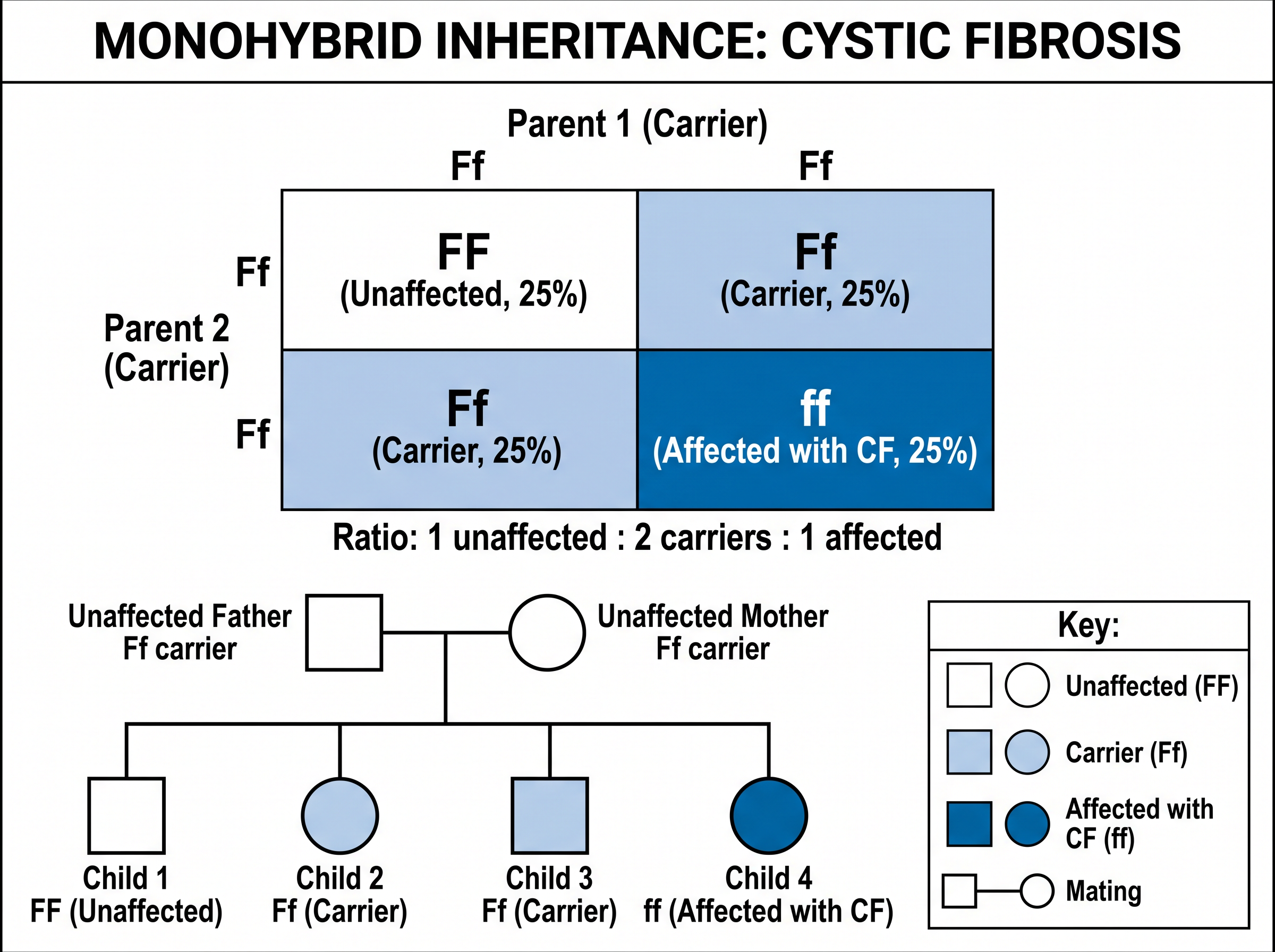
Cystic fibrosis is caused by a recessive allele. To have CF, a person must be homozygous recessive (ff). Heterozygotes (Ff) are carriers—they do not have CF but can pass the allele to offspring.
Mathematical/Scientific Relationships
Fick's Law of Diffusion
This law describes the factors affecting the rate of diffusion across a surface.
Rate of diffusion ∝ (Surface Area × Concentration Difference) / Thickness of exchange surface
- Surface Area: Larger area = faster diffusion (e.g., millions of alveoli in lungs).
- Concentration Difference: Steeper gradient = faster diffusion (maintained by blood flow and ventilation).
- Thickness: Thinner surface = faster diffusion (e.g., alveoli walls are one cell thick).
Must memorise this relationship. In CF, thick mucus increases the effective thickness and reduces the concentration gradient, drastically slowing gas exchange.
Practical Applications
Genetic Screening: This topic heavily features the social and ethical implications of genetic testing. Methods include:
- Amniocentesis: Testing amniotic fluid (15-20 weeks pregnancy). Risk of miscarriage.
- Chorionic Villus Sampling (CVS): Testing placental tissue (11-14 weeks). Slightly higher risk of miscarriage but done earlier.
Examiners often ask you to evaluate these methods. You must consider the medical risks, the emotional impact of false positives/negatives, and the ethical debate surrounding abortion based on genetic traits.
Podcast Audio Revision
Listen to this 10-minute audio guide for a complete walkthrough of the topic, including exam tips and a quick-fire quiz.

Visual Resources
3 diagrams and illustrations
Interactive Diagrams
2 interactive diagrams to visualise key concepts
Conceptual Flow Outline
The process of Transcription (Protein Synthesis Part 1)
Conceptual Flow Outline
How the genetic mutation causes the symptoms of Cystic Fibrosis
Worked Examples
3 worked examples — open one to explore the question and available guidance.
Practice Questions
Test your understanding — click to reveal model answers
State three differences between the processes of simple diffusion and active transport. (3 marks)
Hint: Think about energy, concentration gradients, and whether proteins are needed.
Describe the process of translation in protein synthesis. (4 marks)
Hint: Where does it happen? What does mRNA do? What does tRNA do? How are amino acids joined?
Explain how the structure of DNA is adapted to its function of storing genetic information. (4 marks)
Hint: Think about the length of the molecule, the base pairing, and the bonds holding it together.
A person with cystic fibrosis produces thick, sticky mucus. Explain how this affects their gaseous exchange. (3 marks)
Hint: Use Fick's Law of Diffusion to guide your answer.
In an experiment, bacteria were grown in a medium containing heavy nitrogen (15N) for many generations. They were then moved to a medium containing light nitrogen (14N) and allowed to replicate once. Explain why the resulting DNA was found to be of intermediate density. (4 marks)
Hint: This is testing the Meselson-Stahl experiment. What does semi-conservative replication mean?