
Study Notes
Overview
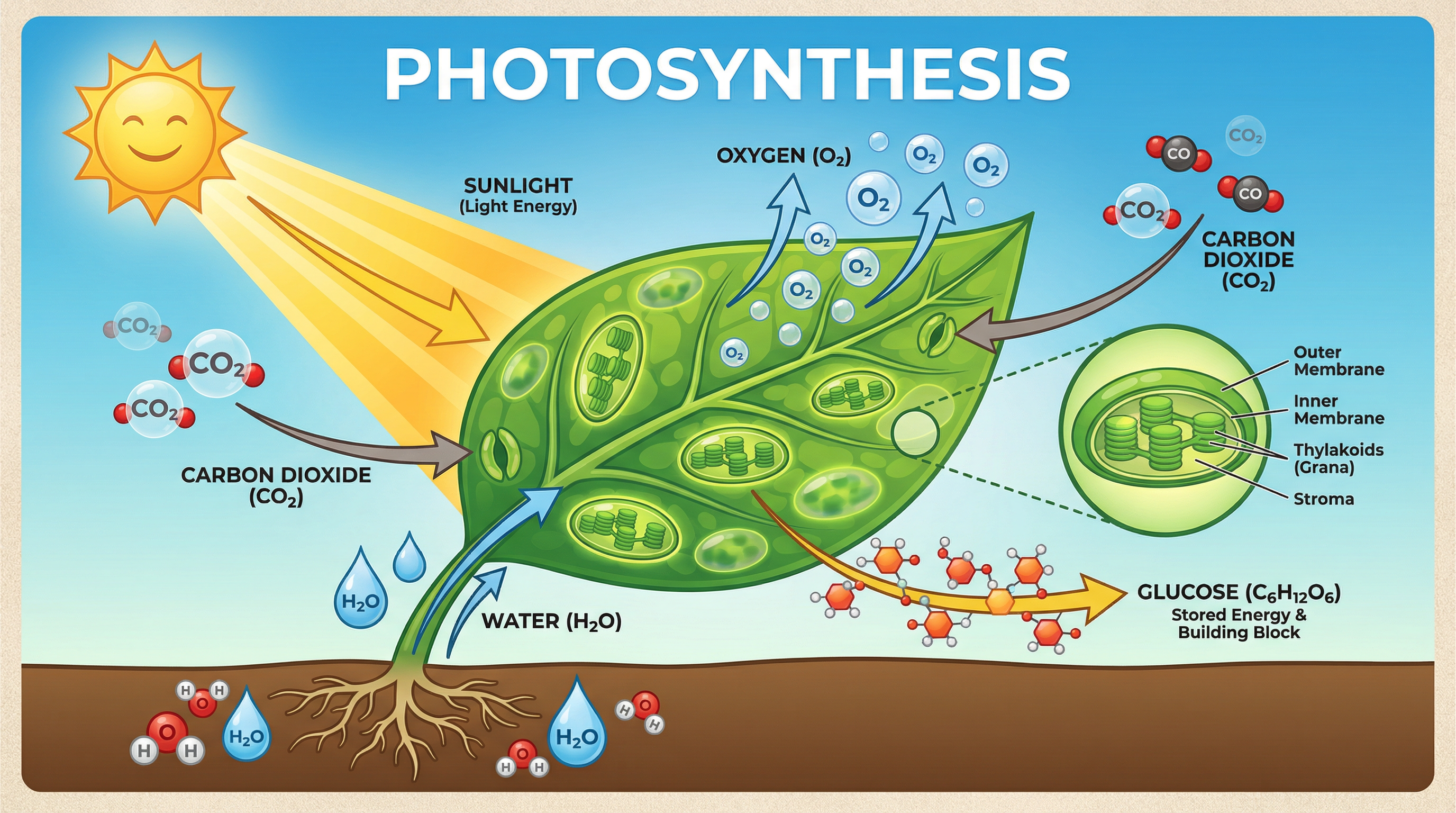
Photosynthesis is the foundational process that sustains nearly all life on Earth. For your Edexcel GCSE Biology exam, it is a cornerstone of Topic 4, ‘Plant Structures and their Functions’. This guide will deconstruct the process by which plants convert light energy into chemical energy, creating glucose for respiration, growth, and storage. A solid understanding is vital as it frequently appears in exams, often in high-mark, synoptic questions linking to respiration, enzymes, and transport in plants. Candidates are expected to not only recall the process but also to interpret data on how different factors can limit the rate of photosynthesis. Expect questions that require you to analyse graphs, evaluate experimental setups, and apply your knowledge to unfamiliar contexts. Mastering this topic is not just about memorising an equation; it’s about understanding a dynamic biological system.
Key Concepts
The Photosynthesis Equation
At its core, photosynthesis is an endothermic reaction, meaning it absorbs energy from the environment. Plants take in carbon dioxide from the air and water from the soil, and through a series of reactions powered by light, convert them into glucose (a sugar) and oxygen.
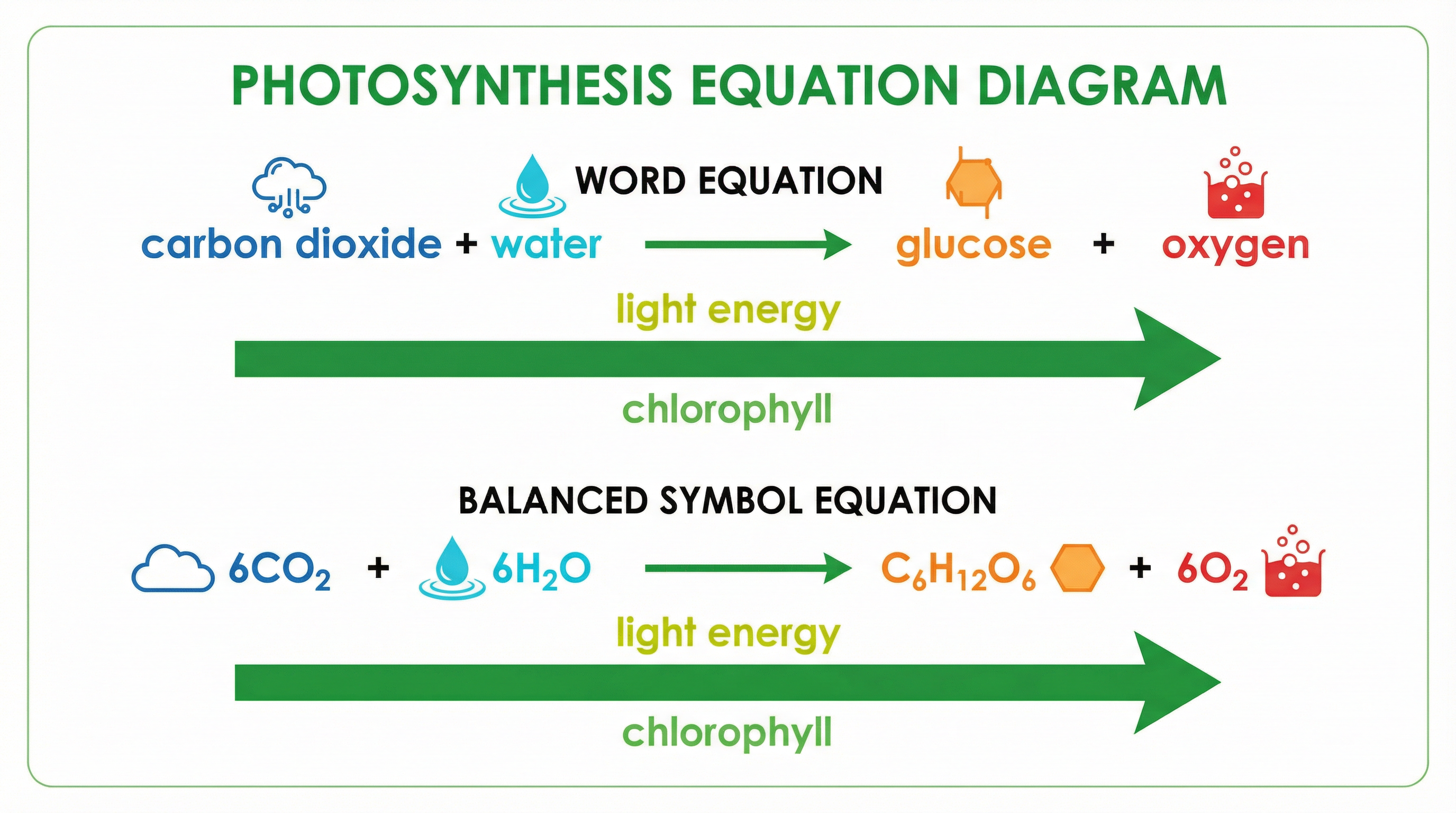
**Word Equation:**Carbon dioxide + Water --(Light & Chlorophyll)--> Glucose + Oxygen
Balanced Symbol Equation (Must Memorise):
6CO₂ + 6H₂O --(Light & Chlorophyll)--> C₆H₁₂O₆ + 6O₂
Credit is awarded for knowing both the reactants (CO₂ and H₂O) and the products (C₆H₁₂O₆ and O₂), as well as the essential conditions: light energy and chlorophyll. The balanced symbol equation is often a source of marks for Higher Tier candidates.
The Role of Chloroplasts
This entire process takes place inside specialised organelles within plant cells called chloroplasts. These are the tiny green discs that give leaves their colour.
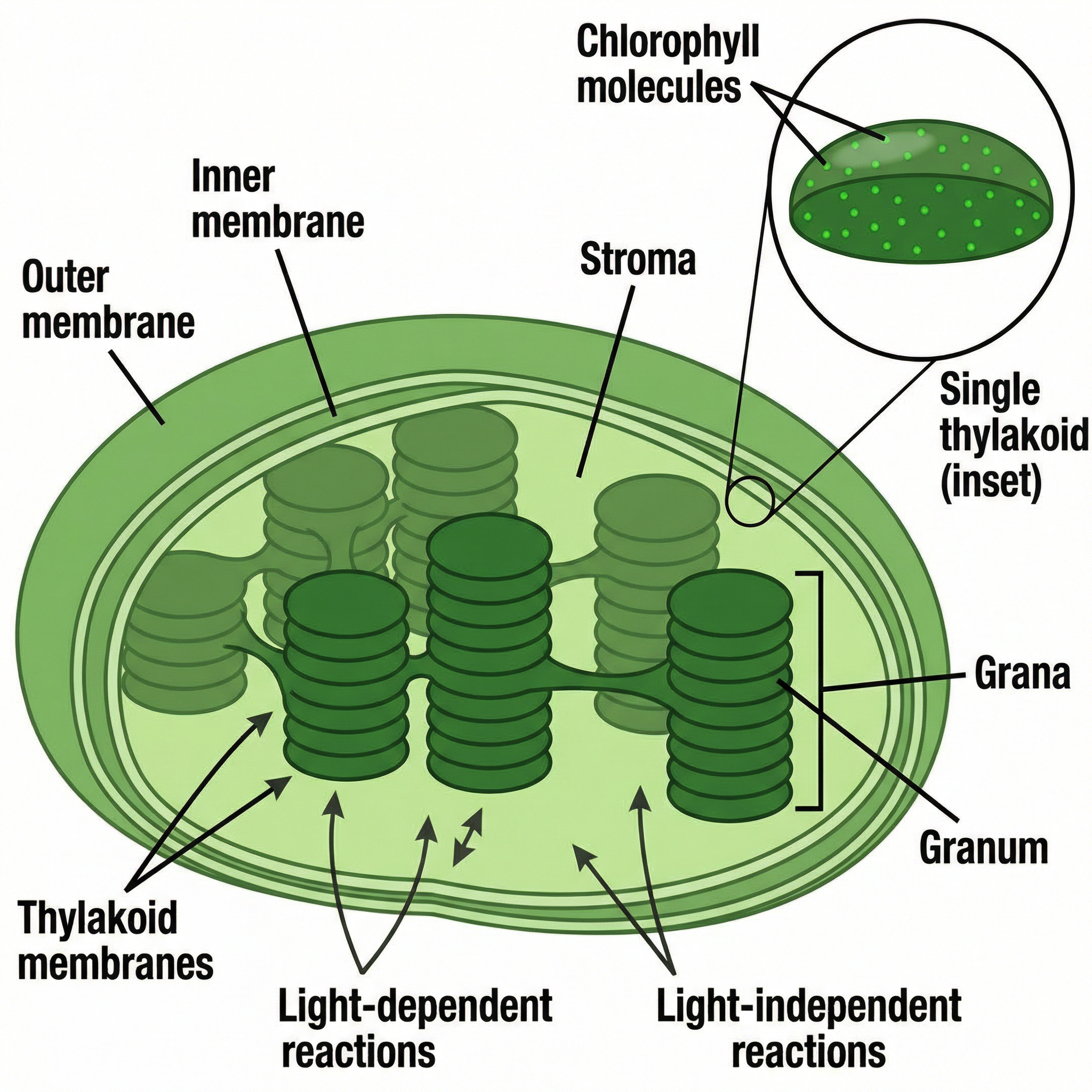
- Chlorophyll: This is the green pigment found within the chloroplasts. Its crucial job is to absorb the light energy needed to power the reaction.
- Structure: Chloroplasts have a complex internal structure with a large surface area to maximise light absorption. They contain stacks of membranes called grana, where the first stage of photosynthesis occurs, surrounded by a fluid-like substance called the stroma, where the second stage happens.
Uses of Glucose
Once the plant has produced glucose, it doesn't just sit there. It's used in several vital ways:
- For Respiration: To release energy for all cellular activities.
- For Storage: Converted into insoluble starch and stored in leaves, stems, or roots for later use. Starch is used because, being insoluble, it doesn't affect the water potential of the cell.
- To Make Cellulose: To build strong cell walls.
- To Make Proteins: Glucose is combined with nitrate ions (absorbed from the soil) to synthesise amino acids, which are then built into proteins.
- To Make Fats and Oils: As an energy store, often in seeds.
Limiting Factors
A limiting factor is any environmental factor that, in short supply, restricts the rate of photosynthesis, regardless of the levels of other factors. Examiners love testing this concept with data interpretation questions.
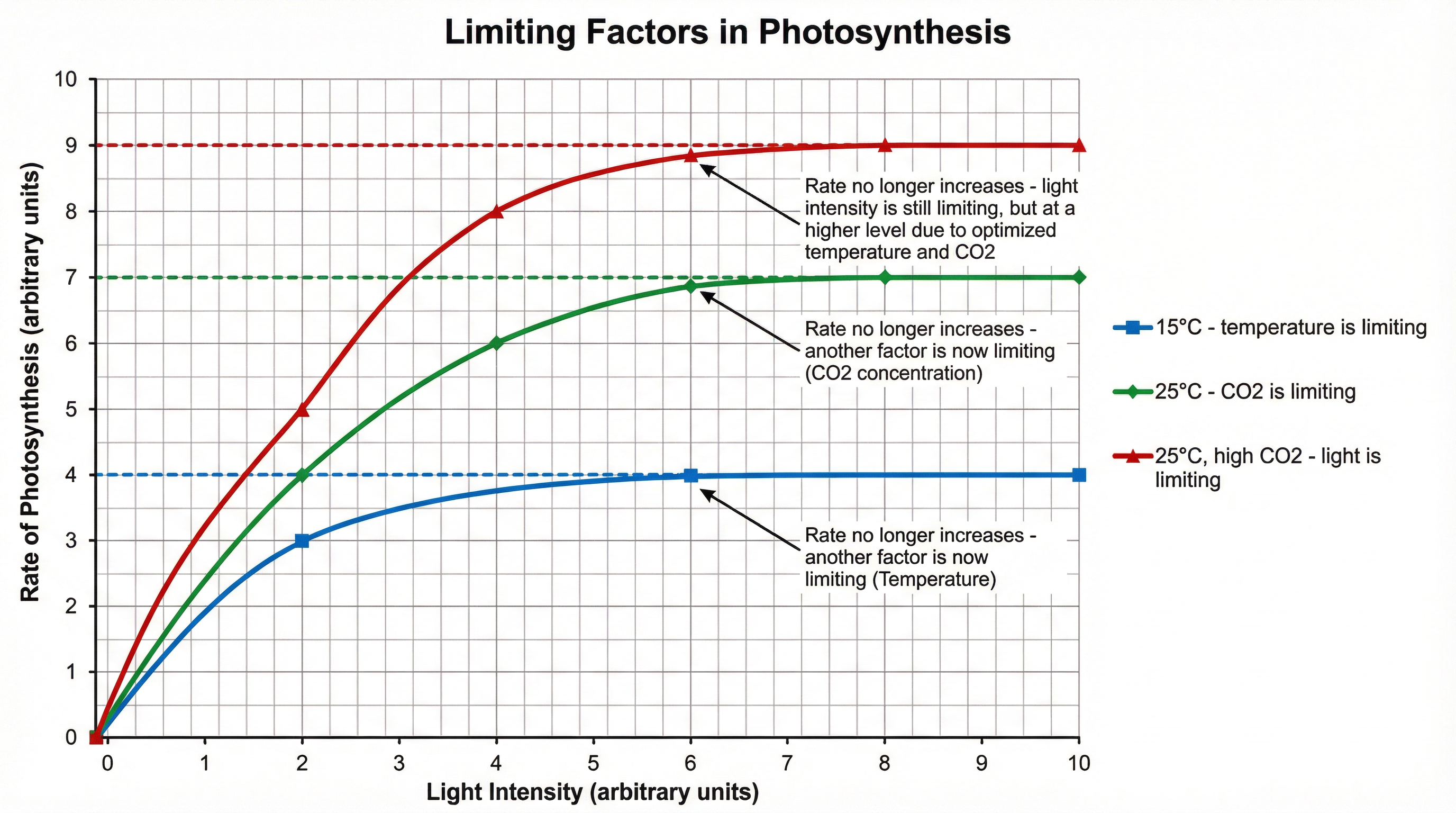
- Light Intensity: Without enough light, photosynthesis cannot happen, no matter how much water or CO₂ is available. As light intensity increases, the rate of photosynthesis increases, until it is limited by another factor.
- Carbon Dioxide Concentration: As with light, increasing CO₂ concentration will increase the rate of photosynthesis, until another factor becomes limiting.
- Temperature: Photosynthesis is controlled by enzymes. As temperature increases towards the optimum (around 25-35°C for most plants), the rate increases. However, if the temperature gets too high (above 45°C), the enzymes begin to denature, their active site changes shape, and the rate of photosynthesis plummets.
Higher Tier Content: The relationship between distance and light intensity follows an inverse square law (Rate ∝ 1/distance²). If you double the distance from a light source, the light intensity quarters.
Required Practicals
Investigating the effect of light intensity on the rate of photosynthesis.
- Apparatus: Pondweed (e.g., Elodea), beaker of water, light source (lamp), ruler, stopwatch.
- Method:
- Place a piece of pondweed in a beaker of water.
- Position a lamp a set distance (e.g., 10 cm) from the beaker.
- Allow the pondweed to acclimatise for 5 minutes.
- Count the number of oxygen bubbles produced in one minute. This is a measure of the rate of photosynthesis.
- Repeat the count twice more and calculate a mean.
- Move the lamp to a greater distance (e.g., 20 cm, 30 cm, 40 cm) and repeat steps 3-5.
- Expected Results: As the distance of the lamp increases, the light intensity decreases, and therefore the number of bubbles produced per minute will decrease.
- Common Errors: Miscounting bubbles, inconsistent timing, temperature changes from the lamp affecting the results. Using a gas syringe to collect the oxygen is a more accurate method for measuring the volume of gas produced.