OCR · A-Level · Biology
Course version: H420 · Version from Sept 2025
Biodiversity: (a) how biodiversity may be considered at different levels
Biodiversity is considered at several levels.
Checked against the OCR H420 specification (opens in a new tab) on .
- Point 1 of 10
- 3 key terms
Study notes
From the checked teaching notes for this specification point.
The idea
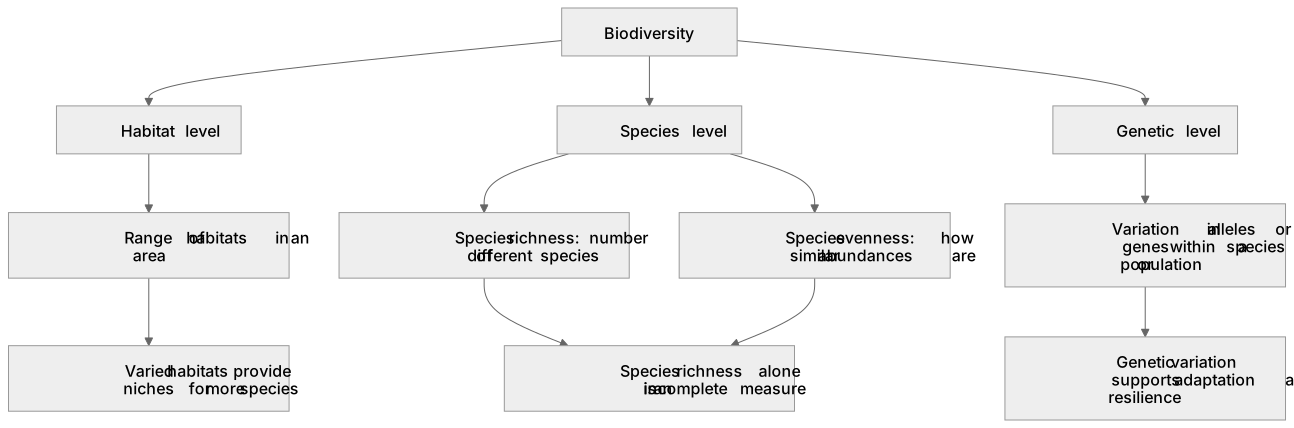
Biodiversity is considered at several levels. At the habitat level, the range of habitats in an area is assessed. At the species level, species richness (the number of different species) and species evenness (how similar their abundances are) are considered. At the genetic level, variation within a species is assessed, which underpins adaptation and resilience. These levels are linked: a habitat with many niches can support more species, and genetically diverse populations are better able to survive environmental change. A single measure such as species richness alone does not capture genetic or habitat diversity, so biodiversity is described by combining levels.
What earns the marks
- Habitat diversity: the range of different habitats present in an area.
- Species diversity: combines species richness (number of different species) and species evenness (relative abundance of each species).
- Genetic diversity: variation in alleles or genes within a species or population.
- The levels are linked: varied habitats provide niches for more species, and genetic variation supports adaptation and resilience.
- Species richness alone is an incomplete measure because it ignores evenness, genetic variation and habitat variety.
Common mistakes and how to put them right
Equating biodiversity only with the number of species present.
Put it right: Evenness, genetic variation and habitat variety are also levels to consider.
Confusing species richness with species evenness.
Put it right: Richness counts species, evenness describes how similar their abundances are.
Treating genetic diversity as a separate unrelated idea.
Put it right: It is one of the levels of biodiversity and links to population resilience.
Exam tips
- Name each level explicitly (habitat, species, genetic) and give a one-line definition for each.
- When comparing areas, mention both richness and evenness rather than richness alone.
- Link genetic diversity to the ability of a population to adapt to change to show why the level matters.
Try the lesson
The start of the Biodiversity: (a) how biodiversity may be considered at different levels lesson, made from checked teaching notes for this specification point.
Have a go first
Species biodiversity in a habitat is determined by which two features?
Listen
Biodiversity is considered at several levels. At the habitat level, the range of habitats in an area is assessed. At the species level, species richness (the number of different species) and species evenness (how similar their abundances are) are considered. At the genetic level, variation within a species is assessed, which underpins adaptation and resilience. These levels are linked: a habitat with many niches can support more species, and genetically diverse populations are better able to survive environmental change. A single measure such as species richness alone does not capture genetic or habitat diversity, so biodiversity is described by combining levels. A strong answer earns marks for these points. Habitat diversity: the range of different habitats present in an area. Species diversity: combines species richness (number of different species) and species evenness (relative abundance of each species). Genetic diversity: variation in alleles or genes within a species or population. The levels are linked: varied habitats provide niches for more species, and genetic variation supports adaptation and resilience. A common slip: Equating biodiversity only with the number of species present. Instead, evenness, genetic variation and habitat variety are also levels to consider. Exam tip: Name each level explicitly (habitat, species, genetic) and give a one-line definition for each.
See it
Key words
Say what each word means before you turn the card.
Habitat diversity
Try answering aloud or in your head before turning the card.
Species evenness
Try answering aloud or in your head before turning the card.
Genetic diversity
Try answering aloud or in your head before turning the card.
See every definition
- Habitat diversity
- The range of different habitats present in an area.
- Species evenness
- How similar the abundances of the species are.
- Genetic diversity
- Variation in alleles or genes within a species or population.
Label the diagram
Some boxes have lost their names. Pick the right name for each number.
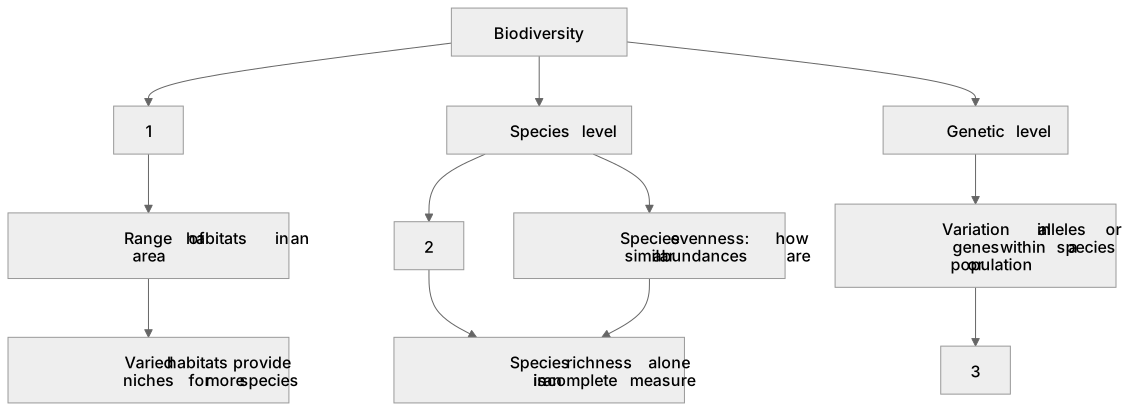
1Box 1
2Box 2
3Box 3
There is more to this lesson
The full lesson goes on to check your understanding and help you earn the marks. Create a free account to carry on, with your progress saved.
A week of Premium from your first lesson · Then the free plan continues · No card, no charge
Test your understanding of Biodiversity: (a) how biodiversity may be considered at different levels
Active recall beats re-reading. Take an instant quiz now to test what you’ve learned and lock it into long-term memory.
A week of Premium from your first lesson · Then the free plan continues · No card, no charge