OCR · A-Level · Biology
Course version: H420 · Version from Sept 2025
Cell division, cell diversity and cellular organisation: (a) the cell cycle
The cell cycle describes the sequence of events by which a cell grows and divides to produce two genetically identical daughter cells.
Checked against the OCR H420 specification (opens in a new tab) on .
- Point 1 of 13
- 4 key terms
Study notes
From the checked teaching notes for this specification point.
The idea
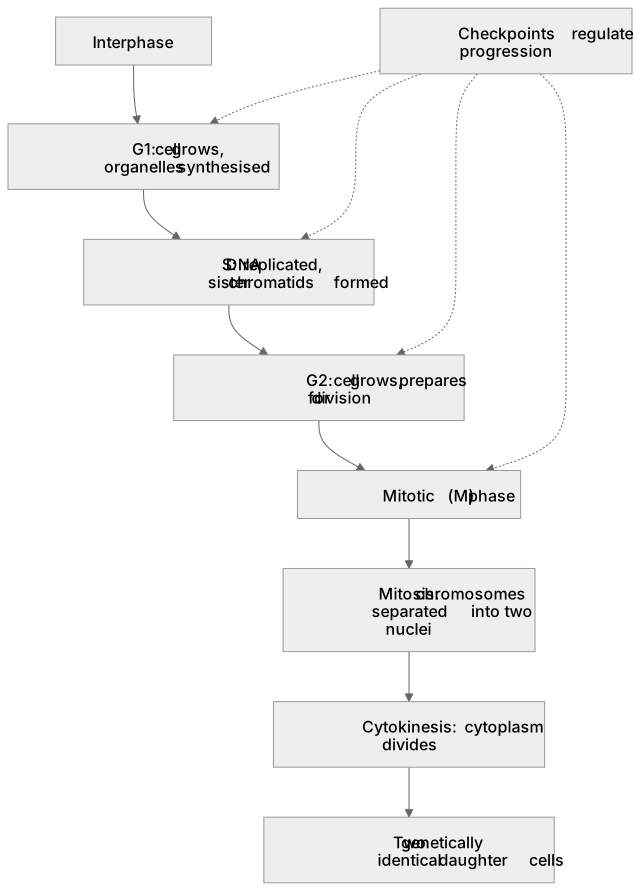
The cell cycle describes the sequence of events by which a cell grows and divides to produce two genetically identical daughter cells. It has two main stages: interphase and mitotic (M) phase. Interphase is subdivided into G1 (first growth phase, where the cell grows and organelles are synthesised), S (synthesis phase, where DNA is replicated so each chromosome becomes two sister chromatids) and G2 (second growth phase, where the cell continues to grow and prepares for division). The mitotic phase includes mitosis, in which the replicated chromosomes are separated into two nuclei, and cytokinesis, in which the cytoplasm divides to form two separate cells. Checkpoints regulate progression through the cycle, ensuring DNA is replicated and undamaged before division.
What earns the marks
- The cell cycle consists of interphase (G1, S and G2) followed by the mitotic phase (mitosis and cytokinesis).
- DNA replication occurs during the S phase, so each chromosome consists of two sister chromatids before mitosis.
- G1 and G2 are growth phases in which the cell increases in size and synthesises organelles and proteins.
- Mitosis separates the replicated chromosomes into two genetically identical nuclei, and cytokinesis divides the cytoplasm to produce two daughter cells.
- Checkpoints control progression through the cycle, preventing division if DNA is damaged or incompletely replicated.
Common mistakes and how to put them right
Thinking DNA replication occurs during mitosis.
Put it right by placing replication in the S phase of interphase.
Believing the cell cycle is only mitosis.
Put it right by including interphase and cytokinesis as parts of the cycle.
Confusing the order of phases.
Put it right by stating G1, then S, then G2, then mitosis and cytokinesis.
Exam tips
- Learn the phases in order and give the key event of each phase.
- Use the terms 'sister chromatids' and 'genetically identical daughter cells' precisely.
- When interpreting data, relate the proportion of cells in a phase to the time spent in that phase.
Try the lesson
The start of the Cell division, cell diversity and cellular organisation: (a) the cell cycle lesson, made from checked teaching notes for this specification point.
Have a go first
During which part of the cell cycle is DNA replicated?
Listen
The cell cycle describes the sequence of events by which a cell grows and divides to produce two genetically identical daughter cells. It has two main stages: interphase and mitotic (M) phase. Interphase is subdivided into G1 (first growth phase, where the cell grows and organelles are synthesised), S (synthesis phase, where DNA is replicated so each chromosome becomes two sister chromatids) and G2 (second growth phase, where the cell continues to grow and prepares for division). The mitotic phase includes mitosis, in which the replicated chromosomes are separated into two nuclei, and cytokinesis, in which the cytoplasm divides to form two separate cells. Checkpoints regulate progression through the cycle, ensuring DNA is replicated and undamaged before division. A strong answer earns marks for these points. The cell cycle consists of interphase (G1, S and G2) followed by the mitotic phase (mitosis and cytokinesis). DNA replication occurs during the S phase, so each chromosome consists of two sister chromatids before mitosis. G1 and G2 are growth phases in which the cell increases in size and synthesises organelles and proteins. Mitosis separates the replicated chromosomes into two genetically identical nuclei, and cytokinesis divides the cytoplasm to produce two daughter cells. A common slip: Thinking DNA replication occurs during mitosis. Instead, placing replication in the S phase of interphase. Exam tip: Learn the phases in order and give the key event of each phase.
See it
Key words
Say what each word means before you turn the card.
Stages of the cell cycle
Try answering aloud or in your head before turning the card.
DNA replication in S phase
Try answering aloud or in your head before turning the card.
Mitosis and cytokinesis
Try answering aloud or in your head before turning the card.
Checkpoints and control of division
Try answering aloud or in your head before turning the card.
See every definition
- Stages of the cell cycle
- The sequence of events by which a cell grows and divides to produce two genetically identical daughter cells, consisting of interphase followed by the mitotic phase.
- DNA replication in S phase
- During the synthesis phase of interphase, DNA is replicated so each chromosome becomes two sister chromatids before mitosis.
- Mitosis and cytokinesis
- Mitosis separates the replicated chromosomes into two nuclei, and cytokinesis divides the cytoplasm to form two separate cells.
- Checkpoints and control of division
- These regulate progression through the cycle, ensuring DNA is replicated and undamaged before division.
Label the diagram
Some boxes have lost their names. Pick the right name for each number.
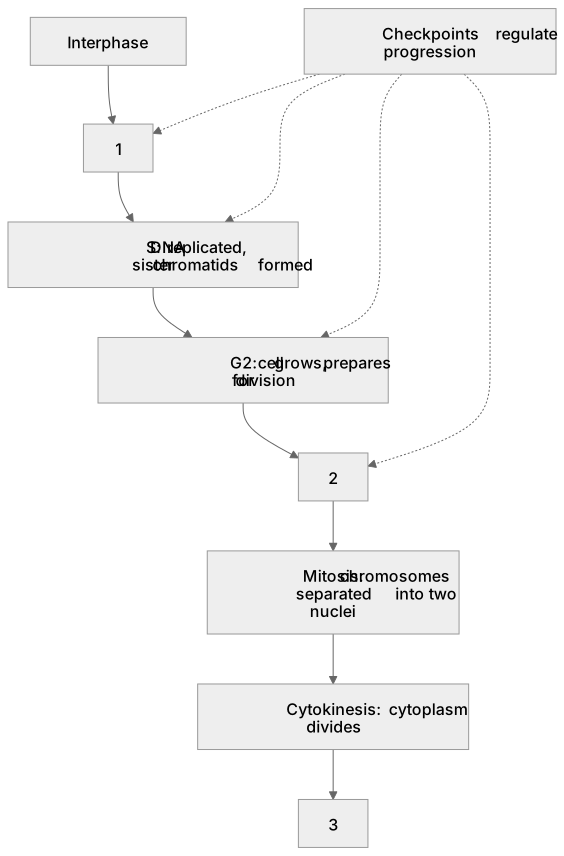
1Box 1
2Box 2
3Box 3
There is more to this lesson
The full lesson goes on to check your understanding and help you earn the marks. Create a free account to carry on, with your progress saved.
A week of Premium from your first lesson · Then the free plan continues · No card, no charge
Test your understanding of Cell division, cell diversity and cellular organisation: (a) the cell cycle
Active recall beats re-reading. Take an instant quiz now to test what you’ve learned and lock it into long-term memory.
A week of Premium from your first lesson · Then the free plan continues · No card, no charge