
Study Notes
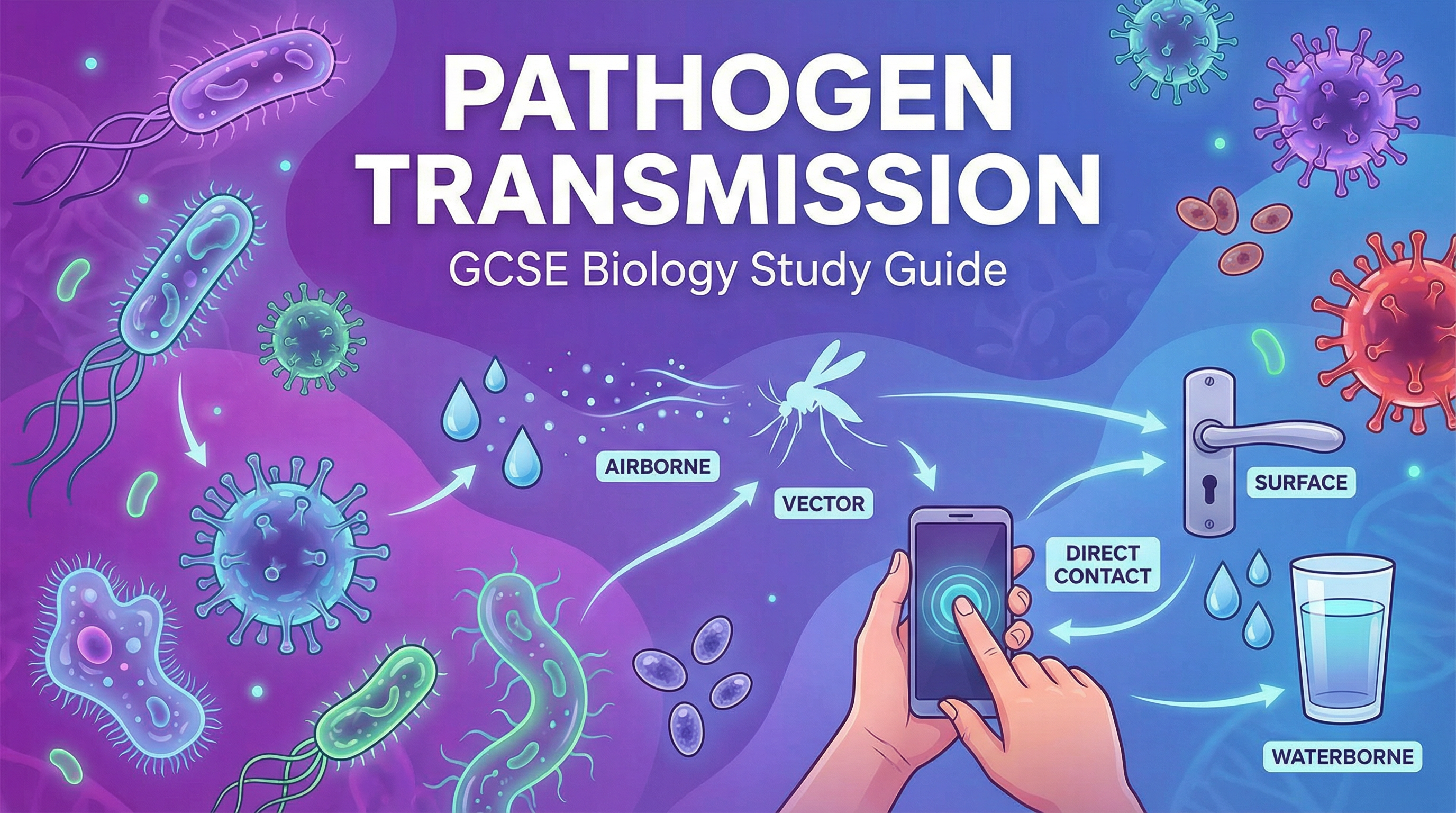
Overview
Welcome to your deep dive into Pathogen Transmission (OCR GCSE Biology, 3.2). This topic is fundamental to understanding not just human health, but also the intricate ecosystems we are a part of. In your exam, you will be expected to demonstrate a clear understanding of how communicable diseases are spread by different types of pathogens: bacteria, viruses, protists, and fungi. Examiners will frequently ask you to apply this knowledge to real-world scenarios, requiring you to suggest and justify methods of preventing disease transmission. A strong grasp of this topic is essential as it links to other key areas of the specification, such as the immune system and vaccination. Expect to see a mix of short-answer questions asking for definitions and longer, 6-mark questions that require you to structure a detailed explanation.
Key Concepts
Concept 1: The Four Main Transmission Routes
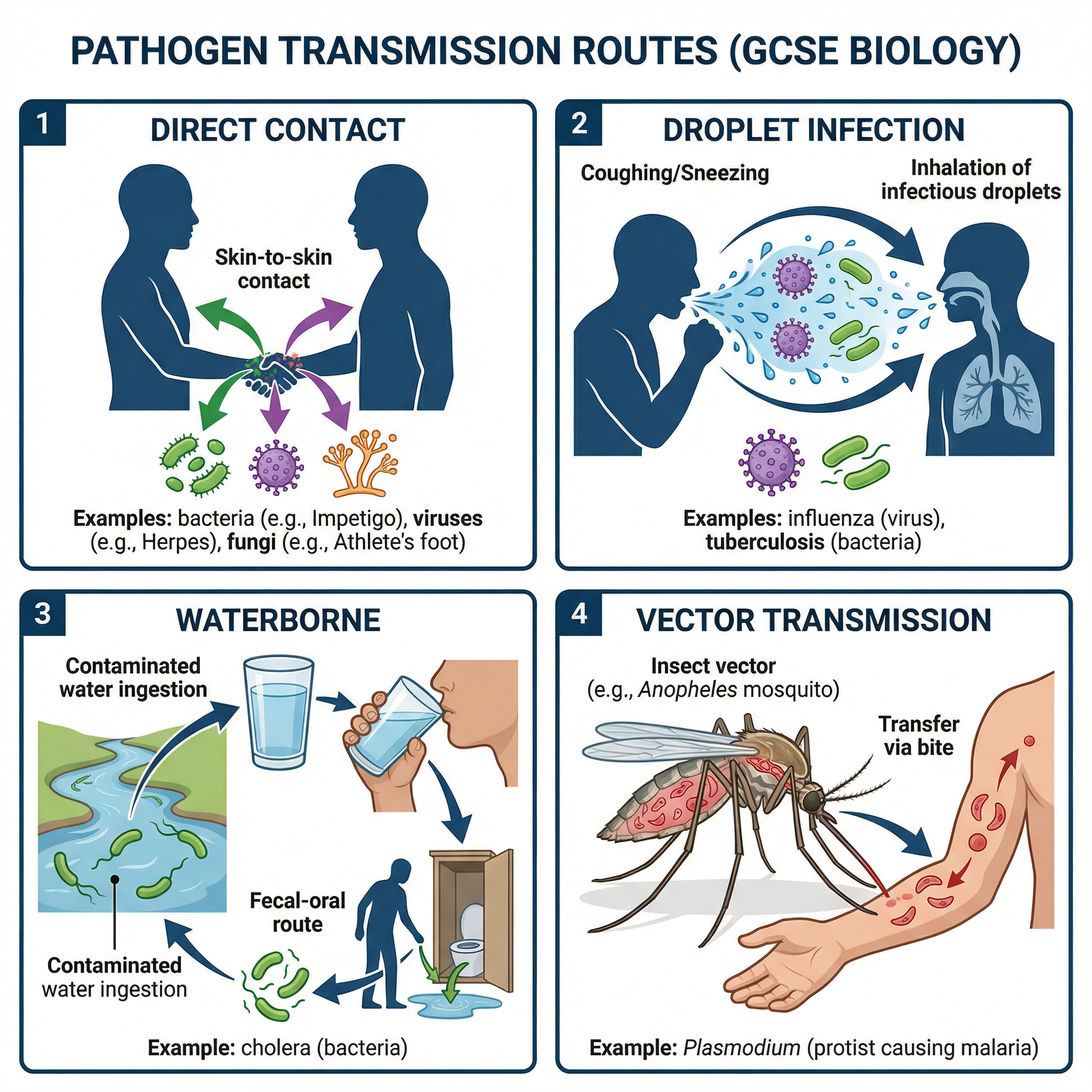
Pathogens have evolved various methods to move from one host to another. For your exam, you must be able to describe and give examples for four key routes. Understanding these is the foundation for all application questions.
-
Direct Contact: This is the simplest route, involving the transfer of pathogens through physical touch. This can be skin-to-skin contact (e.g., athlete's foot, a fungal infection) or the exchange of bodily fluids (e.g., HIV, a virus). The key here is that there is no intermediate object; the pathogen moves directly from an infected individual to a new host.
-
Droplet Infection: When an infected individual coughs, sneezes, or talks, they release tiny droplets of mucus and saliva containing pathogens into the air. If these droplets are inhaled by another person, the pathogen can infect their respiratory system. This is how viruses like influenza and the common cold, as well as bacteria that cause tuberculosis, are transmitted. It is important to note that these droplets travel short distances before falling to the ground.
-
Waterborne Transmission: Some pathogens, particularly bacteria like Vibrio cholerae (which causes cholera), are transmitted through contaminated water. This often occurs in areas with poor sanitation, where sewage can contaminate drinking water supplies. This is often referred to as the oral-fecal route of transmission.
-
Vector Transmission: A vector is an organism that carries a pathogen from one host to another without being harmed itself. The most common exam example is the female Anopheles mosquito, which acts as a vector for the Plasmodium protist that causes malaria. The mosquito is not the cause of the disease, but the carrier. It is crucial to use this terminology correctly to gain marks.
Concept 2: Linking Transmission to Prevention
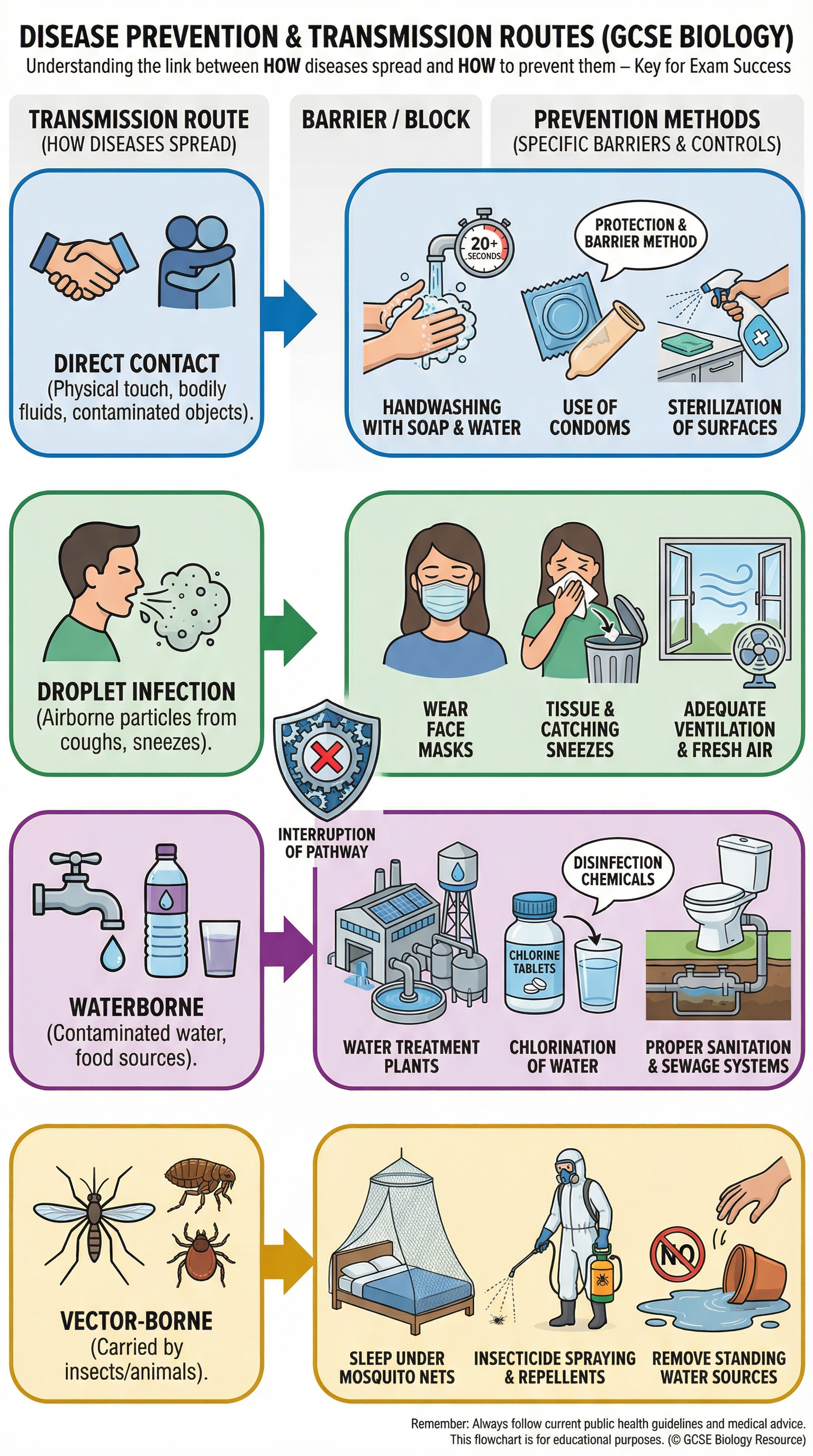
This is a higher-level skill that examiners are specifically looking for. It is not enough to simply list prevention methods; you must be able to explain how a specific method interrupts a specific transmission route. For example, washing your hands is effective against pathogens spread by direct contact, but it will not prevent you from getting malaria.
-
Interrupting Direct Contact: Methods include regular handwashing with soap, using condoms to prevent the exchange of bodily fluids, and sterilizing surfaces and equipment.
-
Interrupting Droplet Infection: This can be achieved by covering your mouth and nose when you cough or sneeze, wearing face masks, and ensuring good ventilation in indoor spaces.
-
Interrupting Waterborne Transmission: This involves large-scale public health measures such as treating sewage and providing clean, chlorinated drinking water.
-
Interrupting Vector Transmission: This focuses on controlling the vector population or preventing it from biting humans. Examples include using mosquito nets (especially those treated with insecticide), using insect repellent, and destroying breeding grounds by draining areas of standing water.
Mathematical/Scientific Relationships
There are no specific mathematical formulas to memorize for this topic. However, you may be presented with data in tables or graphs showing the incidence of a disease before and after a prevention method has been introduced. You would be expected to calculate percentage changes or describe trends in the data to evaluate the effectiveness of the intervention.
Practical Applications
This topic is directly applicable to understanding public health campaigns and the importance of hygiene. The principles of pathogen transmission are also fundamental to the aseptic techniques used in microbiology practicals, where you aim to culture bacteria without contaminating your sample with unwanted microorganisms from the environment.