OCR · GCSE · Biology
Respiration
Respiration is the exothermic reaction that transfers energy from glucose in every living cell. This topic is essential for OCR GCSE Biology, covering aerobic and anaerobic pathways, the body's response to exercise, and the respirometer practical (PAG 4). Mastering this will earn you 8-10 marks across Papers 1 and 2.
- 10 min read
- 4 worked examples
- 6 practice questions
- 8 key terms
Study Notes
Overview
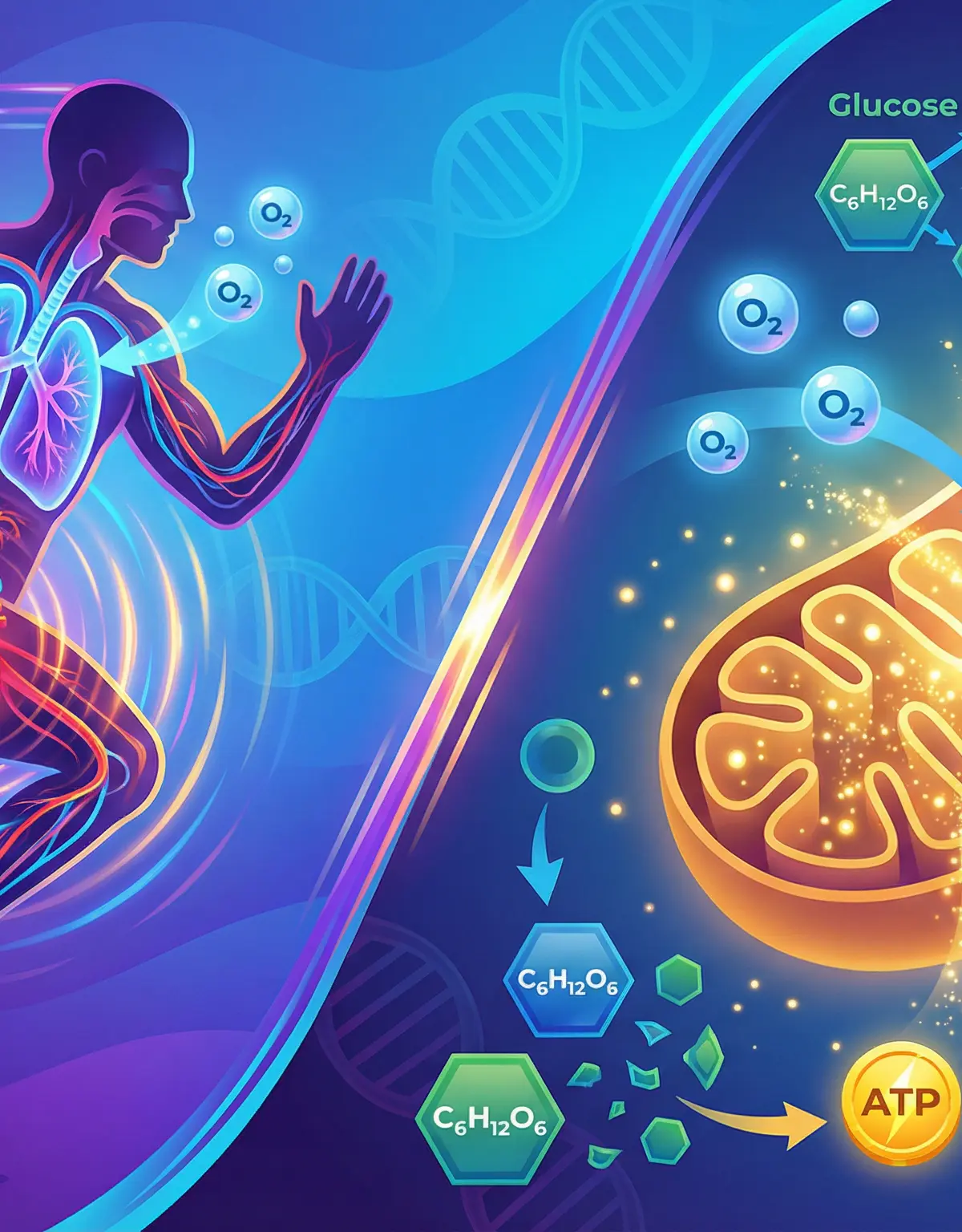
Respiration is the cornerstone of bioenergetics, the study of energy flow in living systems. It is a fundamental chemical process occurring in every living cell, from the smallest bacterium to the largest blue whale. For your OCR GCSE Biology exam, you must understand that respiration is not about breathing; it is the controlled release of energy from food molecules, primarily glucose. This energy is then used to power all life processes. This topic is heavily weighted in your exams, appearing in both Paper 1 and Paper 2, worth approximately 8-10 marks. You will encounter questions ranging from simple definitions to complex data analysis of practical investigations. This guide will equip you with the knowledge and skills to tackle them all with confidence.
Key Concepts
Concept 1: The Purpose of Respiration
Respiration is an exothermic reaction, meaning it releases energy into the surroundings. This is a critical point that examiners look for. Do not say that respiration creates or makes energy; this is a common mistake that will lose you marks. The energy is transferred from the chemical store in glucose molecules to a form that cells can use, called ATP (adenosine triphosphate). Think of ATP as the universal energy currency of the cell. It powers a vast range of metabolic activities including the synthesis of larger molecules such as building proteins from amino acids or starch from glucose, muscle contraction allowing for movement, and maintenance of body temperature keeping our internal environment stable through homeostasis.
Every single cell in your body, whether it's a brain cell, muscle cell, or skin cell, needs a constant supply of energy to function. Without respiration, life as we know it would not exist. The energy released is not all used immediately; some is stored in ATP molecules, which can be broken down when energy is needed.
Concept 2: Aerobic Respiration
This is the most efficient form of respiration and it occurs in the presence of oxygen. It takes place inside the mitochondria, tiny organelles within the cell that are often called the 'powerhouses' of the cell. The overall process can be summarised by the following equations:
Word Equation:
Glucose + Oxygen → Carbon Dioxide + Water
Balanced Symbol Equation (Higher Tier only):
C₆H₁₂O₆ + 6O₂ → 6CO₂ + 6H₂O
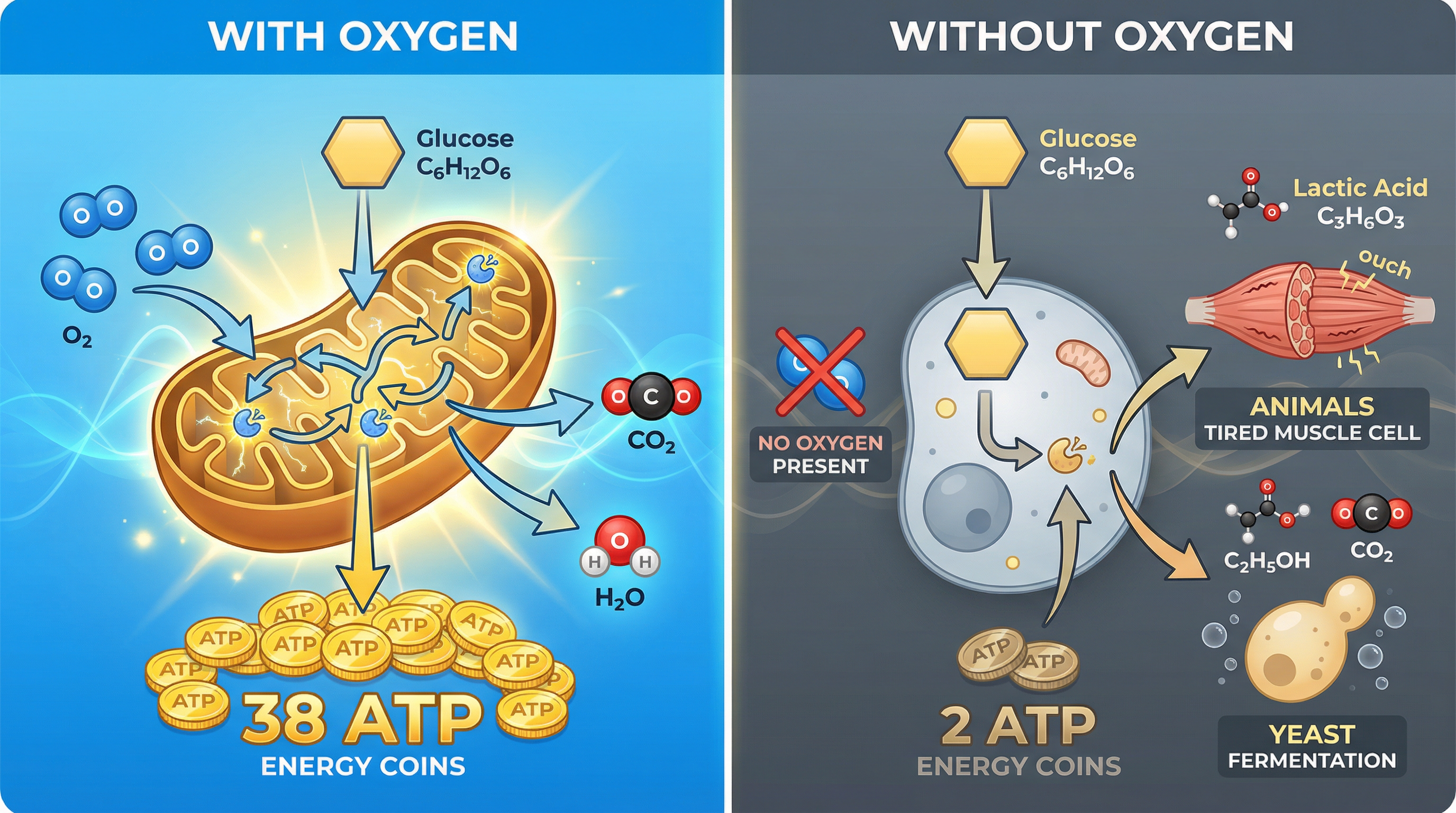
This process releases a large amount of energy, yielding approximately 38 molecules of ATP for every one molecule of glucose. This is why we need a constant supply of oxygen to our cells. The process involves multiple stages, including glycolysis in the cytoplasm and the Krebs cycle and electron transport chain in the mitochondria, although you do not need to know these details for GCSE. What you must remember is that aerobic respiration is highly efficient and produces carbon dioxide and water as waste products.
Concept 3: Anaerobic Respiration
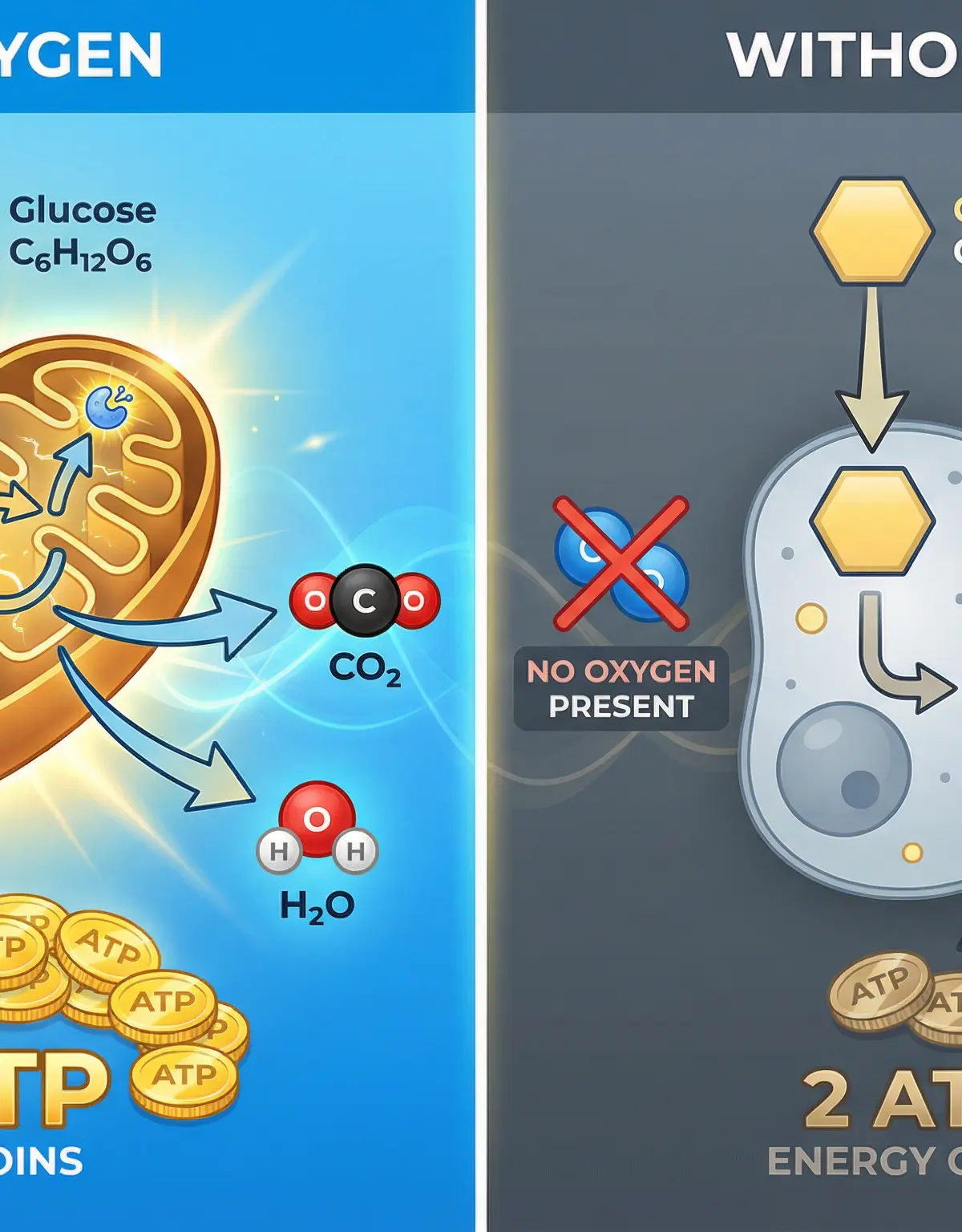
What happens when there isn't enough oxygen? For example, during a short, intense burst of exercise like a 100m sprint. In this situation, cells switch to anaerobic respiration. This process is much less efficient than aerobic respiration, but it provides a quick burst of energy when oxygen is scarce. The key difference is that anaerobic respiration does not require oxygen and releases far less energy, only about 2 ATP molecules per glucose molecule.
**In Animals:**In animal cells, glucose is partially broken down into lactic acid.
Word Equation:
Glucose → Lactic Acid
The build-up of lactic acid in muscles is what causes fatigue and the burning sensation you feel during intense exercise. After the exercise, the lactic acid needs to be broken down. This requires oxygen, and the amount of oxygen needed is called the oxygen debt or EPOC (Excess Post-exercise Oxygen Consumption). The lactic acid is transported to the liver, where it is converted back into glucose, or broken down into carbon dioxide and water. This is why you continue to breathe heavily even after you stop exercising.
**In Plants and Yeast:**Plants and microorganisms like yeast respire anaerobically in a slightly different way, a process called fermentation.
Word Equation:
Glucose → Ethanol + Carbon Dioxide
This process is exploited in industry. The carbon dioxide produced by yeast is what makes bread rise, and the ethanol is the alcohol found in beer and wine. Understanding the difference between animal and yeast anaerobic respiration is crucial, as mixing these up is a frequent cause of lost marks.
Concept 4: Response to Exercise
When you begin to exercise, your muscles require more energy. Your body responds in several ways to meet this increased demand. Your heart rate increases to pump more oxygenated blood to the muscles. Your breathing rate and depth increase to take in more oxygen and remove more carbon dioxide. Blood is diverted from less essential organs, such as the digestive system, to the muscles. If the exercise is very intense, your muscles may not receive enough oxygen to meet their energy demands through aerobic respiration alone. At this point, anaerobic respiration begins in the muscle cells, producing lactic acid.
After exercise, your body needs to repay the oxygen debt. This involves continuing to breathe heavily to supply the oxygen needed to break down the lactic acid that has accumulated in the muscles. The lactic acid is transported to the liver, where it is oxidized back into carbon dioxide and water, or converted back into glucose.
Mathematical/Scientific Relationships
Key Equations:
- Aerobic Respiration (Word): Glucose + Oxygen → Carbon Dioxide + Water
- Aerobic Respiration (Symbol - Higher Tier): C₆H₁₂O₆ + 6O₂ → 6CO₂ + 6H₂O
- Anaerobic Respiration in Animals: Glucose → Lactic Acid
- Anaerobic Respiration in Yeast/Plants: Glucose → Ethanol + Carbon Dioxide
**Respiratory Quotient (RQ) (Higher Tier only):**RQ is the ratio of the volume of carbon dioxide produced to the volume of oxygen consumed.
RQ = CO₂ produced / O₂ consumed
For aerobic respiration of glucose, the RQ is 1. For other substrates like fats, the RQ is less than 1 (approximately 0.7). This can be used to determine what substrate an organism is respiring.
**Calculating Oxygen Consumption from Respirometer Data:**If the coloured fluid in a respirometer moves 15mm in 10 minutes, and the internal diameter of the capillary tube is 1mm, you can calculate the volume of oxygen consumed:
- Volume of a cylinder = πr²h
- Radius (r) = 0.5mm = 0.05cm
- Height (h) = 15mm = 1.5cm
- Volume = π × (0.05)² × 1.5 = 0.0118 cm³
You would then need to convert this to a rate, e.g., cm³ per minute or per hour, depending on the question.
Practical Applications
PAG 4: Investigating Respiration using a Respirometer
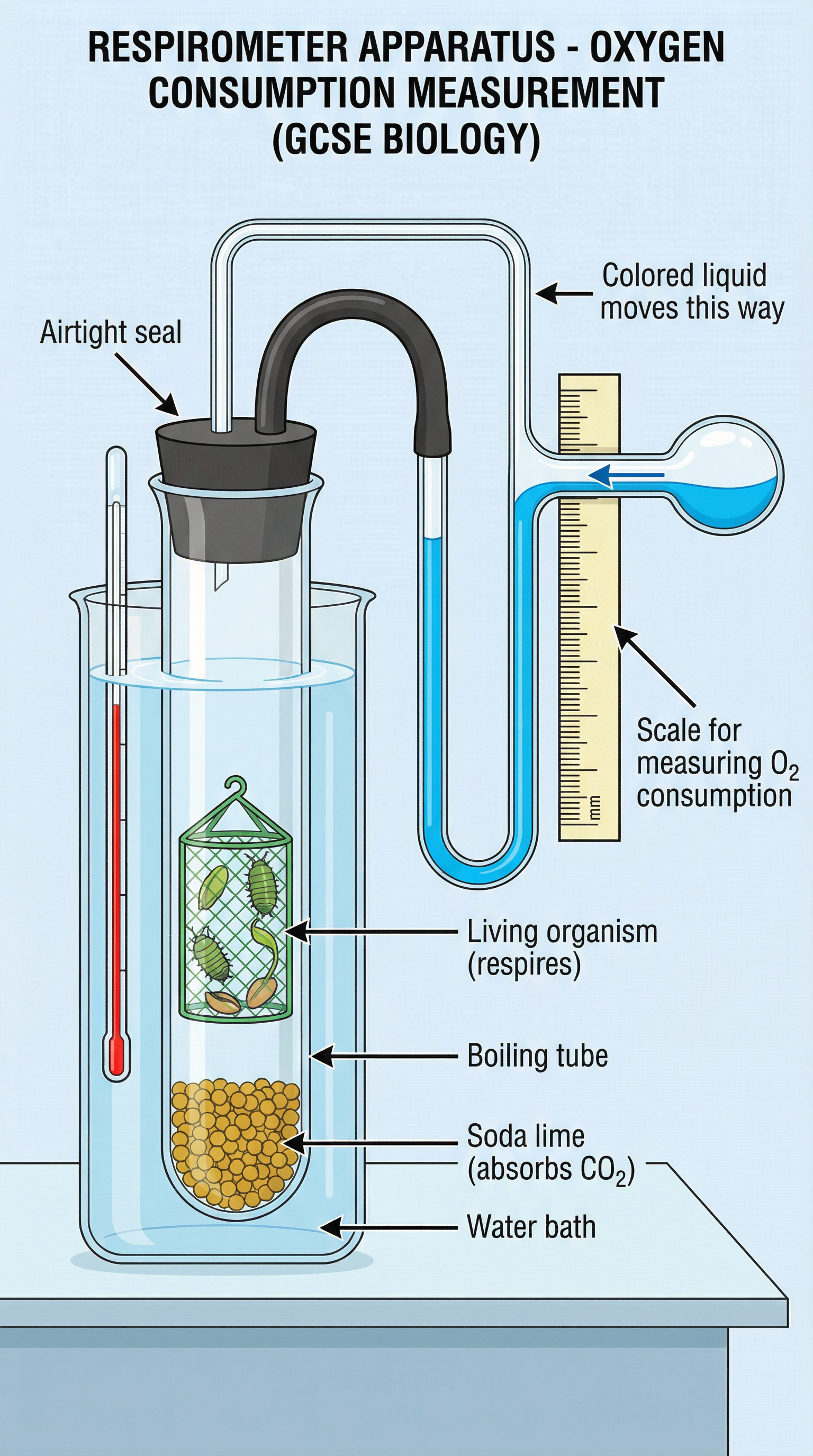
A respirometer is a piece of apparatus used to measure the rate of respiration of a living organism by measuring its rate of oxygen consumption. This is a required practical, and you must be able to describe the method, explain the results, and identify control variables.
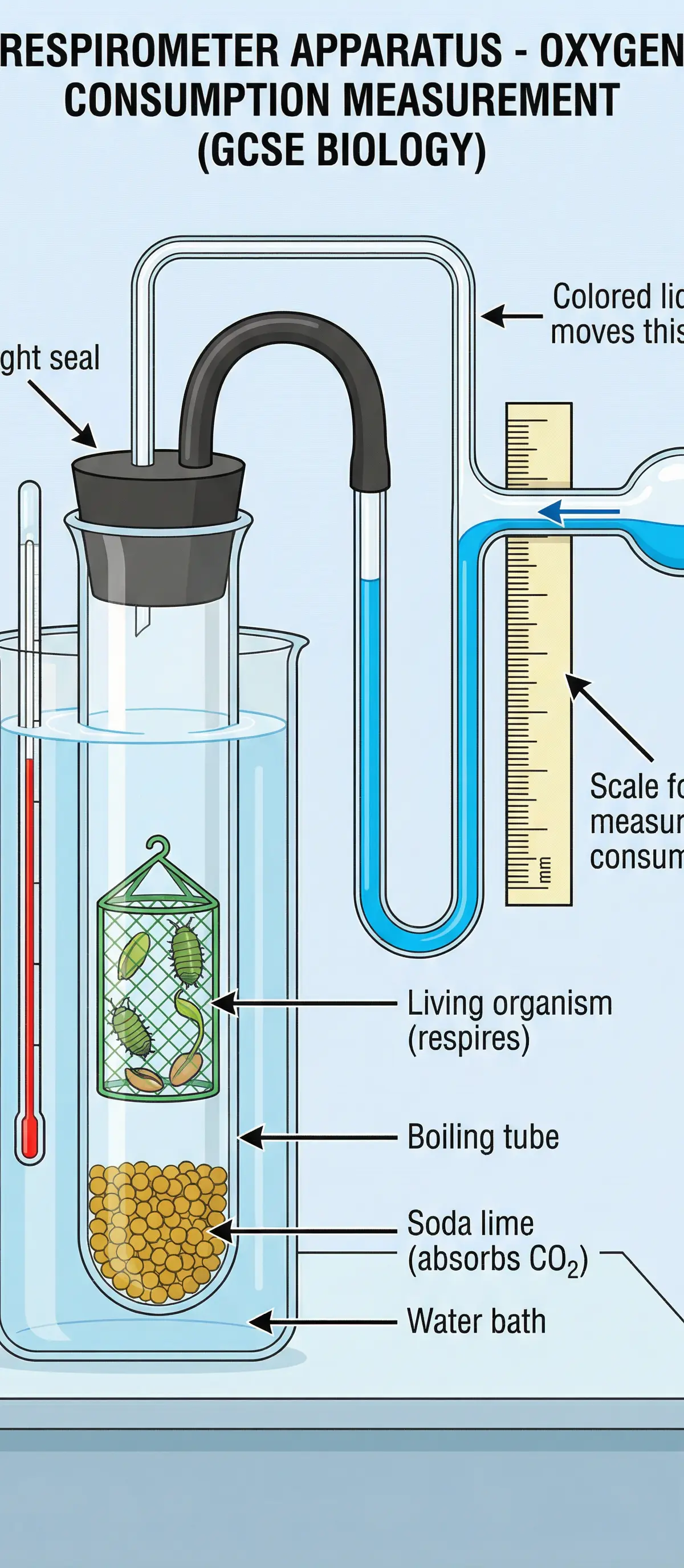
Apparatus:
- Boiling tube or conical flask
- Living organism (e.g., woodlice, germinating seeds, maggots)
- Soda lime granules
- Gauze or mesh to separate organism from soda lime
- Capillary tube with coloured liquid (manometer fluid)
- Ruler or scale
- Water bath (for temperature control)
- Stopper with holes for capillary tube
Method:
- A known mass of a living organism is placed in a sealed container (boiling tube or flask).
- Soda lime is placed in the bottom of the container, separated from the organism by gauze. The soda lime absorbs the carbon dioxide produced by the organism.
- A capillary tube containing a coloured fluid is connected to the container via a rubber tube and stopper, creating an airtight seal.
- As the organism respires, it consumes oxygen, causing a decrease in the volume of gas in the container. This creates a partial vacuum, which pulls the coloured fluid along the capillary tube towards the organism.
- The distance the fluid moves over a set period of time (e.g., 10 minutes) is measured using a ruler.
- This distance can be used to calculate the volume of oxygen consumed, and therefore the rate of respiration.
- The apparatus is placed in a water bath to maintain a constant temperature.
**Expected Results:**The coloured liquid will move towards the organism. The distance it moves is proportional to the volume of oxygen consumed. More active organisms, or organisms at higher temperatures, will consume more oxygen, and the liquid will move further.
Control Variables:
- Temperature: The respirometer is placed in a water bath to maintain a constant temperature, as temperature affects the rate of enzyme-controlled reactions. A 10°C increase in temperature typically doubles the rate of respiration.
- Volume of soda lime: The same volume of soda lime should be used in each experiment to ensure all CO₂ is absorbed.
- Mass of organism: The rate of respiration is often expressed per unit mass of the organism (e.g., cm³ O₂ per gram per minute) to allow fair comparison.
- Type of organism: Use the same species and similar life stage.
- Time period: Measure over the same time period for each trial.
Common Errors:
- Not creating an airtight seal, which allows air to leak in or out.
- Not controlling temperature, leading to inconsistent results.
- Forgetting to include soda lime, which means you are measuring the net change in gas volume (oxygen consumed minus carbon dioxide produced), not just oxygen consumption.
- Not using a control experiment (e.g., a respirometer with dead organisms or glass beads) to account for changes in atmospheric pressure or temperature.
**How Examiners Test It:**Examiners will ask you to:
- Describe the method.
- Explain why soda lime is used.
- Identify control variables.
- Calculate the rate of oxygen consumption from given data.
- Suggest improvements to the method.
- Interpret results and draw conclusions.
Real-World Applications
- Brewing and Baking: Anaerobic respiration in yeast is used to produce alcohol and carbon dioxide.
- Exercise Physiology: Understanding respiration helps athletes optimize training and performance.
- Medicine: Lactic acidosis is a medical condition caused by excessive lactic acid build-up.
- Agriculture: Measuring respiration rates in seeds can indicate their viability.
Visual Resources
2 diagrams and illustrations
Interactive Diagrams
2 interactive diagrams to visualise key concepts
Conceptual Flow Outline
Decision flowchart showing the pathway of respiration depending on oxygen availability and organism type.
Conceptual Flow Outline
Flowchart showing the body's response to exercise and the repayment of oxygen debt.
Worked Examples
4 worked examples — open one to explore the question and available guidance.
Practice Questions
Test your understanding — click to reveal model answers
State two uses of energy released by respiration in the human body. (2 marks)
Hint: Think about what processes in your body need energy to happen.
Explain why a runner continues to breathe heavily for several minutes after finishing a race. (3 marks)
Hint: Think about what builds up in the muscles during intense exercise and what needs to happen to it afterwards.
A student investigated the rate of respiration in yeast at different temperatures. Describe how the student could use a respirometer to measure the rate of respiration. (4 marks)
Hint: Think about the apparatus needed, what you would measure, and how you would ensure a fair test.
Compare aerobic and anaerobic respiration. (4 marks)
Hint: Think about similarities and differences. Use comparative language like 'both', 'whereas', 'however'.
A student set up two respirometers, one with living woodlice and one with dead woodlice. Explain why the student included a respirometer with dead woodlice. (2 marks)
Hint: Think about what factors other than respiration might cause the liquid to move.
During intense exercise, the concentration of lactic acid in the blood increases. Suggest why this could be dangerous if it continued for a long time. (2 marks)
Hint: Think about the properties of acids and their effect on the body.