Study Notes
Overview
Conservation is the active management of the Earth's natural resources and ecosystems to maintain biodiversity. In your WJEC GCSE Biology exam, this topic (8.5) explores the reasons for conservation, the methods used, and the complex balance between human requirements and environmental health. Examiners will test your ability to apply your knowledge to real-world scenarios, such as the debate between intensive farming and protecting wildlife. You'll need to understand specific schemes like CITES and SSSIs, and be able to evaluate the use of biological control versus chemical pesticides. This topic frequently appears in longer, 6-mark questions, where a structured, balanced argument is key to achieving full marks. This guide will equip you with the core knowledge and exam technique to confidently tackle any conservation question.
Key Concepts
1. Biodiversity
Biodiversity is the variety of all life on Earth. It can be considered at three levels. For your exam, you must be able to distinguish between them.
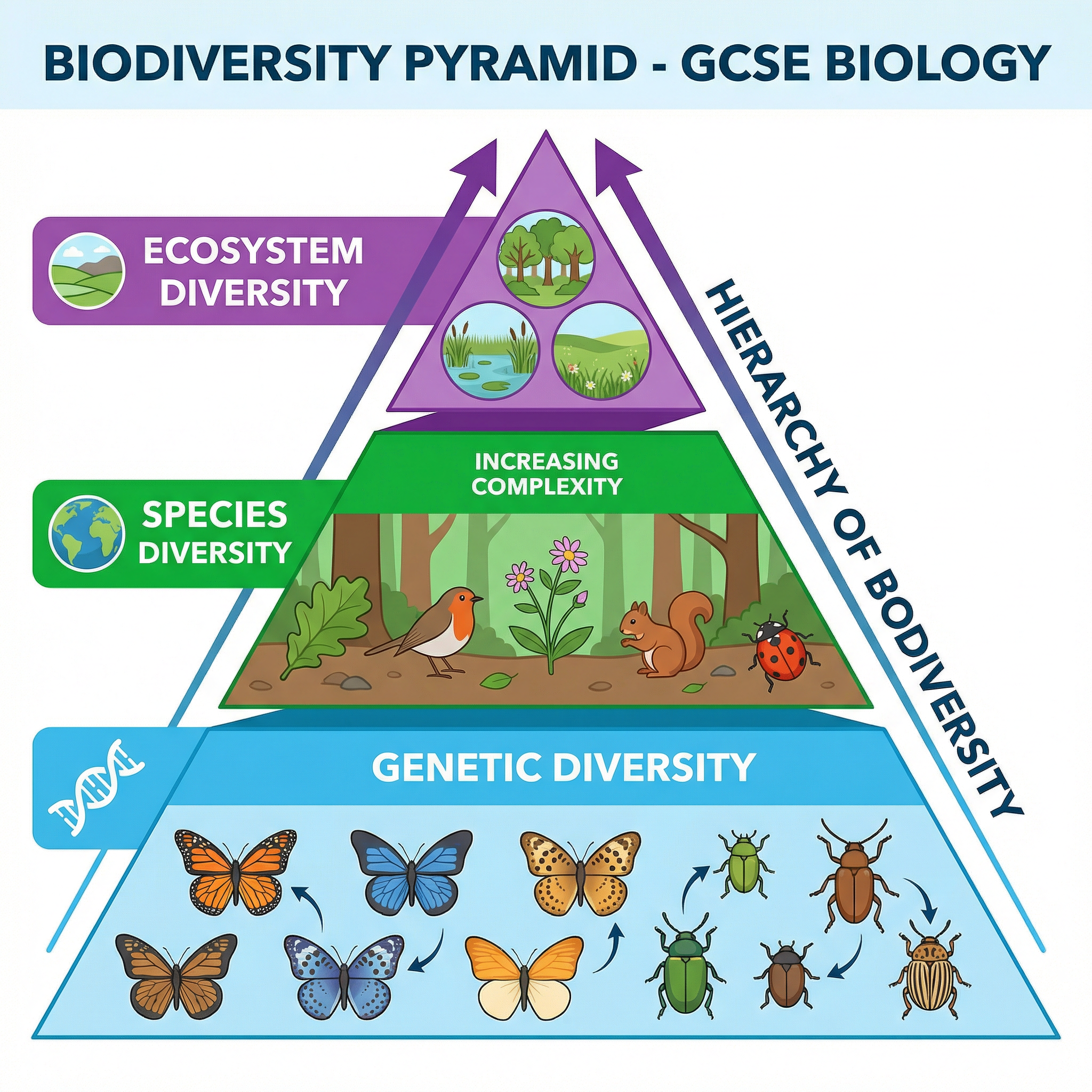
- Genetic Diversity: The variation of genes within a single species. A wide gene pool increases a species' ability to adapt to environmental changes. For example, some individuals in a population may have a natural resistance to a new disease.
- Species Diversity: The number of different species and the abundance of each species within a particular ecosystem. An ecosystem with high species diversity is more stable and resilient.
- Ecosystem Diversity: The range of different habitats, from a small pond to a large forest. Each ecosystem provides a unique set of conditions that supports a specific group of species.
**Why is Biodiversity Important?**Examiners expect you to explain why maintaining biodiversity is crucial. Credit is given for points such as:
- Ecosystem Stability: A greater variety of species means the ecosystem is less dependent on any single one. If one species is lost, the food web is less likely to collapse.
- Source of Resources: Many of the resources humans rely on, such as food, timber, and medicines, come from the natural world. Losing biodiversity could mean losing potential new medicines or food sources.
- Ethical and Aesthetic Reasons: Many people believe that every species has a right to exist and that we have a moral duty to protect them. Natural landscapes also provide recreation and inspiration.
2. Threats to Biodiversity
The primary threat to biodiversity is human activity. Key examples include:
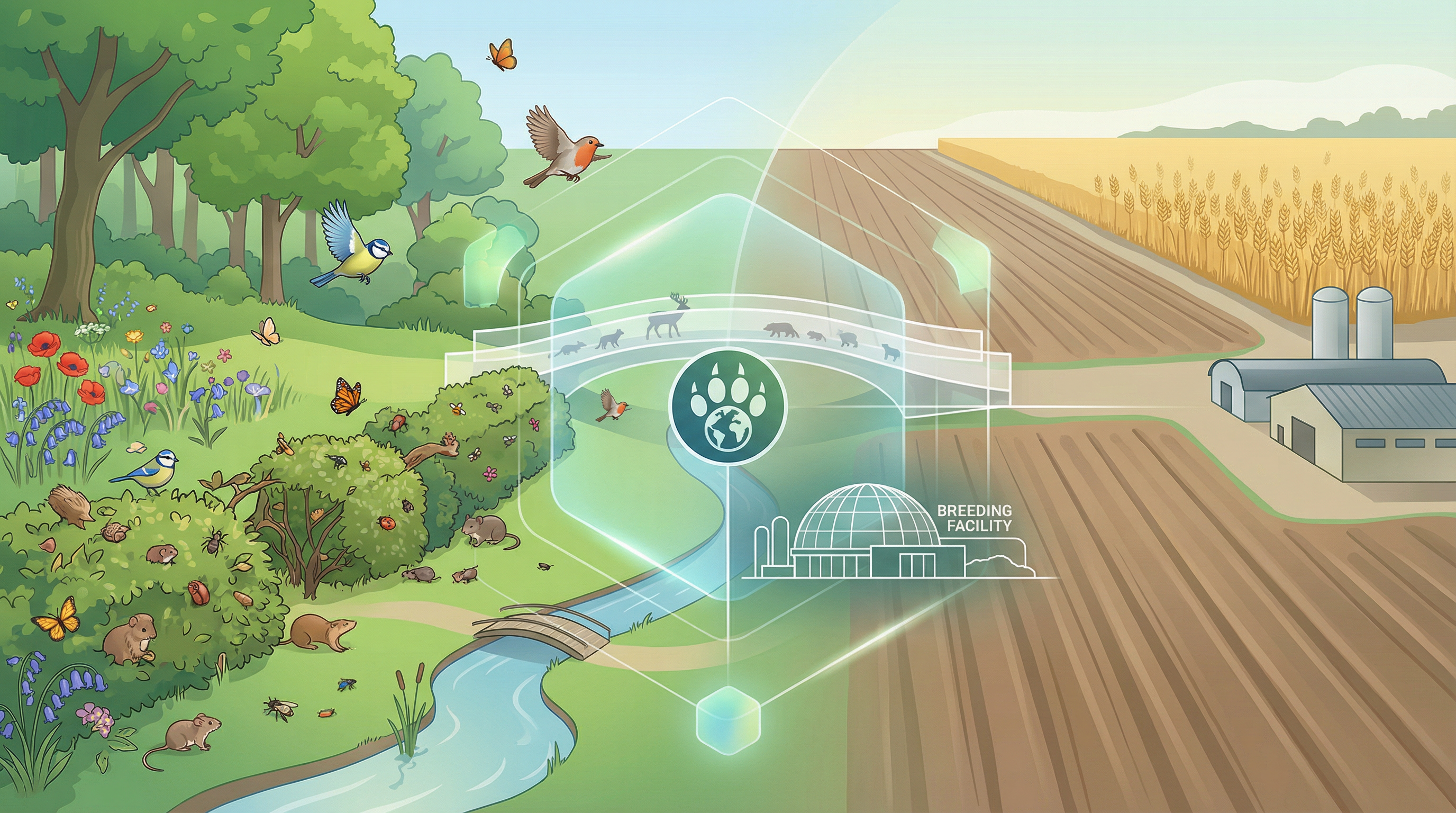
- Habitat Destruction: Intensive farming, deforestation, and urbanisation destroy the places where organisms live. For example, removing hedgerows to create larger fields for machinery removes vital corridors and nesting sites for birds and insects.
- Pollution: Pesticides and herbicides used in farming can harm non-target species. Fertilisers can run off into rivers and lakes, causing eutrophication, where algal blooms deoxygenate the water and kill aquatic life.
- Over-exploitation: Hunting, fishing, and harvesting resources at an unsustainable rate can drive species to extinction.
- Climate Change: Changing weather patterns and rising temperatures alter habitats, forcing species to migrate or face extinction.
3. Conservation Methods
To counter these threats, several conservation strategies are used. You need to know the specifics of each.
-
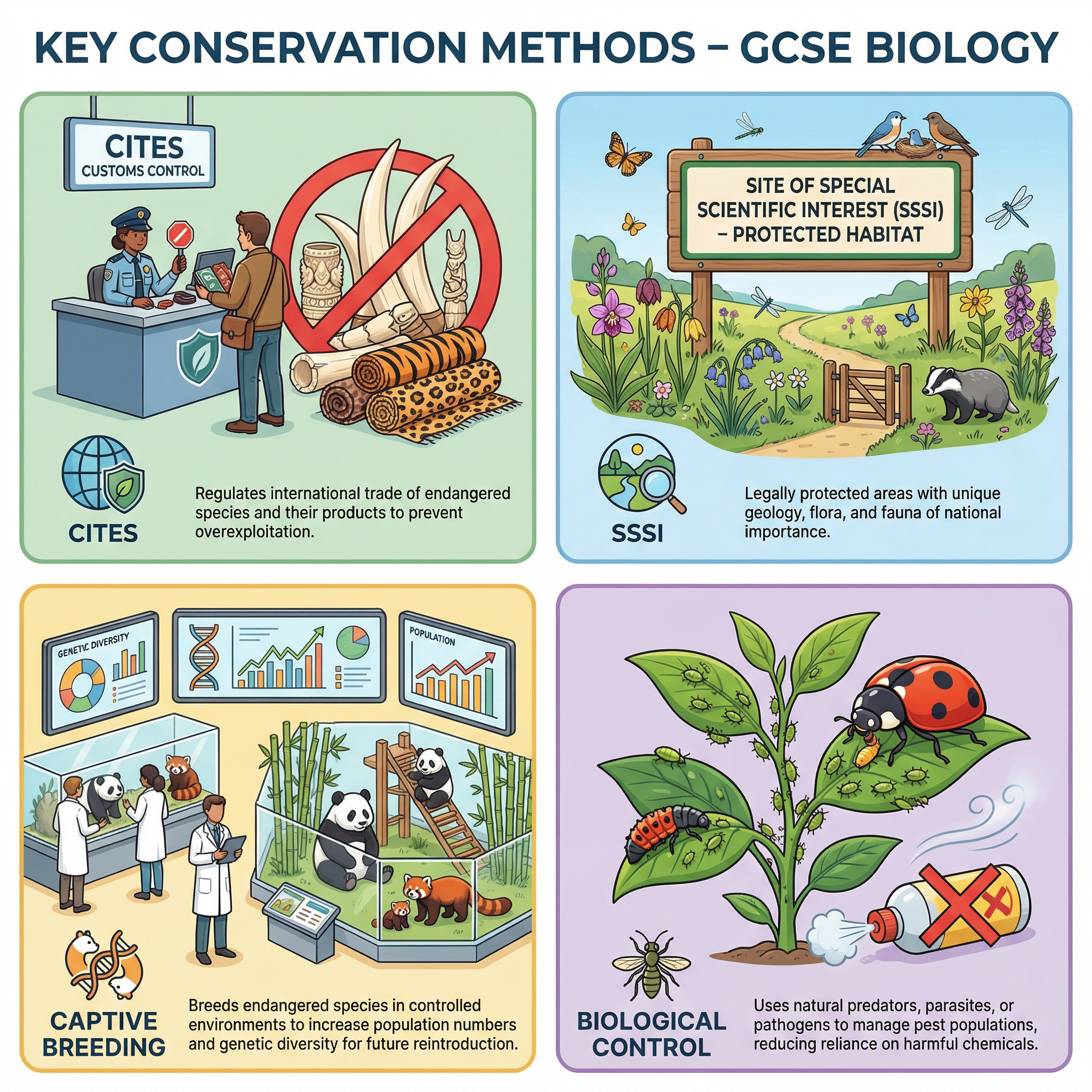
CITES (Convention on International Trade in Endangered Species): This is an international agreement between governments. Its aim is to ensure that international trade in specimens of wild animals and plants does not threaten their survival. It bans or strictly controls the trade of products from endangered species, like elephant ivory or rhino horn. Exam Tip: You must mention 'international trade' for the mark.
-
SSSIs (Sites of Special Scientific Interest): These are areas in the UK that are legally protected because they have important geological, physiological or biological features. This protection restricts activities that could damage the site, such as development or certain types of farming.
-
Captive Breeding Programmes: These involve breeding endangered species in controlled environments like zoos or botanical gardens. The main goals are to increase the population size and maintain genetic diversity. The ultimate aim is often to reintroduce the species back into the in the wild. Exam Tip: Always link captive breeding to increasing genetic diversity and the potential for reintroduction.
-
Seed Banks and Gene Banks: These store genetic material for the future. The Millennium Seed Bank in the UK, for example, stores seeds from thousands of plant species. This acts as an insurance policy against the extinction of plants in the wild.
4. Biological Control vs. Chemical Pesticides
This is a classic evaluation topic.
-
Chemical Pesticides: These are chemicals designed to kill pests. They are effective and fast-acting but have significant drawbacks. They can kill harmless, non-target species (like bees), accumulate in food chains (bioaccumulation), and pests can develop resistance to them over time.
-
Biological Control: This involves introducing a natural enemy of the pest – a predator, parasite, or disease – to control its numbers. For example, using ladybirds to control aphids in a greenhouse.
Evaluation: When asked to compare them, you should structure your answer by discussing the advantages and disadvantages of each. Biological control is more specific, has no risk of bioaccumulation, and pests are unlikely to develop resistance. However, the predator itself may become an invasive pest (e.g., the cane toad in Australia), it is slower to act, and it will never completely eradicate the pest – it only controls it to a manageable level. Crucial Point: Examiners will penalize you for stating that biological control 'gets rid of' or 'eradicates' the pest.
Mathematical/Scientific Relationships
There are no specific mathematical formulas you need to memorise for this topic. However, you may be asked to interpret data from tables and graphs related to population numbers, species distribution, or the effectiveness of conservation projects. For example, you might need to calculate a percentage change in a population over time.
Percentage Change Formula: ((New Value - Original Value) / Original Value) x 100
Practical Applications
This topic is all about real-world applications. A common scenario in exams involves land use conflict.
Intensive Farming vs. Conservation: Intensive farming aims to maximise food production and profit. This often involves creating large fields by removing hedgerows, using pesticides and fertilisers, and growing single crops (monocultures). All of these practices drastically reduce biodiversity.
The Conflict: Society needs affordable food, but also needs to protect the environment. A 6-mark question might ask you to 'Evaluate the impact of intensive farming on the environment'.
How to structure your answer:
- Benefits of Intensive Farming: State the economic need – produces large quantities of food cheaply, which is necessary for a growing human population.
- Costs to Biodiversity: Explain how it reduces biodiversity (loss of hedgerows, monocultures, pesticides, fertilisers leading to eutrophication).
- Suggest a Compromise: Propose solutions that balance both needs. For example, farmers can be paid subsidies to create field margins (strips of wildflowers around fields), replant hedgerows, or use crop rotation. This shows the examiner you can think critically and apply your knowledge in a balanced way.
Required Practicals
While there isn't a specific required practical for Topic 8.5, skills from other practicals are relevant. For example, techniques for sampling populations (using quadrats and transects) from Topic 8.1 (Distribution of Organisms) are often used to monitor the biodiversity of an area and assess the impact of conservation efforts. You might be given data from such a study and asked to interpret it.
- Random Sampling with Quadrats: Used to estimate the size of a population in a large area.
- Systematic Sampling with Transects: Used to show how the distribution of organisms changes across an area (e.g., as you move away from a polluted river).